

I CHING EXPLAINED · MENG UPPER LINE
I Ching Meng Line 6 Explained: Correct Without Attacking
Understand Meng’s upper line, 擊蒙,不利為寇,利禦寇: firm correction, protection rather than domination, and a practical way to address a repeated work error.
Watch the illustrated lesson
English narration and subtitles. AI-assisted illustrations and synthetic Andrew narration. No digital presenter.
Downloads & portrait edition
Share the lessonPlease retain the YiPhase credit and yiphase.com ending.
Download landscape MP4Download portrait MP4Mountain above Water forms Meng. The upper solid line is highlighted only for study; no personal cast or changed hexagram is generated. The report-checking exercise is an original modern application. The school-guardian illustration symbolizes protection and is not a historical reconstruction.
Same mistake again?
I CHING EXPLAINED · 蒙 上九
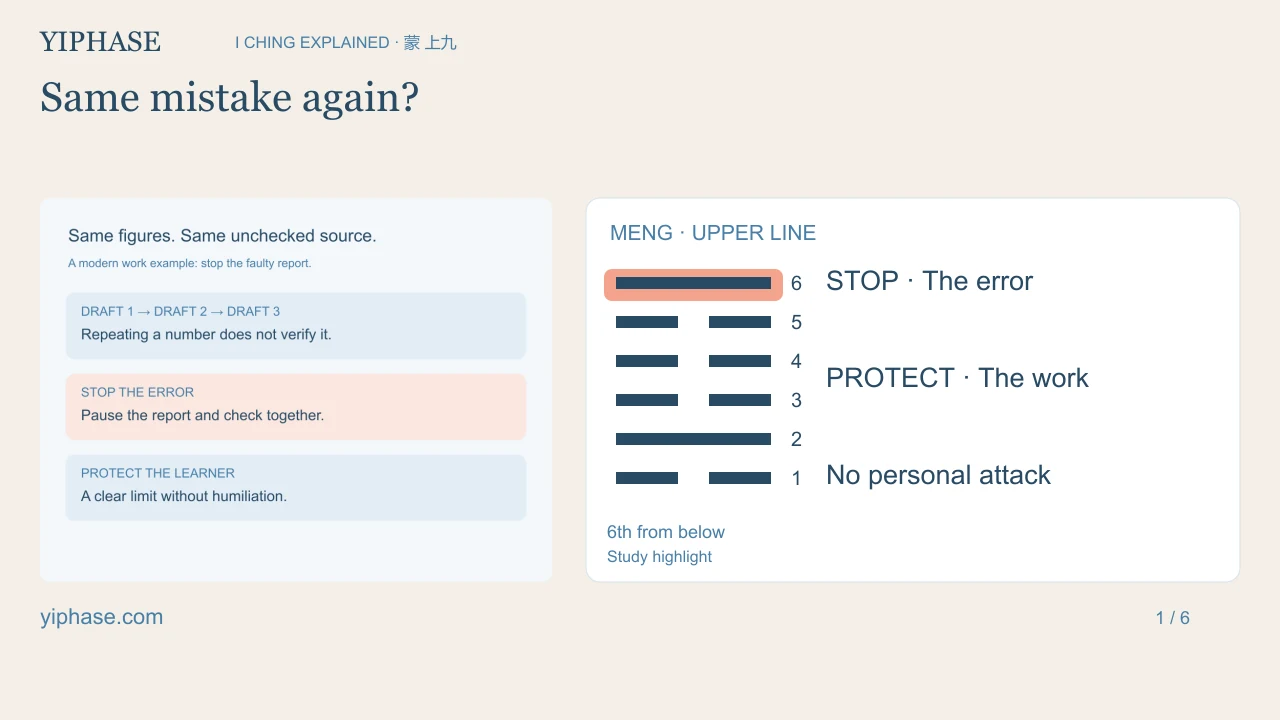
Same mistake again? Stop the error. Don't attack the learner. Meng's upper line draws that boundary.
中文解说
同样的错误又发生了?先制止错误,不把纠正变成人身攻击。蒙卦上九帮助我们辨明这条界线。这是本课的现代问题切入,不冒称逐字直译。
擊蒙 · Correcting inexperience
CLASSICAL LINE · 不利為寇,利禦寇
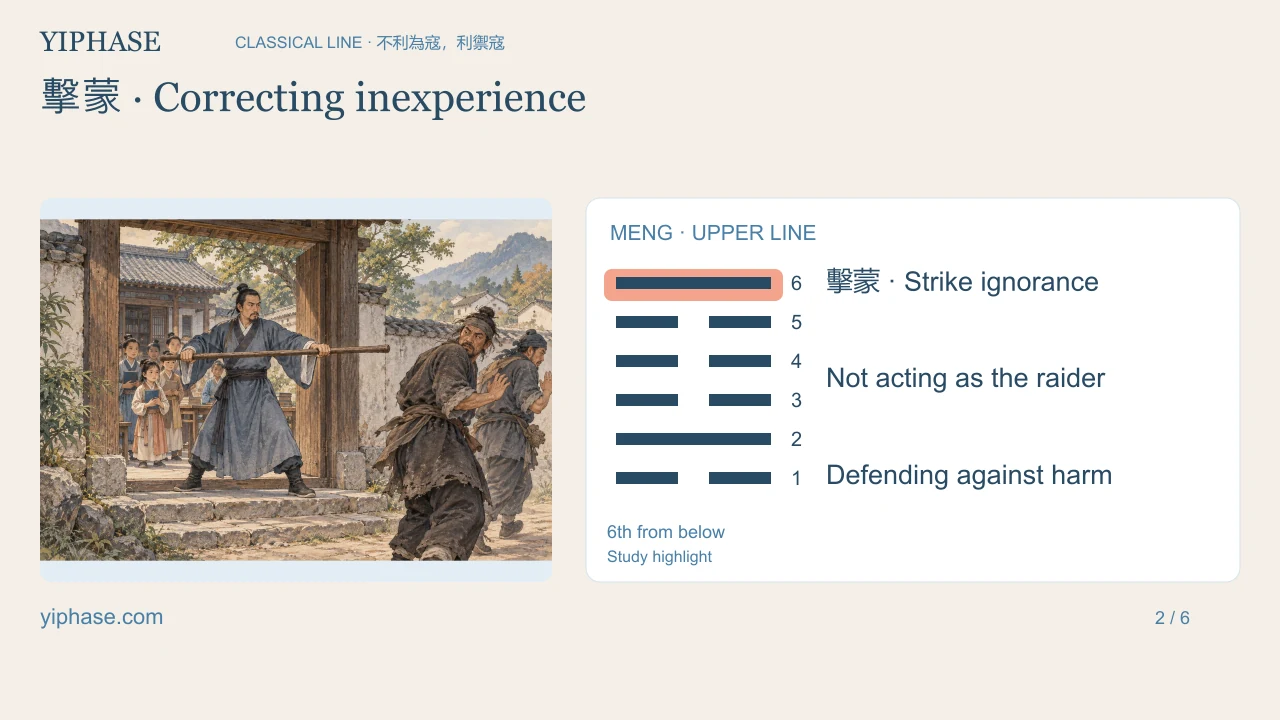
Meng, Hexagram Four, ends with: strike ignorance. It is not beneficial to act as a raider; it is beneficial to defend against raiders. Firmness must not become the threat it opposes.
中文解说
蒙卦上九原文“击蒙,不利为寇,利御寇”。这里将“击蒙”保留为刚健去蒙、发其昧的古典意象;“为寇”与“御寇”明确相对:不利于主动成为侵害者,有利于防护、抵御侵害。不能把它读成可以打骂学习者的许可。
Protect. Do not take over.
WANG BI AND THE IMAGE · 上下順也
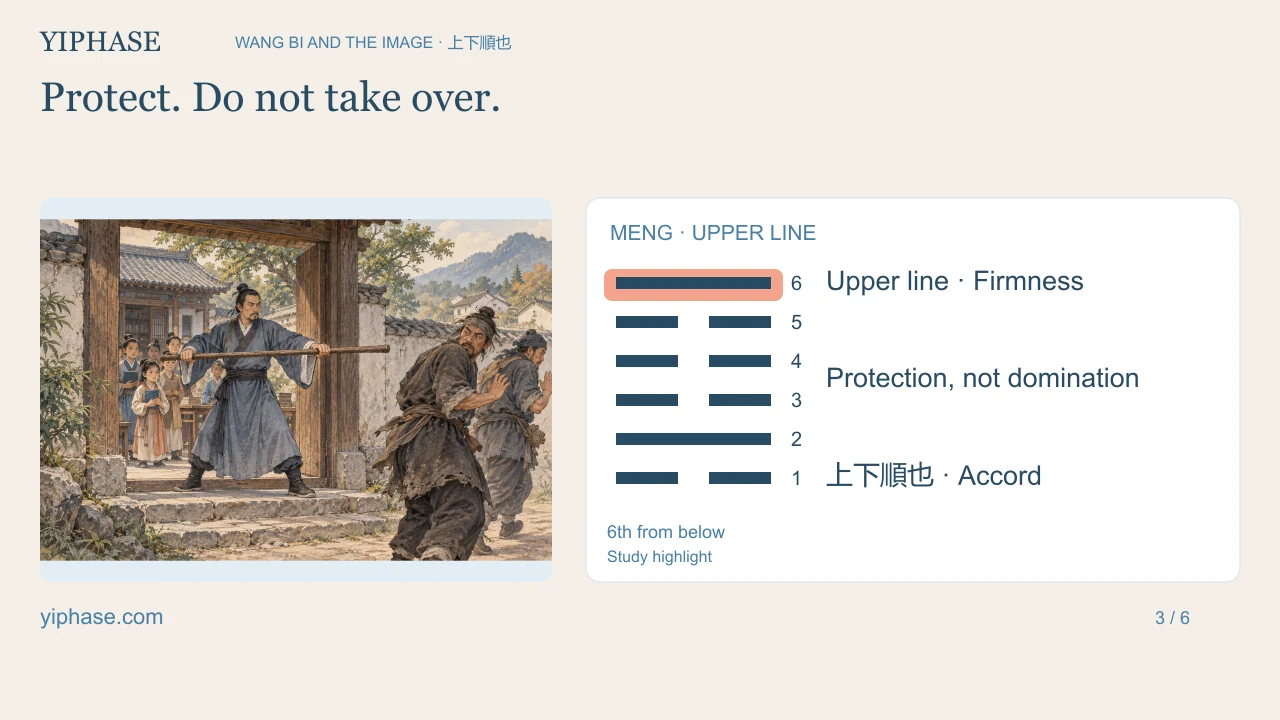
Wang Bi describes strength at the top, clearing confusion. He contrasts protecting others with trying to take them over. The Image speaks of accord above and below. This is not permission to hit a learner.
中文解说
王弼注以“处蒙之终,以刚居上”解释发蒙,并说“为之捍御,则物咸附之;若欲取之,则物咸叛矣”。本课将这种防护与攫取、支配的区别译解出来。《象》说“利用御寇,上下顺也”,联系上下愿意去蒙、共同防护;不是强迫一致,也不是鼓励体罚。
Stop the report. Check the source.
AN ORIGINAL MODERN WORK EXAMPLE
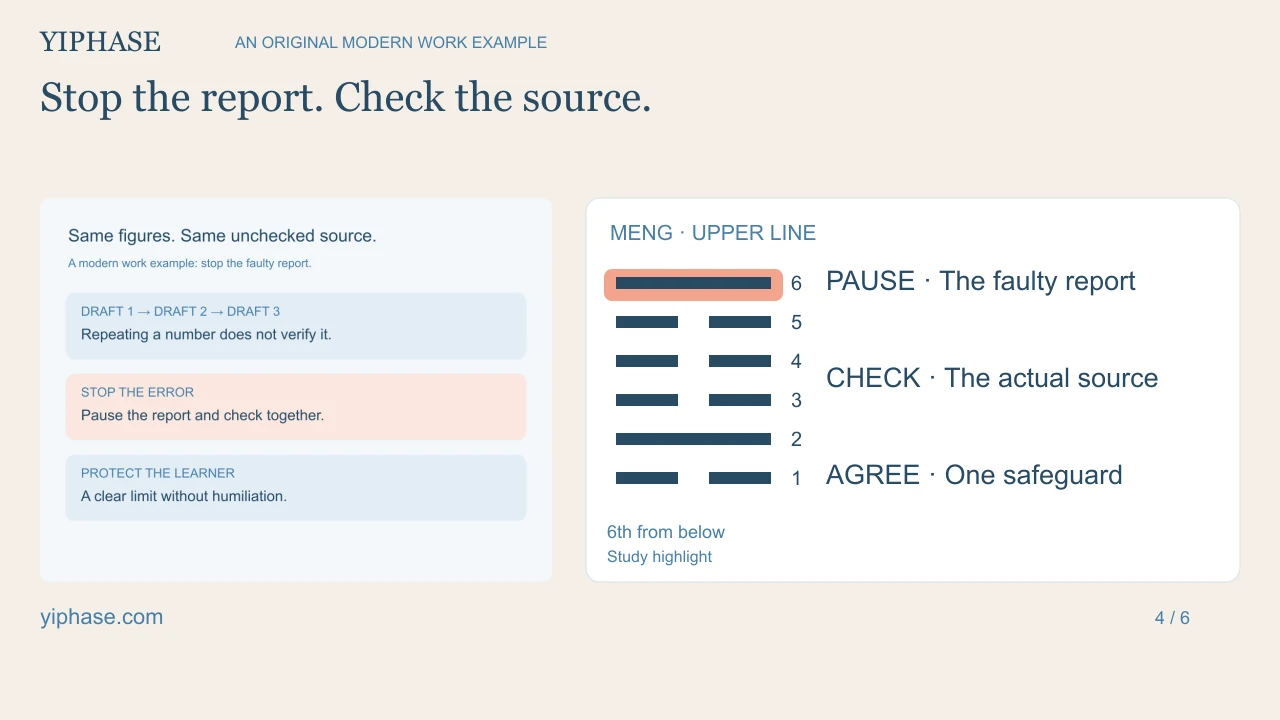
A teammate keeps sending unverified figures. Pause that report. Check the source together, then agree on one verification step before sending it again. Public humiliation would add a second problem.
中文解说
设想一位同事反复发送没有核实的数据。先暂停这份报告,一起核对来源,并约定下次发送前的一个具体检查步骤。若转而公开羞辱同事,就又制造了另一个问题。这是原创工作例子,不是爻辞记载的事件,也不暗示所有重复错误都只有一个原因。
What needs protecting?
THREE CHECKS · A MODERN APPLICATION
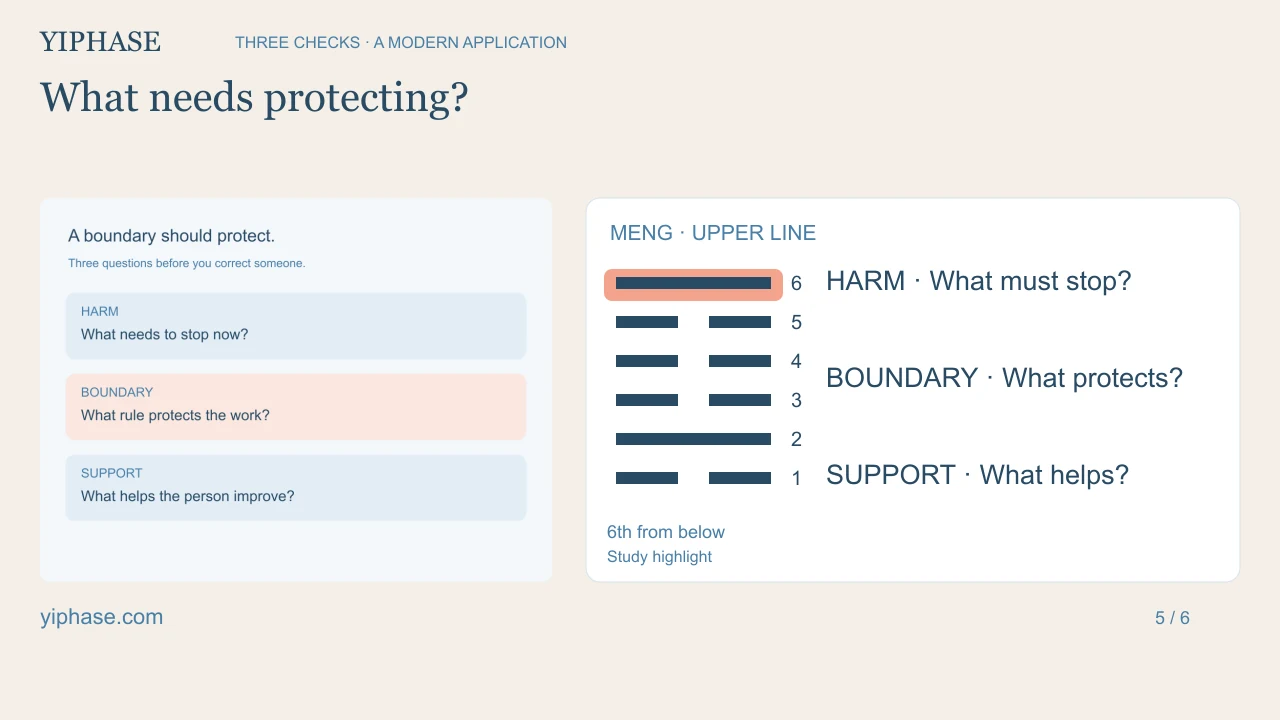
Ask three questions. What harm must stop? What boundary protects the work? What support lets the person improve? Set a limit, explain it, and review the result. This exercise is our modern application.
中文解说
问三个问题:必须制止什么损害?哪条边界保护事情本身?什么支持能帮助对方改进?设定明确界限,说明理由,再复盘结果。三个问题是本课的现代思考方法,不能冒充经文逐字教了管理流程。
Correct without attacking.
蒙 上九 · MENG UPPER LINE
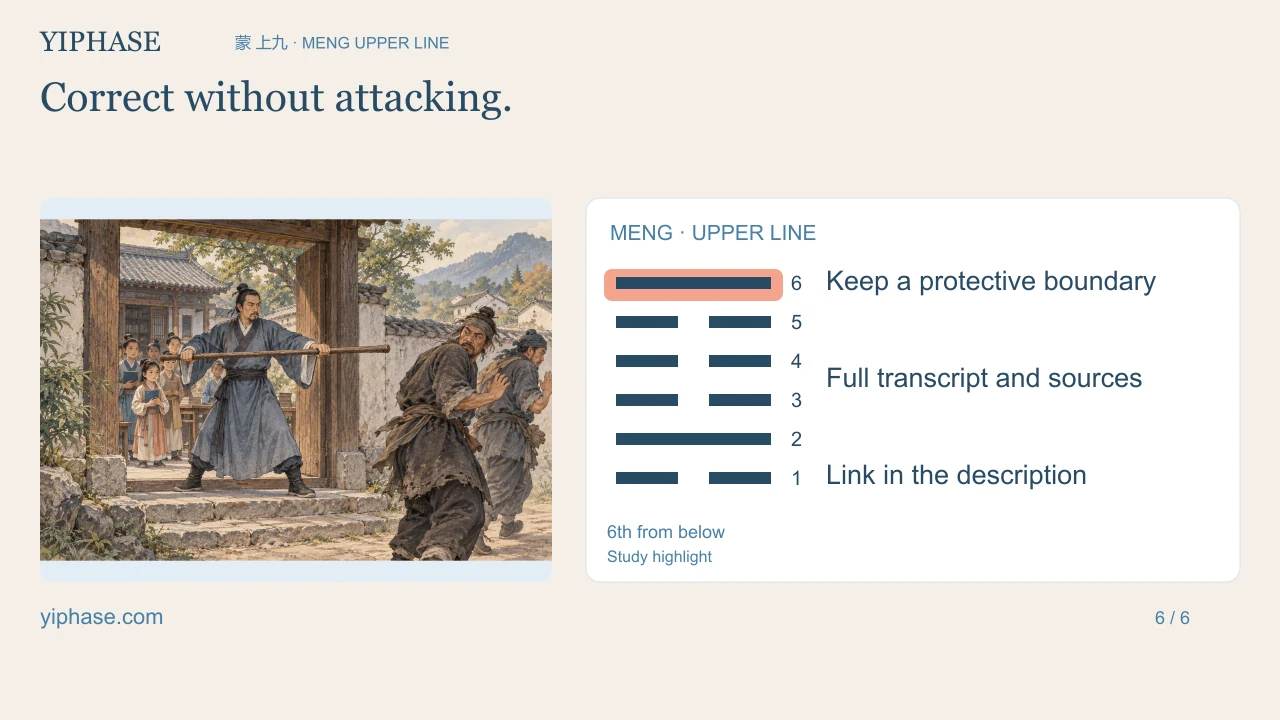
The upper solid line is highlighted for study; the hexagram has not changed. Keep the boundary without becoming the attacker. Explore Meng's full lesson and its sources on YiPhase.
中文解说
蒙卦仍是山上水下,突出自下而上第六条阳爻,仅为教学标记,没有真实起卦、动爻或之卦。要点是持守防护的边界,避免自己变成侵害者。到 YiPhase 对照全卦与经典依据,不把这些解释当作必然结果。
Classical basis
上九:擊蒙,不利為寇,利禦寇。 象曰:利禦寇,上下順也。
The upper line says 擊蒙,不利為寇,利禦寇. We render its martial contrast as striking ignorance, not acting as a raider, and defending against raiders. Wang Bi describes strength at the upper position clearing confusion, then contrasts protecting others with trying to take them over; Kong Yingda explains the same warning against becoming harmful. The Image’s 上下順也 concerns accord above and below in that protective setting. This does not authorize hitting, humiliating or coercing a learner. The report-checking example and three questions are original modern applications, not a literal ancient workplace procedure. The school-guardian illustration symbolizes protection; it is not a historical reconstruction. Meng remains Mountain above Water, with the sixth solid line highlighted only for study. No personal cast, moving line or changed hexagram is generated.
Read Zhouyi · Meng, upper line and Image
Read Wang Bi’s annotation and Kong Yingda’s commentary in Zhouyi Zhengyi · 為之捍禦,則物咸附之。若欲取之,則物咸叛矣。
← All illustrated videos