

I CHING EXPLAINED · XU FIRST LINE
I Ching Xu Line 1 Explained: When Progress Feels Stuck
Learn Xu’s first line, 需于郊,利用恆,无咎: wait at a distance from danger and maintain a steady course. When a project stalls, locate the stage, check what is not ready, and keep useful preparation moving.
Watch the illustrated lesson
English narration and subtitles. AI-assisted illustrations and synthetic Andrew narration. No digital presenter.
Downloads & portrait edition
Share the lessonPlease retain the YiPhase credit and yiphase.com ending.
Download landscape MP4Download portrait MP4Water above Heaven forms Xu. The first solid line is highlighted only for study; no personal cast or changed hexagram is generated. The stalled-project example and timing, situation and people checklist are original modern applications. The traveler preparing equipment away from the storm is a symbolic teaching illustration, not a historical reconstruction.
Progress feels stuck. What now?
I CHING EXPLAINED · 需 初九
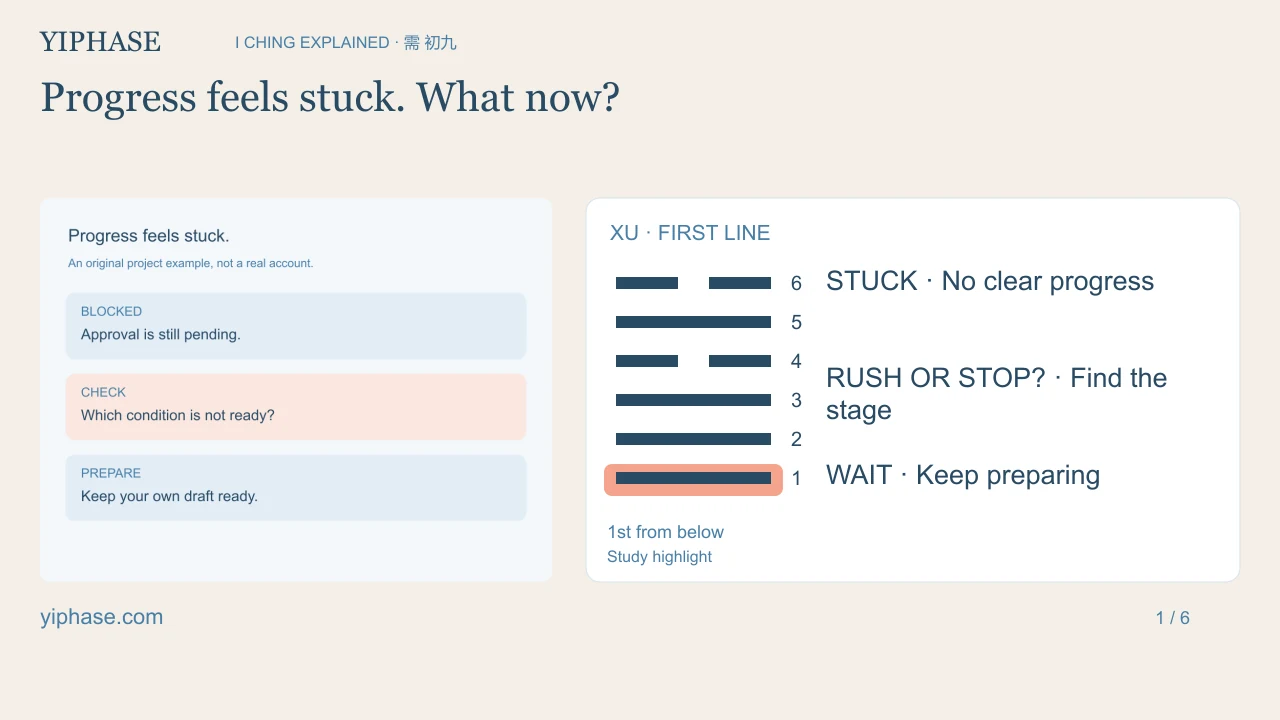
Progress feels stuck. Push blindly, or stop completely? Neither. Wait for conditions, and keep preparing.
中文解说
事情一直迟缓、阻滞,看不到进展。这时是冒进硬冲,还是彻底停摆?先看条件与阶段,等待条件的同时保持准备。这里先抓现实痛点,是本课的现代问题切入,不是经文逐字翻译。
What is holding the project back?
A MODERN EXAMPLE · BEFORE THE THEORY
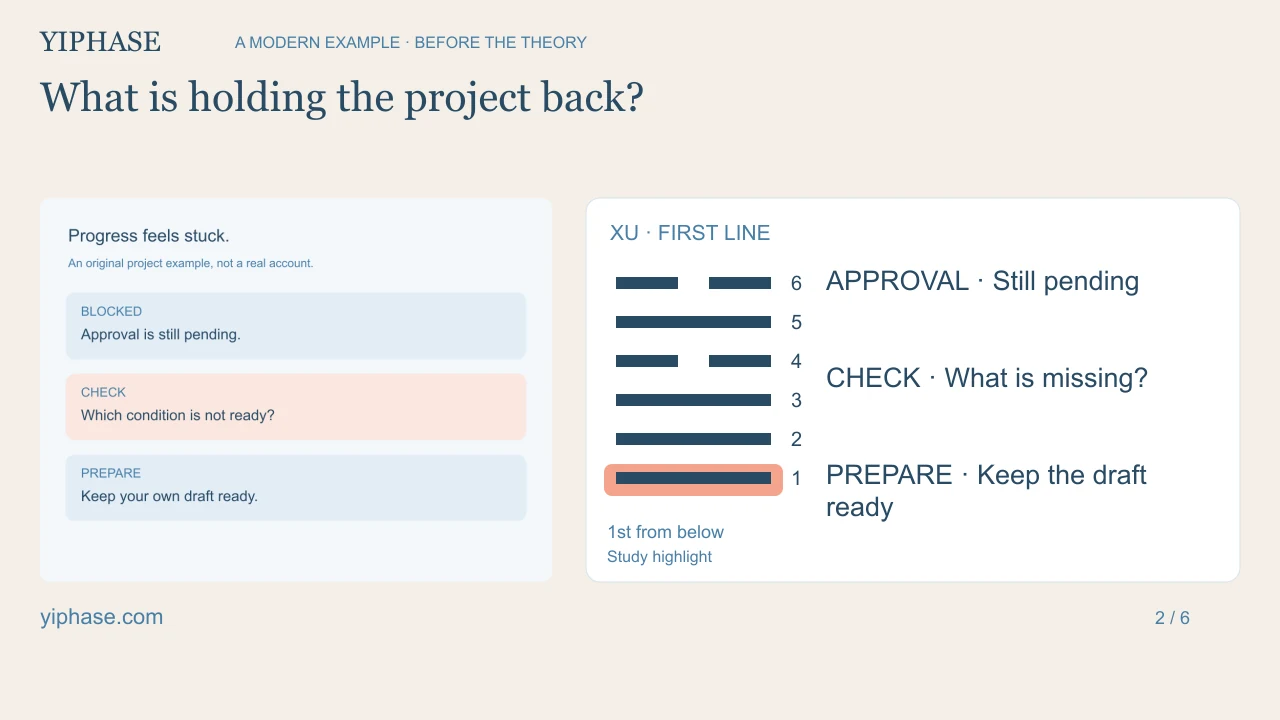
Your project is waiting on approval. Before sending another urgent message, ask what is missing. Keep the draft ready while the decision is outside your control.
中文解说
设想项目卡在审批或确认。再次急着催促前,先弄清缺的究竟是什么。外部决定尚未到来时,自己负责的草案、资料和准备仍可做好。这是原创现代例子,不是说所有催促都无用,也不保证项目必然获批。
First, locate the stage.
XU · DIFFERENT POSITIONS, DIFFERENT RESPONSES
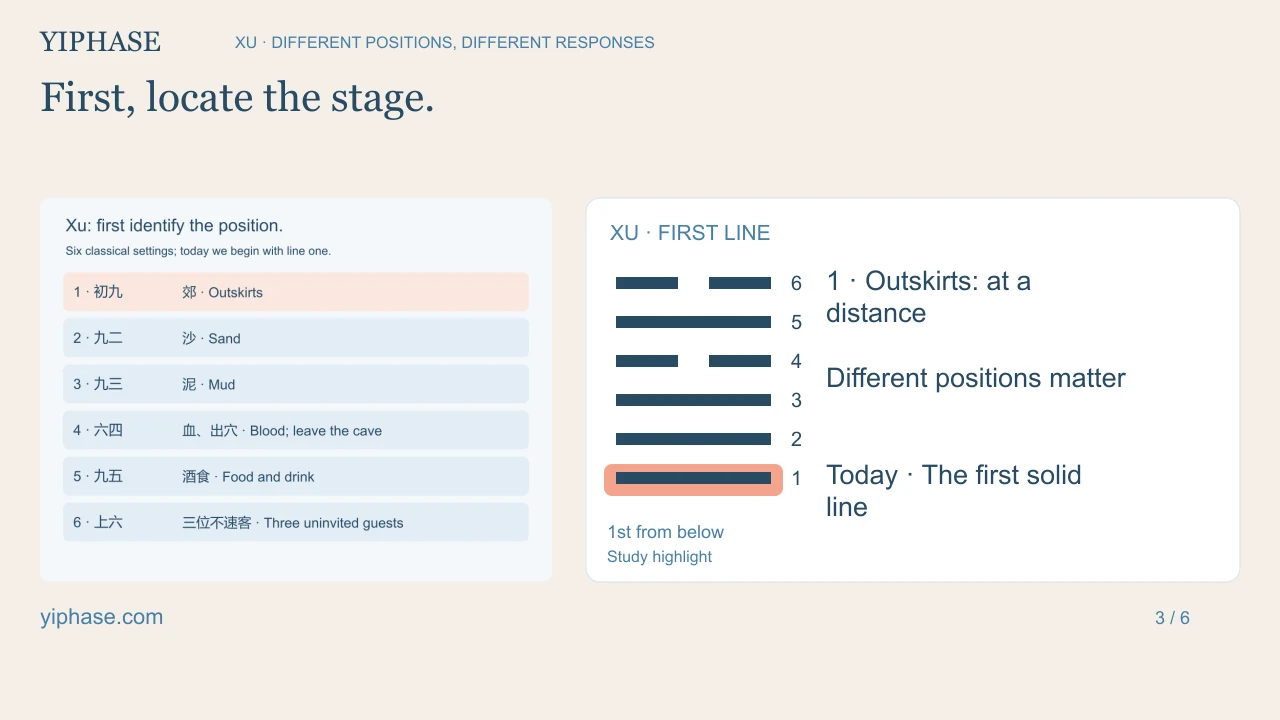
That is our modern doorway into Hexagram Five, Waiting. First, locate the stage. Its six lines describe different positions around difficulty; they do not prescribe the same response to every delay.
中文解说
这就是我们进入第五卦需卦的现代入口。先判断事情处于什么阶段:还在风险较远处,还是已经接近、进入困难?六爻给出不同位置和情境,不是把一种等待方式机械套在所有阻滞上。本课先讲初九,后续再逐爻展开。
需于郊 · Waiting in the outskirts
CLASSICAL LINE · 利用恆,无咎
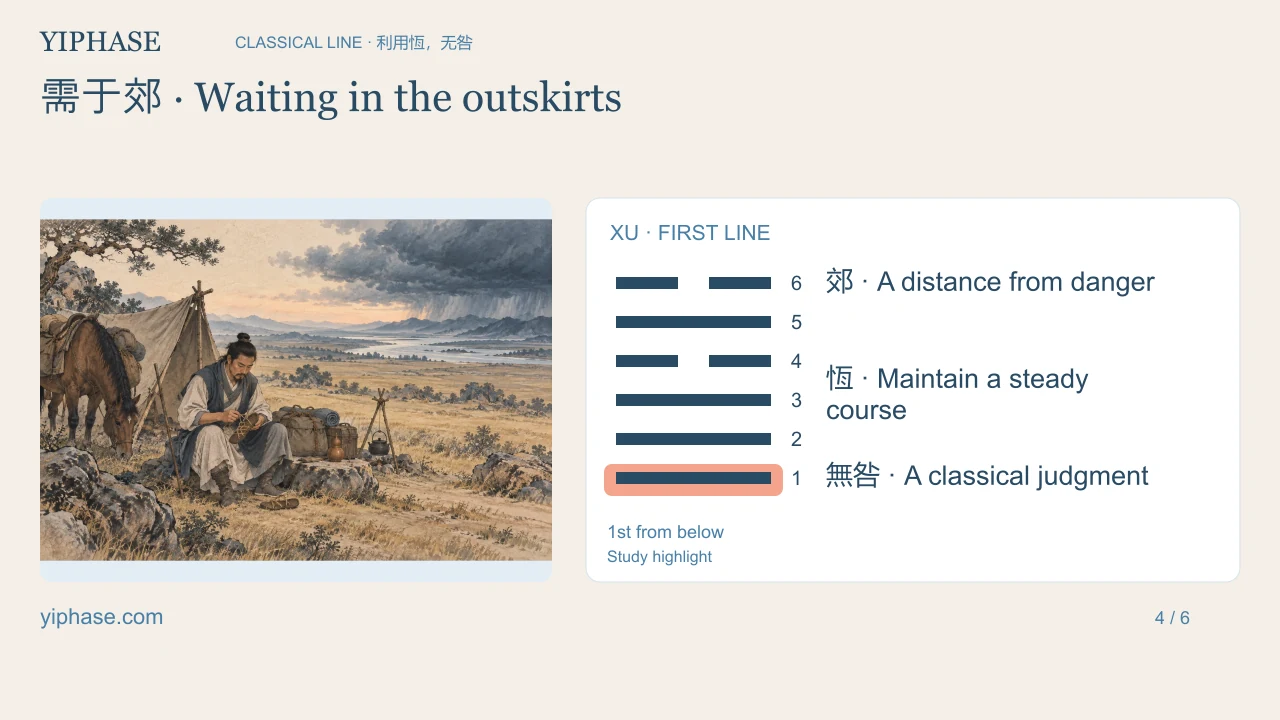
The first line says: waiting in the outskirts. Steadfastness is useful. No blame. You are still far from the danger. Do not turn impatience into a rash advance.
中文解说
初九:“需于郊,利用恒,无咎。”本课独立英译为在郊外等待,宜于持守恒常,无咎。初爻距离坎险仍远,要避免因为焦急而自己逼近风险。“无咎”保留为古典判断,不保证现代项目的结果。
Waiting preserves your ability to act.
THE IMAGE AND WANG BI · 未失常也
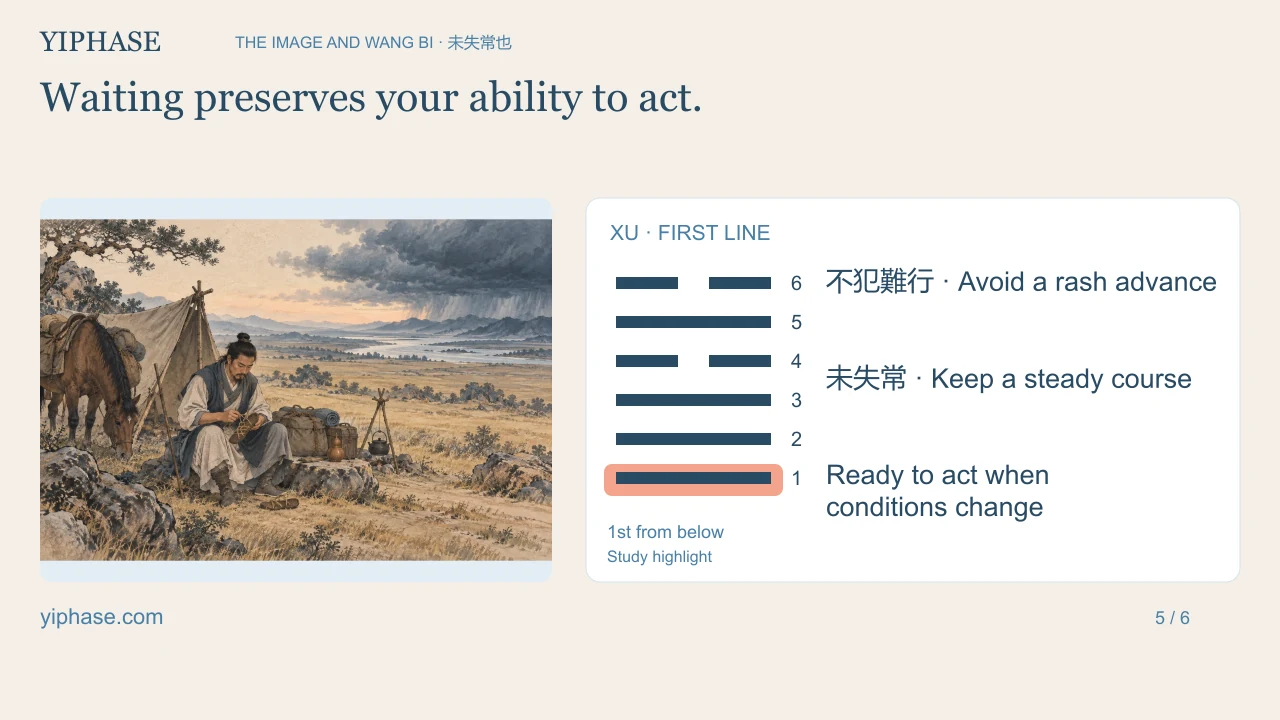
The Image says this waiting does not lose its steady course. Wang Bi explains holding back the advance while waiting at a distance from danger. Waiting here preserves your ability to act.
中文解说
《象》说“不犯难行也”“未失常也”。王弼注说明初九最远于难,能抑其进,以远险待时、保守恒常。本课据此解释为等待中不失常、保持可行动的准备,而非把全部事情无限搁置。
Which condition is not ready?
OUR MODERN READINESS CHECKS
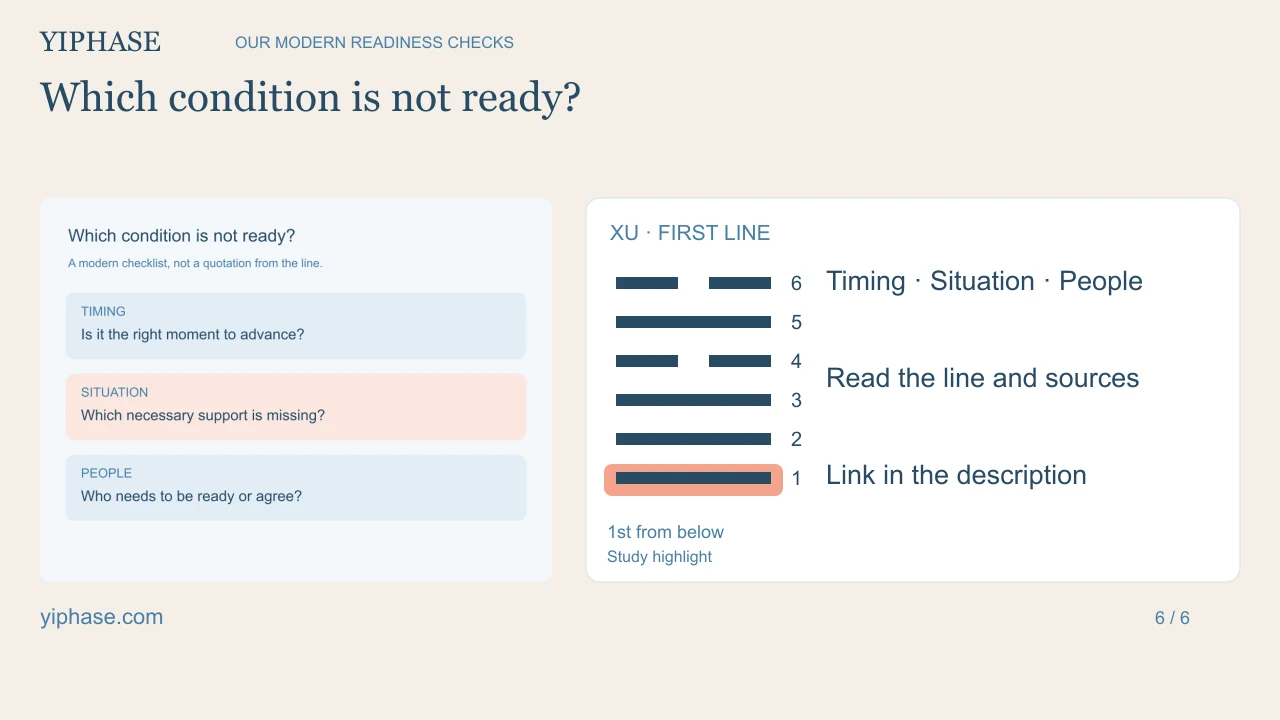
Now check the timing, the situation, and the people involved. What is not ready? What useful preparation can continue? Set a review point. This is our practical application. Explore Xu's first line at YiPhase.
中文解说
再从天时、处境条件与相关人员的准备来检查:缺的是哪一项?现在什么有用的准备仍可继续?何时重新判断?天时地利人和在这里作为现代复盘框架,不能冒充初九爻辞原文。水上天下,第一条阳爻只为教学突出,并无个人起卦或结果预言。
Classical basis
初九:需于郊,利用恆,无咎。 象曰:需于郊,不犯難行也。利用恆,无咎,未失常也。
Xu has Heaven below and Water above; its Judgment commentary describes danger ahead. At the first position the danger is still distant. The line’s outskirts image and the Image’s 未失常 support holding a steady course without a rash advance. Wang Bi reads this as restraining advance while keeping distance from danger and waiting for the right time; Kong Yingda connects 恆 with maintaining what is constant. Our stalled-project example, timing/situation/people checklist and reflection questions are original modern applications, not ancient instructions about recruitment or promises of a particular answer. No blame is retained as a classical judgment, not a guarantee. The traveler maintaining equipment outside the storm is a modern symbolic illustration, not a historical reconstruction. The first solid line is highlighted only for study; there is no personal cast, moving line or changed hexagram.
Read Zhouyi · Xu, first line and Image
Read Wang Bi’s annotation and Kong Yingda’s commentary in Zhouyi Zhengyi · 居需之時,最遠於難,能抑其進以遠險待時。
← All illustrated videos