

I CHING EXPLAINED · MENG FIFTH LINE
I Ching Meng Line 5 Explained: Ready to Learn, Even When You Lead
Understand 童蒙,吉 and 順以巽也 in Meng’s fifth line: a receptive learner in a position of authority, the response to the second line, and a practical adult learning exercise.
Watch the illustrated lesson
English narration and subtitles. AI-assisted illustrations and synthetic Andrew narration. No digital presenter.
Downloads & portrait edition
Share the lessonPlease retain the YiPhase credit and yiphase.com ending.
Download landscape MP4Download portrait MP4Mountain above Water forms Meng. The fifth broken line is highlighted for study. All six original lines remain unchanged; this is not a moving line from a user cast. The reporting-tool example is an original modern application. The classical teacher-child illustration is symbolic, not a historical event.
You lead. Can you still learn?
I CHING EXPLAINED · 蒙 六五
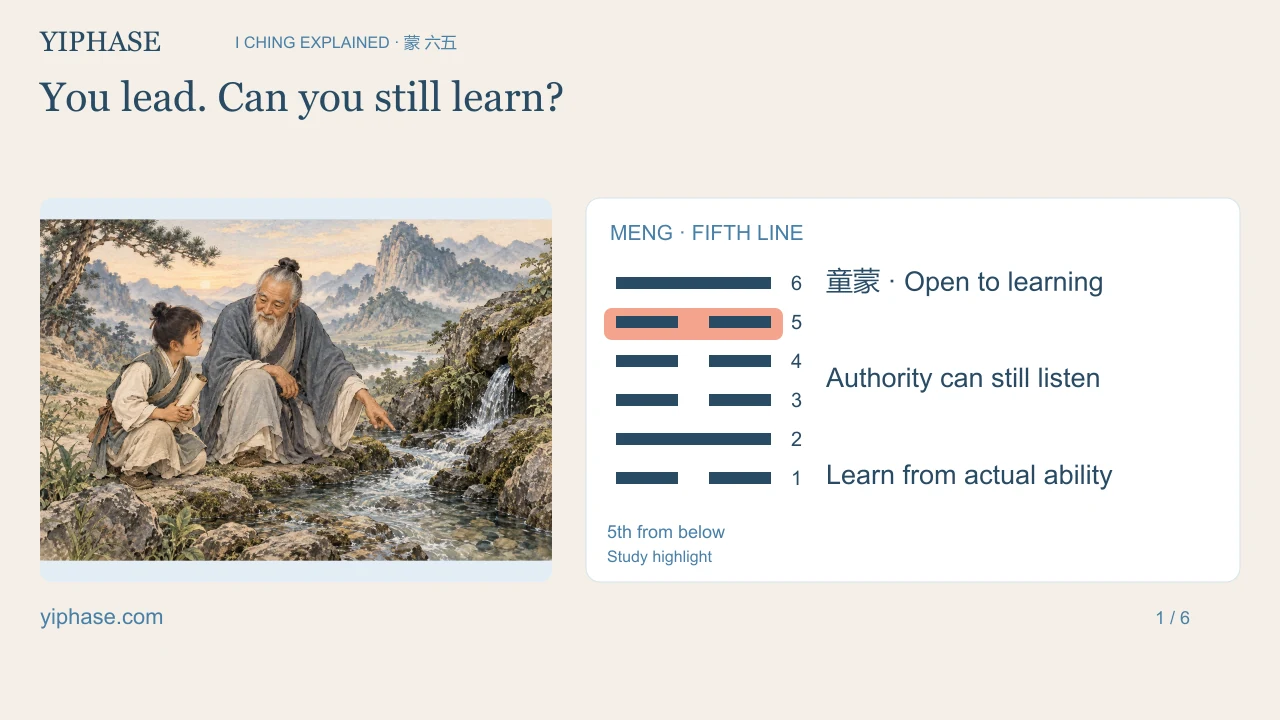
You lead the team. A junior colleague understands the new system better. Can you let them teach you? Meng's fifth line treats the learner's openness as a strength.
中文解说
你带领团队,但新系统恰好是一位资历较浅的同事更懂。你能让他来教自己吗?本课从蒙卦六五说明:身处负责的位置,也可以保留愿意受教的心态。这是引入古文的现代问题。
童蒙,吉。
CLASSICAL LINE · CHILDLIKE INEXPERIENCE
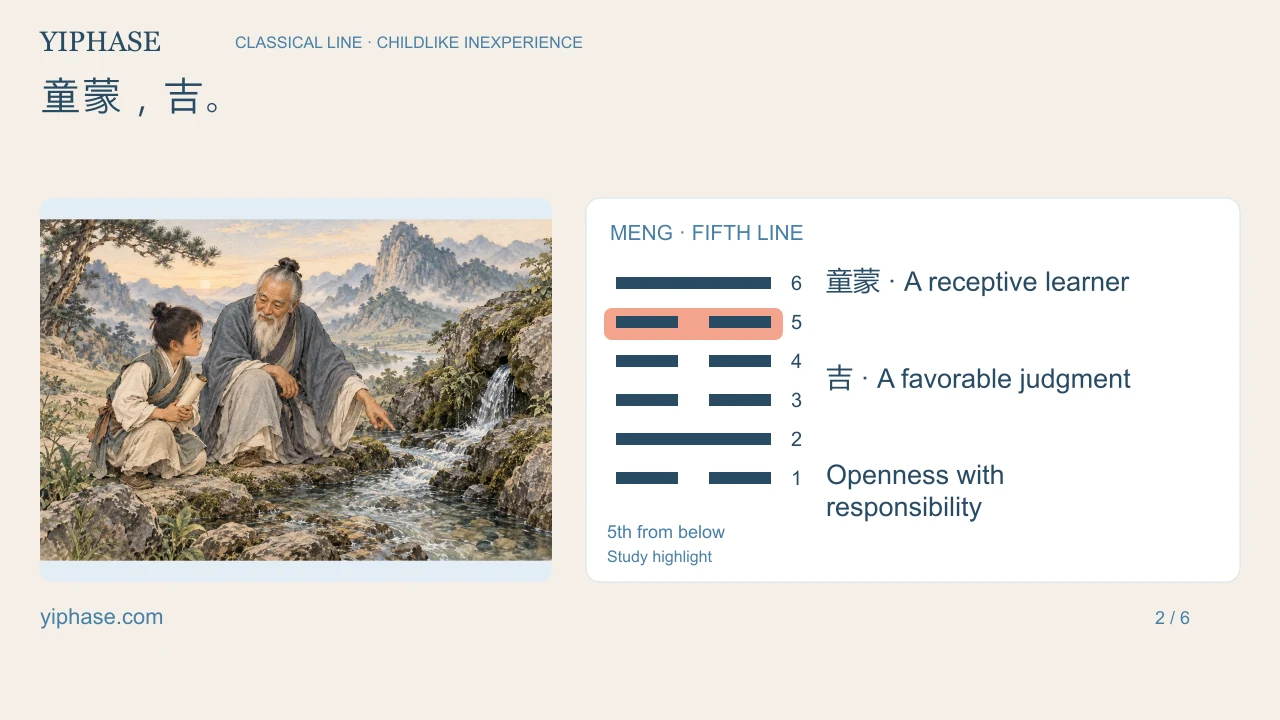
The line says: childlike inexperience; good fortune. Tong meng, ji. Childlike describes a readiness to learn here. It does not mean behaving carelessly or pretending to know nothing.
中文解说
爻辞原文是“童蒙,吉”。童蒙本有童稚、尚未明白之意,结合六五及注疏,本课强调愿意受教、不过度自任聪明的姿态;不是把成年人当幼儿,也不是鼓励糊涂、轻率或故意装作不懂。“吉”是此种处境与态度的有利判断,不保证结果。
順以巽也 · Yielding and humble
THE IMAGE AND TRADITIONAL COMMENTARY
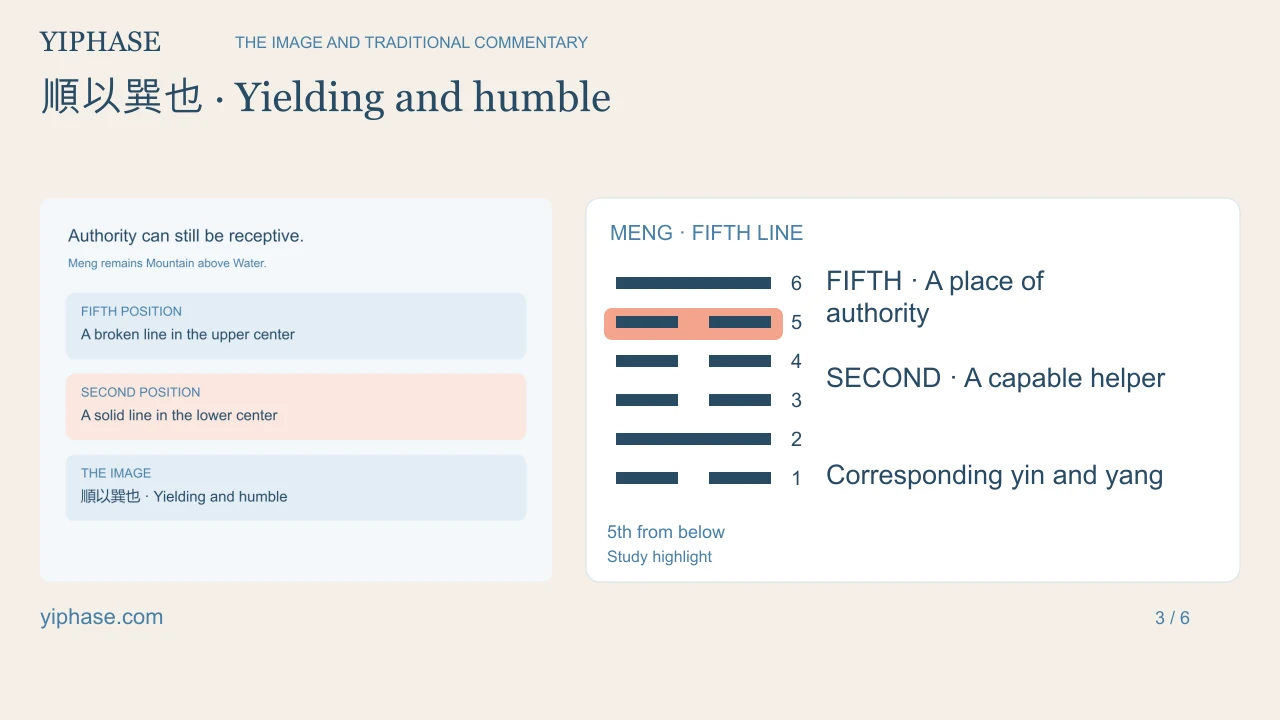
The Image says: yielding and humble. In the traditional commentary, the fifth position holds authority. Its broken line responds to the solid second line. The leader entrusts the capable helper with the task.
中文解说
《象》说“童蒙之吉,顺以巽也”。王弼注以六五“居于尊位”,解释为不自任察而委于九二、付物以能;孔颖达疏又说明五与二相应。这里的“巽”按谦下、逊顺解释,不是把蒙的上卦改成巽卦。六五阴、九二阳,均居各自三爻卦的中位,五居尊位仍能信任有能力者。
Let the colleague demonstrate.
AN ORIGINAL MODERN WORK EXAMPLE
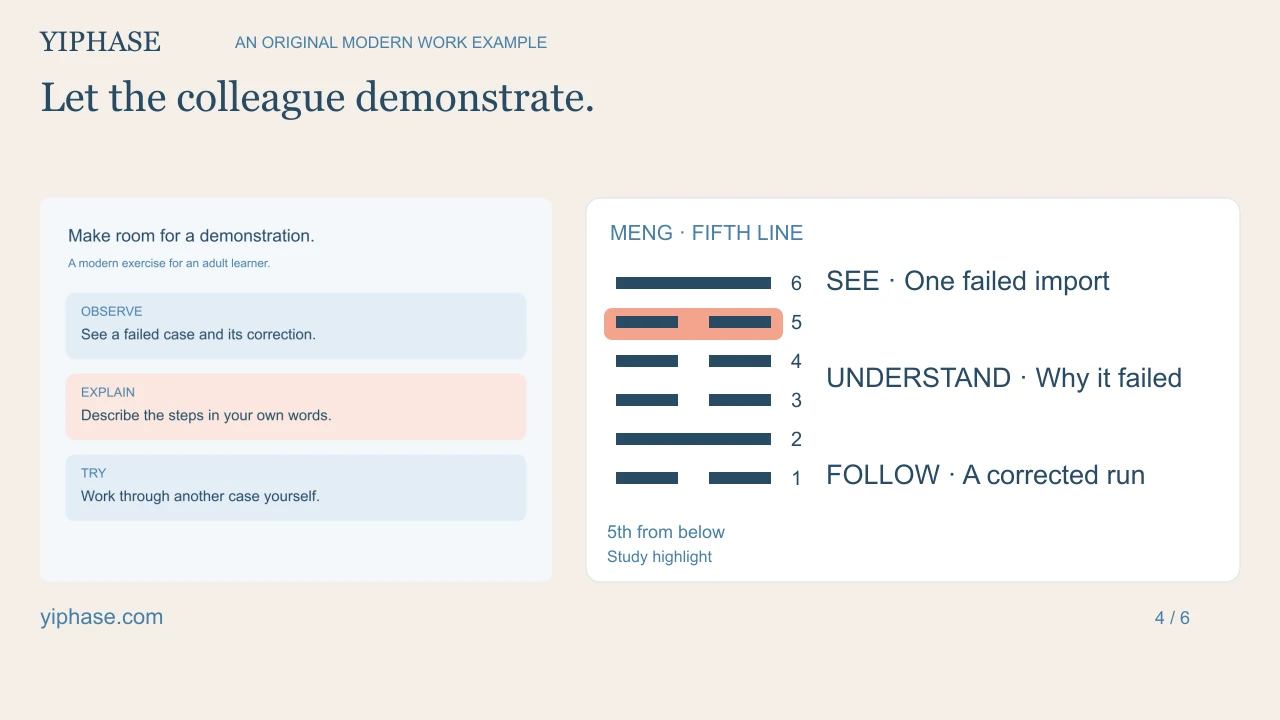
Picture a manager learning a reporting tool. Instead of taking over the keyboard, she asks the colleague to show one failed import, explain the error, and run the corrected version.
中文解说
设想一位管理者学习新的报表工具,没有一遇到停顿就抢过键盘指挥,而是让熟悉工具的同事展示一次导入失败、解释原因,再演示修正后的结果。此例为原创现代应用,不是爻辞里的历史事件。资历较浅也不自动代表有能力,例子以实际能解释与演示为前提。
Explain it back. Try it yourself.
A PRACTICAL LEARNING EXERCISE
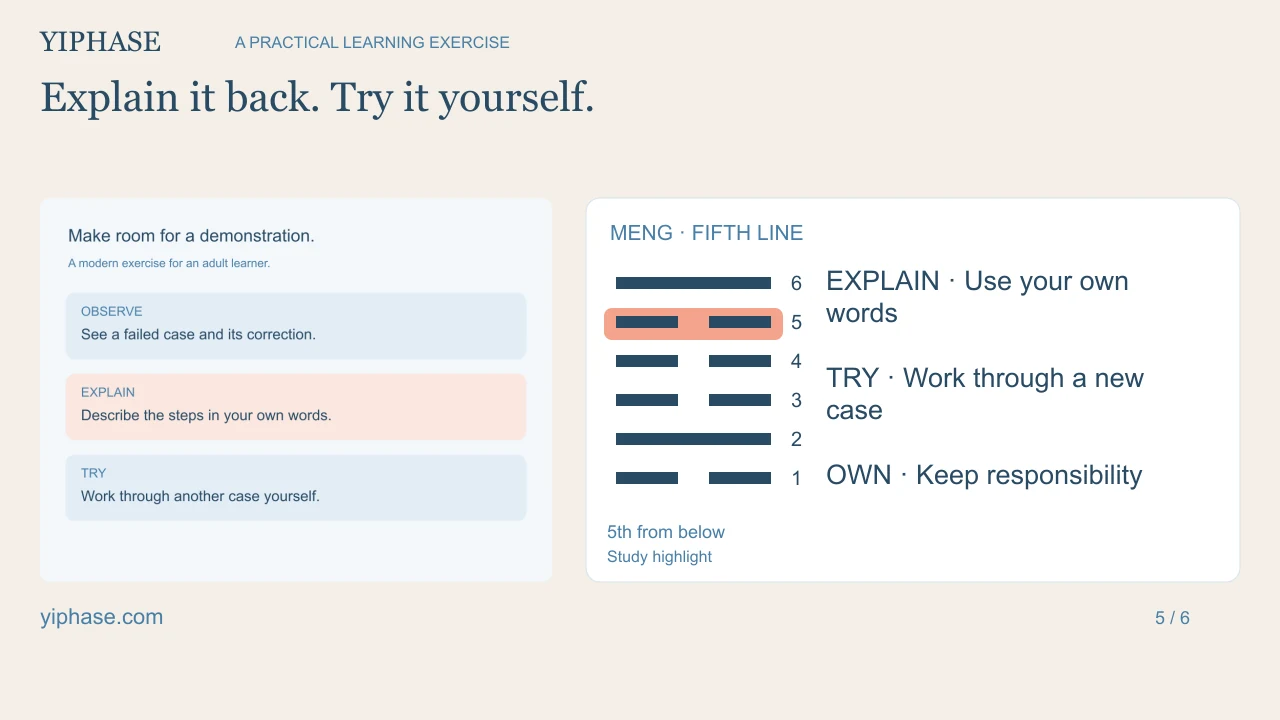
Then she explains the steps back and tries another file herself. She accepts instruction while keeping responsibility. This is our modern application: make room for teaching, then show what you understood.
中文解说
然后她把步骤复述一遍,再独立试一个不同文件。接受别人的指导,同时保留自己的理解与责任。复述、练习属于本课建议的现代方法,不冒称经文逐字教了报表操作,也不把谦逊变成盲从。
Stay receptive, even when you lead.
蒙 六五 · MENG FIFTH LINE
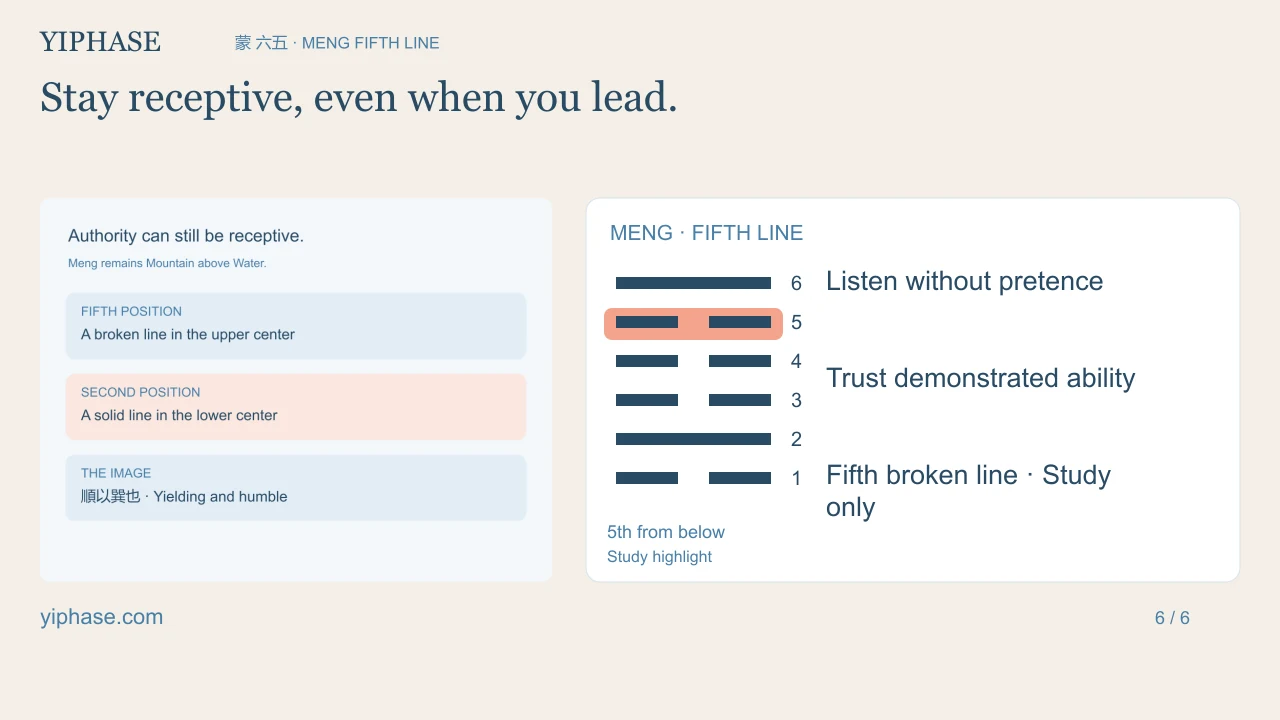
Here, good fortune belongs to a receptive way of learning, not a guarantee that every teacher is right. Explore Meng's fifth line and the full hexagram on YiPhase.
中文解说
本课把“童蒙,吉”放回“顺以巽”与六五、九二的关系中:即使在负责的位置,也可以受教、任能。不是每个声称老师的人都正确,更不是自动获得好运。回到 YiPhase 对照全卦与注疏;山上水下原卦保持不变,只突出第五阴爻用于学习。
Classical basis
六五:童蒙,吉。 象曰:童蒙之吉,順以巽也。
The line says 童蒙,吉: childlike inexperience, good fortune. The Image explains 順以巽也, yielding and humble. Wang Bi’s annotation describes a receptive fifth line in a place of authority, entrusting work to the capable second line. Kong Yingda’s commentary explains their corresponding relationship. Five is yin at the upper center; two is yang at the lower center. These are traditional line positions, not fixed judgments about people or a requirement to accept every teacher. 巽 here describes humility/yielding; the hexagram remains Mountain above Water. The adult reporting-tool example, demonstration and teach-back are original modern applications. The existing teacher-child scene symbolizes receptive learning and is not a historical reconstruction. The fifth broken line is highlighted only for study; all six original lines remain unchanged. 吉 is a favorable classical judgment, not guaranteed success. No user cast or changed hexagram is generated.
Read Zhouyi · Meng, fifth line and Image
Read Wang Bi’s annotation and Kong Yingda’s commentary in Zhouyi Zhengyi · 以夫陰質居於尊位,不自任察而委於二,付物以能。
Previous: Meng’s fourth line, break isolation from understanding →
← All illustrated videos