

I CHING EXPLAINED · MENG FOURTH LINE
I Ching Meng Line 4 Explained: When Agreement Keeps You Stuck
Understand Meng’s fourth line, 困蒙,吝, and the Image’s far from the solid. A modern work example separates repeated guesses from independent evidence, while keeping the traditional line-position explanation clear.
Watch the illustrated lesson
English narration and subtitles. AI-assisted illustrations and synthetic Andrew narration. No digital presenter.
Downloads & portrait edition
Share the lessonPlease retain the YiPhase credit and yiphase.com ending.
Download landscape MP4Download portrait MP4Mountain above Water forms Meng. The fourth broken line is highlighted for study. All six original lines remain unchanged; this is not a moving line from a user cast. The launch-estimate example is an original modern application, not a literal translation of the traditional yang-line reading.
Everyone agrees. Did anyone check?
I CHING EXPLAINED · 蒙 六四
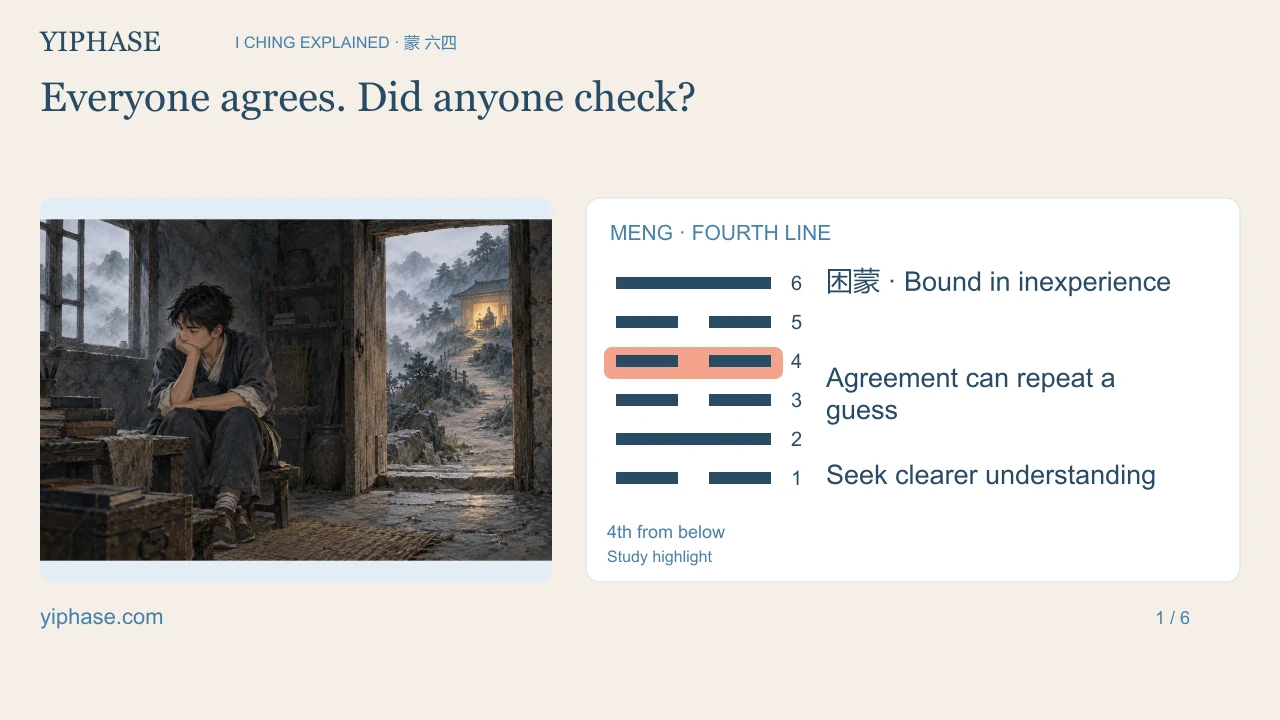
Everyone agrees. But did anyone check? Meng's fourth line warns about staying trapped in not knowing. Repeating the same uncertain answer does not make it clearer.
中文解说
大家都赞同,但有人查过吗?蒙卦六四写困于蒙昧的处境。把同一个没有把握的答案再说几遍,并不会让它变得更明白。这是本课由爻辞引出的现代学习问题。
困蒙,吝。
CLASSICAL LINE · BOUND IN INEXPERIENCE
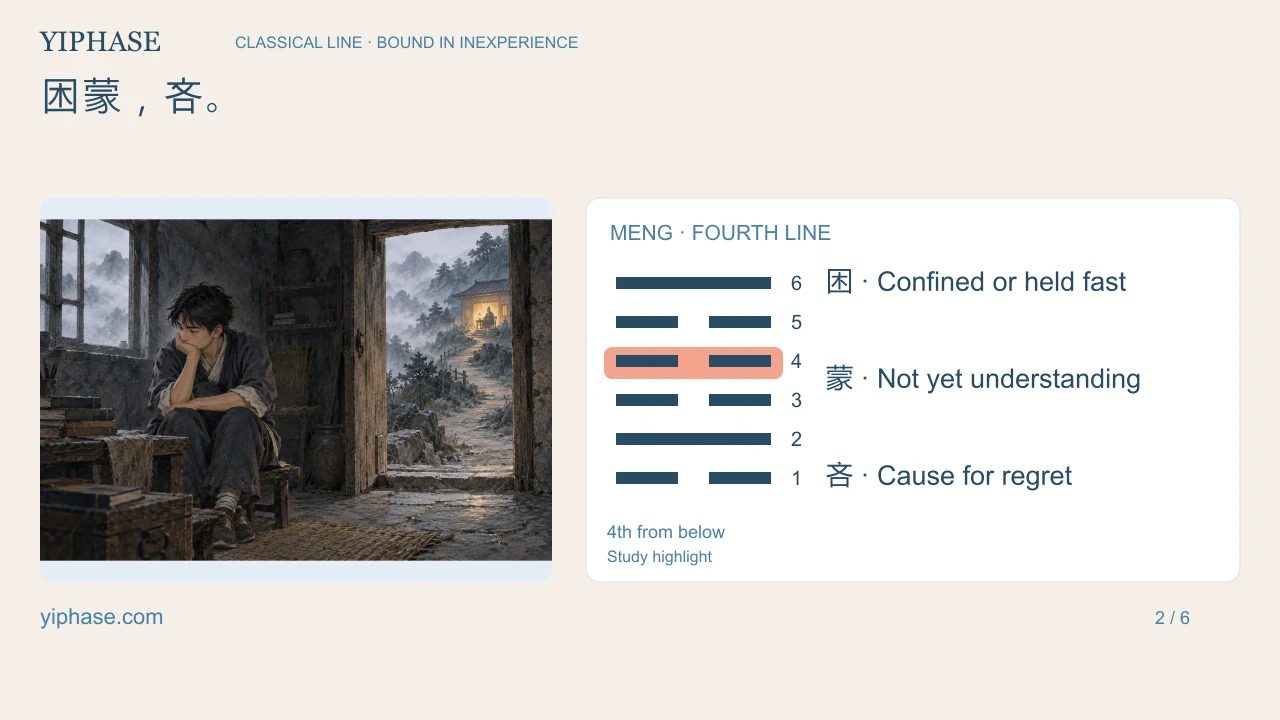
The line says: bound in inexperience; cause for regret. The Chinese is kun meng, lin. This is a difficult condition, not a fixed label saying someone cannot learn.
中文解说
原文只有“困蒙,吝”。这里将“困蒙”译作被困在不明白、经验不足之中;“吝”保留憾惜、困窘、不利的评价。这是在说一种处境,不是把一个人贴成永远学不会的标签,更不是保证必定失败。
獨遠實也 · Far from the solid
THE IMAGE AND TRADITIONAL COMMENTARY
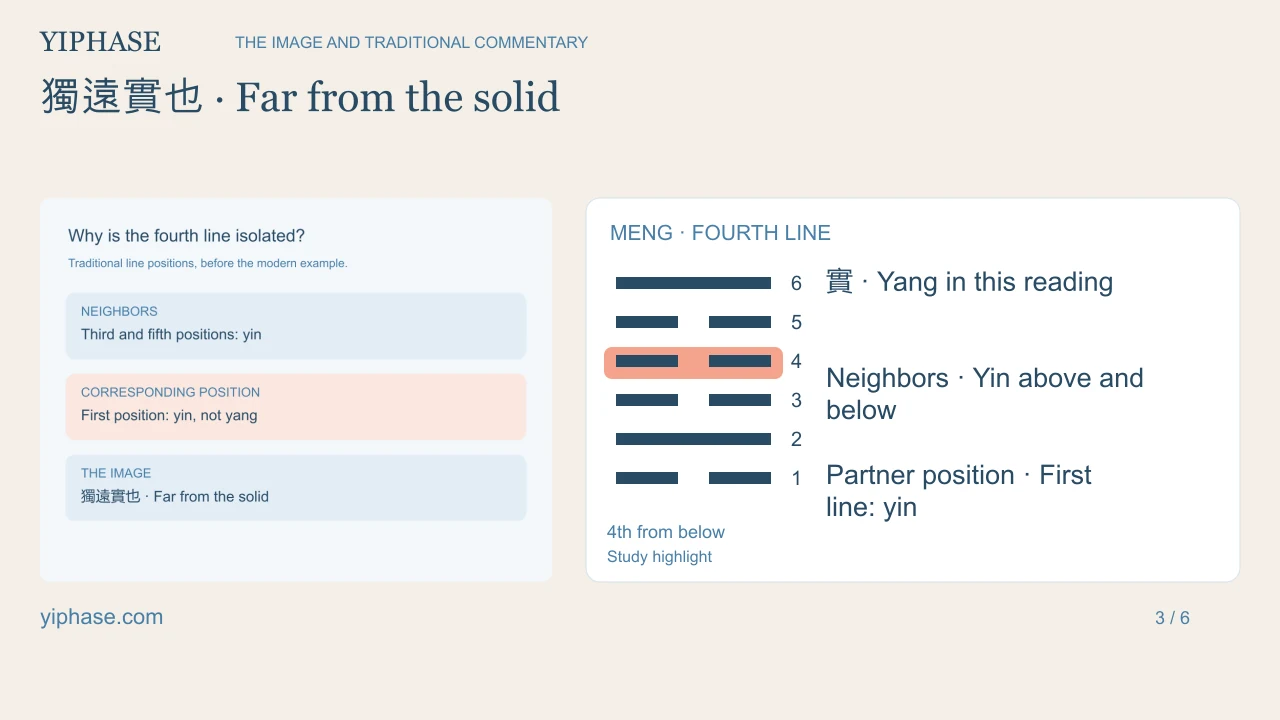
The Image says: alone, far from the solid. The traditional commentary calls yang solid. The fourth broken line has yin neighbors, and no yang partner at its corresponding first position.
中文解说
《象》说“困蒙之吝,独远实也”。《周易正义》在此有“阳称实也”的说明,并联系九二之阳;王弼注指出六四“独远于阳,处两阴之中”。六四上下相邻的六三、六五均为阴爻,与之相应的初爻也为阴,缺少相邻或正应的阳爻。“实”在这个传统爻位解释中指阳,不直接等于现代证据;本课随后才引出现代应用。
Three slides. One unchecked guess.
AN ORIGINAL MODERN WORK EXAMPLE
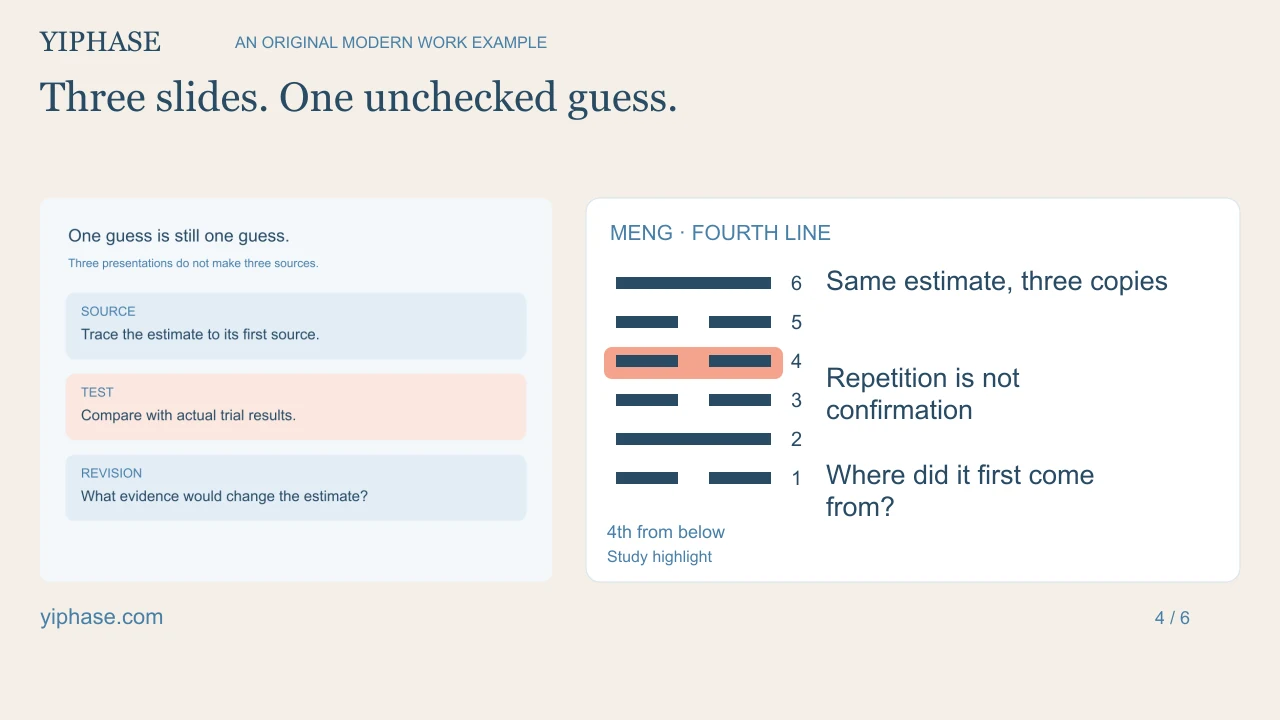
Imagine a team forecasting a product launch. Three presentations repeat one optimistic estimate. It feels confirmed, but every number comes from the same unchecked guess. This is our modern example.
中文解说
设想团队预测一个产品上线后的表现,三份演示都重复同一个乐观估计。看起来已经获得多方印证,数字实际上却都出自最初那一个未经核实的猜想。这是原创现代工作例子,不是真实公司的数据,也不是古代爻辞描述的事件。
Return to the first source.
A PRACTICAL EVIDENCE CHECK
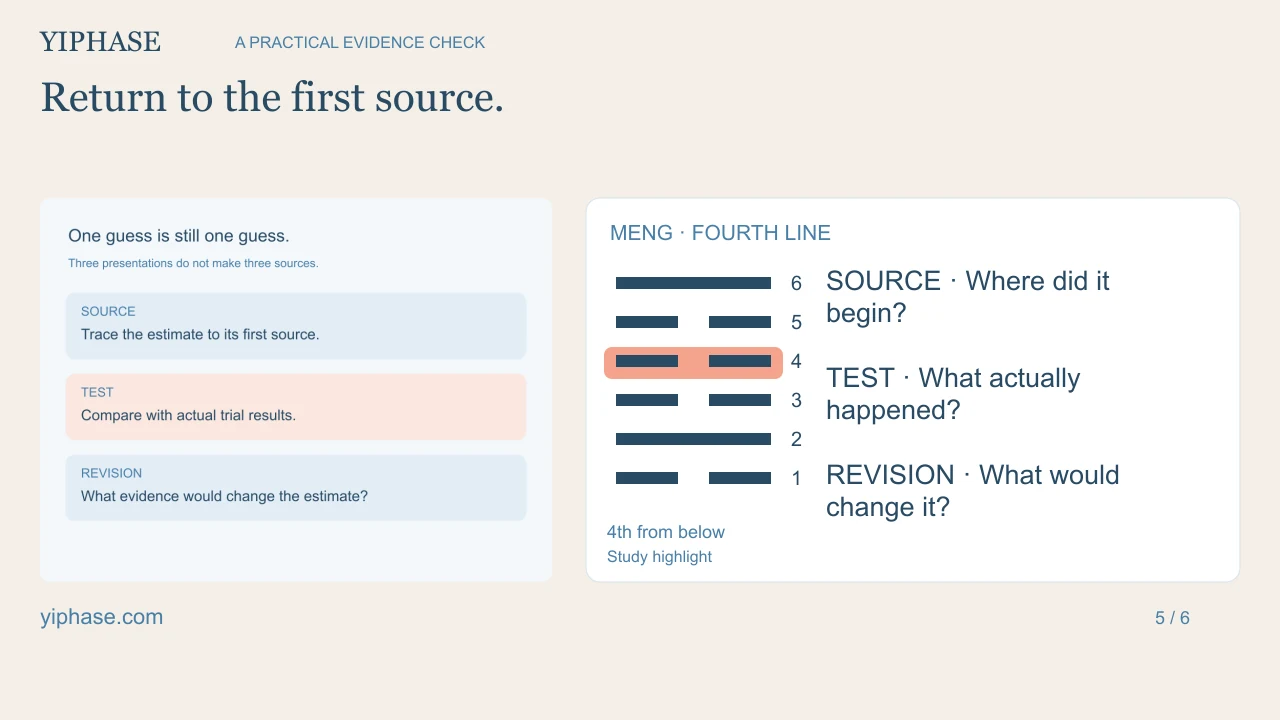
Trace that number to its first source. Compare it with actual trial results. Ask what evidence would change the estimate. Another approving voice is not a substitute for independent evidence.
中文解说
先追溯数字最初从哪里来,再与实际试做或试运行的结果对照,并明确什么证据会让自己调整估计。再找一个赞同的人,并不能代替独立核实。这是现代思考步骤,不是把“独远实也”硬翻译成统计规则,也不提供投资回报建议。
Break isolation from understanding.
蒙 六四 · MENG FOURTH LINE
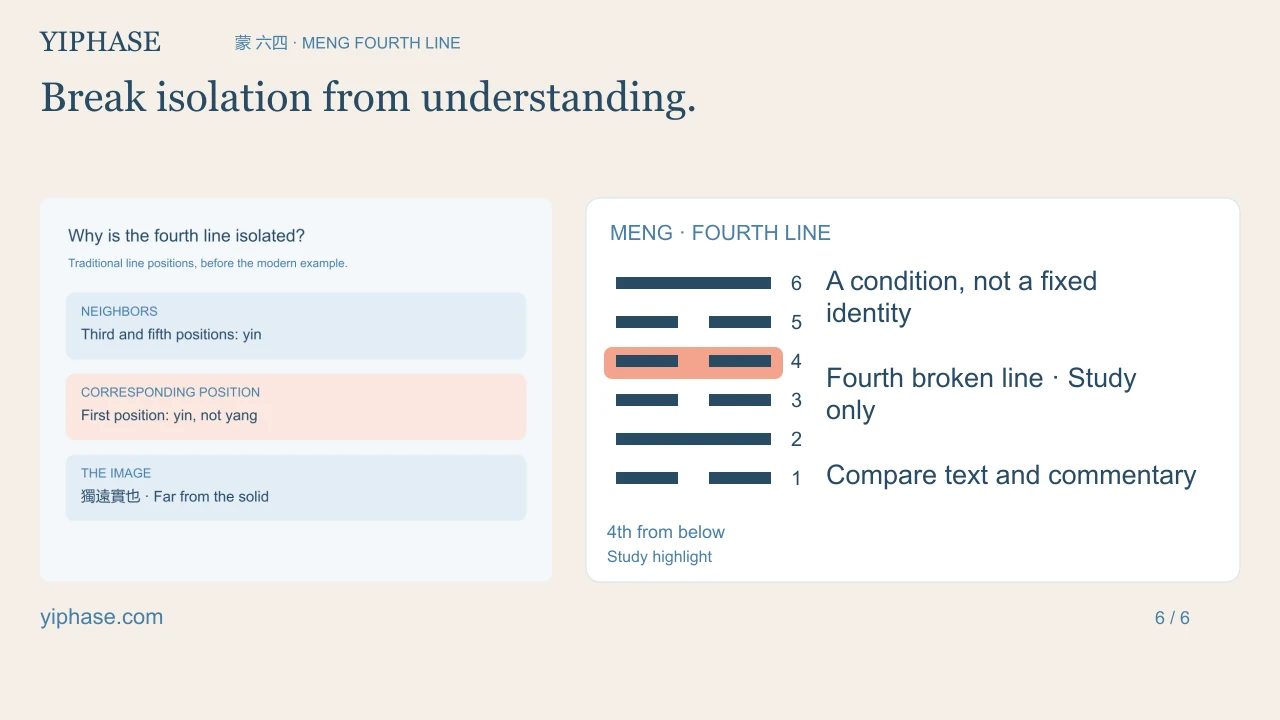
Here, the lesson is to break isolation from clearer understanding. Read Meng's fourth line alongside the full hexagram and its classical commentary on YiPhase.
中文解说
本课关注的不是独处有错,而是与能够帮助自己明白的依据、知识或指导隔绝。回到 YiPhase 对照蒙卦全卦、六四及传统注疏。卦仍是山上水下,第四条阴爻由下往上数,只作学习突出,未生成动爻或之卦。
Classical basis
六四:困蒙,吝。 象曰:困蒙之吝,獨遠實也。
The line says 困蒙,吝: bound in inexperience, cause for regret. The Image says 獨遠實也, alone and far from the solid. Wang Bi describes a fourth yin line amid yin neighbors and distant from yang; the traditional commentary identifies 實 with yang and refers to the second yang line. The corresponding first position is also yin. These are line-position relationships, not a claim that every yin quality is bad or every yang person is a reliable guide. Isolation here concerns access to understanding; it does not condemn solitude. The launch-estimate example, independent sources and practical checks are original modern applications, not literal ancient forecasting rules. The fourth broken line is highlighted only for study; the six lines remain unchanged. No user cast, changed hexagram or guaranteed outcome is reported. The fog-and-distant-teacher scene is a symbolic teaching illustration, not historical documentation.
Read Zhouyi · Meng, fourth line and Image
Read Wang Bi’s annotation and Kong Yingda’s commentary in Zhouyi Zhengyi · 獨遠於陽,處兩陰之中,闇莫之發。
← All illustrated videos