

I CHING EXPLAINED · ZHUN UPPER LINE
I Ching Zhun Line 6 Explained: When a Painful Start Keeps Repeating
Understand Zhun’s upper line: circling horses, flowing tears and the Image’s question, how could this continue for long? A practical project example distinguishes changing conditions from repeating a painful loop.
Watch the illustrated lesson
English narration and subtitles. AI-assisted illustrations and synthetic Andrew narration. No digital presenter.
Downloads & portrait edition
Share the lessonPlease retain the YiPhase credit and yiphase.com ending.
Download landscape MP4Download portrait MP4Water above Thunder forms Zhun. The sixth/top broken line is highlighted for study. All six original lines remain unchanged; this is not a moving line from a user cast. The shared-project example is an original modern application.
The same beginning keeps hurting.
I CHING EXPLAINED · 屯 上六
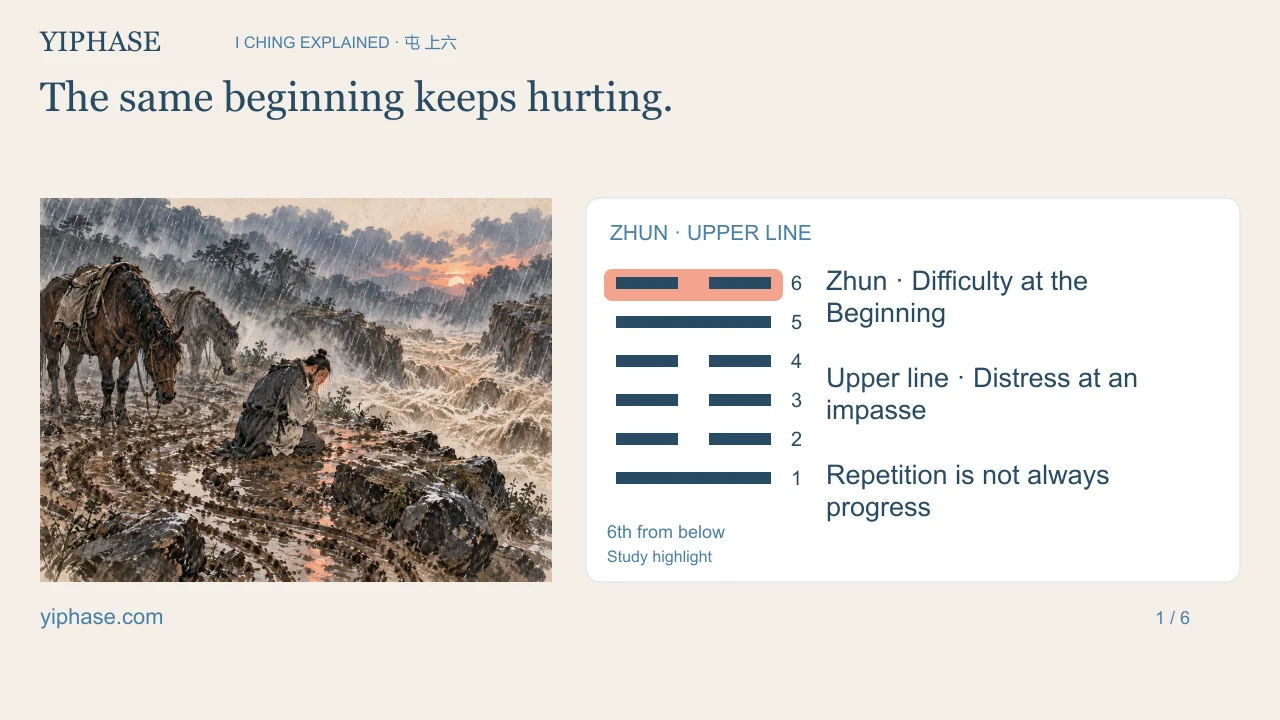
The same beginning keeps hurting. Is another attempt really patience? Zhun's upper line shows stalled movement reaching distress. Are you changing the conditions, or repeating a painful loop?
中文解说
同一个开头反复受挫。再试一次,就一定是在耐心坚持吗?屯卦上六呈现行动受阻、困顿而悲伤的处境。要辨别的是:条件有没有改变,还是只在重复痛苦的循环?
Horses turn back. Tears flow.
CLASSICAL LINE · 乘馬班如,泣血漣如
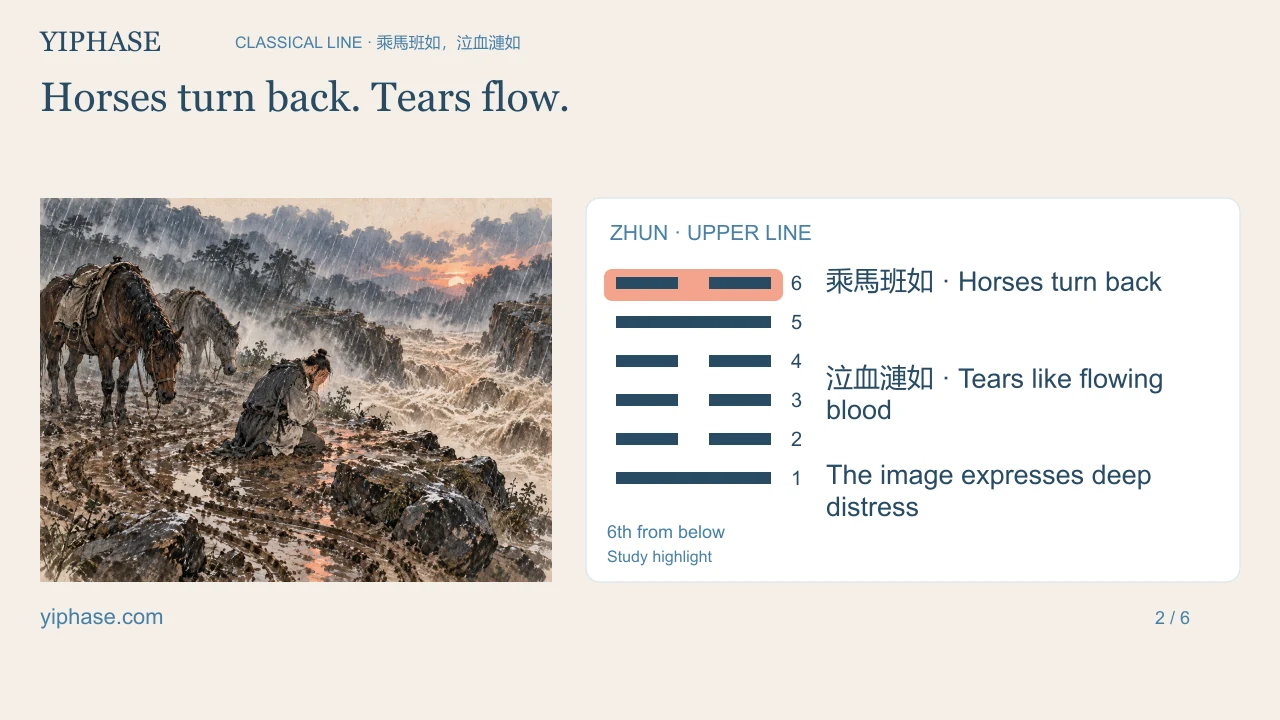
The line pictures horses turning back, then tears like flowing blood. This is an intense image of grief, not a prediction of physical injury. The difficult beginning has reached its uppermost position.
中文解说
爻辞是“乘马班如,泣血涟如”:马匹徘徊退转,悲泣不止。“泣血”以强烈的修辞写悲痛,不把它当作身体伤害的预言。上六处于屯卦最上面的位置。
How could this continue for long?
THE IMAGE · 何可長也
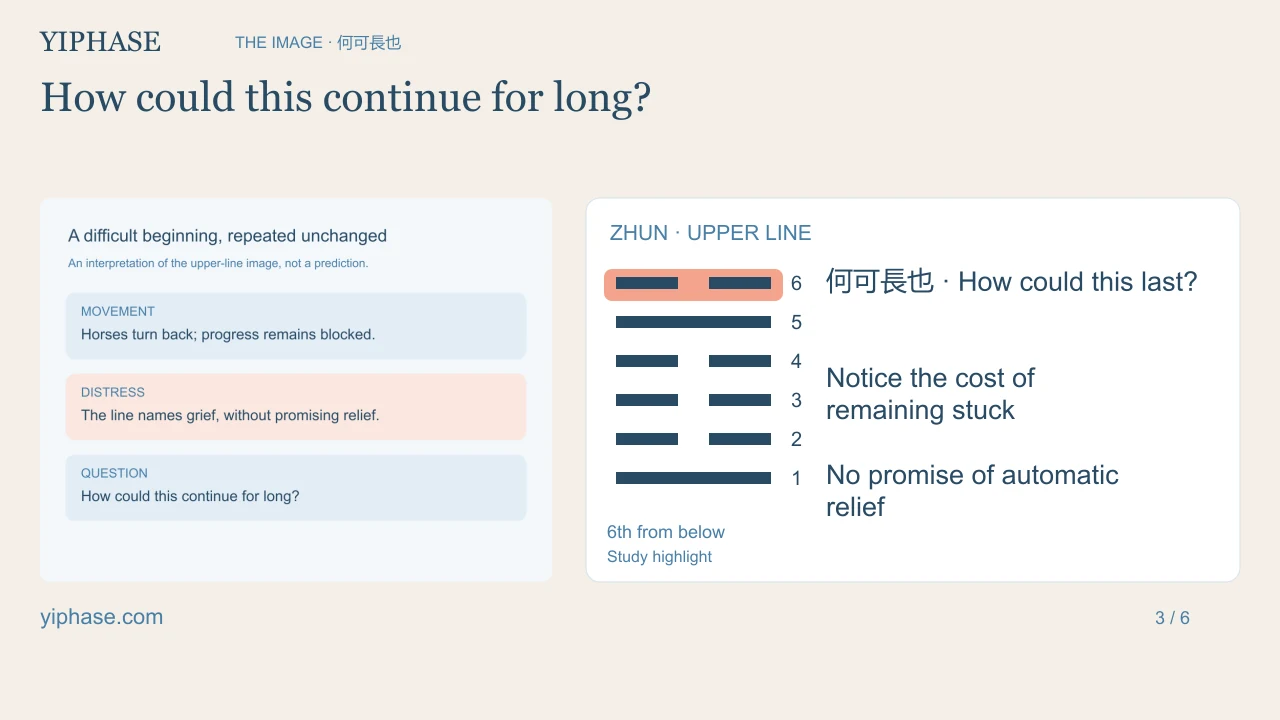
The Image asks: how could this continue for long? It does not promise that one more wait will fix the problem. Our reading is that this much distress cannot simply be prolonged unchanged.
中文解说
《象》说“泣血涟如,何可长也”:如此悲伤,怎么能长久持续?它并没有承诺再等一次事情就会好。我们据此理解:不能让造成如此困苦的状态原样延续。
Six meetings. The same blocked start.
AN ORIGINAL MODERN APPLICATION
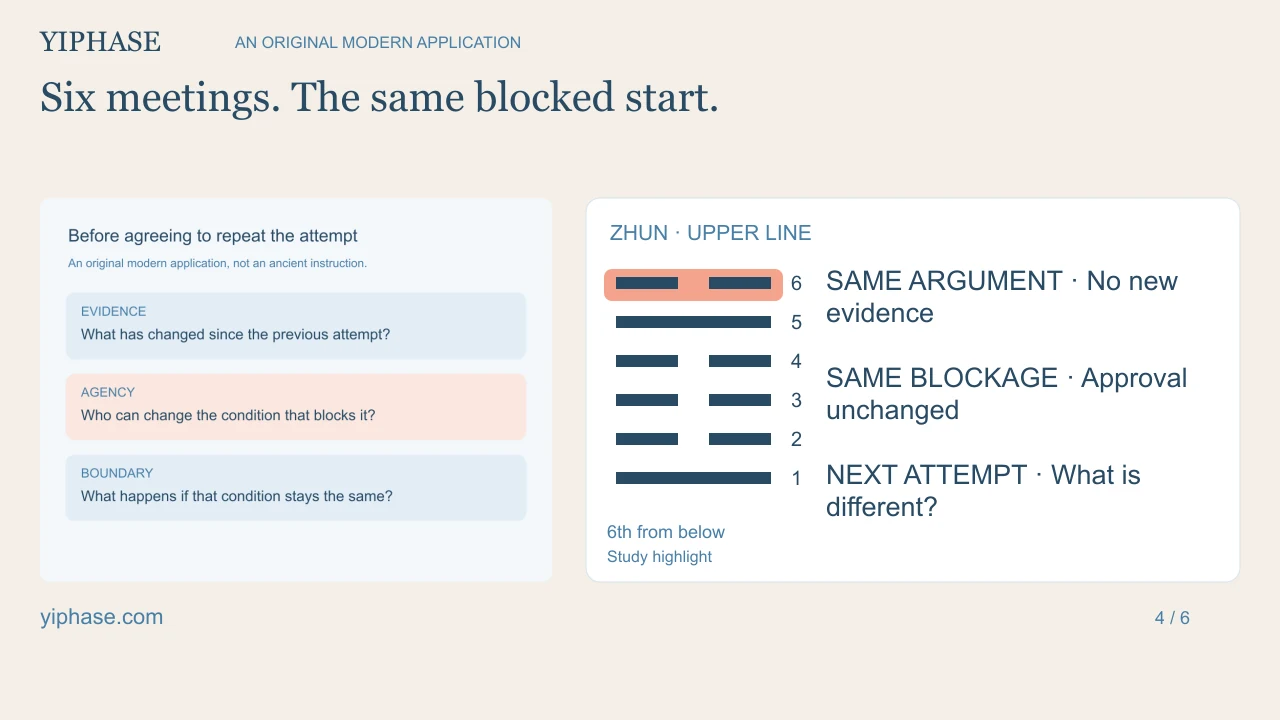
Imagine a shared project reviewed six times. Each meeting repeats the same argument; nobody can change the missing approval. Another meeting is not automatically progress. What would make a new attempt different?
中文解说
设想一个合作项目已开了六次评审会,每次都是相同争执,缺失的审批仍没人能推动。再开一次会不等于有进展。下一次尝试,究竟有什么条件会与上次不同?这是现代例子,不是爻辞原来的故事。
What changes before another attempt?
THREE QUESTIONS · 现代思考步骤
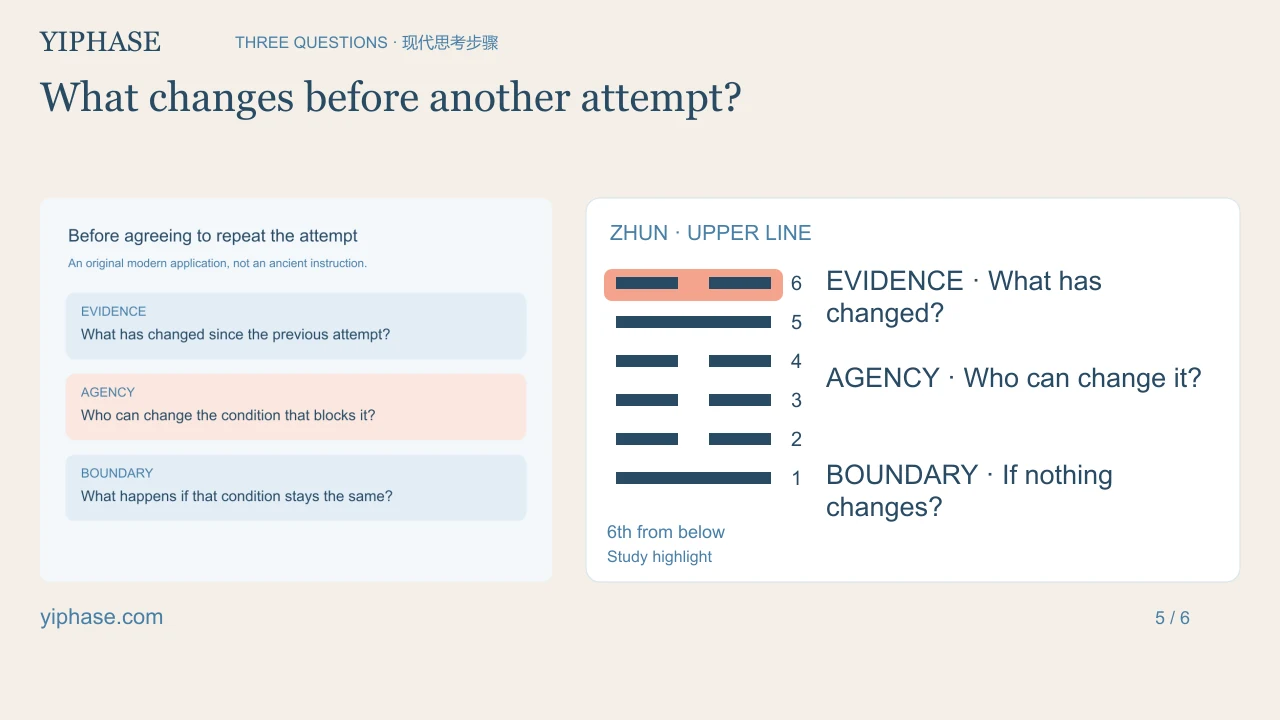
Ask: what has actually changed since the last attempt? Who can change the blocked condition? What will you do if it remains unchanged? A pause, a different arrangement, or closing this attempt are possible modern responses, not ancient commands.
中文解说
先问三件事:上次尝试后,什么真正改变了?谁能够改变受阻的条件?如果仍不改变,准备怎么处理?暂停、换一种安排或结束这次尝试,都只是现代回应的选项,不是古文的强制命令。
Recognize the cost of staying trapped.
屯 上六 · ZHUN UPPER LINE
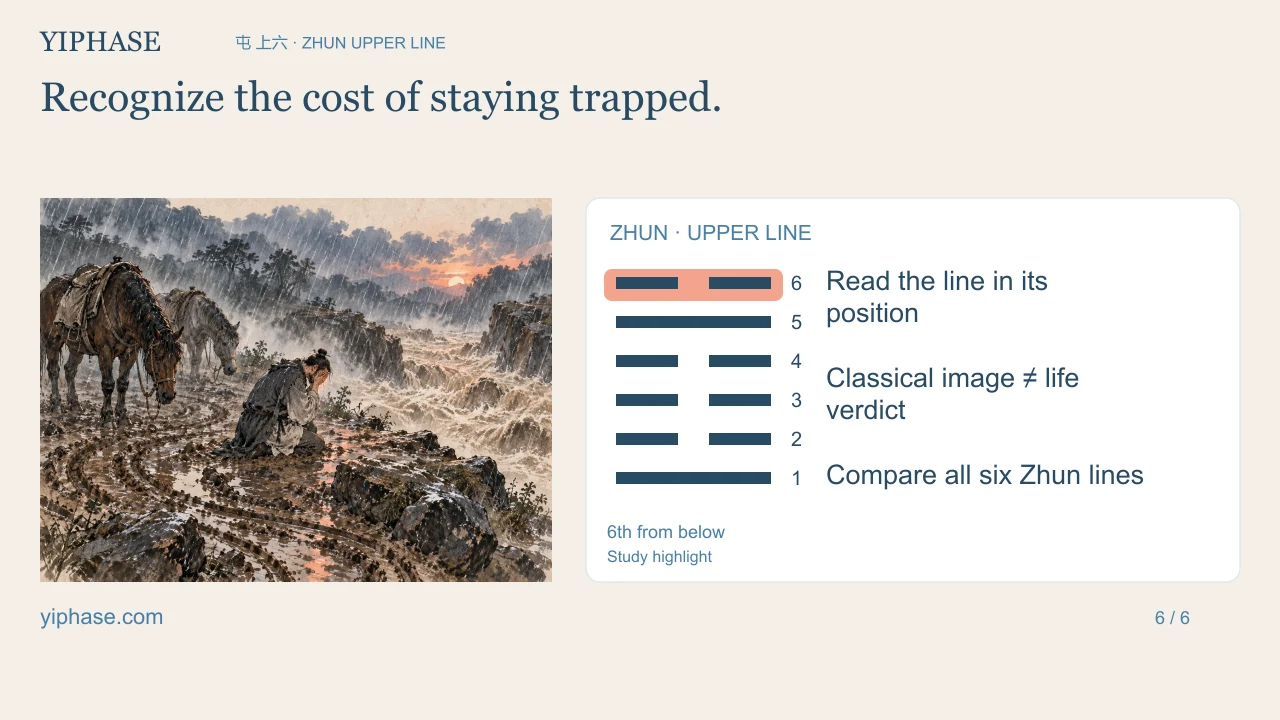
Zhun's upper line names the cost of remaining trapped. Recognize the distress without turning it into a verdict about your life. Explore Zhun's six lines on YiPhase: different positions call for different responses.
中文解说
屯卦上六提醒我们看见困住不动的代价。承认眼前的悲伤,不把它变成对整个人生的定论。回到YiPhase的屯卦六爻,对照不同位置为什么会有不同回应。
Classical basis
上六:乘馬班如,泣血漣如。 象曰:泣血漣如,何可長也。
The ancient line pictures circling horses and intense grief at the uppermost position of a difficult beginning. The Image asks how this state could last. Our reading is that such distress should not simply be prolonged unchanged. The English rendering and shared-project example are original. Pausing, changing an arrangement or closing an attempt are possible modern responses, not ancient commands. This is not a prediction of injury or a verdict about someone’s life. The illustration is symbolic, not ancient history.
← All illustrated videos