

I CHING EXPLAINED · MENG SECOND LINE
I Ching Meng Line 2 Explained: Patience Without Taking Over
Understand Meng’s second line: embracing inexperience, the ancient marriage and household images, and firmness meeting receptiveness. An original shared-home example explores welcome that builds responsibility.
Watch the illustrated lesson
English narration and subtitles. AI-assisted illustrations and synthetic Andrew narration. No digital presenter.
Downloads & portrait edition
Share the lessonPlease retain the YiPhase credit and yiphase.com ending.
Download landscape MP4Download portrait MP4Mountain above Water forms Meng. The second solid line is highlighted for study. All six original lines remain unchanged; this is not a moving line from a user cast. The shared-calendar example is an original modern application.
Patience without taking over?
I CHING EXPLAINED · 蒙 九二
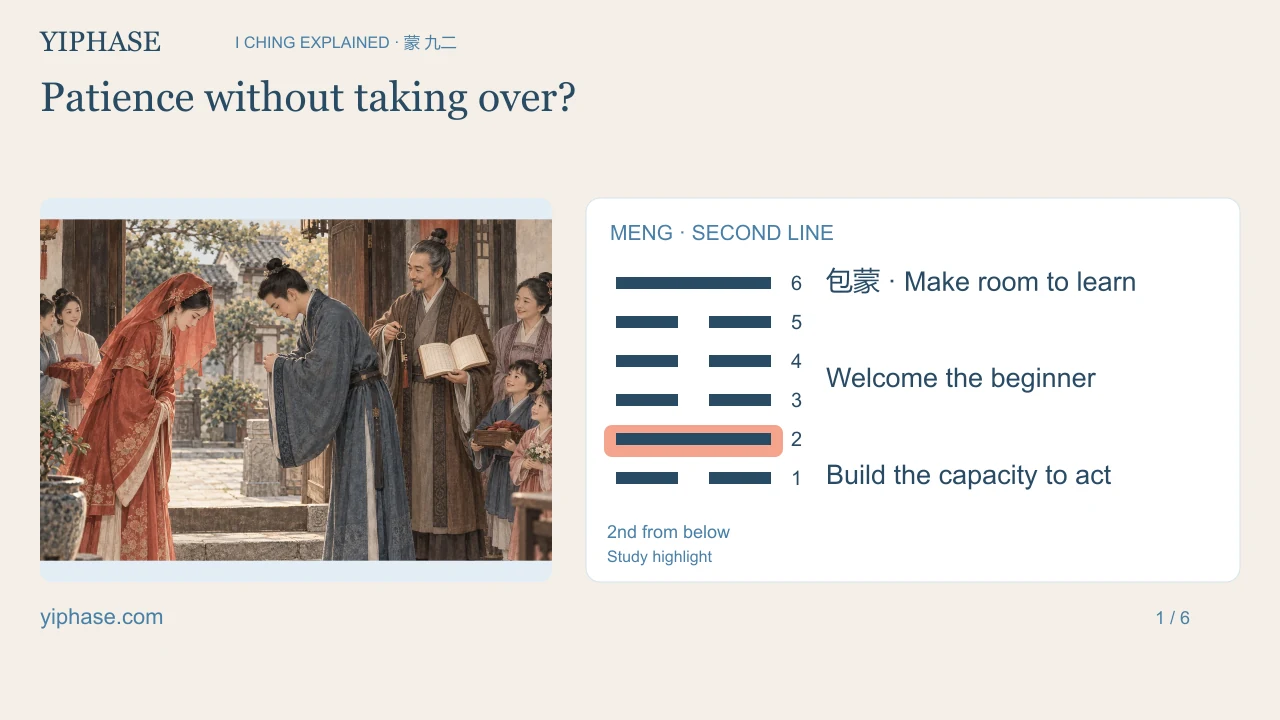
Someone asks the same basic question again. Do you dismiss them, or take over? Meng's second line offers another direction: make room for inexperience while helping responsibility grow.
中文解说
一个人又问了同一个基础问题。是嫌弃他,还是干脆把事情全部接过来?蒙卦九二给出另一种理解方向:容纳尚未明白的人,同时让他逐渐担得起责任。
包蒙吉,納婦吉,子克家。
CLASSICAL LINE · MENG SECOND LINE
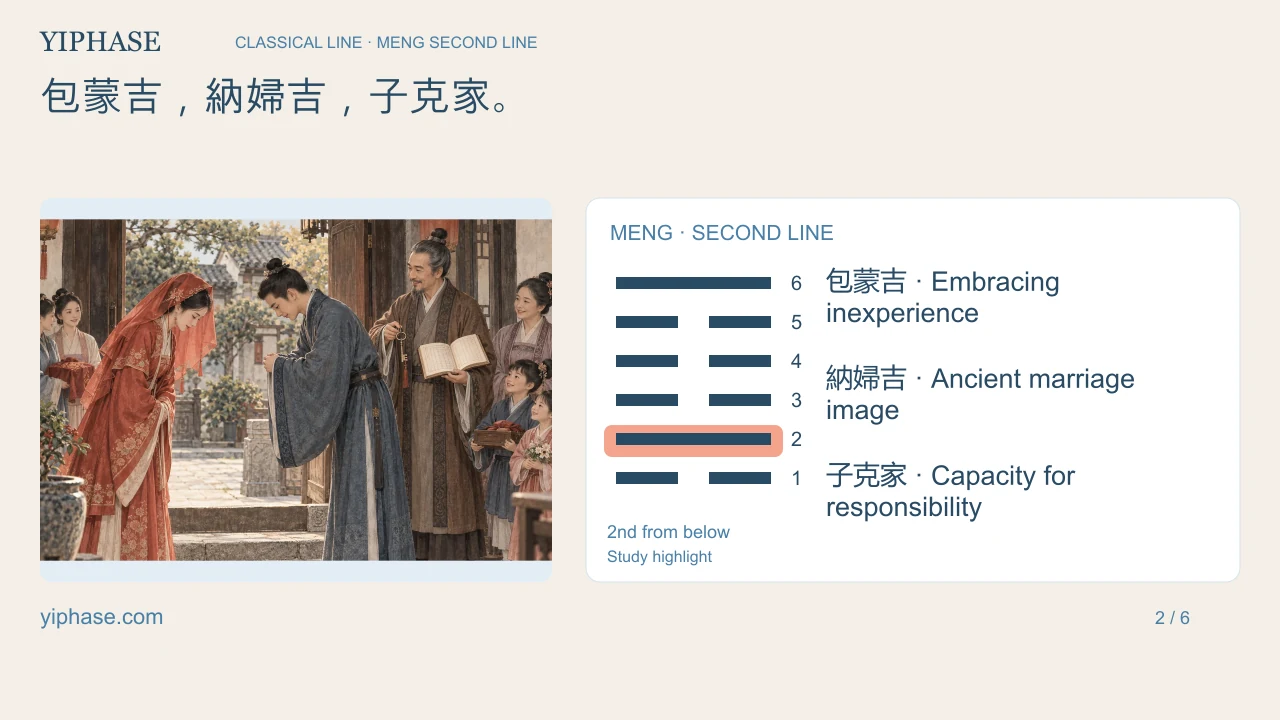
The line says: embracing inexperience is favorable; taking a wife is favorable; the son can manage the household. These are ancient family images, not a marriage prediction or a rule assigning household ability by gender.
中文解说
爻辞是“包蒙吉,纳妇吉,子克家”。“包蒙”可理解为包容蒙昧;“纳妇”保留古代婚姻的形象;“子克家”是子辈能够承担家事。这里不把它改写成婚姻必成的预言,也不据此规定今天谁应按性别承担家庭职责。
Firmness meets receptiveness.
THE IMAGE · 剛柔接也
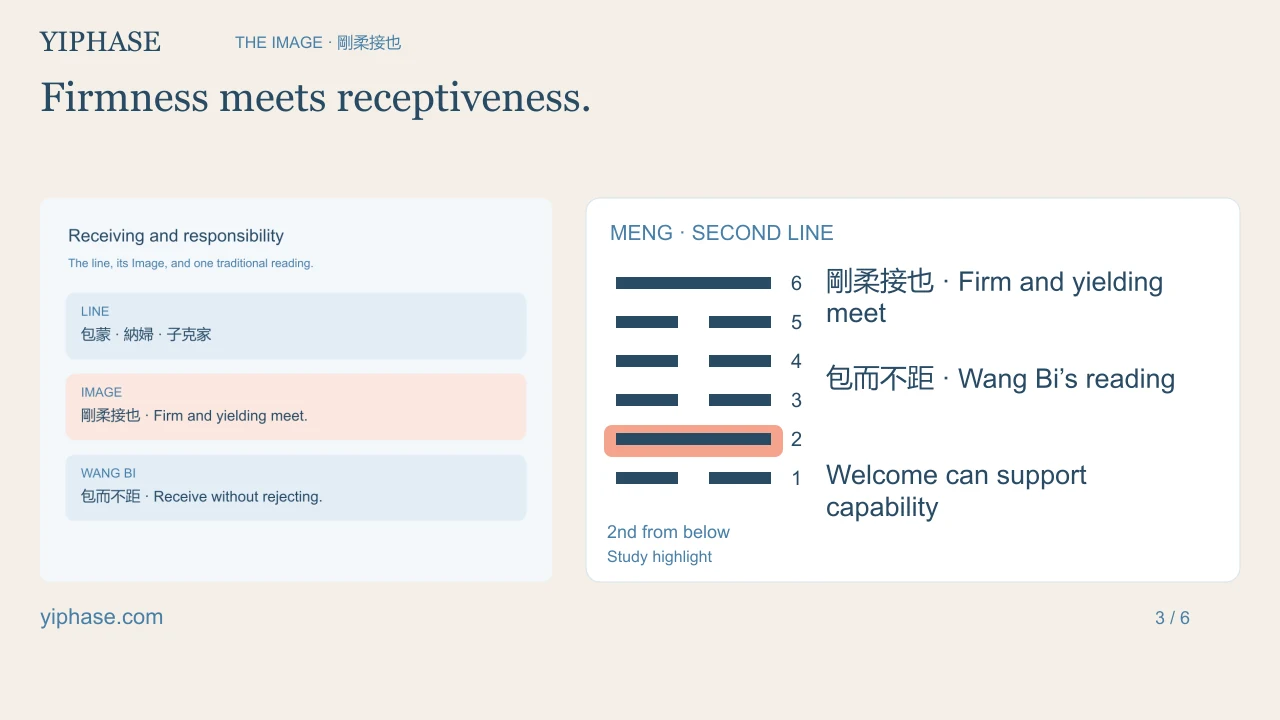
The Image explains this capacity through firm and yielding meeting. Wang Bi reads embracing as receiving without rejecting. Firmness can welcome someone who is still learning; welcome does not mean doing every task for them.
中文解说
《象》以“刚柔接也”解释“子克家”。王弼注说“包而不距”:包含、容纳而不拒绝。在这一传统解释中,九二以刚居中而能够接纳尚在蒙昧中的人。现代应用则要区分接纳学习者与替他承担一切;后者不是古文直接规定的教学步骤。《周易正义》所载《象》作“节”,其疏仍以“刚柔相接”解释。
One shared home. One real task.
AN ORIGINAL MODERN FAMILY EXAMPLE
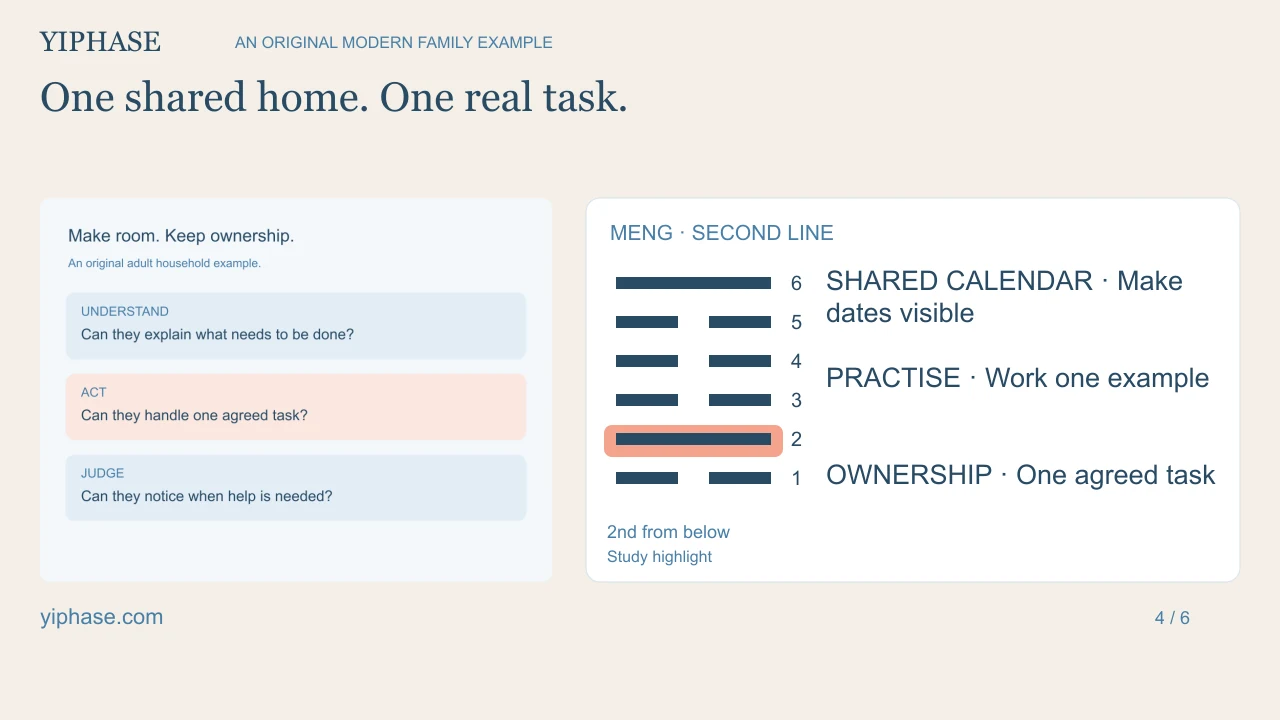
In a shared home, an adult learning the bills keeps missing due dates. Instead of ridicule or permanent rescue, make one shared calendar, practise together, and give them one agreed task to handle.
中文解说
设想共同生活的一位成年人刚开始接手账单,总忘记截止日期。与其讥讽,或永远替他补救,可以先建一个共同日历,一起练习一次,再让他接手一项双方同意的实际任务。这是原创现代家庭例子,不是经文记载的故事或商务财务建议。
Can they carry the task?
THREE CHECKS · A MODERN APPLICATION
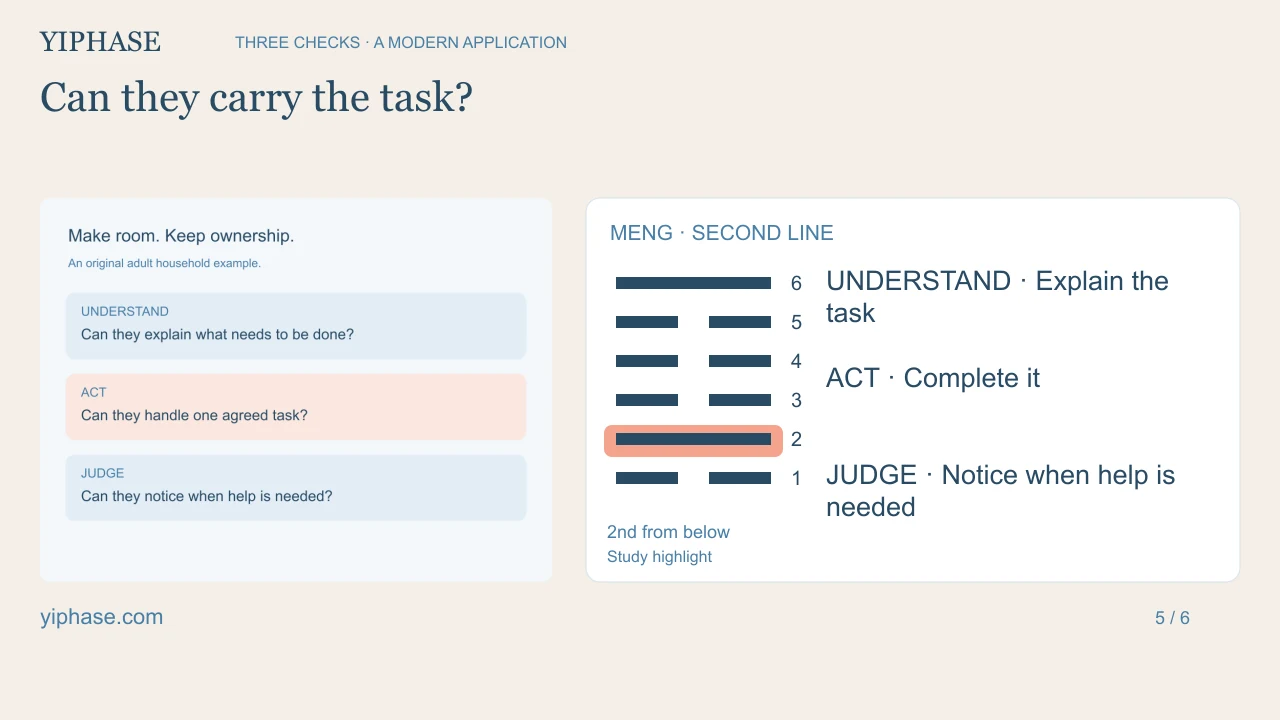
Can they explain the task, do it, and notice when help is needed? Make room for errors without removing ownership. The aim is growing capacity, not keeping someone dependent.
中文解说
看三件事:能否说清任务?能否实际完成?遇到自己处理不了的情况,能否发现并求助?允许学习中的错误,也保留对方的任务归属。目的在于培养承担能力,不是让人一直依赖自己。这些是现代反思问题。
Welcome. Then grow responsibility.
蒙 九二 · MENG SECOND LINE
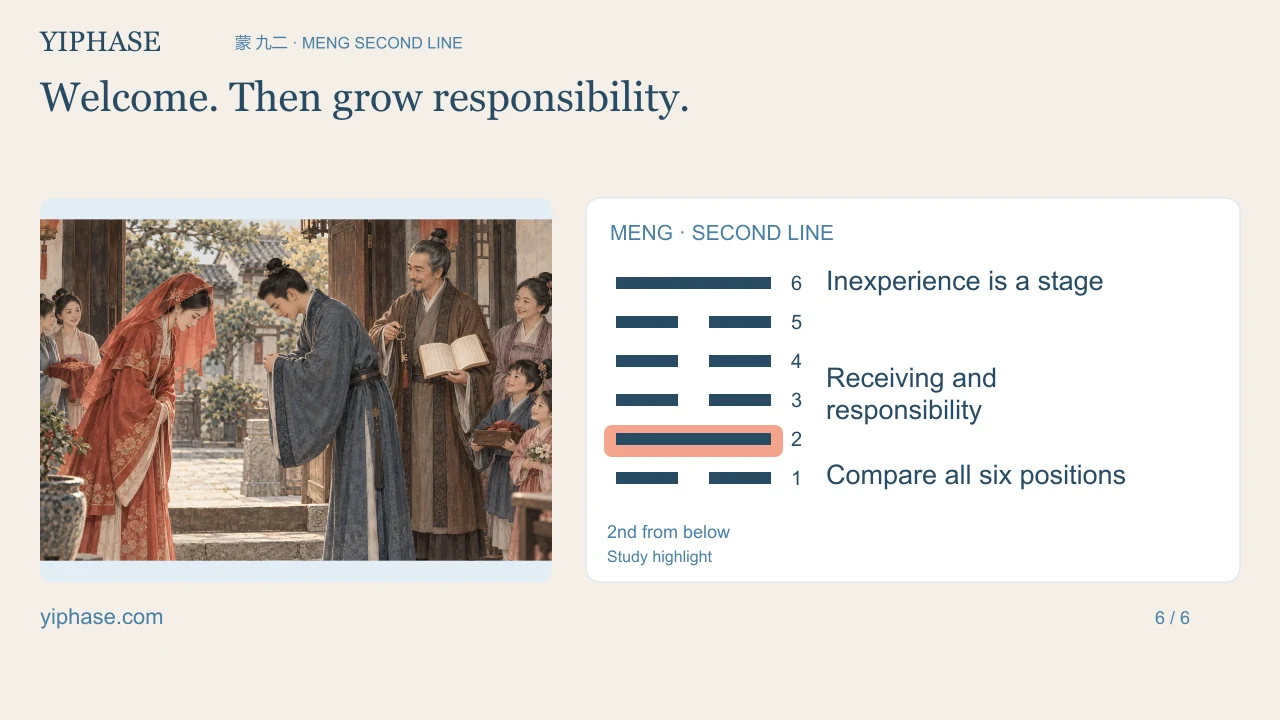
Meng pairs receiving the inexperienced with becoming able to carry a household. Keep both sides in view. Compare its six positions and read the bilingual explanation on YiPhase.
中文解说
蒙卦九二把包容尚在学习的人,与能够承担家事的形象放在一起。接纳与担当,两面都要看到。可在YiPhase比较蒙卦六个位置并阅读中英解说。第二条实爻只作学习高亮,不是用户起卦的动爻。
Classical basis
九二:包蒙吉,納婦吉,子克家。 象曰:子克家,剛柔接也。
The line places embracing inexperience, taking a wife and a son capable of managing a household side by side. We preserve these ancient family images without turning them into a marriage guarantee or a rule assigning modern household abilities by gender. The Image uses firm and yielding meeting to explain capacity for responsibility. Wang Bi’s annotation describes receiving without rejecting. The Zhouyi Zhengyi edition prints 節 in the Image, while its commentary explains 相接; the base Zhouyi page uses 接. Our English explanation and shared-calendar application are original. The picture is symbolic, not a historical record. Highlighting the second solid line identifies the study position; it does not change the hexagram or label a user’s cast.
Read Zhouyi · Meng, second line and Image
Read Wang Bi’s annotation and Kong Yingda’s commentary in Zhouyi Zhengyi · 包而不距則遠近咸至
← All illustrated videos