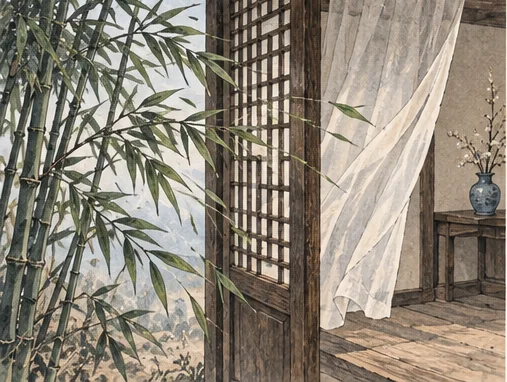
1. Let steady influence enter · 象曰:隨風,巽;君子以申命行事。
The doubled Wind enters by steady repetition rather than force. The Tuan keeps firmness and right measure within gentleness; the Image asks that instructions be repeated before action.
巽为风,也有顺入之意。重巽不是一味低头,而是像风持续进入各处,使说明和行动逐步被理解。
One current follows another. Important changes need explanation, room for understanding, and then consistent action; repetition has a purpose when the message is sound.
风随风入,方向保持一致。现代语境可读为重要变化要先说明、给人理解与反馈的时间,然后才落实,不靠一纸命令强压。
Maya wants to start a weekly repair café in her neighborhood, but she must introduce the idea gently and persistently. She asks for permission, recruits helpers, and adjusts to concerns.
Maya想在社区发起每周一次的修理咖啡馆,但她必须温和而持续地推动。她申请许可、招募帮手,并回应邻居的顾虑。
2. Choose a steady course · 進退,利武人之貞。
Hesitation needs a steady decision. The warrior image speaks to discipline and resolve, not violence.
进退间志有疑。武人之贞在这里是果断而有纪律,不是鼓励动武;图中引路者稳指一途,帮助犹疑者先整定方向。
At the community meeting, Maya cannot decide whether to propose the repair café or a tool-share first.
在社区会议上,Maya犹豫该先提议修理咖啡馆还是工具共享。
Her mentor, a retired carpenter, sees her restless back-and-forth and says, "Pick one route and commit." The warrior's discipline here means steady resolve, not aggression. Maya writes one clear proposal.
她的导师,一位退休木匠,看到她进退不决,便说:‘选一条路,然后坚定走下去。’这里的武人之贞是果断的纪律,不是攻击。Maya写下一份清晰的提案。
3. Humility with purpose · 巽在牀下,用史巫紛若,吉无咎。
The low posture is striking. The scribe and ritual practitioner belong to an ancient ceremonial setting; classical commentary distinguishes sincere reverence from servility before power.
床下是极低的姿态,“史巫”是古代主持记录与礼仪的人。《正义》提醒这种谦恭应施于郑重之事,而非对权势者无原则屈服;图中床、竹简、铃与敬礼都清晰可辨。
Maya meets the building manager about using the common room. She sits on a low stool, paperwork in hand, while the building secretary reviews the rules and an elder resident explains the proper request process.
Maya为使用公共活动室去见物业经理。她坐在矮凳上,手拿文件,物业秘书在旁边核对规定,一位老住户解释正式申请流程。
Her low posture is sincere respect, not servility. She gets a tentative yes.
她的低姿态是真诚的尊重,不是奴颜婢膝。她得到了初步同意。
4. Do not mistake fear for tact · 頻巽,吝。
Classical commentary links pin with a distressed, furrowed expression. The bow is strained, not freely chosen.
《正义》以“频蹙”解释为忧戚紧皱的神情。画中人弯身而面色不安,说明被逼到只剩屈从时,所谓顺势已经失去从容。
A neighbor, Mr. K, insists on controlling every detail of the repair café. Maya bends to his demands—changing the schedule, the tools, the volunteers—but her face is tight and worried.
邻居K先生坚持控制修理咖啡馆的每个细节。Maya屈从他的要求——改时间、换工具、换志愿者——但她眉头紧皱。
This bow is forced, not freely chosen. Classical commentary calls such strain 'pin.' If she keeps bending, she will lose her own footing.
这种弯腰是被迫的,不是自愿的。古注把这种忧戚紧皱称为‘频’。如果她继续屈从,就会失去自己的立场。
5. Let effort bear useful fruit · 悔亡,田獲三品。
The three portions had distinct ceremonial, guest, and household uses in the ancient commentary. The harvest image makes useful accomplishment visible: action now yields something that can be shared appropriately.
《正义》列三品为祭用、待宾与供庖。画中把收获分作三份,重点是因位得当、行动有功,所得被恰当地分配;不是以猎杀为现代生活建议。
The first repair café finally happens. Maya and two volunteers fix a lamp for the community raffle, a chair for a neighbor recovering from surgery, and a jacket for the winter shelter.
第一次修理咖啡馆终于举办。Maya和两位志愿者修好一盏灯,用于社区抽奖;一把椅子,送给术后康复的邻居;一件夹克,捐给冬季庇护所。
The three portions have distinct uses, just as the classical commentary describes. The work is small but useful, and Maya's earlier regret fades.
三份收获各有用途,正如古注所描述。工作虽小却有用,Maya先前的悔意也消退了。
6. Prepare and follow through · 貞吉悔亡,无不利。无初有終,先庚三日,後庚三日,吉。
Geng marks a change of order. Classical commentary reads the days before and after as time to announce, implement, and repeat an instruction.
庚关联变更与申命。《正义》说先后三日反复宣示,让人有时间知晓和调整;图以公众说明和信使传达表现“有终”,不把六天画成虚假的历法或一张神秘符咒。
After a rocky start, Maya renews the repair café's plan. She posts the new schedule three days before the next session, and then repeats it three days after, using the library noticeboard and volunteer messengers.
经历磕绊的开端后,Maya重新发布修理咖啡馆的计划。她在下次活动前三天张贴新时间表,又在之后三天重复提醒,利用图书馆公告栏和志愿者信使。
Everyone knows their role. A rough beginning turns into a steady, well-attended routine.
每个人都清楚自己的角色。粗糙的开头变成了稳定、参与度高的日常。
7. Keep your tools within reach · 巽在牀下,喪其資斧,貞凶。
The bed image returns, but its consequence has changed. Stooping too far leaves the purse and axe outside one's reach.
同为床下,九二有得中之敬,上九却过度伏低,把资财与斧都失在门边。谦退若使自己失去基本行动能力,还坚持如此便是凶。
Mr. K demands control of the repair café's funds and toolbox. Maya, exhausted, gives in completely.
K先生要求控制修理咖啡馆的资金和工具箱。
She crouches beneath the weight of his rules while the petty cash and tools sit just beyond her reach at the open door. If she persists in this submission, the café will lose its means to act.
Maya精疲力尽,完全屈服。她伏在床下般的低姿态里,而零用金和工具就放在敞开的门边,她够不着。如果她继续这样顺从,咖啡馆将失去行动的手段。
8. Where can gentleness keep its footing? · 巽:小亨。利有攸往。利見大人。
Wind reaches far by entering gradually. Progress is modest but real when there is a direction and a wise person to consult.
风能无处不入,但每次推进幅度不大。见大人是寻求有识见者,不是盲目服从权势;方向、沟通与相称的支持使小亨成为可持续的进展。
Crouching too low until one's tools are lost is the boundary of this approach.
柔顺有用,但失掉主见和工具就不再是善用巽。
Where in your life might steady, gentle repetition help you make progress without losing your own grounding?
在你生活中,哪里可以通过稳定而温和的重复来取得进展,同时不失去自己的根基?