57 · The Gentle Wind (XÙN)
The doubled Wind enters by steady repetition rather than force. The Tuan keeps firmness and right measure within gentleness; the Image asks that instructions be repeated before action. Across six lines, uncertainty may need discipline, humility can be sincere, forced submission turns sour, useful work bears fruit, and a carefully renewed command can succeed. Crouching too low until one's tools are lost is the boundary of this approach.
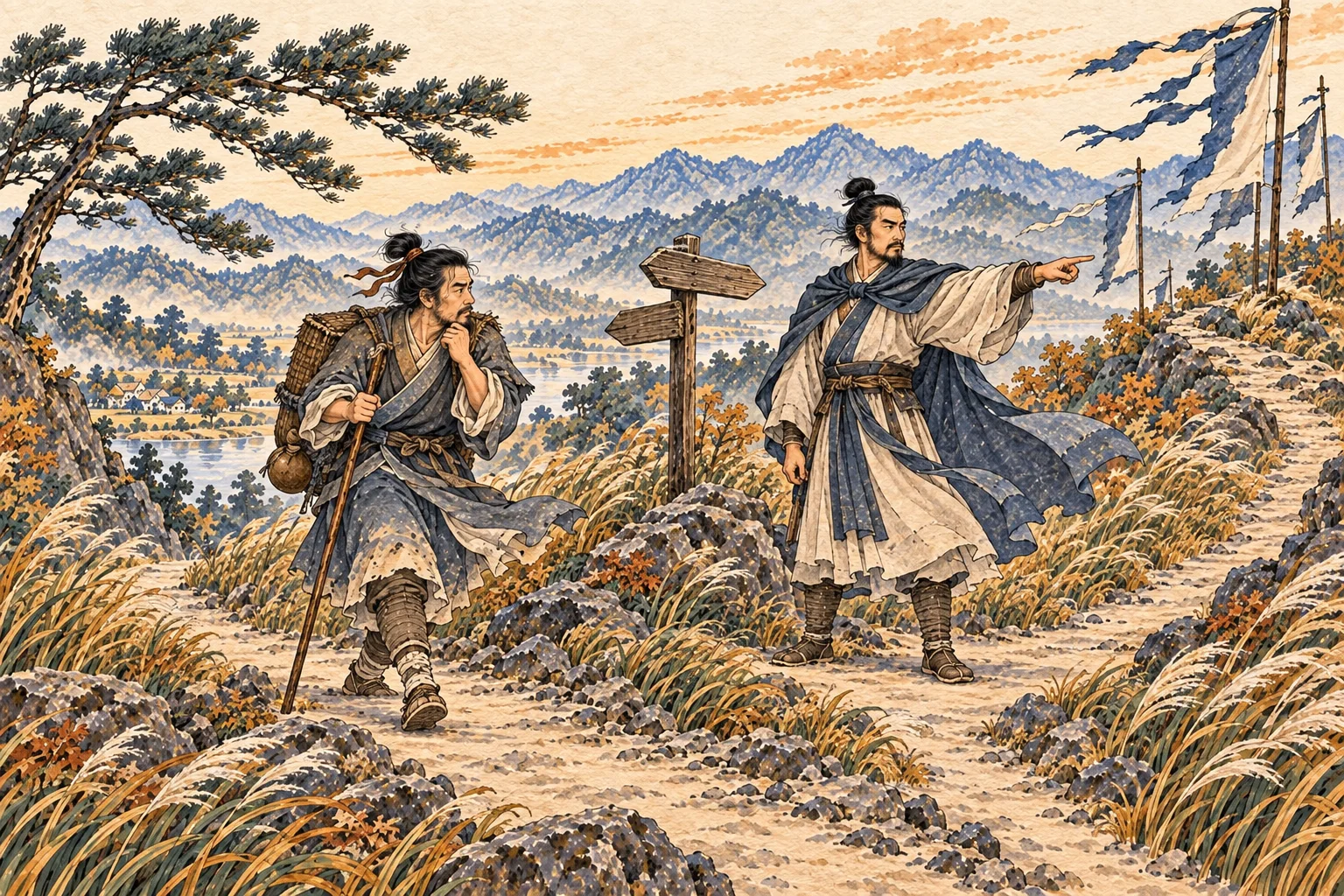
The judgment
The Gentle: small passage. It is beneficial to have somewhere to go and to meet a great person.
Wind reaches far by entering gradually. Progress is modest but real when there is a direction and a wise person to consult. Meeting such a person need not mean uncritical obedience.
Original Chinese text
巽:小亨。利有攸往。利見大人。
The six lines
- 初六 · Line 1 — Advance and retreat; the steadfastness of a warrior is beneficial.
Original Chinese
進退,利武人之貞。
- 九二 · Line 2 — Gentleness beneath the bed; ritual scribes and shamans are employed in abundance. Auspicious, no blame.
Original Chinese
巽在牀下,用史巫紛若,吉无咎。
- 九三 · Line 3 — Anxious, repeated yielding: regret or embarrassment.
Original Chinese
頻巽,吝。
- 六四 · Line 4 — Regret vanishes; the hunt yields three classes of game.
Original Chinese
悔亡,田獲三品。
- 九五 · Line 5 — Steadfastness is auspicious, regret disappears, nothing is unfavorable. Though the beginning is lacking, there is an end; three days before Geng and three days after Geng. Auspicious.
Original Chinese
貞吉悔亡,无不利。无初有終,先庚三日,後庚三日,吉。
- 上九 · Line 6 — Gentleness beneath the bed; resources and axe are lost. Persisting in this is unfortunate.
Original Chinese
巽在牀下,喪其資斧,貞凶。