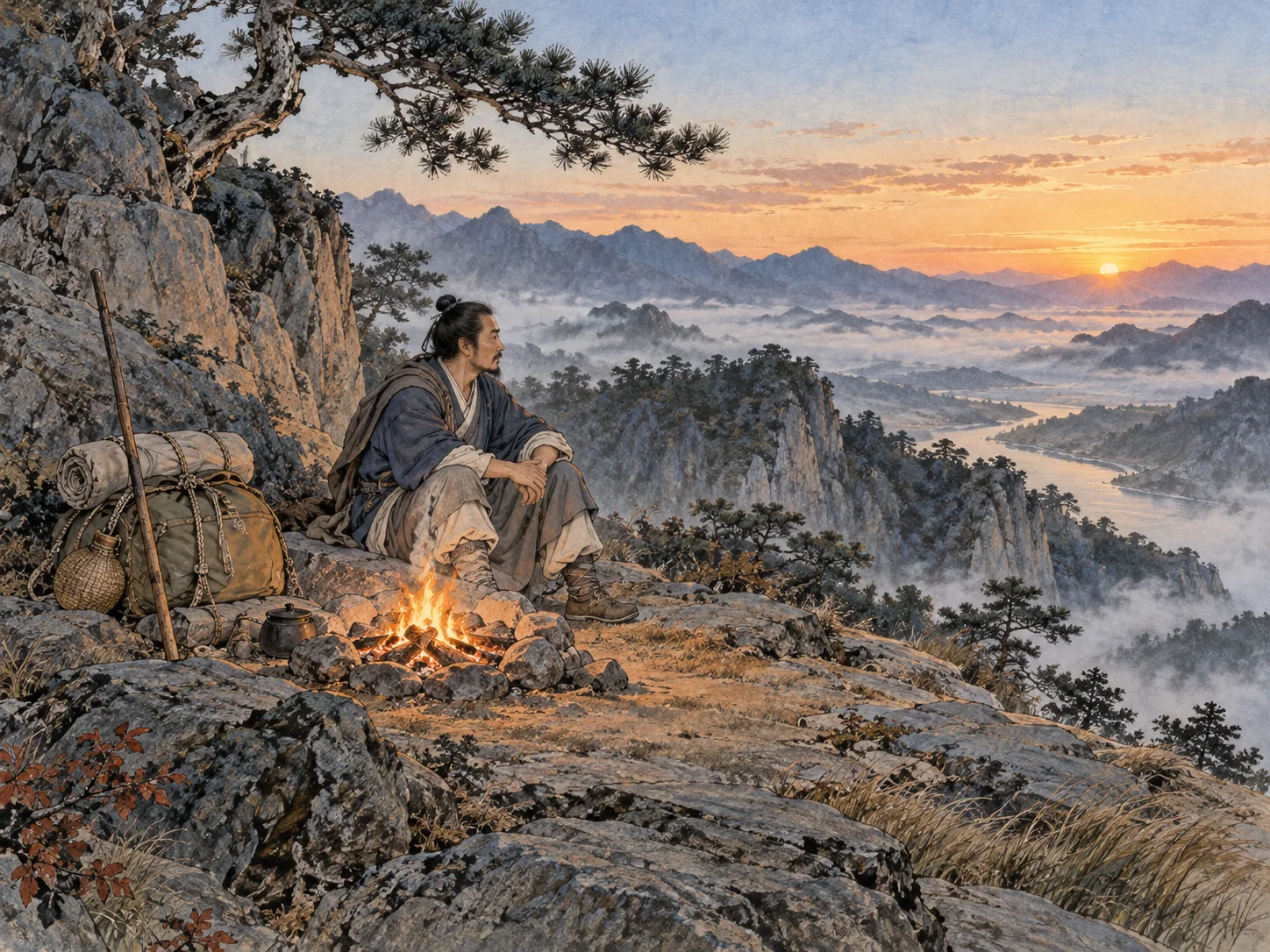
1. Live well as a guest · 象曰:山上有火,旅;君子以明慎用刑,而不留獄。
The Wanderer is a guest away from home, with only modest room to prosper. Mountain steadies while Fire gives light, yet a flame on a ridge cannot stay forever.
旅不是观光,而是离开本居、寄身他方的处境。卦辞只说“小亨”,要求在不稳定时保有正道。
Mountain fire moves on. In the ancient judicial image, clear evidence and restraint go with timely resolution.
山火沿草而行,既照见又不久留。原文谈古代司法:要审明而慎重,也不要把人长期滞留在悬而未决的案子里;今日可读作临时权力更要有程序和时限。
You are staying away from home for a limited time—a semester abroad, a seasonal job, or a temporary caregiving stay. You have only modest control; the place is not yours, and resources can shift.
你离家在外只住一段时间——可能是海外学期、季节工,或临时照护的居所。你能掌控的很少;这个地方不属于你,资源也会变动。
2. Keep the larger risk in view · 旅瑣瑣,斯其所取災。
The path and weather need attention, but the traveler is absorbed in scattered trinkets. The warning concerns misplaced focus under pressure; it does not blame people for being displaced or poor.
身处险路却一直捡拾散落的小物,容易错过前方的落石与风雨。这里批评的是在关键时刻失去轻重次序,不把遭遇困顿者归罪为“自取灾”。
On a rainy mountain road, a traveler stops to pick up tiny spilled trinkets while the last bus to shelter waits.
在雨中的山路上,旅人停下来捡拾散落的小饰品,而开往旅舍的末班车正在等。
The scattered items distract from the weather and the path. The warning is about misplaced focus under pressure, not about blaming people for being displaced or poor.
小物分散了对天气和路况的注意。这里批评的是关键时刻失去轻重次序,不是把困顿者归罪为自取灾。
3. Find sound shelter · 旅即次,懷其資,得童僕貞。
Lodging, necessary funds, and dependable help make travel steadier. The young servant belongs to the ancient social setting; today the point is secure shelter and a relationship of trust, not child servitude.
“次”是旅舍,“资”是行旅所需,童仆为古代社会身份。图中歇脚、钱袋与可信的年轻帮手同在,现代读法重在安全落脚与相互负责,并非赞成役使儿童。
At a roadside inn, a traveler sets down a tied purse and luggage, then accepts water from a capable young attendant.
在路边旅舍,旅人放下系好的钱袋和行李,接过能干的年轻帮手递来的水。
Shelter, necessary funds, and trustworthy help make the stay steadier. The ancient servant role is not a model for child labor; today the point is mutual responsibility and safe lodging.
安全的落脚处、必要的盘缠和可信的协助让旅途更稳。古代的童仆身份并非赞成役使儿童;今天重在相互负责与安全落脚。
4. Protect shelter and trust · 旅焚其次,喪其童僕,貞厲。
Fire destroys the shelter and the companion leaves. The ancient commentary also warns that a guest who overreaches can lose protection; the image does not invent a cause for the fire.
旅舍焚毁,依靠的人也离去,客居者最脆弱的两根支柱同时失去。《正义》还警惕寄居者越位争权;画面只呈现后果,不武断指认失火原因。
A kitchen fire destroys the rented lodging. The young attendant leaves along a separate path. The traveler loses shelter and dependable help at once.
厨房起火,租住的旅舍烧毁。年轻帮手沿另一条路离开。旅人同时失去住处和可靠的帮助。
Ancient commentary also warns a guest who overreaches may lose protection; the image does not invent the fire's cause. Attend first to safety and broken trust.
古注还提醒寄居者越位争权可能失去庇护;画面并未编造失火原因。先处理安全和信任破裂。
5. Tools are not belonging · 旅于處,得其資斧,我心不快。
The axe and supplies can clear a rough camp but cannot turn it into home. Unease remains because the place is temporary and ill suited, even though useful things have been gained.
斧与资具在手,仍只能在荆棘间搭临时棚;对岸村舍可望而不可即。拥有工具不等于获得归属,心不快也并非不知足。
With an axe and supplies, the traveler clears a rough camp in a thicket. Across the river, a settled village is visible but out of reach.
旅人带着斧头和补给,在荆棘丛中清出一块临时营地。对岸的村庄清晰可见,却无法抵达。
Having tools does not create belonging. The unease is not ingratitude; the place is temporary and ill suited.
拥有工具不等于获得归属。心不快并非不知足;这地方既临时又不合适。
6. A loss is not the whole story · 射雉一矢亡,終以譽命。
The arrow is visibly lost and the pheasant escapes. Yet recognition comes from the observer.
一箭落进芦苇,雉鸟飞远,眼前并未得猎物;长者却看到旅人懂得分寸而予以嘉许。图将“一矢亡”与“终以誉命”同框,强调小失与长远声誉不同。
An archer shoots at a pheasant; one arrow disappears into the reeds and the bird escapes.
射手向雉鸟发箭,一支箭落入芦苇,鸟飞走了。
An elder sees the archer's measured conduct and offers a ribbon of esteem. A small immediate loss does not erase the longer value of restraint.
一位长者看到射手懂得分寸,赠予表示嘉许的绶带。眼前的小损失,不会抹去克制带来的长远声誉。
7. Guard the nest before it burns · 鳥焚其巢,旅人先笑後號咷。喪牛于易,凶。
A burned nest, discarded celebration, and an ox leaving an open gate mark a rapid reversal. The former laughter has become grief.
高处鸟巢燃起,方才得意的旅人如今掩面痛哭,牛又从敞门走失。图以残留庆物表现“先笑”,聚焦失去住处、资源与判断力的连锁转折。
A bird's nest burns high above. The traveler first laughs at the spectacle, then cries. An ox wanders out through an open field gate.
高处的鸟巢燃起。旅人先是发笑,随后痛哭。一头牛从敞开的田门走失。
At a precarious height, displaying success matters less than protecting one's base; loss can follow quickly.
身处高危之处,炫耀成功不如保护根基;失去可能接踵而来。
8. How will you be a good guest? · 旅:小亨,旅貞吉。
Classical commentary describes a guest away from their usual home. Small success reflects limited control over circumstances, not a smaller human worth.
《正义》将旅解为寄居异地,因此通达有限。小亨并非人生价值小,而是客居时可支配的条件少;坚持合宜的行为比硬求大展更重要。
Travel calls for care with people, resources, and the limits of a temporary place.
安全、资源和关系都可转瞬改变;旅人的智慧是知道何时停、依靠何人、什么时候不该把临时位置当永久归宿。
Where in your life are you a temporary guest, and what reliable conduct can you keep there?
在你生活中,哪里让你只是临时客居?在那里你能守住什么合宜的行为?