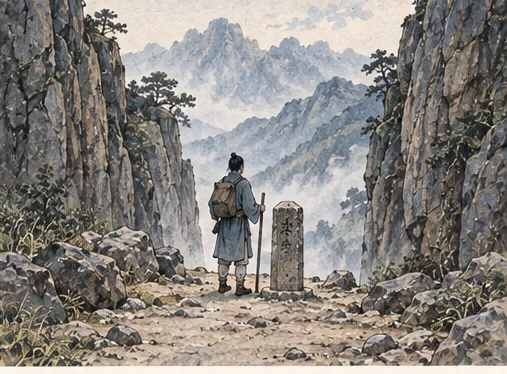
1. The wisdom of a timely pause · 象曰:兼山,艮;君子以思不出其位。
Keeping Still is the mountain's lesson in timing. The Tuan says to stop when it is time to stop and go when it is time to go.
艮是山,也是止。《彖传》把“时止则止,时行则行”说得很清楚:该停时停,该行时行,不把静止当成永恒禁令。
Two mountains give shape to boundaries. Think first about the responsibilities you can actually carry.
兼山是两山相重,安而有界。“思不出其位”可读为先处理自己有责、能及之事,不越位指挥他人;它不否定关怀,也不鼓励对不公视而不见。
Alex and Jordan share an apartment. A disagreement about chores is escalating.
亚历克斯和乔丹合租一套公寓。关于家务的分歧正在升级。
2. Pause before the first step · 艮其趾,无咎,利永貞。
The first step has not yet been taken. Holding the feet before loose stones prevents an avoidable error; lasting steadiness does not require standing there forever.
最初的动势从脚趾起。脚下石路未稳,先不跨出,是把错步截在最早处;图以稳住双足和前方碎石表达“利永贞”,并非永不前进。
Alex feels the urge to stand up and walk out. Instead, they keep both feet flat on the floor.
亚历克斯感到想站起来走开。但他们让双脚平放在地板上。
This small stop—before the first step—prevents an avoidable argument. The pause is not forever, just for now.
这个小小的停止——在第一步之前——避免了一场可避免的争吵。暂停不是永远,只是现在。
3. Notice frustrated movement · 艮其腓,不拯其隨,其心不快。
A calf held still cannot bring the foot along. The departing companion makes the frustration visible: a limit imposed at the wrong place can trap a genuine wish to follow.
腓是小腿,脚本随腿动;腿被强止,想跟随的人也走不了。图里前人远去、后人按住小腿而不快。
Jordan continues talking. Alex wants to jump in with a sharp reply. They hold back, but feel frustrated because they cannot follow their impulse.
乔丹继续说话。亚历克斯想插一句尖锐的反驳。他们忍住了,但感到沮丧,因为无法跟随自己的冲动。
The pause feels forced, and the frustration builds. This is not a restful stop.
暂停感觉是被迫的,沮丧在积累。这不是一个安歇的停止。
4. Do not split yourself · 艮其限,列其夤,厲薰心。
The line uses a harsh bodily image: rigid stopping at the waist divides what should work together. The strained back and hand at the chest convey the danger without literal injury.
限为腰际,夤指脊背近中处。古文用强烈的身体撕裂感写不当的止:上下失联,心被忧危薰灼。
Alex's back stiffens. Their shoulders rise, and a knot forms in the stomach.
亚历克斯的背绷紧了。肩膀耸起,胃里形成一团结。
The effort to stay still becomes rigid, splitting the body from the breath. This forced stillness is a warning: it hurts and clouds the mind.
努力保持不动变得僵硬,身体与呼吸割裂。这种强制的静止是一个警告:它带来疼痛并蒙蔽心智。
5. Let the whole body settle · 艮其身,无咎。
Unlike the strained third line, the whole person can rest. The pack is down and the posture is integrated; the pause restores alignment rather than cutting the body into competing parts.
从腰际分裂转到全身安住,六四止得其所。背篓放下、双足落地、肩臂松开,表明暂停是一种整体协调,不是把某一部分硬锁住。
Alex takes a slow breath. The shoulders drop, the jaw unclenches, and the feet feel the floor.
亚历克斯慢慢吸了一口气。肩膀落下,下巴松开,双脚感觉到地板。
The whole body settles into the pause. Now the stop is not a fight but a rest. It restores balance instead of dividing.
整个身体安顿在暂停中。现在停止不是战斗,而是休息。它恢复平衡,而不是分裂。
6. Speak in order · 艮其輔,言有序,悔亡。
A pause at the jaw allows words to find their order. The speaker is not silenced; thoughtful speech can prevent the regret of saying too much too soon.
辅是颊部。不是永远闭嘴,而是先停住未经思考的言辞,再依次说清。
Alex pauses before speaking. A hand rests near the mouth, and they choose words carefully.
亚历克斯在说话前暂停。一只手靠近嘴边,他们仔细选择词语。
'I need a minute,' they say. Jordan listens. The pause prevents a regretful remark and allows a clearer message to come.
“我需要一分钟,”他们说。乔丹倾听。这个暂停防止了后悔的言论,让更清晰的信息得以表达。
7. Rest with depth · 敦艮,吉。
This stillness has weight without rigidity. The guide's calm stance gives companions room to rest.
敦是厚实。上九的止不再是惊惧、勉强或僵硬,而是有内在分量的安定。
After a few minutes of quiet, Alex feels settled. Their calm presence helps Jordan relax too.
安静几分钟后,亚历克斯感到安定了。他们平静的存在也帮助乔丹放松。
They speak from a place of depth, not tension. This is the mature stillness that can hold when a new moment begins.
他们从深度而非紧张中说话。这是成熟的静止,当新时刻开始时能够保持。
8. Where should you stop first? · 艮:艮其背,不獲其身,行其庭,不見其人,无咎。
The back is outside one's direct gaze. Classical commentary reads this as setting a limit before desire pulls attention away, rather than violently suppressing it afterward.
背在身后,不在目光追逐的前方。《正义》以此解释止于欲念未萌处,而非强行压住已起的念头。
A pause can prevent harm, but forcing the wrong part of a person to stop can create frustration and danger.
六爻从止趾、止腓、止腰背、止全身、止口,到敦厚地止,逐层问我们把界限设在哪里:过早、不当或强硬地截断身心会带来不快与危惧;恰当的节制才能安稳。
Where in your own reactions do you notice the earliest impulse to move or speak?
在你自己的反应中,你注意到最早想行动或说话的冲动在哪里?