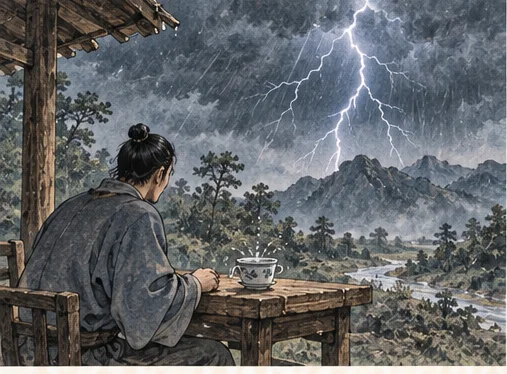
1. Stay steady when thunder strikes · 象曰:洊雷,震;君子以恐懼修省。
Shock is thunder's jolt and the sudden change it resembles. The judgment moves from fear to speech and laughter while a ritual spoon and vessel are not dropped.
震是雷声引起的惊动,也可比喻突发变化。卦辞从虩虩之惧走到啞啞之笑,并强调百里震动时仍不失匕鬯;真正的能力不是从不害怕,而是受惊后能守住责任。
Repeated thunder invites review. Once safe, ask what can be prepared or repaired before the next jolt.
洊雷是重雷、再三震动。修省不是把灾难归咎于受惊的人,而是在安全之后检视准备、习惯和责任:哪些地方该修补,下一次如何更稳。
A sudden disruption hits your everyday life—a burst pipe floods your home, or a surprise announcement changes your workday. The initial jolt is real.
一次突发变故打乱你的日常——水管爆裂淹没家里,或工作突然变动。最初的惊吓真实存在。
2. Fear, then steadiness · 震來虩虩,後笑言啞啞,吉。
A startle can become useful attention. The attendant holds on to what matters; after the danger is understood, speech and laughter return without carelessness.
初惊并非凶兆;先谨慎,后看清局面,便能重新说笑。画中匕与杯没有脱手,提醒人把受惊转成照料当下,而不是麻木或逞强。
At a family dinner, a shelf crashes down. The host, carrying a tray of glasses, feels a jolt. She pauses, secures the tray, and checks on everyone.
家庭聚餐时,架子突然倒塌。端着玻璃杯托盘的主人心里一惊。她停下来,稳住托盘,查看每个人。
Once the scare passes, laughter returns. If she had flinched wildly, the glasses might have shattered, turning a startle into a real loss.
惊吓过后,笑声重新响起。若她当时慌乱乱动,杯子可能摔碎,把惊吓变成真正的损失。
3. Safety before possessions · 震來厲,億喪貝,躋于九陵,勿逐,七日得。
The spilled cowries are valuable, yet safety comes first. Leave what has fallen while climbing clear of danger.
贝为古代资货。避雷登陵时顾不上追落贝,先离险才是当下要紧的事。
During a mountain hike, a sudden storm hits. A traveler slips, and coins spill from a torn pouch. The safe choice is to climb to higher ground, not chase the rolling money.
山间徒步时,突遇暴风雨。一位旅人滑倒,钱袋破裂,硬币滚落。安全的选择是爬上高处,而非追赶滚落的钱。
Days later, they may find a new path or help, but the classical line does not guarantee the same coins return.
数日后,他们可能发现新路或得到帮助,但古爻并不保证原物找回。
4. Move with care · 震蘇蘇,震行无眚。
Trembling does not forbid action. A measured step toward someone needing shelter can be safer than freezing, provided the person sees where they are going.
苏苏是惊惧不安之状。虽发抖,只要判断清楚仍可行动;图中女子扶稳自己、朝孩子迈步,动作有目的而非慌乱奔跑。
A student trembles before a class presentation. Despite shaking hands, she steps to the podium and begins speaking.
一名学生在课堂演讲前发抖。尽管双手颤抖,她还是走向讲台,开始发言。
Her movement is purposeful, not frantic. The talk goes well enough. Had she fled, she would have lost the opportunity and felt worse.
她的行动有目的,而非慌乱。演讲还算顺利。若她逃走,便会失去机会,感觉更糟。
5. Regain footing · 震遂泥。
The person expected to guide others is immobilized, and the wheel is stuck too. Shock becomes stagnation when one cannot regain footing; practical help matters more than forceful words.
九四居众人之间,本可领动,自己却陷泥失去行动力。画里双足和车轮同陷,远处有人等待,说明僵住不仅影响自己。
After a storm, a cyclist's wheels sink into deep mud on a group ride. Others wait ahead. Pedaling harder only digs deeper.
暴风雨后,一名骑手在集体骑行中,车轮陷入深泥。前方有人等待。越用力蹬,陷得越深。
The rider must step off, find solid ground, and accept a push. Forcing the bike through alone keeps everyone stuck.
骑手必须下车,找到硬地,接受他人的推助。独自硬闯只会让所有人困住。
6. Keep the essential work · 震往來厲,億无喪,有事。
Repeated shocks keep the situation risky. The steward cannot stop thunder, but can protect what is entrusted to her and direct the next useful task.
震动反复,不意味着可以放下职责。六五处中,抓住应办之事就不致大失;图里护住器具、指挥同伴是“有事”的具体动作。
A community organizer manages a shelter during repeated aftershocks. The ground shakes again and again.
一位社区组织者在余震不断时管理避难所。地面一次次摇晃。
She cannot stop the quakes, but she secures the medical supplies and directs volunteers to safe tasks. By keeping to essential duties, the shelter avoids major losses.
她无法阻止地震,但她固定好医疗物资,指挥志愿者做安全的工作。守住关键职责,避难所避免了重大损失。
7. Learn from nearby danger · 震索索,視矍矍,征凶。震不于其躬,于其鄰,無咎。婚媾有言。
Fear is near its limit. The neighbor's disturbance is a warning to prepare, not a cue to run blindly into the storm.
上六惊到目光不定,此时急出会凶。邻家受震,自己先戒备可无咎;连婚媾亲近之人也容易因紧张而争言。
Lightning strikes a neighbor's roof. One partner wants to run out immediately; the other insists on waiting for the storm to pass. They argue sharply.
闪电击中邻居的屋顶。一方想立刻冲出去;另一方坚持等风暴过去。他们激烈争吵。
The line advises preparing to help without rushing into danger. If they pause and talk, they avoid harm and blame, even though quarrels arise.
爻辞建议做好准备去帮忙,但不要冲进危险。若他们停下来沟通,便可避免伤害与过错,尽管争吵难免。
8. What remains in your hands? · 震:亨。震來虩虩,笑言啞啞。震驚百里,不喪匕鬯。
The spoon and aromatic offering belong to ancient ritual. They stand for responsibilities kept secure even under a sudden shock.
匕是祭时取鼎实的器具,鬯是香酒,属古代礼制。震来不掉匕鬯,是遇突发时仍能承责的形象;“笑言”在后,说明安定不是硬装无惧,而是经历警醒后恢复分寸。
The six lines ask how a person can respond: take warning, protect life over possessions, move despite trembling, avoid getting stuck, keep essential duties intact, and learn from a disturbance nearby without rushing into it.
六爻从初惊后安、失贝避险、颤抖而行,转到陷泥不振、往来危中仍有事,最终学会从邻居的震动中警戒自己,避免惊恐驱动下的妄动。
What essential responsibility will you protect when shock arrives?
当震惊来临时,你会守护什么关键责任?