52 · Keeping Still (GÈN)
Keeping Still is the mountain's lesson in timing. The Tuan says to stop when it is time to stop and go when it is time to go. The six lines move from the toes to the calf, waist, whole body, and jaw before ending in mature, generous stillness. A pause can prevent harm, but forcing the wrong part of a person to stop can create frustration and danger.
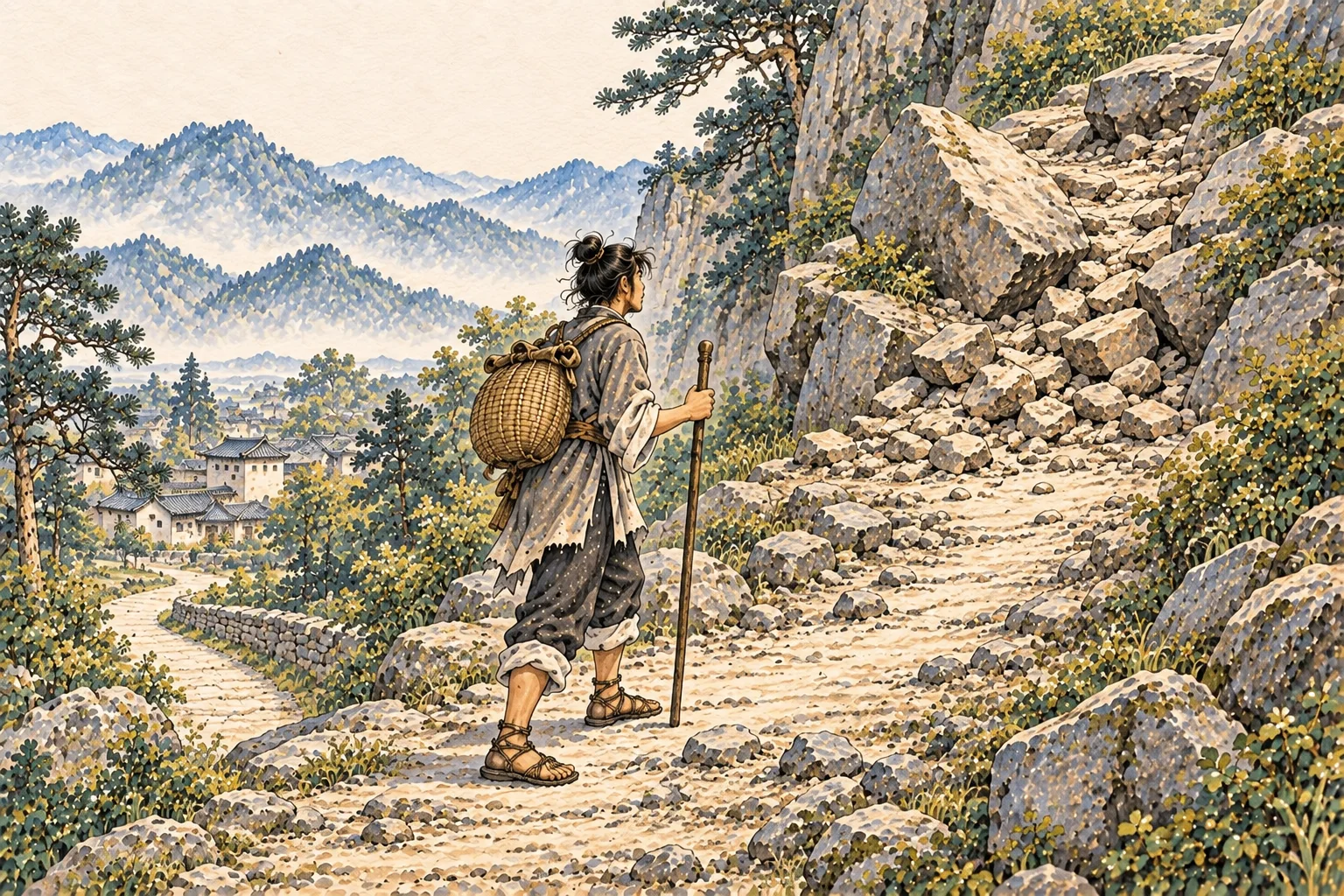
The judgment
Keeping Still: still the back and one does not grasp the body; walking in the courtyard, one does not see its people. No blame.
The back is outside one's direct gaze. Classical commentary reads this as setting a limit before desire pulls attention away, rather than violently suppressing it afterward. The courtyard image asks for settled attention, not indifference to other people.
Original Chinese text
艮:艮其背,不獲其身,行其庭,不見其人,无咎。
The six lines
- 初六 · Line 1 — Keep the toes still: no blame. Lasting steadfastness is beneficial.
Original Chinese
艮其趾,无咎,利永貞。
- 六二 · Line 2 — Keep the calf still; it cannot lift what follows. The heart is not glad.
Original Chinese
艮其腓,不拯其隨,其心不快。
- 九三 · Line 3 — Keep the waist still; split the flesh along the back. Danger burns the heart.
Original Chinese
艮其限,列其夤,厲薰心。
- 六四 · Line 4 — Keep the body still: no blame.
Original Chinese
艮其身,无咎。
- 六五 · Line 5 — Keep the jaws still; words come in order, and regret vanishes.
Original Chinese
艮其輔,言有序,悔亡。
- 上九 · Line 6 — Thick, generous stillness: auspicious.
Original Chinese
敦艮,吉。