1. Change at the right time · 象曰:澤中有火,革;君子以治歷明時。
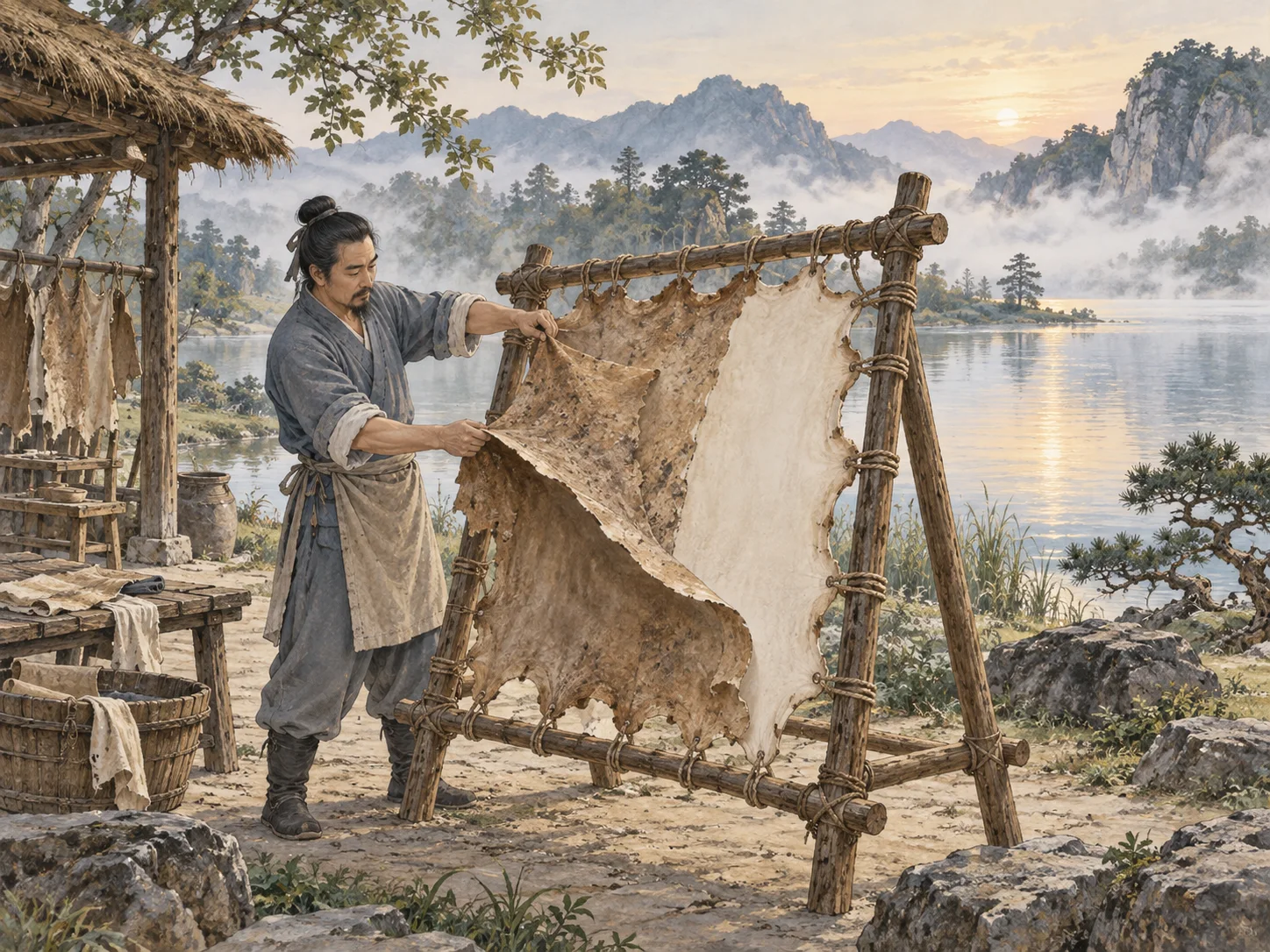
Revolution here means a justified turning of an old order, like a hide whose surface changes. The text insists that trust comes with the right time and conduct.
革既指皮革,也指旧制更替。《彖传》从水火不相容、四时递变谈到汤武革命;但卦辞先说“巳日乃孚”,变革要待时、合正并获得信任,不是逢旧必拆。
Fire within a lake makes tension visible. Ordering the calendar is a way to see when a phase has ended and another can begin; good change starts with observing time accurately.
泽中有火,是两种力量相遇而必须调整的形象。治历明时不是预测神秘时辰,而是认识季节和秩序的变化,再安排恰当的行动。
In a worn neighborhood courtyard, residents debate replacing the old gate and notice board. One group wants an immediate teardown; another urges waiting.
在一个老旧的小区院门口,居民们讨论是否更换坏了的铁门和公告栏。有人主张立刻全部拆掉,有人提醒再等等。
2. Secure before acting · 鞏用黃牛之革。
At the very beginning, the work is to hold fast. The yellow oxhide strap makes restraint tangible: secure the plan before acting on a change that has not yet gained its moment.
初九位在革之始,时机未熟,先用坚韧黄牛革巩固所守。《小象》说“不可以有为”,因此图中只扎紧计划卷而不拆旧门。
Before any demolition, a shoemaker ties the rolled-up gate drawings with a sturdy yellow oxhide strap. The group reinforces the worn hinge and writes down who will check the bolts each week.
还没动手拆除前,一位修鞋匠用结实的黄牛皮绳把一卷铁门图纸扎紧。居民们先加固磨损的门轴,并写下每周由谁检查螺栓。
They deliberately do not tear down the old gate yet. Restraint here means securing the base, not refusing all change.
他们暂时不拆旧门。这里的保守是把基础稳住,并不是拒绝一切改变。
3. Change at the right time · 巳日乃革之,征吉,无咎。
The time for action has arrived and others respond. Replacing a damaged gate together shows a concrete, welcomed improvement rather than a lone person's urge to disrupt.
六二中正而与九五相应,条件成熟后可以动手。图以居民共同换门表达“时到”和“有应”:不靠一人强拆,而由大家一起完成有必要的更新。
When the agreed day comes, residents gather at dawn and lift away the cracked gate panel. No one acts alone; the neighbor who first proposed the change works beside those who had doubts.
约定的日子到了,居民们天亮时一起抬走裂开的门板。不是一个人强拆,最早提议换门的人也来和原先有疑虑的人一起干活。
The replacement fits, and the courtyard can close safely again. Acting at the right moment brings no blame.
新门板装得合适,院子又能安全关门。时机成熟再动手,因此没有过失。
4. Test the case for change · 征凶,貞厲,革言三就,有孚。
A forceful move would be dangerous here. Three rounds of settled discussion stand for testing the proposal until others can trust it.
九三刚躁,急于出征有凶。反复商议、方案三度成就,才有可凭的信。
A few residents want to ride out and demolish the whole wall at once. Instead, the committee pins three separate plans to the table.
有几个人想立刻骑马出去,把整面院墙一次拆掉。大家没有照做,而是把三份不同方案摊在桌上。
A horse stands saddled outside, but no one mounts. After the third discussion, signatures appear. Rushing would be dangerous; repeated agreement creates trust.
门外一匹备好鞍的马站着,却没人骑上去。讨论到第三轮,愿意签名的人出现了。急着出征有危险;反复商量才建立信任。
5. Earn trust for the new order · 悔亡,有孚改命,吉。
A mandate can change when trust supports it. The shared work of replacing the public board matters as much as the seal: legitimacy must be visible to those who live with the result.
此时可正式改命,但“有孚”仍是前提。图中旧榜与新榜、官印、彼此扶持的手,把制度更替和公众接受放在一起;命令若只在纸面更换,未必真吉。
With signatures collected, the residents replace the old notice board and update the courtyard rule. A respected elder and a young renter hold the new board together while the official seal is pressed beside it.
签名收齐后,居民们更换旧公告栏,也更新院子的管理规则。一位受敬重的老人和一位年轻租客一起扶着新公告栏,旁边盖上公章。
The change is not just on paper; people helped write it. Because trust is present, regret fades.
改变不只在纸上,因为大家参与了制定。信任在场,悔恨就消退。
6. Make the change visible · 大人虎變,未占有孚。
The tiger's striking pattern stands for change that can be seen. Trust precedes divination because the leader's work has become evident; the image is a metaphor, not a model of force.
虎变指虎纹炳然,变化的成果清楚可见,不是人变成虎,也不是以猛兽威压人。九五以中正领变,德与制度显明,众人未待占问已能信服。
The tiger in the picture is a living symbol, not an animal walking into a neighborhood meeting. In the everyday story, the block leader opens the gate at the posted hours herself and returns every borrowed key.
画里的真虎是鲜明的取象,并非有猛兽走进小区。放到日常生活里,小区负责人开始按公告时间亲自开门,也归还每一把借出的钥匙。
Before a formal vote, neighbors see that the new order works. Like a tiger's unmistakable markings, the reform has a pattern everyone can recognize; trust comes from visible conduct, not a fierce pose.
还没正式投票,邻居已看见新秩序确实运作。正如虎纹鲜明可辨,改革的轨迹也让人看得清楚;信任来自可验证的行动,不来自摆出强硬姿态。
7. Refine and hold steady · 君子豹變,小人革面,征凶,居貞吉。
The leopard's patterned coat suggests refinement after the main change. Rebuilding the gate goes deeper than dressing differently for a mirror.
豹纹细密,象征后期深入而有质地的改进;“革面”则可能只是外表顺从。图里修门与照镜形成对比。
After the gate and board are renewed, one resident wants to launch another campaign to replace every planter. Others instead refine the latch and plant flowers by the gate.
铁门和公告栏更新后,有人又想发起新一轮运动,把所有花盆都换掉。其他人却选择完善门闩,在门边种花。
A passerby only changes clothes for a photo by the new board. The leopard's fine pattern suggests deeper improvement; once the main change stands, another forced push would be bad.
一个路人只是换件衣服,在新公告栏旁拍照。豹纹细密,象征更深入的改进;主要改变已成,再强行推进反而不吉。
8. Has trust caught up with change? · 革:巳日乃孚,元亨。利貞。悔亡。
Trust is not granted at the first announcement. A change must answer a real need, fit its moment, and be carried out with integrity before people can believe in it.
“巳日”古注多读为变革经过一段时间后才获信,并非要求现代人择特定日期。若更改合时、合正、能向人说明并承担后果,悔才可能消失。
Its six lines begin with restraint, then timely action and repeated consultation, move to a trusted change of mandate, and end by asking leaders to let the new order settle rather than launch another campaign.
六爻从初九固守、六二时至而行、九三反复议定、九四有孚改命,发展到九五虎文显著;上六则提醒成果已成,宜安守,不再折腾。
Where in your own life might a needed change be waiting for the right time and trust?
在你自己的生活中,哪一处必要的改变可能正在等待合适的时机与信任?