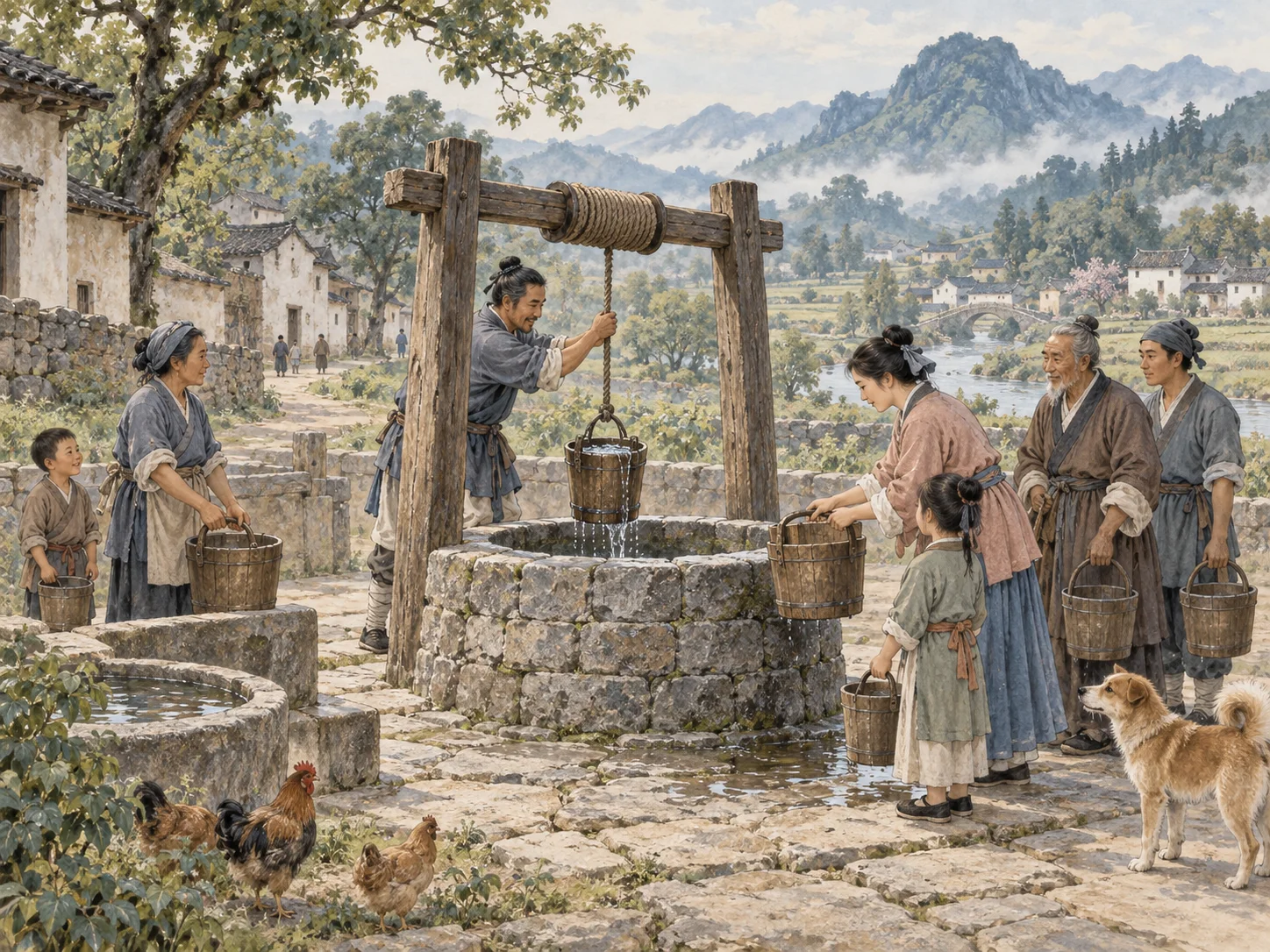
1. Keep the shared well usable · 象曰:木上有水,井;君子以勞民勸相。
The Well is a shared source of nourishment. A town may move while the well's purpose remains, yet muddy water, a leaking jar, or a bucket broken before reaching the rim all defeat that purpose.
井是供众人汲养的共同基础。城邑可以迁移,井的滋养原则却不变;但井若淤泥、瓶若破漏、水未出井,资源再好也未真正惠人。
The lifting gear makes the water available. The Image extends that work into care for people and encouragement of mutual aid: sustaining a commons takes both infrastructure and cooperation.
古时汲水依赖木构与绳具,大象因而联想到井的提水之功。“劳民劝相”可理解为关怀民生、鼓励互助,让公共资源真正抵达需要的人。
A neighborhood keeps an old hand-pump well in its community garden. The town has changed around it, but the well still marks a shared source.
一个社区在花园里保留着一口老手压井。城镇变了,井仍代表共同的源头。
2. Restore the source · 井泥不食,舊井无禽。
The well still exists, but its water cannot serve anyone. Even birds pass it by.
井底淤泥令水不能饮,弃置已久,连禽鸟也不来。图中井缘、泥水和远去飞鸟同时说明“潜力”不能替代维护;先清理,才谈滋养。
At the community garden, the old hand-pump well has gone muddy; algae and silt fill the bottom. Children no longer fill bottles there, and even the sparrows that once bathed nearby stay away.
社区花园的老手压井积了淤泥,水浑得不能喝。以前来喝水的小孩不再靠近,连常在井边洗澡的麻雀也飞走了。
The well still stands, but no one can drink from it. The neighbors first admit neglect before any repair.
井还在,却已不是活水。邻居们先承认长久疏忽,才谈得上清理。
3. Repair the channel · 井谷射鮒,瓮敝漏。
Water is present, but it falls to fish below while the vessel leaks above. The source is not the only thing to fix; the route from source to people must work too.
水不上汲,反流向井底的鲋鱼;瓮又破漏,说明输送之路有问题。画面用井内小鱼和井沿漏水的瓮表示“有水却送不到人”。
A neighbor tries to draw water, but the old pipe sends it sideways into a garden pond where minnows dart, while the collection jar has a crack and leaks onto the path.
邻人想打水,旧管子却把水斜送到园中池塘,池里小鱼游动;接水的陶瓮又裂了缝,水漏到小路。
The source has water; the route to thirsty people fails. They must fix the jar and pipe, not just praise the spring.
井里有水,送到人手里的路却断了。他们需要修瓮、修管,而不只是赞叹泉源。
4. Recognize what is ready · 井渫不食,為我心惻,可用汲,王明,並受其福。
The water is ready, but no one draws it. The sadness is the waste of a useful capacity.
井已经清洁,却仍无人来汲,像有才有德者未被任用。惻然不是自怜;愿明智的人看见并把它接入需要处,使井与众人一同得福。
The well is cleaned and the water is clear, yet the garden group still buys bottled water and walks past it.
井已淘净,水也清了,可花园小组仍买瓶装水,路过井边不取。一位志愿者为此难过。
A volunteer feels the waste. A local councillor notices the clean well, arranges a simple sign and rota, and the whole garden can benefit.
后来社区负责人看见这口干净的井,安排简单的取水说明和值日轮排,使整片花园都能受益。
5. Maintenance matters · 井甃,无咎。
Repairing the well wall is modest work, yet essential. It may not deliver water today, but it restores the structure that can serve tomorrow.
甃是砌治井壁。此时尚未见汲水大功,但修补崩坏、补过自守就是必要的一步;图以双人安放石块表达耐心维护。
Before any grand reopening, two neighbors spend a Saturday resetting loose stones in the well wall and sealing cracks.
还没到热闹的重启,两位邻居先花一个周六,把井壁松动的石块重新砌好,又补上裂缝。
No one draws water that day; the work is unseen. Yet without this repair, the well would collapse again. The line says modest maintenance is no fault.
那天没人打水,工作也不显眼。但若不做这步,井还会塌。爻辞说,朴实的维护没有过错。
6. Let the benefit reach people · 井冽,寒泉食。
The water is clean and finally drunk. Here the well's promise becomes real: its benefit reaches a person rather than remaining only potential.
井水清冽,终于可以入口。图中递水与饮水把“食”落实到受益者身上:清洁可靠的资源只有被人实际使用,井德才显明。
After testing, the water runs cold and clear. An older neighbor takes the first cup, then a child, then a gardener.
检测之后,井水清冽冰凉。老邻居先喝第一杯,接着是小孩,再是园丁。
The well is no longer a project or a symbol; it is drink. The line's 'cold spring is eaten' means the source finally reaches a body and quenches thirst.
井不再只是一个工程或象征,而是可以入口的水。九五的“寒泉食”落到具体的人身上:泉源终于解了渴。
7. Keep the well open · 井收勿幕,有孚元吉。
The well is fully useful when it stays open. Trust grows because water can be drawn and shared, rather than hoarded at the moment of success.
水已汲至井口,不要加盖私占。众人轮流取水、彼此递瓶,才是井卦最终的完成:共同的源泉因开放与守信而持续滋养。
The pump now works, the water is clear, and the neighbors could lock the well or ration it. Instead they leave the cover open and share a rota.
泵修好了,水也清了,邻居们本可以把井锁起来,或按份额配给。他们却敞开井盖,轮班共享。
People pass filled jars to one another, and trust grows. The well is complete only when its water stays available, not hoarded after success.
人们把装满的瓶子彼此传递,信任也长起来。井的完成,不在成功后私占,而在水仍可被众人取用。
8. Who can actually draw the water? · 井:改邑不改井,无喪无得,往來井井。汔至亦未繘井。羸其瓶,凶。
The well endures as a common resource, but its benefit is real only when water reaches people. A broken vessel at the last moment turns near-completion into failure.
井的价值在让水真正到达使用者。“汔至”几乎完成,却因汲绳未出、瓶又损坏而前功尽失。
The six lines progress from neglect and waste through cleaning and repair to water actually drunk and freely shared.
六爻从弃井、漏水、清而未用、修井、寒泉可饮,走到开井与众共享,说明修德、修设施与善用人才都要完成最后一步。
Where is a shared resource in your life still waiting for the final step from repair to real use?
你生活里哪一处共享资源,还停在修补后未真正被使用的一步?