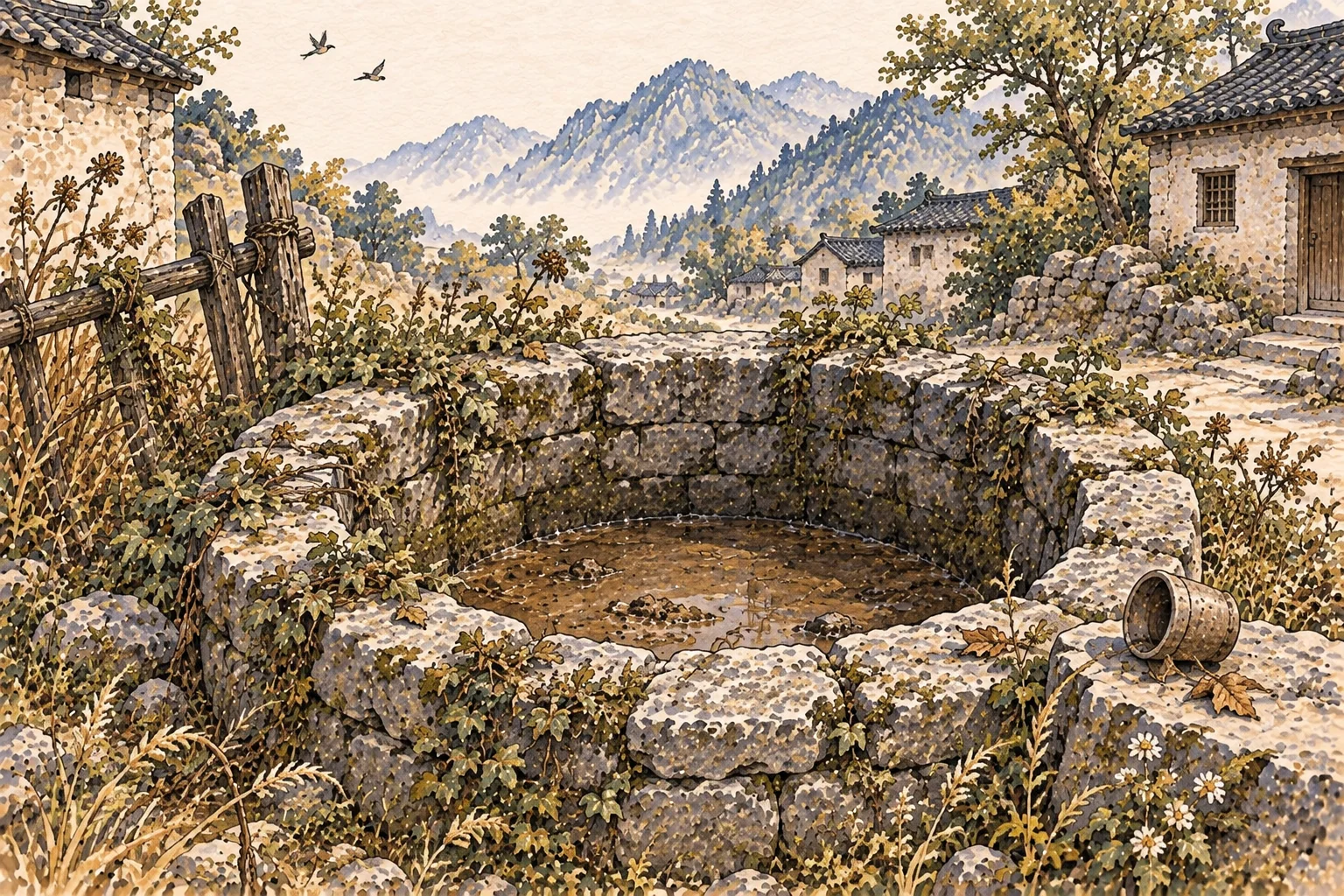
A neighborhood keeps an old hand-pump well in its community garden. The town has changed around it, but the well still marks a shared source. When silt, a leaking jar, or an unused bucket keeps water from reaching people, the well's purpose is not fulfilled. This entry follows the neighbors from neglect to repair, first drink, and open sharing.
一个社区在花园里保留着一口老手压井。城镇变了,井仍代表共同的源头。若淤泥、破瓮或没人来汲水,水到不了人身边,井的意义就没有完成。下面从被忽视、修补,到真正喝到水,再到开放共享。
ASK YOURSELF想一想
Where is a shared resource in your life still waiting for the final step from repair to real use?
你生活里哪一处共享资源,还停在修补后未真正被使用的一步?
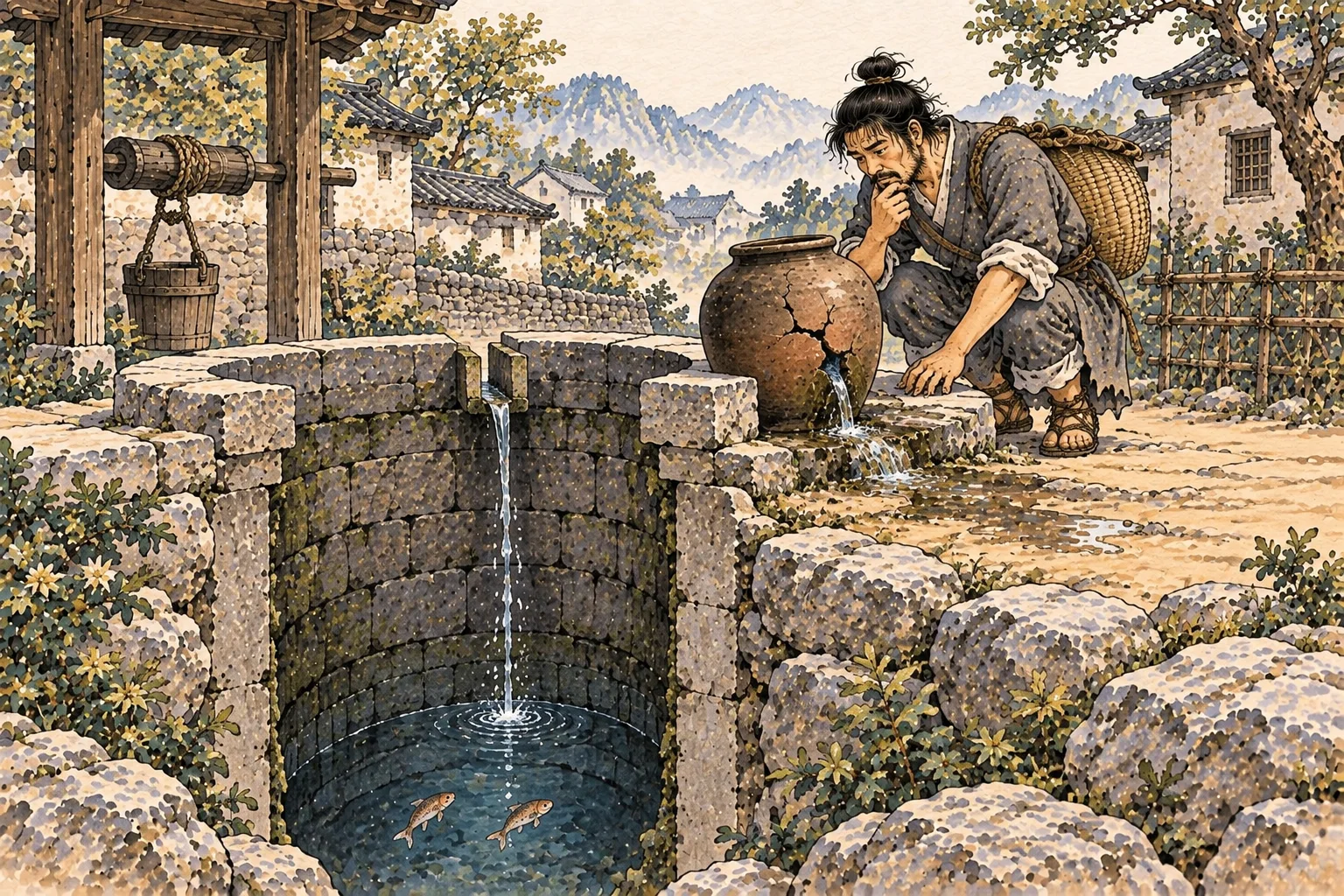
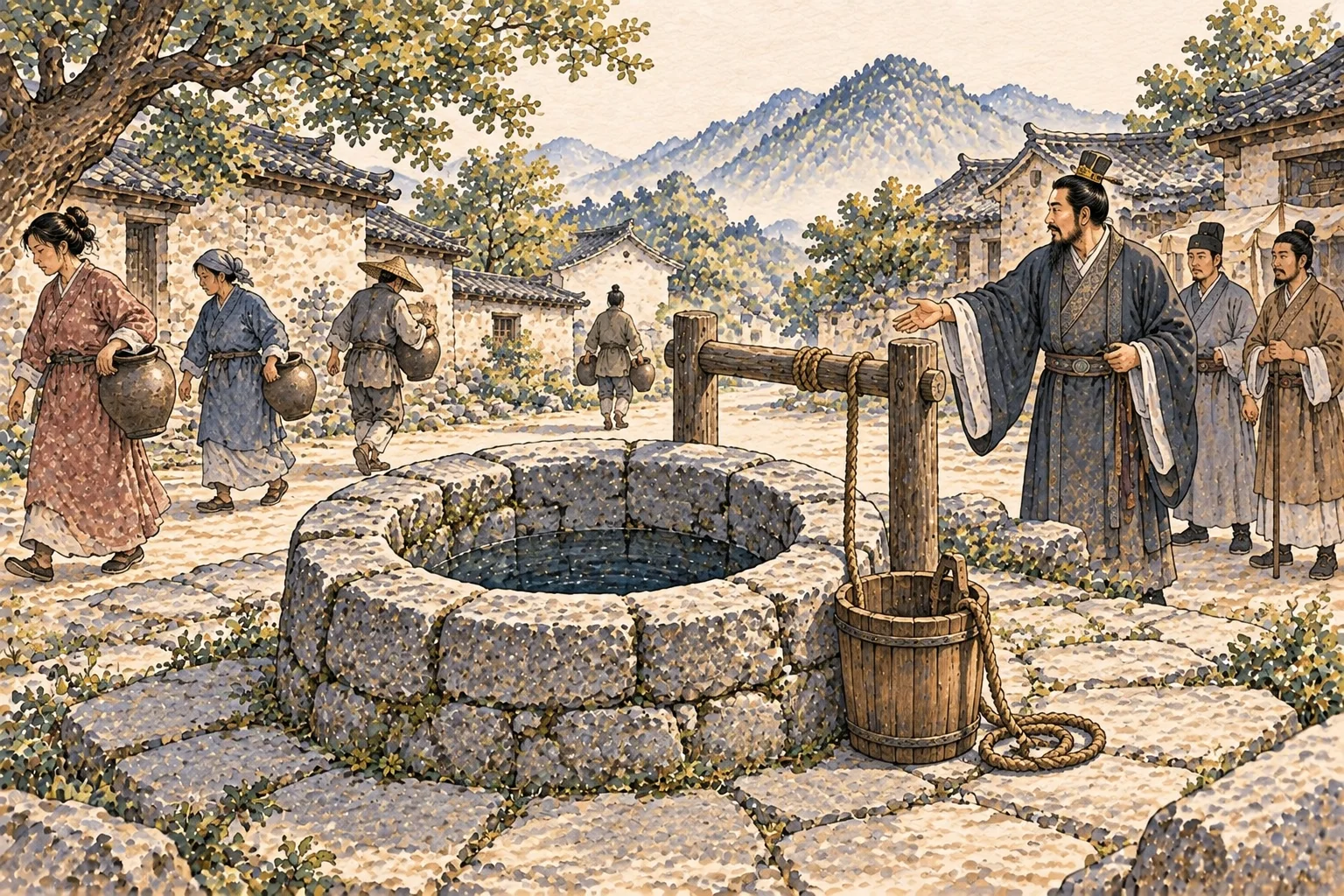
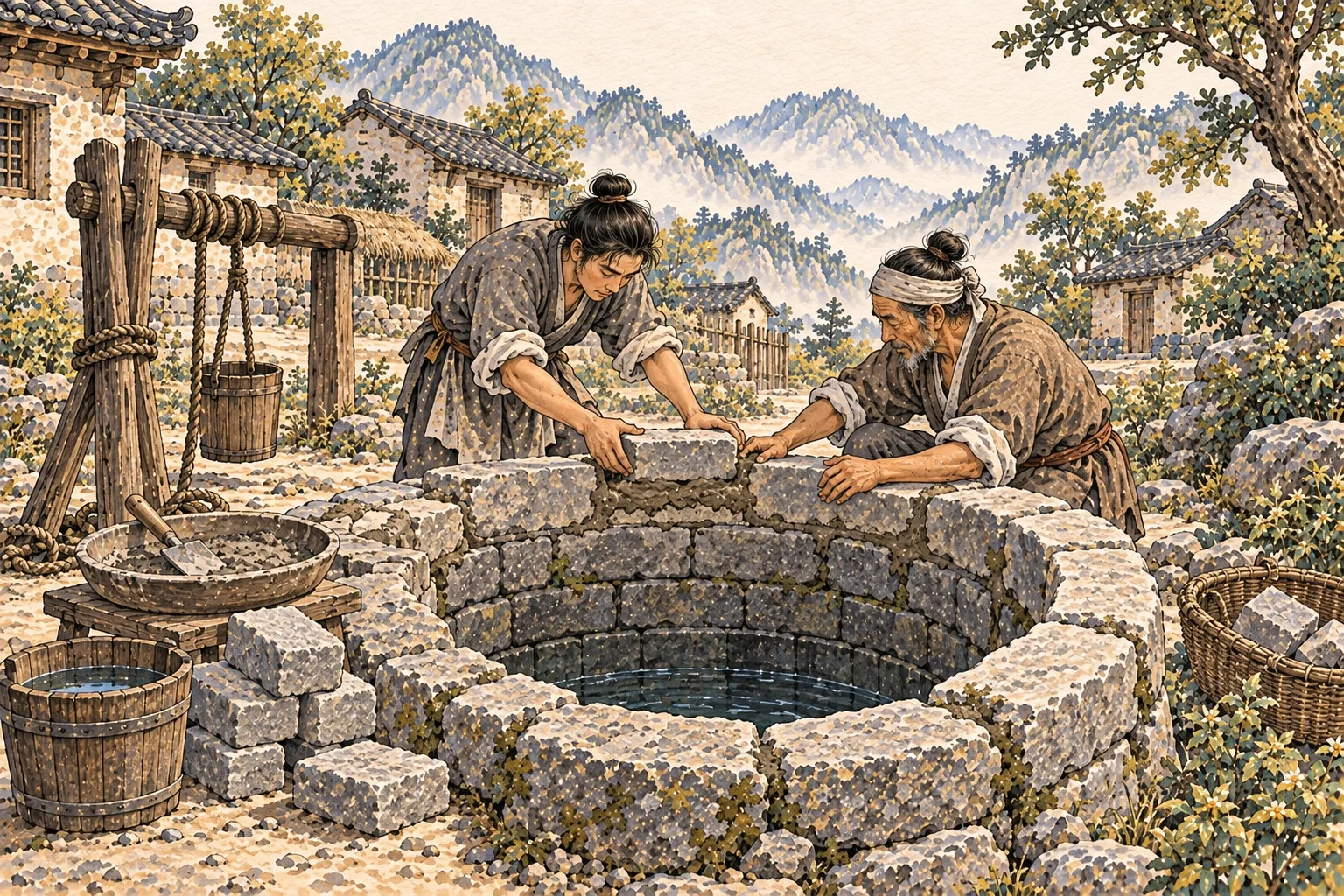
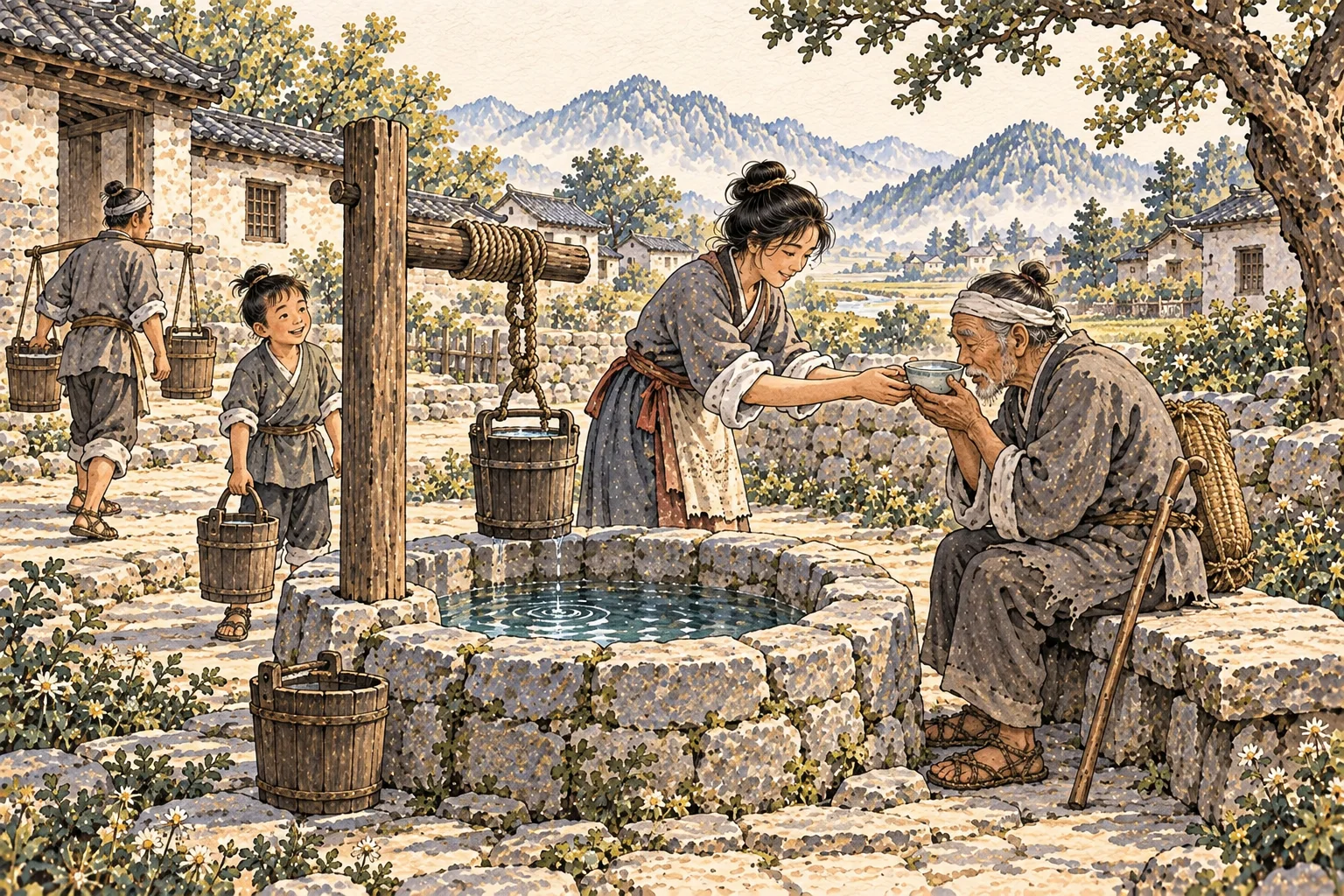
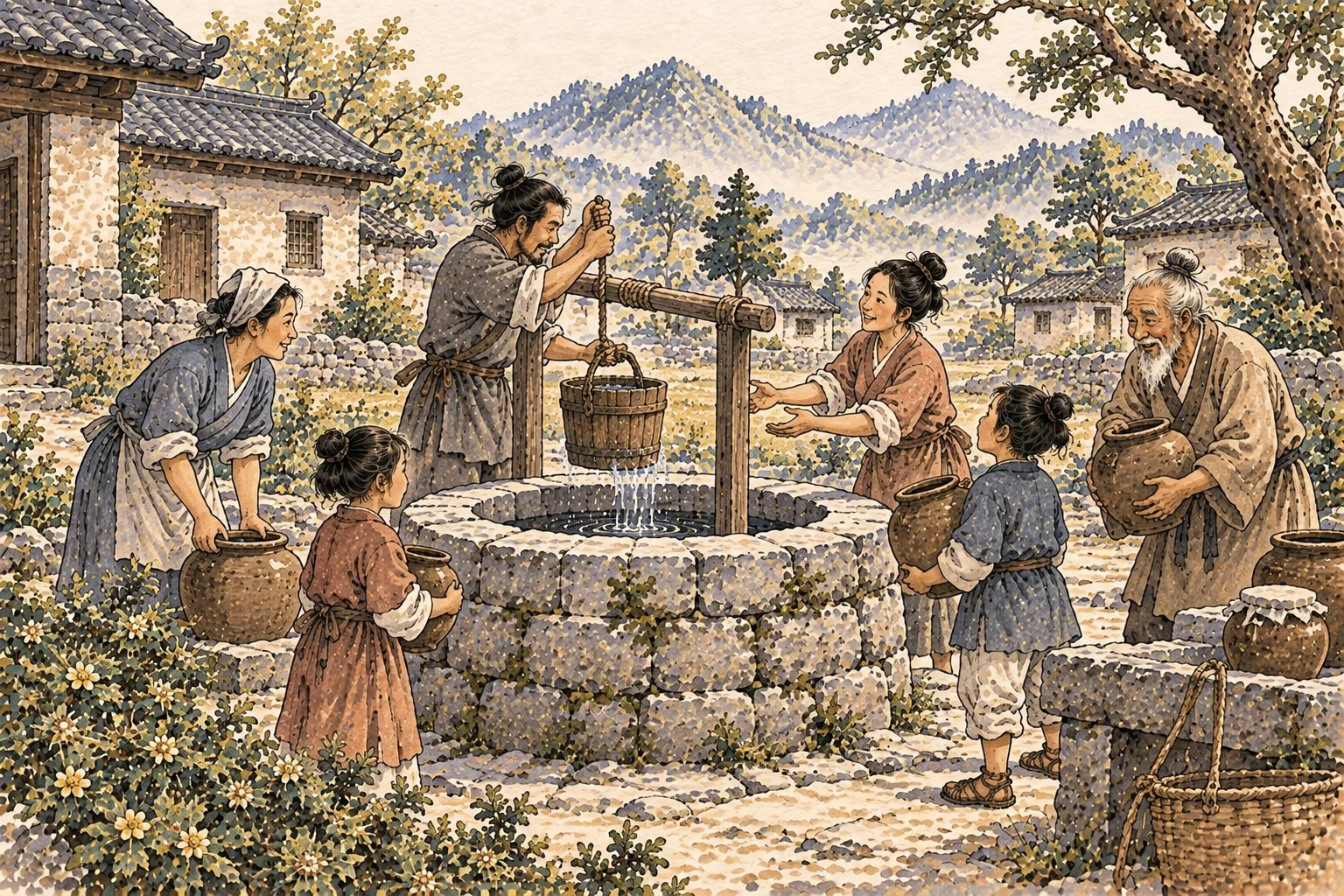
《彖传》以木入水而上汲解释井象,称井养而不穷,但“差一点完成”还不算有功。刚中意味着资源和原则稳定,实际使用则需要可靠的器具与行动。
The Tuan pictures wood reaching into water to lift it upward. The source can nourish without exhaustion, but until water is brought up and delivered, the work is unfinished.
Water above wood: The Well. A cultivated person cares for the people and encourages mutual help.
古时汲水依赖木构与绳具,大象因而联想到井的提水之功。“劳民劝相”可理解为关怀民生、鼓励互助,让公共资源真正抵达需要的人。
The lifting gear makes the water available. The Image extends that work into care for people and encouragement of mutual aid: sustaining a commons takes both infrastructure and cooperation.