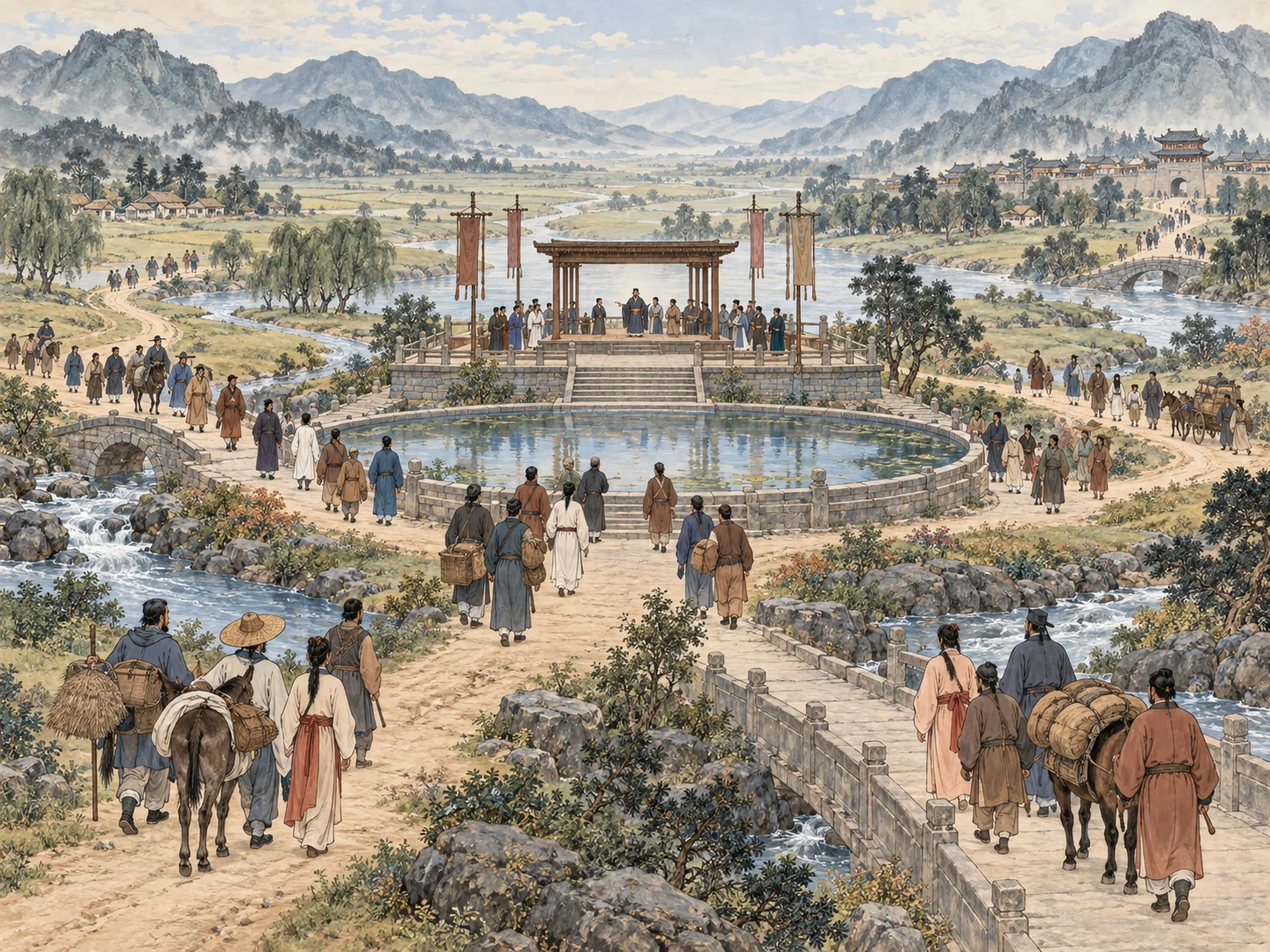
1. What brings people together · 象曰:澤上于地,萃;君子以除戎器,戒不虞。
Gathering asks what makes people come together and what keeps that bond sound. The ancient judgment places a ruler at an ancestral temple; the Image calls for preparedness when many assemble.
萃是聚集。泽水汇在大地之上,人也因共同目的与可信的中心而相聚;但“人多”本身不是好事,若没有正道与防备,聚也会成乱。
A gathering needs stewardship as well as welcome. The ancient image speaks of maintaining arms against unforeseen danger; its practical lesson is to plan for safety and responsibility before a crowd is tested.
“除戎器”古注释为修治武备,是大群聚集时预防意外的提醒,不等于鼓动冲突。今天可读为事前安排安全、责任与应急,而不让热闹掩盖脆弱处。
Gathering asks what makes people come together and what keeps that bond sound. Imagine a neighborhood community garden.
萃卦问的是:人为何聚在一起,又靠什么让这份联结稳固。想象一个社区花园:有人为新鲜蔬菜,有人为陪伴,有人为共同劳作。
2. Call and reconnect · 有孚不終,乃亂乃萃,若號一握為笑,勿恤,往无咎。
Trust falters when suspicion fills a crowd. A clear call and a small renewed connection are enough for a first step.
起初有信,后来因猜疑而乱聚。与其揣测人心,不如真诚呼号并向可信的小群迈步;握手而笑是关系修复的缩影,不要求所有人立刻一致。
Maya is on a big community garden email list. When rumors spread that the coordinator plays favorites, trust starts to fray. She writes an honest note asking for clarity.
Maya 在一个大型社区花园的邮件群里。当谣言说协调人偏袒熟人时,信任开始动摇。她写了一条诚恳的消息,请求澄清。
A few gardeners reply with jokes and support. They meet for coffee, laugh, and agree to tend a small shared bed together.
几位园友用玩笑和支持回应。他们约喝咖啡,笑着决定一起照料一小块共享菜畦。
3. A small sincere invitation · 引吉,无咎,孚乃利用禴。
A trustworthy invitation draws someone in. The modest vessel shows that a simple rite can carry sincerity.
中正者不必靠华丽场面取信。有人善意牵引,便能进入合适的群;“禴”是简薄祭礼,贵在有孚。
A friend invites Leo to join a small gardening circle that meets on Saturdays. He brings a jar of homemade jam, not a fancy dish.
一位朋友邀请 Leo 加入一个每周六聚会的小型园艺圈。他带了一罐自制果酱,而不是精致的菜肴。
The group welcomes him because he shows up with genuine interest. A simple offering carries more weight than display.
小组欢迎他,因为他带着真诚的兴趣出现。简单的奉献比炫耀更有分量。
4. Find the fitting company · 萃如,嗟如,无攸利,往无咎,小吝。
An awkward crowd does not become welcoming merely because one waits longer. Turning toward a more fitting connection is reasonable, even if a trace of embarrassment remains.
想聚却未找到合适位置,嗟叹并不会使局面变好。换一个能真诚相待的方向可以无咎,但刚受冷落的尴尬仍在,故有“小吝”。
Nina tries to join the popular garden clique that always meets near the rose arch. She stands at the edge and sighs; no one invites her in.
Nina 想加入那个总在玫瑰拱门旁聚会的热门园艺小圈子。她站在边缘叹气,没人邀她加入。
She turns toward a quieter group planting herbs. They welcome her, though a small sting of rejection remains.
她转向一个更安静、正在种香草的小组。他们欢迎她,但一丝被冷落的刺痛仍在。
5. Let service justify influence · 大吉,无咎。
The line's brevity hides a condition: the Image says this position is not fitting. A person who draws people together must earn legitimacy through substantial shared benefit, as the repaired store and passed baskets show.
爻辞虽短,《小象》却说“位不当”:九四聚众而位置不正,不能只因有人跟从就自认无咎。画面以修仓分粮的实功承载“大吉”,使众人真实受益。
Sam doesn't hold an official title, but he organizes a workday to repair the garden's tool shed. He divides donated seeds fairly and passes baskets of harvest to every household.
Sam 没有正式头衔,但他组织了一个工作日来修理花园的工具棚。他把捐赠的种子公平分配,并把收获的菜篮传递到每户人家。
People see the real benefit and start treating him as a trusted organizer, though he never claims a throne.
人们看到实实在在的好处,开始把他当作可信的组织者,尽管他从未自居高位。
6. Earn trust over time · 萃有位,无咎。匪孚,元永貞,悔亡。
The raised seat is real, and so is the distance in people's faces. Trust has to be earned through sustained, principled attention; a title alone cannot gather hearts.
有位并不等于有信。《正义》说九四专聚人心时,九五的德尚未通达;所以要长期守正、亲自听见民意,信任不能凭名位立刻领取。
Elena is elected president of the garden association. People applaud, but their faces show hesitation. She spends months listening at the shared well, addressing small disputes fairly, and keeping promises.
Elena 被选为花园协会的主席。人们鼓掌,但脸上带着犹豫。她花了几个月在共享水井旁倾听,公平处理小纠纷,并信守承诺。
Slowly, trust grows—not because of her title, but because she keeps showing up with integrity.
慢慢地,信任增长了——不是因为她的头衔,而是因为她持续带着诚信出现。
7. Grief can tell the truth · 齎咨涕洟,无咎。
At the outer edge of a gathering, a person recognizes isolation and grieves openly. Tears are not a moral failure; the line allows distress to register rather than hiding it.
上六处聚之极却没有援应,悲伤是意识到孤立与危险后的真实反应。画面让眼泪与山下人群的距离同在;“无咎”不是要求人压住哭泣。
Mrs. Chen used to tend the garden's oldest apple tree. After new members redesigned the space, she feels left out.
陈奶奶曾经照料花园里最老的苹果树。新成员重新设计空间后,她觉得自己被冷落了。
She sits on a bench above the garden, sighs, and wipes her tears. The line says this grief is not a moral failure; sometimes isolation deserves to be acknowledged.
她坐在花园上方的长椅上,叹气,擦去眼泪。爻辞说,这种悲伤不是道德过失;有时孤独值得被承认。
8. What would make belonging real? · 萃:亨。王假有廟,利見大人,亨。利貞。用大牲吉,利有攸往。
The temple and large offering belong to an ancient ritual world. They show the weight of shared memory and commitment, not an instruction to perform a sacrifice today.
宗庙和大牲属于古代礼制,表达共同记忆、集体投入与庄重承诺,不是当代用户必须仿行的仪式。能否聚得正、是否有公正可信的带领者,比聚会的规模更重要。
The six lines follow wavering trust, a gentle invitation, exclusion and a new path, service without formal status, authority that still lacks confidence, and grief at the edge of the group.
六爻从信心摇摆、被引入群、失落后另寻同道,到有功而聚、在位仍需赢信,最后独处者泪下。
What makes you feel truly gathered in, and what might be missing?
什么让你觉得自己真正聚在其中?又可能缺了什么?