45 · Gathering (CUÌ)
Gathering asks what makes people come together and what keeps that bond sound. The ancient judgment places a ruler at an ancestral temple; the Image calls for preparedness when many assemble. The six lines follow wavering trust, a gentle invitation, exclusion and a new path, service without formal status, authority that still lacks confidence, and grief at the edge of the group.
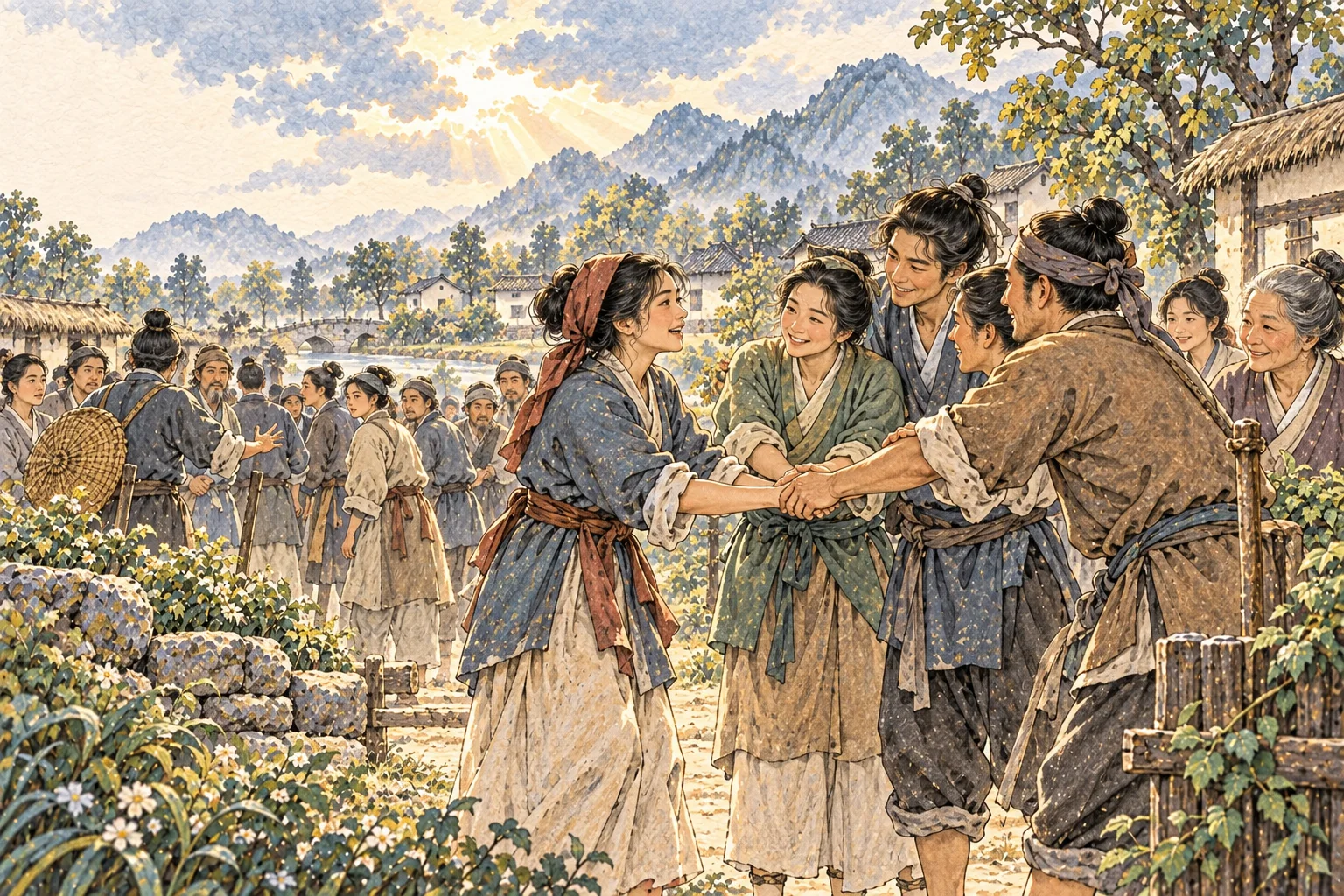
The judgment
Gathering: free passage. The king arrives at the ancestral temple; it is beneficial to meet a great person, and there is passage. Steadfastness is beneficial. A large sacrificial offering is auspicious; it is beneficial to have somewhere to go.
The temple and large offering belong to an ancient ritual world. They show the weight of shared memory and commitment, not an instruction to perform a sacrifice today. Gathering becomes fruitful when its purpose and leadership are worthy of trust.
Original Chinese text
萃:亨。王假有廟,利見大人,亨。利貞。用大牲吉,利有攸往。
The six lines
- 初六 · Line 1 — Trust does not last, so there is disorder and then gathering. If one calls out, a small handful laughs; do not worry. Go forward without blame.
Original Chinese
有孚不終,乃亂乃萃,若號一握為笑,勿恤,往无咎。
- 六二 · Line 2 — Being drawn along is auspicious, without blame. With sincerity, a simple spring offering is beneficial.
Original Chinese
引吉,无咎,孚乃利用禴。
- 六三 · Line 3 — Gathering with sighs brings no advantage. Going onward is without blame, though there is a little regret.
Original Chinese
萃如,嗟如,无攸利,往无咎,小吝。
- 九四 · Line 4 — Great good fortune; no blame.
Original Chinese
大吉,无咎。
- 九五 · Line 5 — Gathered in a position of authority, without blame. If trust is lacking, great and enduring steadfastness lets regret vanish.
Original Chinese
萃有位,无咎。匪孚,元永貞,悔亡。
- 上六 · Line 6 — Sighing deeply, with tears and a runny nose: no blame.
Original Chinese
齎咨涕洟,无咎。