1. Cut back without cutting the roots · 象曰:山下有澤,損;君子以懲忿窒慾。
A neighborhood garden faces a dry month. The coordinator must decide what to cut: watering hours, a planned expansion, or each member's share of the harvest.
社区花园遇上干旱月份。
Decrease does not mean everyone gives until empty. It means honest, timely reductions that protect essentials, keep trust, and let simple offerings—two baskets—still count.
协调人要决定削减什么:浇水时段、扩建计划,还是每人的收成份额。损卦并非让所有人一味奉献到枯竭;它要求诚实、合时地减少过度之处,守住必需,也让两只简朴的篮子仍能表达诚意。
The mountain rises over the lake. The personal practice is specific: curb anger that harms others and wants that outrun what is enough, while preserving real needs.
山高泽低,形成损的取象。最值得主动减少的,首先是会伤人伤己的愤怒与无度欲望,而不是人的基本需要。
2. Help promptly, with measure · 已事遄往,无咎,酌損之。
Her own work finished, a craftswoman brings a measured basket of help next door.
自己的事做完,工匠才提着量好的物资去帮邻居。
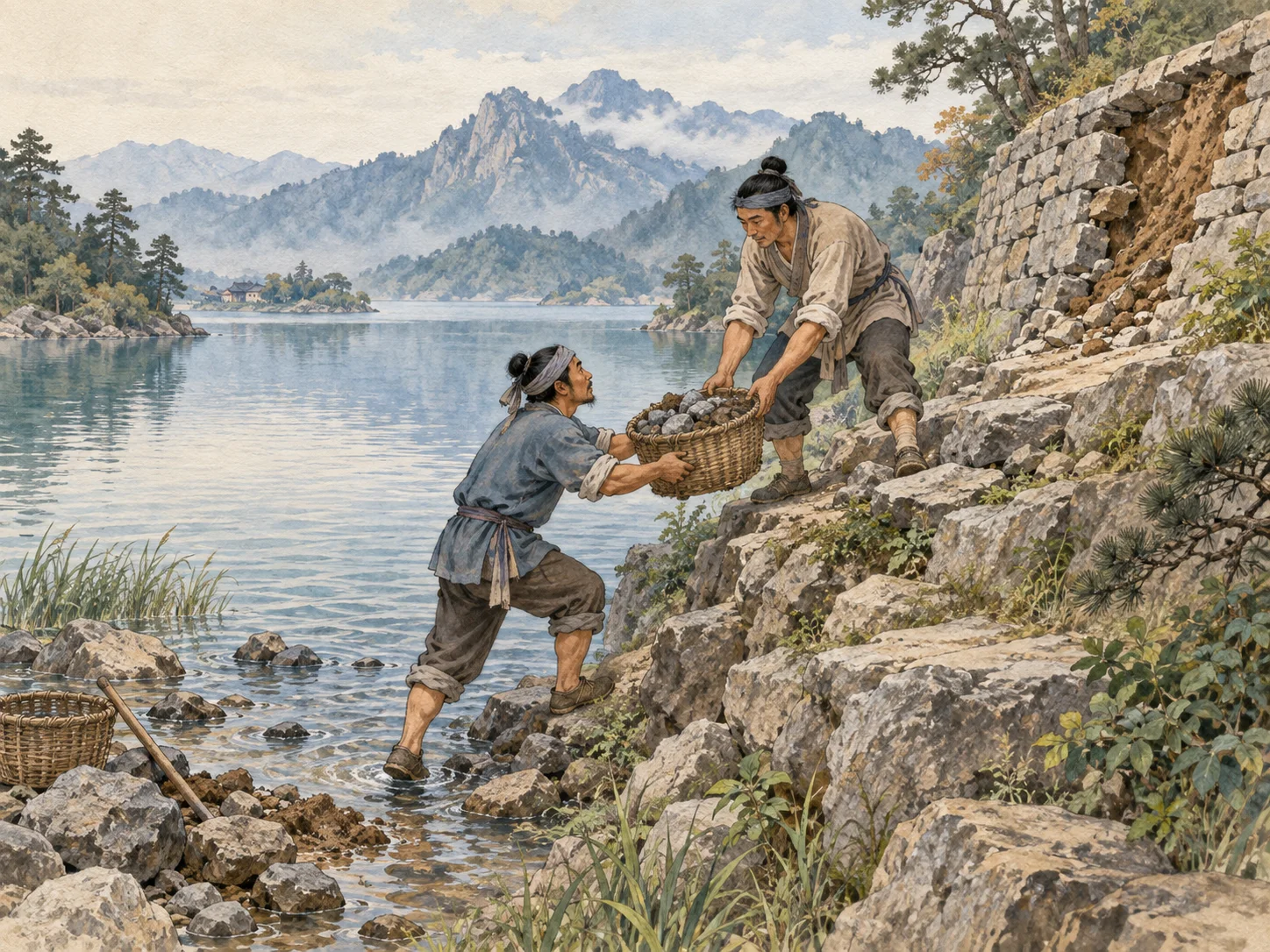
A gardener finishes her own plot's watering, then carries a small basket of seeds to the neighbor mending a fence. She does not empty her whole seed stock; she measures out enough for the neighbor's row. The help is timely and real, and her own work is not abandoned.
一位园丁先做完自己地块的浇水与除草,再提着一小篮种子走到正在修篱笆的邻居那里。她没有把整袋种子倒空,只量出够种一行菜的量。帮忙及时而真实,自己的活儿也没有丢下。
What must I finish before I rush to help?
我在赶去帮忙前,应先完成什么?
3. Give without hollowing out · 利貞,征凶,弗損益之。
The steward shares surplus water without draining the field at home.
管水的人分出余水,却不抽干自家的田。
A water steward stays at the shared irrigation gate during a dry spell. He lets a small surplus flow to the lower plots but keeps enough pressure for his own field. Leaving the gate to chase another scheme would risk the source; steady balance is the help.
干旱时,管水人守在共用水渠闸门旁。他让一小股余水先流向下游地块,却为自家田保留必需的水量。若贸然离开闸门去追逐别的计划,反会断了水源;守住中正的调配本身就是助益。
Where does holding steady help more than rushing off?
在哪里,守住原位比贸然远行更能帮到人?
4. Find the fitting companion · 三人行,則損一人;一人行,則得其友。
Three travelers separate; one finds a companion where the path forks.
三人分开之后,落单的人在岔路遇到新伙伴。
On a hill walk, three friends reach a fork. The trio's banter has made decisions slow, so one friend chooses the quieter trail and soon meets another hiker waiting at a marker. The two walk on as a clearer pair. The split is a change in fit, not a rule that trios always fail.
徒步到岔路口,三位朋友意见总难一致。其中一人选择较静的小路,不久在路标旁遇见另一位等候的同行者,两人重新结伴,步伐反而更合。此处取“三则疑”的相应之道:分开是关系重组,不是说任何三人组合都必散。
When does a group need to change shape?
一个同行小组什么时候需要改变组合?
5. Relief can come swiftly · 損其疾,使遄有喜,无咎。
At the gate, a friend gently loosens a binding that has been hurting the woman’s wrist and sets down the basket she has struggled to carry.
门边,友人轻轻松开勒痛女子手腕的布带,又帮她放下沉重的篮子。
Imagine doing the household errands while your wrist aches and the load keeps growing. You might keep saying “I can manage.” The helpful choice is to tell a trusted person exactly what hurts and let them take one task now. Waiting in silence can turn a small problem into a harder one. This is prompt relief, not a promise that pain disappears instantly.
想象手腕已经疼了,却仍独自扛着家务,篮子越来越重。你或许一直说「我可以」。更合适的做法是具体告诉可信赖的人哪里难受,及时让对方分担一件事。默默硬撑,原本可减轻的小问题也可能拖成大问题。这里说的是及时宽解,并不保证疼痛立刻消失。
Which burden could I name clearly and ask someone to help remove today?
今天,我能明确说出哪一份负担,并请人帮我减轻?
6. Let support arrive · 或益之,十朋之龜弗克違,元吉。
A leader accepts an unexpected gift and counsel without grabbing for more.
领导者接纳意外的馈赠与劝告,却不贪取。
A neighborhood association chair admits she does not know how to solve a parking dispute. She accepts an elder's careful advice and a formal survey from residents instead of forcing her own plan. The old tortoise-shell image stands for weighty confirmation, not a promise of money; humility opens real support.
社区协会主席承认自己不懂如何解决停车争执。她没有强推自己的方案,而是接受长者的审慎建议和居民正式问卷的意见。古时“十朋之龟”象征郑重的确认,不是今日发财保证;谦逊让真实的支援进来。
Whose counsel am I too proud to receive?
我因骄傲而不愿接受谁的忠告?
7. Serve beyond one household · 弗損益之,无咎,貞吉,利有攸往,得臣无家。
Grain reaches many households without stripping anyone else of essentials.
粮食送到许多家庭,却没有夺走别人的生活必需。
At harvest's end, the garden coordinator and volunteer aides open the communal storehouse. They share surplus squash and beans with many households, but no one's own essential share is taken. Helpers join for a common task beyond one family, and the old phrase “without a household” does not mean making anyone homeless.
收成结束时,花园协调人和自愿帮手打开公共库房,把多余的南瓜和豆子分给许多家庭,却不拿走任何一家的必需份额。众人为一桩超出自家利益的事协力;“得臣无家”在这里不是让人失去家园。
What surplus can I share without taking from anyone's essentials?
我有什么余裕可以分享,而不拿走任何人的必需?
8. Where is a sincere, measured decrease better than a grand sacrifice? · 損:有孚,元吉。无咎,可貞,利有攸往。曷之用?二簋可用享。
Finish your own task, then help promptly and in measure. Hold your center rather than empty yourself. A crowded alliance may need a clearer pairing. Relief brings joy; support may arrive unasked. The last line turns gain outward without diminishing others.
初爻先了己事再速往,仍须酌量;二爻守中,不以自损换取表面助益;三爻以同行人数说关系里的疑与合;四爻所苦得解而喜;五爻有外来之益;末爻由不损人而益人,归于公心。
The two vessels make a concrete point: a sincere offering need not be lavish. Decrease becomes constructive only when trust and proportion guide it; austerity by itself is no virtue.
古代祭享重诚,不以器物丰厚为唯一标准。“有孚”是损而可吉的前提;“二簋”说明简约亦可尽心,不是鼓励苛刻节省,更不能让弱者单方面承担代价。
Where is a sincere, measured decrease better than a grand sacrifice?
在哪里,真诚而有分寸的减少比一次轰轰烈烈的牺牲更合适?