1. Release what has been holding you · 象曰:雷雨作,解;君子以赦過宥罪。
After a violent storm floods a neighborhood, the water begins to drain.
暴雨过后,社区积水开始退去,风暴留下的结正在松开。
Some neighbors want to return to normal, while one blocked drain and a few hidden problems still need attention. The work now is to distinguish what can be released from what must be handled early.
有人想立刻回归日常,但一处堵塞的下水道和几处隐患仍需处理。此时的功课,是分辨哪些可以放下,哪些必须趁早动手,并在真正有急难时及早行动。
As storm rain releases what was tight, leadership can make room for repair. Mercy distinguishes an error from a serious wrong; release is not the absence of judgment.
雨后万物得舒展,做人也应给改过留空间。“赦过宥罪”有轻重分辨,不是毫无原则地放过一切。
2. Let the first knot go · 无咎。
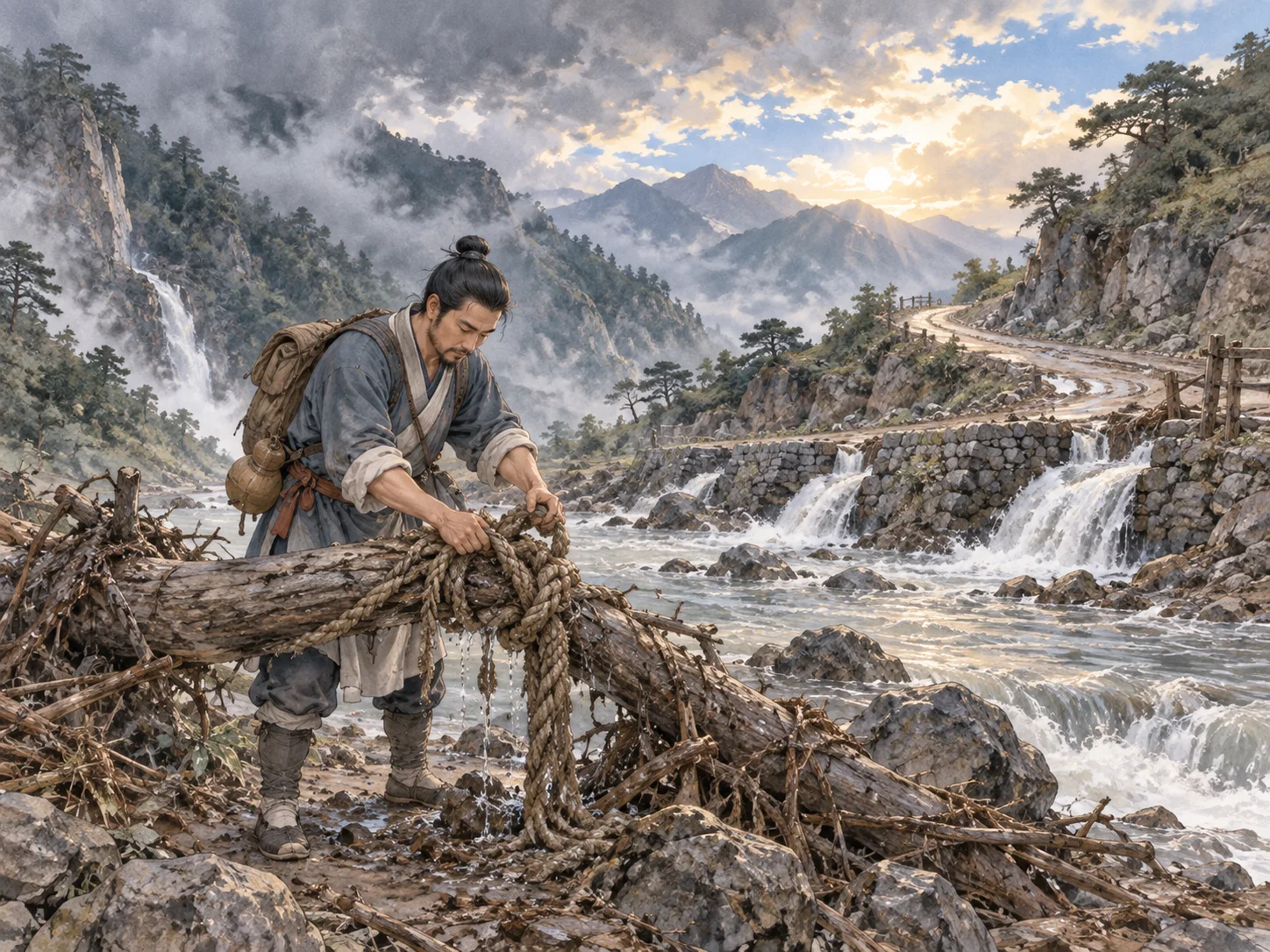
A wet rope comes loose as the stormwater begins to drain.
暴雨渐退,湿绳终于解开。
After the storm, a neighbor unties a wet rope from the shelter railing and steadies a child stepping into the shallow water. No one adds blame for the mess. The first safe step is enough.
暴雨初歇,邻居解开避难棚栏杆上的湿绳,扶着一个孩子踩进浅浅的积水。没有人再为混乱添责。刚脱离险难,先得到喘息,便是无咎。
The first safe step after a storm is enough. The knot begins to loosen, and there is no need to place fresh blame on those emerging from danger. Where would a gentler first step help?
刚脱离险难,柔弱之人也能得到喘息。此时不必再强加过失,先让绷紧的结松开。哪里可以先松开一步,而不是追责?
3. Find a straight course · 田獲三狐,得黃矢,貞吉。
Three foxes are caught; a straight yellow arrow remains in hand.
三只狐狸被网住,手里还有一支端正的黄箭。
In the muddy community field, a groundskeeper finds three foxes caught in a net. She frees them unharmed, then checks the fence with a straight yellow arrow marker. Naming the three hidden gaps keeps the repair centered.
在泥泞的社区田里,管理员发现三只狐狸被困网中。她把它们无损放走,又用一支笔直的黄色箭标检查围栏,标出三处暗藏的缺口。找出潜藏的扰乱,再用不偏不曲的方式处理。
Three foxes stand for trouble that hides. The straight yellow arrow points to a centered, direct response: name the concealed problem without becoming crooked in the hunt for it. What hidden problem needs a centered, direct look?
狐能潜藏,田获三狐是把暗处的扰乱找出来;黄取中、矢取直,是处理问题不偏不曲。图保留三狐与黄矢两件经文物象,不暗示鼓励伤害动物。哪个暗藏的问题需要用中正直接的方式看待?
4. Do not advertise a weakness · 負且乘,致寇至,貞吝。
A passenger rides high on a cart while still carrying a load; thieves draw near.
人坐在车上仍背着重物,盗贼也被招来。
On a crowded bus, a rider piles a heavy load on his shoulders while sitting above an open bag of cash. His showy mismatch draws a pickpocket. The line faults his poor judgment and display—not the thief's wrong.
拥挤的公交车上,一名乘客把沉重包裹扛在肩上,又坐在敞开的现金袋上方。这种位置与举止不相称的张扬,引来了扒手。爻意责备的是失当显露,而不是把罪过推给受害者。
The rider's showy, mismatched posture calls attention to goods and invites trouble. The line criticizes poor judgment and display; it is not a rule for blaming victims of theft. Where am I showing more than the situation can safely carry?
既乘车又夸张地背负财物,位置与举止不相称,惹人觊觎。爻意重在自省失当的显露和处事方式,不应拿来责备真正遭受侵害的人。我在哪里显露过多,超出了处境所能安全承载?
5. Free the wrong tie · 解而拇,朋至斯孚。
A cord slips from the big toe and a trusted friend approaches.
大脚趾上的绳松开,可信的朋友来到门前。
At the community center gate, a volunteer notices a cord knotted around his sandal's big toe, an old dependency that trips him. He cuts it. A trusted friend arrives through the gate, and their handshake is sincere.
在社区中心门口,一名志愿者发现一根细绳缠住自己凉鞋的大脚趾,那是不该再拖着的旧依附,害他走路绊脚。他割断细绳。一位可信的朋友正好走进门来,两人的握手坦诚无猜。
The bound toe makes an unwanted attachment visible. Free the small hold that distorts your step, and a trustworthy companion can meet you without suspicion. What small attachment is keeping a trusted friend at the gate?
拇为大脚趾,古注把它比作不适当的贴附。先解掉牵住自己的人事关系或小结,真正可信的朋友才能到来。画面用脚上绳结取其直接意象。什么小小的纠缠,让可信的朋友停在门外?
6. Release with fairness · 君子維有解,吉;有孚于小人。
A leader opens the gate and even former opponents lower their sticks.
领导者开门释怨,原先对立的人也放下棍棒。
At a neighborhood meeting, the block captain lifts the bar on the locked courtyard gate to let both sides in. She hears the dispute fairly; the men who had raised sticks lower them. Trust grows, but rules still hold.
社区会议上,楼长抬起锁着的院门横杆,让争执双方都进来。她公正地听完争端,先前举棍的人放下了棍子。信任由此生长,但边界仍然保留。
A fair act of release changes the posture of people who had sustained the conflict. Their sticks lower because trust becomes possible; justice still has boundaries. How can fairness make even opponents stand down?
君子用公正的方式解开争端,先前制造难处的人也能感到可信而退让。《小象》说“小人退也”;这不等于没有边界的赦免。公正的处理怎样让对手也愿意退让?
7. Remove the last threat · 公用射隼,于高墉之上,獲之,无不利。
One predatory falcon on the high wall is finally removed.
高墙上的一只猛禽,终于被准确清除。
After the water recedes, a wildlife volunteer sees a predatory falcon trapped on the high wall of the old school. She waits for a safe moment, nets it on the parapet, and relocates it. The last danger is removed without spectacle.
积水退去后,野生动物志愿者看见一只猛隼困在旧学校的高墙上。她等到安全时机,在墙头用网捕获,再将它迁走。最后的危害被解除,不必张扬流血。
The falcon on the high wall is the remaining danger. The noble's targeted action, after waiting for the right moment, completes the release. The illustration shows capture without spectacle. What final threat needs a timely, targeted response?
隼据高墙,不在应处,古注以它比拟尚存的悖乱。到解的尽头,需要在时机成熟后有针对性地除去最后的危害;图以捕获而不见血表现经文动作。哪个最后的危害,需要适时而有针对性地处理?
8. What has already been released, and what still needs your prompt attention? · 解:利西南,无所往,其來復吉。有攸往,夙吉。
The first line simply clears blame. The second finds three hidden foxes and a straight yellow arrow. Displaying a burden from a cart then attracts danger; loosening the wrong tie makes room for a trusted friend. A fair leader eases conflict, and a final decisive act removes a hawk from the high wall.
初爻险解无咎;二爻田获三狐得黄矢,求出暗藏问题并守中直;三爻负且乘而招寇,四爻解其拇后朋友可信,五爻君子以德解难,末爻射高墉之隼以除残余悖乱。
The southwest carries a classical image of reaching others, not a modern compass rule. The decisive distinction is whether work remains: return when the crisis has passed, but move promptly when a real need calls.
“西南”在《彖传》中连于得众、施解于众,不宜当作今天每次出行的方向指令。没有待解之事就返常守中;真有急难则宜早去,不要等局势再坏。
What has already been released, and what still needs your prompt attention?
哪些事已经可以放下,哪些仍需你及早处理?