40 · Deliverance (XIÈ)
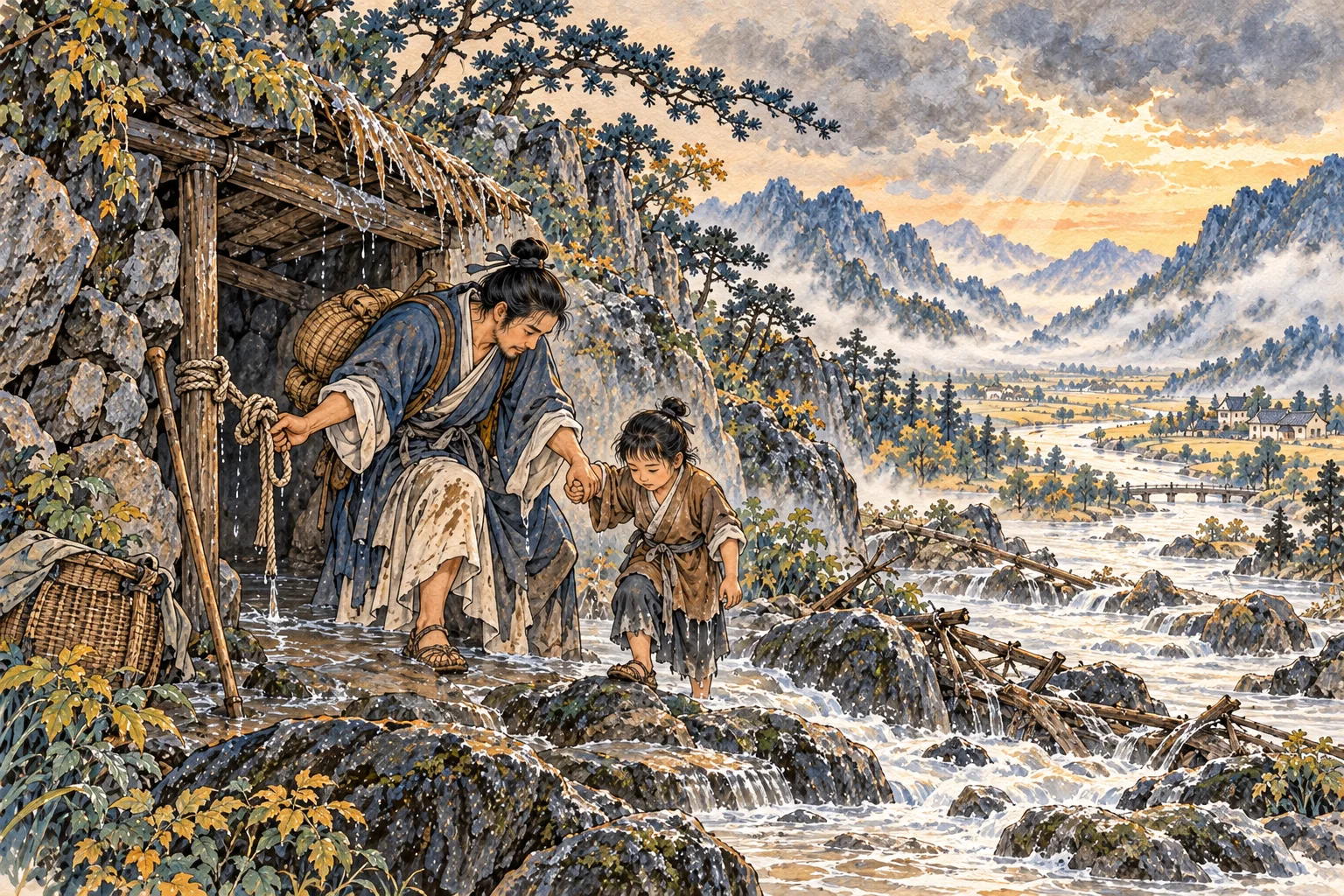
Deliverance follows obstruction: thunder and rain loosen what was bound. If no urgent work remains, return to ordinary life. If someone still needs help, act early. The lines show release as practical work—expose hidden trouble, drop false attachments, restore trust and remove a final threat.
The judgment
Deliverance: favourable to the southwest. If there is nowhere to go, returning is auspicious. If there is somewhere to go, setting out early is auspicious.
The southwest carries a classical image of reaching others, not a modern compass rule. The decisive distinction is whether work remains: return when the crisis has passed, but move promptly when a real need calls.
Original Chinese text
解:利西南,无所往,其來復吉。有攸往,夙吉。
The six lines
- 初六 · Line 1 — No blame.
Original Chinese
无咎。
- 九二 · Line 2 — In the field capture three foxes; obtain a yellow arrow. Steadfastness is auspicious.
Original Chinese
田獲三狐,得黃矢,貞吉。
- 六三 · Line 3 — Carrying a load while riding in a cart brings raiders; even persistence is shameful.
Original Chinese
負且乘,致寇至,貞吝。
- 九四 · Line 4 — Release your big toe; then a friend arrives and trust becomes possible.
Original Chinese
解而拇,朋至斯孚。
- 六五 · Line 5 — A cultivated person brings release: auspicious; even lesser people come to trust it.
Original Chinese
君子維有解,吉;有孚于小人。
- 上六 · Line 6 — A noble uses an arrow against a falcon atop a high wall and captures it; nothing is unfavourable.
Original Chinese
公用射隼,于高墉之上,獲之,无不利。