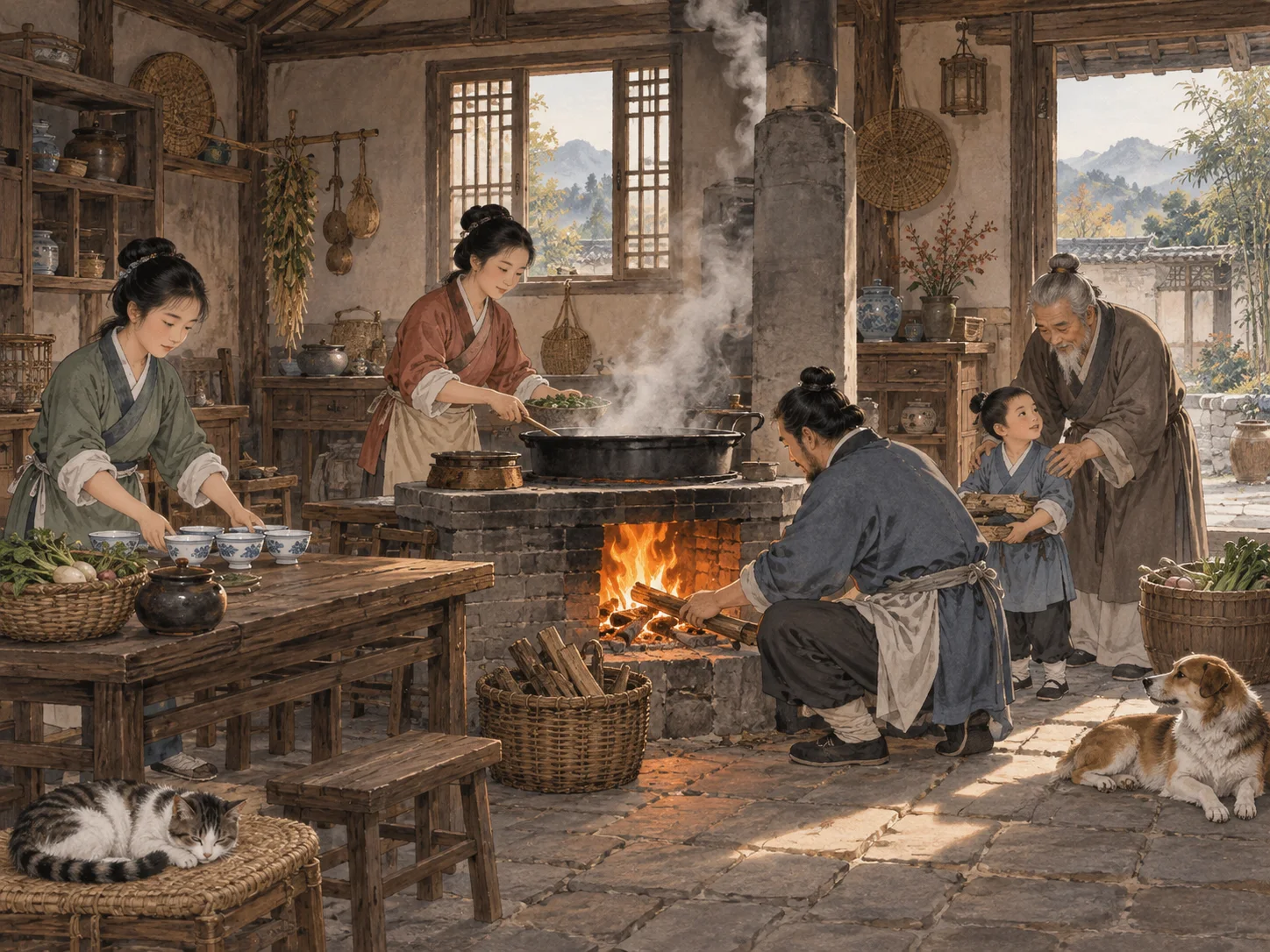
1. Build a household people can trust · 象曰:風自火出,家人;君子以言有物,而行有恆。
Three generations reopen the old family home for a year.
一家人重新打开老屋,准备三代同住一年。
They can make daily life dependable through early boundaries, shared meals, measured warnings, common provision, and trust—or let old habits harden into resentment. The classical text speaks from ancient gender roles; the modern question is mutual respect and shared responsibility, not fixed domestic assignments.
日常边界、共同备餐、说话分寸、照料与信任,可以让家变得可靠;若只靠旧习惯或一味忍让,也可能积累怨气。经典中的男女内外分工是古代语境,今天读它,重点是责任与尊重,不是照搬性别安排。
Like wind issuing from fire, influence spreads outward from repeated acts at home. Say something real; do what you say consistently.
风从火生,影响由家中日常向外延展。说话有内容、做事有恒心,比空讲家规更能建立可信的关系。
2. Set limits early · 閑有家,悔亡。
A child watches adults set a small, understandable boundary at the gate.
孩子看着大人修好门闩,家庭边界先讲明白。
Before the boxes are unpacked, the family gathers by the kitchen door. They fit a simple latch on the cupboard where cleaning supplies are kept, agree on quiet hours, and decide which room is shared. The boundary is small but spoken aloud; later, no one has to guess or resent a rule made too late.
箱子还没拆完,一家人先站在厨房门口商量。他们给放清洁用品的柜子装上简单搭扣,约定安静时段,也定下哪间房共用。边界虽小,却是提前说清的;若拖到矛盾出现才补救,就容易留下怨气。
Where could a small, early agreement spare your household later friction?
在你家里,哪件小事提前说清,就能少一场摩擦?
3. Care for the center · 无攸遂,在中饋,貞吉。
Everyone helps prepare the meal at the center of the home.
家中众人一起备餐,照料不再落在一个人身上。
At the center of that same house, the evening meal is the steady point. One woman plans and cooks it, but not alone: a teenager washes greens, an elder sets bowls, another adult wipes the table. The point is shared stewardship of daily care, not assigning kitchen work by gender.
在同一屋檐下,晚餐是家的中心。一位女性负责计划和掌勺,但并非一人承担:少年洗菜,长辈摆碗,另一位成人擦桌。经典以古代主妇主持中馈为象;今天可理解为谁都可以分担这份日常照料,而不是按性别分派厨房之事。
Who keeps your daily life nourished, and how could that care be shared more openly?
谁在维持你日常的饮食起居?这份照料可以怎样更公开地分担?
4. Firm without cruelty · 家人嗃嗃,悔厲吉;婦子嘻嘻,終吝。
An elder warns a child away from a hot pot while others laugh.
长辈及时劝开伸向热锅的孩子,旁边的人还在笑。
At supper, a child reaches toward the hot pot. An elder calmly blocks the small hand and says, 'Wait—steam burns.' Two relatives are laughing and miss it. The warning is firm but not shaming. If the house only scolds, warmth dies; if no one watches, indulgence later stings.
晚饭时,孩子伸手去够热锅。长辈平静地挡住那只小手,说:“等等,蒸汽会烫。”旁边两个亲人正说笑,没注意到。提醒有分寸,却不羞辱人。若家里只剩呵斥,温情会冷掉;若无人看顾,纵容终会带来懊悔。
When does a firm boundary protect someone—and when does it tip into fear?
坚定的边界何时是在保护人,何时又会变成让人害怕的压制?
5. Build shared provision · 富家,大吉。
Stored grain and shared work make the home plentiful.
粮食有储备,事务有人分担,家便渐渐丰足。
That year, the family turns a spare room into a shared pantry. Jars are labeled, rice and beans rotated, tools repaired and hung. An aunt keeps the list, a nephew carries boxes, a grandmother checks dates. Because they provision together, an unexpected guest or a tight month does not cause panic.
那一年,家人把空房改成共用储藏间。罐子贴上标签,米豆轮换,工具修好挂起。姨妈管清单,侄子搬箱子,奶奶查日期。因为一起储备,突然来客或手头紧的一个月,也不至于慌乱。这不是炫耀富足,而是让家有照料众人的余力。
What would a well-kept 'storehouse' mean for your household beyond money?
对你的家来说,除了钱,一个打理得当的“储藏间”还意味着什么?
6. Let care go both ways · 王假有家,勿恤。吉。
A ruler comes home and greets elders and children without distance.
位高的人回到家中,仍亲近长者与孩子。
The person who usually carries authority in the house—here, a grandfather who once ran a shop—sits at the ordinary dinner instead of issuing instructions. He asks each person about their day and listens. The household feels secure because care moves both ways, not because someone demands respect from above.
家中通常掌事的人——这里是一位曾开过店的祖父——没有发号施令,而是坐到平常的饭桌旁。他挨个问大家今天过得怎样,并认真听。家人觉得安稳,是因为关爱双向流动,而不是因为有人高高在上地要求尊敬。尊位之人以相爱相接,就不必忧虑。
What changes when authority in your home listens before it decides?
当家里的权威先倾听再决定,会有什么不同?
7. Earn respect through trust · 有孚威如,終吉。
An elder checks her own reflection before speaking with authority.
长者发话之前,先照见并检点自己。
Before speaking about the shared budget, an elder pauses at the hallway mirror. She checks her own record: Did she keep the quiet-hours agreement? Did she repay what she borrowed? Then she speaks plainly. Trust and quiet dignity hold the household together; if she demands more than she practices, respect frays.
谈共同开支前,一位长辈在走廊镜子前停了一下。她先看自己:安静时段的约定做到了吗?借的东西还了吗?然后才平静开口。可信与可敬的威信让家凝聚;若要求别人多、自己做得少,敬重就会磨损。《小象》所谓“反身”,正是先省察自己。
Where might self-scrutiny make your words carry more weight than volume?
在哪些事上,先反省自己,会让你的话比提高音量更有分量?
8. Where in your household is a small routine either holding people together or quietly eroding trust? · 家人:利女貞。
The lines move from setting limits early and tending the shared meal to balancing firmness with warmth. A well-provided home, reciprocal care, and authority earned through sincerity complete the sequence.
初爻及时立界,二爻守中理馈;三爻提醒严与纵的分寸,四爻说家能富足,五爻以相爱而不忧,末爻则以诚信、威仪和反身自省收束。
The judgment centers a woman's right conduct within the ancient household. That is the text's historical frame, not a rule assigning domestic work to women today. Its lasting question is whether each person can keep faith with the home.
卦辞以古代家庭中的女性角色为切入点,强调家内之事须守正。它反映当时的分工语境;用于今天,不应据此限定女性只可承担家务,而可理解为家人都须认真守住各自承诺。
Where in your household is a small routine either holding people together or quietly eroding trust?
在你家里,哪个小习惯正在把人聚在一起,还是在悄悄磨损信任?