37 · The Family (JIĀ RÉN)
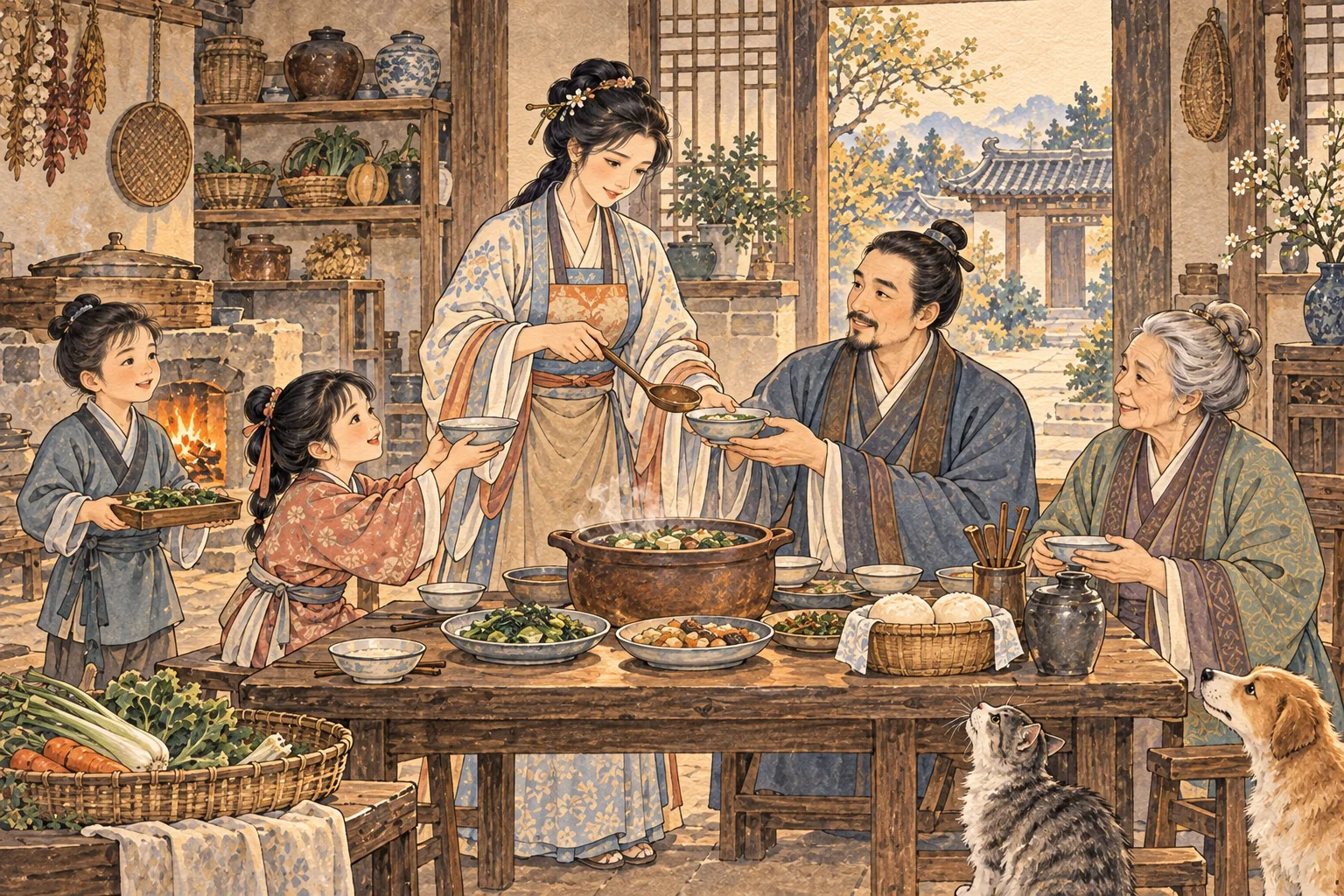
The Family asks how a household becomes dependable through everyday conduct: timely boundaries, shared provision, measured words, care, and trust. The classical text speaks from an ancient division of gender roles; the modern question is how people uphold responsibilities with mutual respect.
The judgment
The Family: a woman's steadfastness in what is right is favourable.
The judgment centers a woman's right conduct within the ancient household. That is the text's historical frame, not a rule assigning domestic work to women today. Its lasting question is whether each person can keep faith with the home.
Original Chinese text
家人:利女貞。
The six lines
- 初九 · Line 1 — Set a protective boundary for the household; regret disappears.
Original Chinese
閑有家,悔亡。
- 六二 · Line 2 — No separate undertaking is pressed; remain at the central provision of food. Steadfastness is auspicious.
Original Chinese
无攸遂,在中饋,貞吉。
- 九三 · Line 3 — The household speaks sternly: despite regret and strain, good fortune. Wife and children laugh heedlessly: in the end, shame.
Original Chinese
家人嗃嗃,悔厲吉;婦子嘻嘻,終吝。
- 六四 · Line 4 — A flourishing household: greatly auspicious.
Original Chinese
富家,大吉。
- 九五 · Line 5 — The king reaches the way of having a household. Do not worry; auspicious.
Original Chinese
王假有家,勿恤。吉。
- 上九 · Line 6 — With trustworthiness and a dignified presence, the end is auspicious.
Original Chinese
有孚威如,終吉。