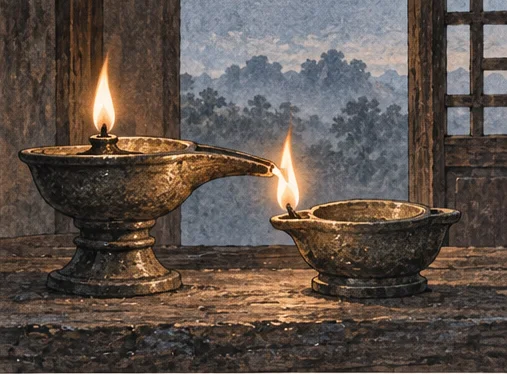
1. Keep the light without burning out · 象曰:明兩作離,大人以繼明照于四方。
Mei runs a small community art studio that has become a bright spot in her neighborhood.
梅经营着一家小型社区艺术工作室,它已成为邻里间的一盏明灯。
But its light depends on her energy and the support of many hands. The hexagram Li reminds Mei that brightness needs a steady, gentle ground to keep shining without burning out or overwhelming others.
但这份光亮依赖她的精力和众人的支持。离卦提醒梅:光明需要稳定而柔和的根基,才能持续照耀,而不至于燃尽或灼伤他人。
The doubled light points beyond a single flash. Keep clarity alive and let it reach in every direction.
光要一代接一代地照出去,而不只在一时灿烂。明辨与教化,重在持续。
2. Step with care · 履錯然,敬之无咎。
Crossing footprints make the first step uncertain; the traveler pauses by the light.
脚印杂乱交错,行人在灯旁先看清下一步。
When Mei first opened the studio, many paths crossed: pottery, painting, poetry nights. Each idea glowed. Instead of rushing, she visited other community spaces and asked what they needed. Respecting their tracks, she chose one workshop to start.
梅刚开工作室时,眼前有许多交叉的路:陶艺、绘画、诗歌之夜,每个想法都在发光。她没有急着全做,而是走访了其他社区空间,询问他们需要什么。她敬重这些已有的足迹,只选择先开一门工作坊。
At the beginning, many tracks cross. Bright perception helps only if it makes your next step more careful. What helps you choose one path when many call to you?
一开始就有纷杂的路迹,越明亮敏锐,越要敬慎地选下一步。当许多道路同时召唤你时,什么帮助你选择其中一条?
3. Keep light centered · 黃離,元吉。
Yellow light gathers at the center, warm and steady rather than dazzling.
黄色光落在中央,温和而稳定,并不刺眼。
Mei found her center leading a weekly clay class. She didn't perform or seek applause; she moved slowly, showing each person how to shape a bowl. Like the yellow light that stays in the middle, her warmth made the studio a place where people felt safe to learn.
梅在每周的陶艺课上找到了自己的中心。她不表演也不求掌声,只是慢慢地示范,教每个人如何捏出碗形。就像黄色的光安守中道,她的温暖让工作室成为人们安心学习的地方。
Yellow marks the center. Light that is warm and well placed, rather than dazzling for its own sake, is deeply fortunate. Where do you find your center when the world asks for brightness?
黄色居中,光不偏不倚。让明亮有温度、有分寸,才是离卦的盛处。当世界要求你发光时,你在哪里找到自己的中心?
4. Meet the setting sun · 日昃之離,不鼓缶而歌,則大耋之嗟,凶。
At sunset, an elder has forgotten the song and only laments the fading day.
太阳西斜,老人忘了击缶歌唱,只顾哀叹暮色。
At sunset, an elder who helped build Mei’s studio sits beside an untouched clay drum. He laments that he can no longer work as he once did. Mei asks him to share a story instead. The fading day is real, but if he answers it only with regret, the wisdom he can still give is lost.
日落时,曾帮梅建起工作室的长者坐在未敲响的陶鼓旁,感叹自己不如从前。梅请他讲一个故事。日光确实会衰退,但若只剩哀叹,他仍能传下的经验也会失去。
The sun is setting. If one can only lament age and cannot find a song in ordinary life, the fading light becomes a source of dread. When your light fades, what simple song can you still drum?
日已西斜,盛光不会常在。与其只为衰老叹息,不如在有限的时光里仍能安然生活。当你的光渐弱时,你还能敲响怎样简单的歌?
5. Do not let light consume · 突如其來如,焚如,死如,棄如。
Fire arrives suddenly; people escape while the building burns behind them.
火突然烧起,人们逃离,房屋在身后焚烧。
One afternoon, a fire spreads through the timber studio without warning. Mei and the volunteers run out, leaving work and tools behind. The sudden blaze is not a moment to protect possessions or insist on business as usual. First make sure everyone is out; then face what was destroyed.
一个下午,火突然烧进木造工作室。梅和志愿者赶紧逃出,作品和工具只能留在里面。骤火来时,不能先顾财物,也不能假装照常营业。先确认人都脱险,再面对已经失去的东西。
Fire arrives without restraint and leaves devastation. Bright force that turns abrupt and consuming can destroy the very ground that held it. When a sudden fire destroys what you built, what remains?
失控的火骤然而至,留下焚毁与弃置。光明一旦变成躁烈,反会无所容身。当突如其来的大火烧毁你所建之物时,还剩下什么?
6. Let grief guide care · 出涕沱若,戚嗟若,吉。
After loss, the leader weeps with others and then helps the survivors.
失去之后,带领者与众人同哭,再照料幸存者。
After the fire, Mei gathers the people who escaped. She cries with them and listens to what each has lost. Their grief is not weakness. She begins with shelter, calls, and practical help rather than a cheerful promise to reopen tomorrow. Care can follow tears without denying them.
火灾后,梅把逃出来的人聚到一起,听他们讲失去的东西,也和他们一同落泪。悲伤不是软弱。她先安排暂住、联络和实际帮助,而不是轻率许诺明天就能重开。照料可以从眼泪之后开始。
The fortunate part is not the loss. It is a leader willing to see suffering honestly and answer it with care. How can shared grief become a source of healing?
位高者能为伤痛落泪,正是看见人的处境。这里的吉,不是灾难本身,而是悲悯带来的清醒与担当。共同的悲伤如何成为治愈的源泉?
7. Judge without sweeping blame · 王用出征,有嘉折首,獲匪其醜,无咎。
The commander restrains the ringleader but releases ordinary followers.
带队者制止首恶,却放走普通跟随者。
The investigation finds that one coordinator had repeatedly ignored a blocked exit. The community removes that person from the safety role, while ordinary volunteers who followed the schedule are not treated as accomplices. A clear response identifies the source of preventable harm; punishing everyone would darken the studio again.
调查发现一位协调人多次忽视堵住的出口。社区撤下他负责安全的职务,却不把按安排做事的普通志愿者都当成同谋。清楚地处理可预防的伤害,要分清责任源头;迁怒所有人只会再次遮蔽工作室。
An expedition guided by clarity distinguishes the source of harm from those who followed. Restraint prevents force from becoming indiscriminate. How do you address harm without punishing everyone involved?
用明辨去平乱,重点是制止首恶,不把跟随者一概牵连。力量因有分寸而无咎。你如何应对伤害,而不惩罚所有涉及的人?
8. What sustains your light, and how can you keep it gentle? · 離:利貞。亨。畜牝牛,吉。
The lines begin with careful steps and balanced yellow light, then face sunset and sudden fire. Honest grief opens care for others; at the end, clear judgment distinguishes a harmful leader from those who followed.
六爻由初见光时谨慎落脚、黄光居中,走到日昃的衰落与突然焚毁;之后以真实哀伤重新照看众人,最终把明辨用于节制而公正的行动。
Light needs a sustaining ground. The image of a female cow adds patience and gentle steadiness to the force of brightness.
火要有依托,明也需要守正。卦辞以柔顺的牝牛提醒:持续的光明不能只有炽烈,还要有耐心与涵养。
What sustains your light, and how can you keep it gentle?
什么支撑着你的光?你如何让它保持柔和?