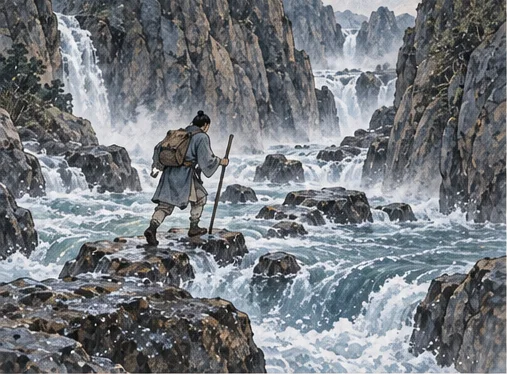
1. Hold steady through repeated danger · 象曰:水洊至,習坎;君子以常德行,習教事。
A potter in a riverside town faces repeated flooding that threatens her studio.
一位陶艺师在河畔小镇的工作室反复遭遇洪水威胁。
The danger is not one storm but a pattern. She must keep her integrity, steady her heart, and discern when to move, when to accept small help, and when to stop pushing.
危险不是一场风暴,而是一种模式。她必须保持诚信,稳住内心,辨明何时该走、何时接受小帮助、何时必须停下。
Repeated water calls for repeated practice. Consistent conduct and practiced instruction prepare people for danger before it arrives again.
反复来水,需要反复练习。以一贯的品行与训练回应风险,才能在下一次险情中不乱。
2. Notice the deeper pit · 習坎,入于坎窞,凶。
Inside one ravine, the traveler slips into an even deeper pit.
人在险谷里,又落入更深的坑。
The potter's studio already sits in a low area. A first flood damages her kiln. She tries to salvage clay by moving it to a basement, but that basement floods even deeper. She realizes she has made the danger worse.
陶艺师的工作室原本就在低洼处。第一场洪水损坏了窑。她试图把黏土搬到地下室抢救,但地下室淹得更深。她这才意识到自己让危险加重了。
Already in a ravine, the traveler enters a deeper hollow. Recognize that the danger has compounded before taking another step. What sign tells you that trying to fix a problem has only made it deeper?
本已在险中,又误入更深的陷处。第一步是承认处境已加重,不要凭惯性继续下探。什么迹象表明,你试图解决问题反而让它更深了?
3. Secure a small foothold · 坎有險,求小得。
A small foothold matters when the whole cliff is wet and steep.
整个山崖都湿滑时,一小块稳固落脚处就很重要。
The potter finds a small dry shelf high in her studio where some clay and tools survived. She secures it, not as a solution but as a reliable base. She feels a small sense of progress.
陶艺师在工作室高处找到一个小干燥的架子,一些黏土和工具幸存下来。她把它固定好,不是作为解决方案,而是作为可靠的立足点。她感到一丝小进展。
The ravine still surrounds you. A firm ledge is a real gain even if it is not yet an escape. What small, reliable step can you take while still in danger?
尚未脱险,先找到一块可靠的立足处。小得不是失败,而是危险阶段里真实可守的进展。在危险尚未过去时,你能采取什么小而可靠的步骤?
4. Pause between dangers · 來之坎坎,險且枕,入于坎窞,勿用。
Dangerous water blocks both directions; the traveler stops on a narrow island.
前后都有急水,行人先停在狭窄的孤岛。
The potter considers leaving town or staying. Both seem risky: moving costs money and loses customers; staying risks another flood. She feels paralyzed, but realizes she must stop and assess rather than rush into either.
陶艺师考虑离开小镇还是留下。两者似乎都有风险:搬走要花钱且失去客户;留下则可能再遇洪水。她感到瘫痪,但意识到必须停下来评估,而不是仓促选择。
Danger lies both ahead and behind. Pushing in either direction can deepen the trap; pause and assess instead. When both paths seem dangerous, what helps you pause instead of forcing a choice?
前后都是险,急着进退只会陷得更深。此爻不是鼓励硬闯,而是要求停下来判断。当两条路都显得危险时,什么能帮你暂停,而不是强迫自己选择?
5. Let sincerity find a window · 樽酒簋貳,用缶,納約自牖,終无咎。
A simple gift passes through a window: trust begins without display.
酒与朴素器皿从窗中递入,信任不靠排场。
A neighbor, knowing the potter is struggling, passes a simple meal of bread and soup through her studio window in a plain clay pot. The potter accepts it as a genuine gesture of support. It strengthens her resolve.
一位邻居知道陶艺师处境艰难,用朴素的陶罐装上面包和汤,从她的工作室窗户递进去。陶艺师接受这份真诚的支持。这增强了她的决心。
In hardship, a modest gift offered sincerely can reach someone even through a window. The vessels are simple; the connection matters more than display. How can a small, sincere gesture reach you when you feel closed off?
在艰难处境里,用一樽酒、两簋食物和朴素陶器表达诚意,不靠排场。窗虽不是正门,仍能成为传达心意的通路。当你感觉封闭时,一个小而真诚的举动如何能触及你?
6. Let the water settle · 坎不盈,祗既平,无咎。
Water settles below the rim; the hollow has not overflowed.
水面渐平,还没有漫过深坑的边缘。
The potter reinforces her studio's low wall and pumps water out. The water level in the ditch outside stays below the rim. She doesn't claim victory, but the danger is contained. She feels steady.
陶艺师加固工作室的低墙,把积水抽出去。外面沟渠的水位保持在边缘以下。她不宣称胜利,但危险已被控制在边界内。她感到平稳。
The hollow has not overflowed; its level has steadied. Containing danger within its banks is enough for now. What does "enough for now" look like in your situation?
水尚未漫出坑沿,却已趋于平稳。此时不必夸称大胜,只要把险情控制在边界内。在你的处境中,“目前足够”是什么样子?
7. Do not stay bound to danger · 係用徽纆,寘于叢棘,三歲不得,凶。
Ropes and thorns show how repeated danger can become captivity.
绳索与荆棘提醒人:反复的险境也可能成为困缚。
The potter ignores the pattern and keeps repairing the same damaged kiln year after year. Eventually, debts and repeated floods trap her; she feels bound like cords around thorn bushes, unable to escape for years.
陶艺师忽视这种模式,年复一年修复同一个损坏的窑。最终,债务和反复的洪水困住了她;她感觉像被绳索绑在荆棘丛中,多年无法脱身。
Cords and thorns make prolonged confinement visible. The line warns what repeated danger can become when the way is lost and never corrected. What repeated cycle might be binding you, and what would it take to change course?
失了方向,终于被绳索与荆棘困住,久不能出。末爻让人看见反复入险而不改路的代价。什么反复的循环可能正绑住你?要改变方向需要付出什么?
8. What repeated danger are you facing, and how can you keep your center while deciding when to move or stop? · 習坎:有孚,維心亨。行有尚。
The six lines descend into a deeper pit, find a small foothold, and then pause when both directions are dangerous. Modest sincerity opens a connection; water levels out, while the final line warns of prolonged confinement after losing the way.
六爻由坠入更深的坑、在险中只求小得,走到进退皆险时先停住;随后以简朴诚意相通,等待水位趋平,末爻警示失道后的长期困缚。
The danger does not vanish. Trustworthiness and a clear inner purpose make movement through it possible.
险情不会自动消失,但内在可信、判断清明,才能找到可贵的行动方向。
What repeated danger are you facing, and how can you keep your center while deciding when to move or stop?
你正面临什么反复出现的危险?在决定何时行动或停下时,你如何稳住内心?