1. The strength of modesty · 象曰:地中有山,謙;君子以裒多益寡,稱物平施。
Modesty does not make one smaller.
谦不是削弱自己,而是有力量却不居高自满,能按事物的分量公平调配。
A neighborhood cooperative is restoring a shared garden and irrigation channel after a hard season. People bring different strengths: a newcomer asks local fishers for help, a craftswoman repairs a bell, a tired gardener shares water, a steward divides surplus seeds, neighbors clear a blocked ditch, and a small crew repairs a footbridge.
一个社区合作社在艰难的一季后修复共享花园和灌溉渠。 新来的志愿者向本地渔民请教,女工匠修好铜铃,疲惫的园丁分享饮水,管理员公平分配多余种子,邻居们疏通堵塞的沟渠,一支小修理队修复小桥。
The Image gives us a clue: A mountain within Earth: Modesty. The noble one diminishes what is excessive and augments what is scant, giving evenly according to things. We will read the six lines from the ground upward.
象曰:地中有山,謙;君子以裒多益寡,稱物平施。 我们从下往上读六爻,看看处境怎样一步步变化。
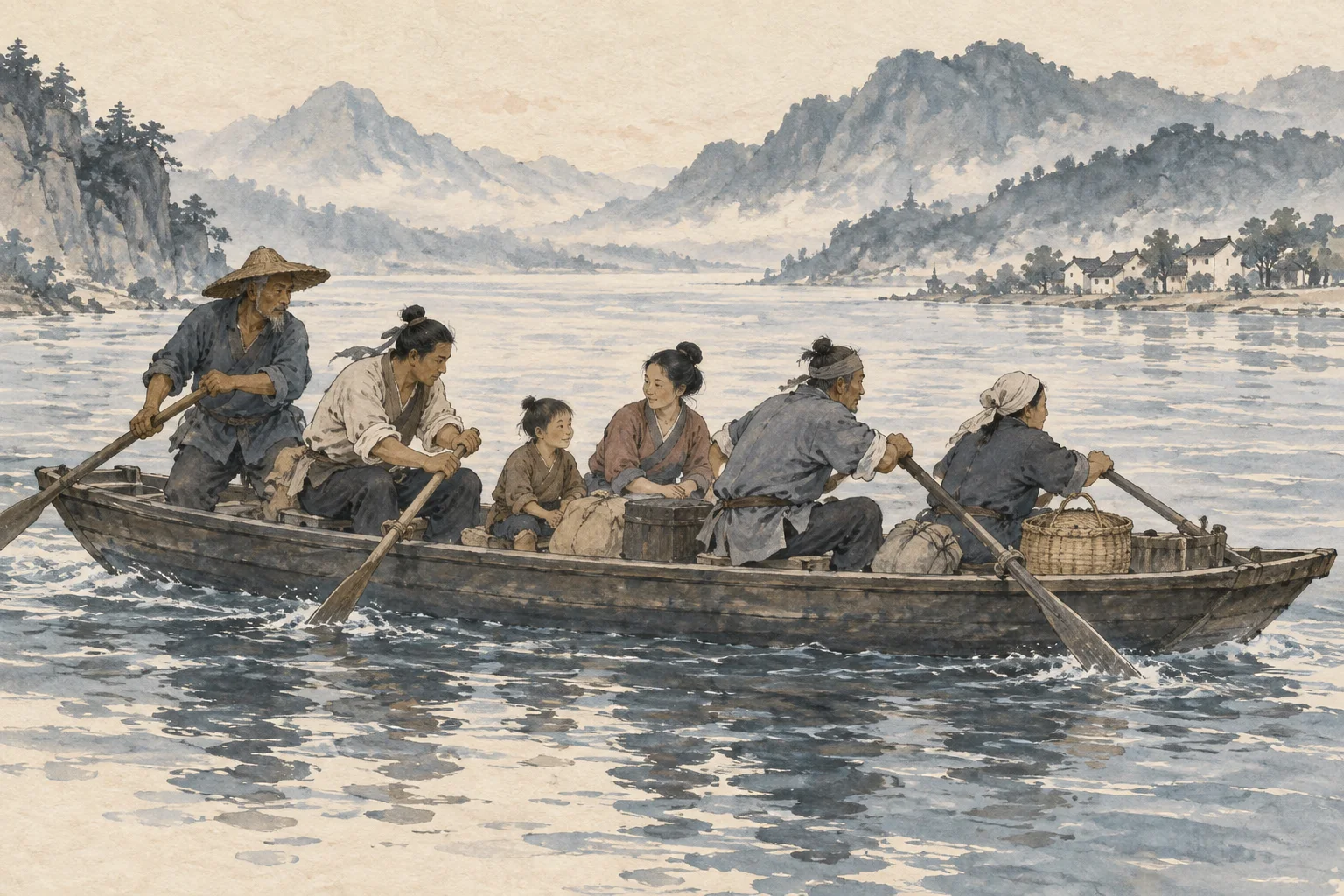
2. Cross humbly · 謙謙君子,用涉大川,吉。
The crossing is wide, and a humble traveler rows alongside villagers rather than demanding a special passage.
河面宽阔,谦逊的旅人与乡人同划一舟,不要求特别待遇。
A new volunteer arrives at the riverbank with simple clothes and no special gear. Instead of directing the cleanup, they ask local fishers how to row across. The fishers hand them an oar; together they cross to collect litter. Humble cooperation turns a big task into a shared crossing.
一位新志愿者穿着朴素来到河边,没有带专业装备。他不指挥清理,而是先问本地渔民怎样划船过河。渔民递给他一支桨,大家一起渡河去捡垃圾。谦逊合作把大事变成共同渡河。
The larger the undertaking, the more humble cooperation is needed. Where could asking for guidance help you cross a larger task?
在哪里,先请教别人能帮你渡过更大的任务?
3. Let conduct speak · 鳴謙,貞吉。
The craftswoman does not call for attention; people hear the bell she has tuned. Quiet conduct can carry a clear sound.
匠人无需自夸,调好的钟声自会传出去;谦德也能让人听见。
A craftswoman repairs and tunes the community's old bronze bell in her open workshop. She doesn't post about it. The clear note carries down the street; neighbors hear and bring her other broken items. Her steady skill, not self-promotion, draws trust.
一位女工匠在敞开的作坊里修理并调校社区旧铜铃。她没有发帖宣传。清脆的铃声传到街上,邻居听见后,把别的坏物件也拿来请她修。稳稳的手艺,而非自我推销,赢得了信任。
True modesty needs no loud advertisement, yet people hear it. When has quiet work spoken for you?
什么时候,安静的工作替你说了话?
4. Labor without claiming · 勞謙君子,有終吉。
A tired farmer shares water after bearing the harvest. Work done without claiming the whole credit wins lasting regard.
农人负重收获后还分水给人;肯做事、不独占功劳,才能长久受敬。
A gardener hauls heavy bundles of mulch all morning for the shared plot. Tired and dusty, he still passes his water bottle to the next volunteer. He doesn't mention the extra loads he carried. By afternoon, others quietly copy his effort and respect grows.
一位园丁整个上午为共享菜地搬运成捆的沉重覆盖物。他又累又脏,却仍把水壶递给下一名志愿者。他没有提自己多搬了几趟。到了下午,别人默默学他出力,敬意自然增长。
Labor that does not claim itself earns enduring respect. What labor could you do without announcing it?
有什么辛劳,你可以做了却不宣扬?
5. Yield and balance · 無不利,撝謙。
The steward portions the grain evenly, giving surplus where it is needed. Modesty becomes fair action, not a pose.
管事把粮食按需要分妥;谦不是摆样子,而是肯把多余的让出来。
A co-op steward notices some families received extra seed packets by mistake. Instead of keeping the surplus for the strongest growers, she redistributes them by need. No one loses; the whole garden gets a fairer start. Yielding what is extra brings no disadvantage.
合作社管理员发现,有些家庭因失误多领了种子包。她没有把多余种子留给最强壮的种植户,而是按需要重新分配。没有人受损,整个园子有了更公平的开端。让出多余,并没有不利。
There is no disadvantage in yielding what is extra and distributing fairly. What extra could you yield to make a group fairer?
你能让出什么多余的东西,让群体更公平?
6. Correct together · 不富,以其鄰,利用侵伐,無不利。
Neighbors together clear the tree blocking shared irrigation. Gentle character does not forbid firm action for the common good.
邻里合力移走挡住水渠的树;为公事采取坚定行动,并不违背谦。
A grower repeatedly diverts water from a shared irrigation channel. The neighboring households have little money or status, but they act together: document the diversion, demand its end, and ask the water council to enforce the agreed limits. Modesty does not mean letting a stronger person take everyone's share.
一名种植者反复把共用灌溉渠的水引到自己田里。邻近几户并不富有,却联合起来记录事实、要求停止,并请水务议事会执行原有的用水界限。谦逊不等于任由强势者拿走大家应得的一份。
Modesty is not weakness. When does fairness need firm, shared action?
为公共秩序纠正不服时,可与邻人共同行动。 什么时候,公平需要坚定而共同的行动?
7. Act with discipline · 鳴謙,利用行師,征邑國。
The small group carries tools to restore order nearby. Even corrective force should have a limit and a practical aim.
小队带着修复工具去整治近处;即使要用力,也须有边界和明确目标。
At a local assembly, the organizer openly asks for help after a district group keeps blocking the public path despite repeated warnings. A trained council team goes together, removes the unauthorized barrier under the agreed rules, and restores access. At this final stage, humble words need disciplined action within one's own community.
在本地议事会上,组织者坦诚求助:附近街区一再无视提醒,仍阻断公共通道。议事会派出受过训练的小队,依共同规则撤除擅设的路障,恢复通行。到这一阶段,谦和的言辞还须化为辖区内有纪律的纠正行动。
If modest warning still goes unheard, disciplined strength may be needed to restore order. When should a gentle warning become disciplined action?
什么时候,温和的提醒该变成有纪律的行动?
8. How can ability serve without display? · 謙,亨,君子有終。
Modesty lets relationships and resources flow.
谦让能使关系与资源流通;君子能把它坚持到最后,而不是一时姿态。
It is strength without self-exaltation, able to distribute according to the true weight of things.
山藏于地中,力量不张扬。 谦的实践是削多补少,平衡地分配。
Ask yourself: Where might quiet fairness distribute resources better than loud self-promotion?
不妨问自己:在哪里,安静的公平分配比高声自我宣传更能让资源流通?