Skip to content
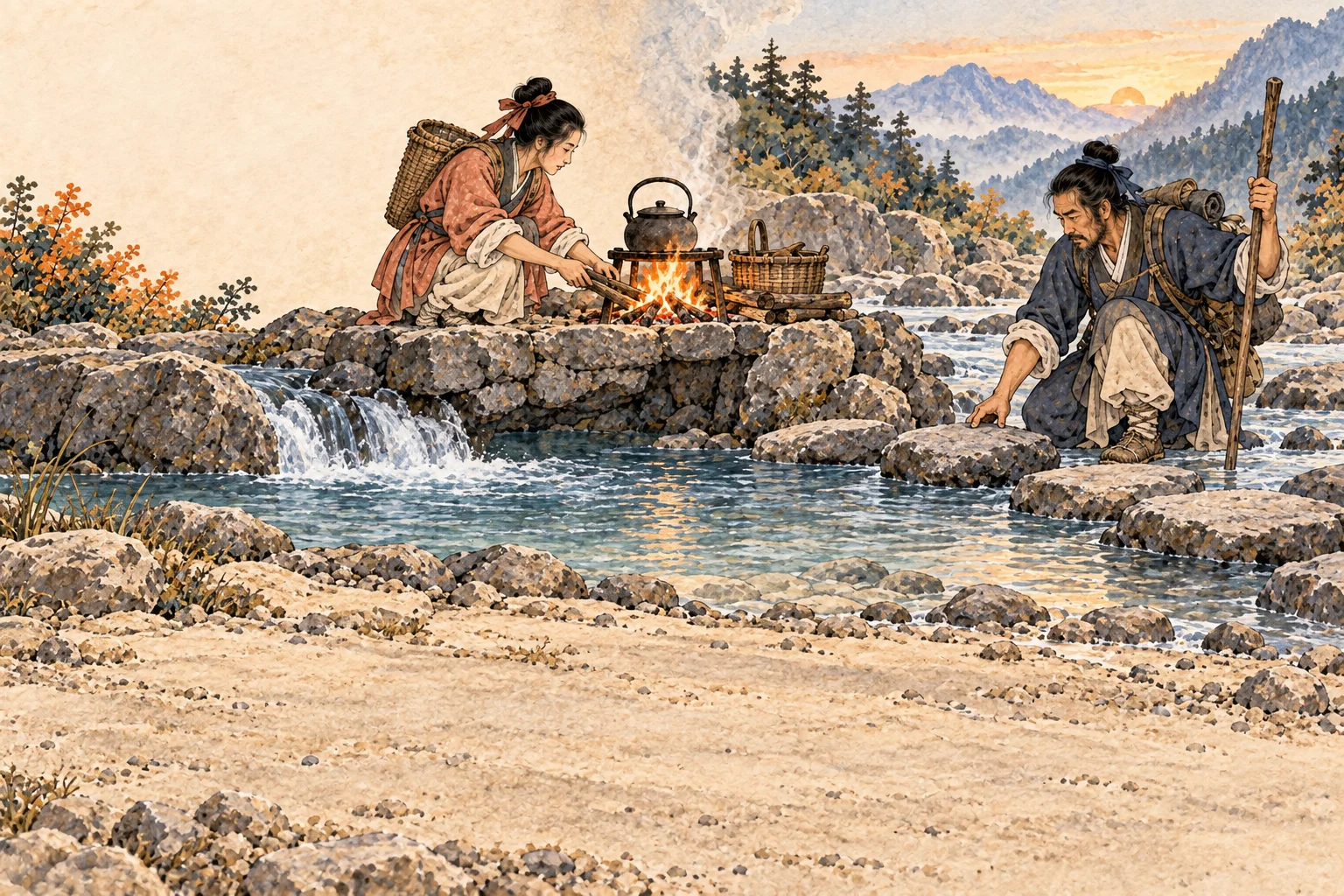
A small fire burns on a raised stone bank above the river water as two travelers prepare the next crossing.
Fire above water · The crossing remainsScene imagery · YiPhase original learning visual
Hexagram 64 · 火水未濟
未濟WÈI JÌ

Before Completion

離 · Fire · 坎 · Water

未济是尚未渡达,不等于注定失败。火在水上,彼此未能相济;但《彖传》说柔中而刚柔相应,仍有亨通之机。小狐几乎过河却湿了尾巴,提醒人越近终点越不能耗尽后力。六爻由初爻的失慎、九二的持重、六三求助渡险,走到九四历久得赏与六五信任生光;末爻则在酒与湿首之间,再次把自守交给人。全书止于未济,留下继续调整、继续渡河的空间。

Before Completion is a crossing still underway, not a sentence of failure. Fire sits above water without yet working with it; the lines nonetheless answer one another, leaving a path open. The little fox nearly reaches shore but wets its tail: effort must last through the final step. Six lines move through misjudged limits, disciplined work, accepted help, costly achievement, trusted leadership, and the danger of losing restraint after relief.

Original Chinese, independent English explanations and modern examples. Check the sources.保留经典原文,英文独立释读,生活例子单独说明。查看依据。

LESSON 64 · EVERYDAY I CHING

Almost there is not there yet

第 64 课 · 生活里的卦意

A short bilingual narration with moving views of all six line images.

跟着双语讲解与逐爻画面,理解这一卦的生活处境。

▶ Play Lessons▶ 播放课程
YiPhase · Today

In everyday life这一卦在生活中

A modern scene to help you recognize the situation. This is YiPhase's own example, separate from the classical text below.

用当代处境帮助理解卦意。以下为 YiPhase 独立编写的例子,与后面的经典原文分开。

A situation you may recognize一个可能熟悉的处境

Your group has almost finished moving the neighborhood tool library across the creek before the rainy season. The last boxes still sit on the near bank; the footbridge is slick and the old handcart is heavy. Before Completion means the crossing is still underway, not doomed. Keep strength for the final stretch, accept skilled help, and watch the urge to celebrate too early.

你们要把社区工具图书馆的最后一箱工具搬过小溪,赶在雨季前完成。小桥湿滑,旧手推车很重,大家已经看见对岸。未济表示尚未渡达,并非注定失败:保留最后力气,接受熟练帮助,也别提前庆祝而失去分寸。

ASK YOURSELF想一想

Where in your almost-finished task do you need to conserve strength or ask for help?

在你几乎完成的事情里,哪里需要保存力气或主动求助?
The Judgment

The Judgment卦辞

The original Chinese remains visible as the cultural source. The English translation and reading explain it without replacing it.

先保留经典中文,再提供英文直译与现代中文解释。英文用于理解,不替代原文。

《周易》经文 · Original Chinese
未濟:亨。小狐汔濟,濡其尾,无攸利。

Before Completion: passage is possible. A little fox nearly crosses but wets its tail; nothing is gained by pressing on that way.

Beginner’s reading

The fox is almost across, yet almost is not ashore. Its soaked tail shows what happens when the last stretch is attempted without enough strength. The opening promise of passage remains; the warning concerns how to finish.

现代中文解说

「汔」是将近,重点在几成而未成。小狐不是永远不能过河,而是眼下后劲不足,尾巴被水拖住。卦辞先言「亨」,再指出临门失守的条件:看清剩余距离、保存完成的力量,通路仍在。

Classical Commentary

Tuan Commentary & The Image彖传与大象

These classical commentaries are shown separately from the Zhouyi core text, so their textual role stays clear.

以下属于解释《周易》的经典传文,页面与卦辞分层展示,方便初学者看清文本来源。

彖曰 · Tuan Commentary
彖曰:未濟,亨;柔得中也。小狐汔濟,未出中也。濡其尾,无攸利;不續終也。雖不當位,剛柔應也。

六五柔而居中,是「亨」的根据;小狐尚未离开险境,尾湿则后力不能续终。六位虽未各得其正,阴阳仍两两相应。未济的重点因此不是贴上凶签,而是辨明阶段、借助相应的力量,把未尽之事接续下去。

The yielding fifth line holds the center, while the firm and yielding lines still correspond despite unfitting positions. The fox has not yet left danger and cannot sustain its final effort. The pattern describes unfinished conditions and available cooperation, not a fixed verdict.

象曰 · The Image
象曰:火在水上,未濟;君子以慎辨物居方。

Fire above water: Before Completion. A cultivated person carefully distinguishes things and places each where it belongs.

水在下、火在上,眼前还不能成炊。《象传》给出的不是盲目加火,而是先辨事物的性质、位置和配合方式,再安置得宜。自然之象把「未完成」变成可着手的整理工作。

A fire separated above the water cannot yet heat it. The response is to discern what each thing is and arrange it in a workable place. Before Completion asks for clear placement before renewed effort.

Six Changing Stages

Six Lines: Position and Change六爻:位置与变化

A wet tail exposes an unfinished crossing. Pull the wheel with discipline; do not force a dangerous ford alone. Long service may earn recognition, and trusted leadership can bring light. Even a well-earned drink needs a limit.

初六湿尾有吝;九二曳轮守正;六三独进则凶而涉川须得助;九四久征而有赏;六五以诚信明德;上九饮酒可信,但湿首便失其是。

初六
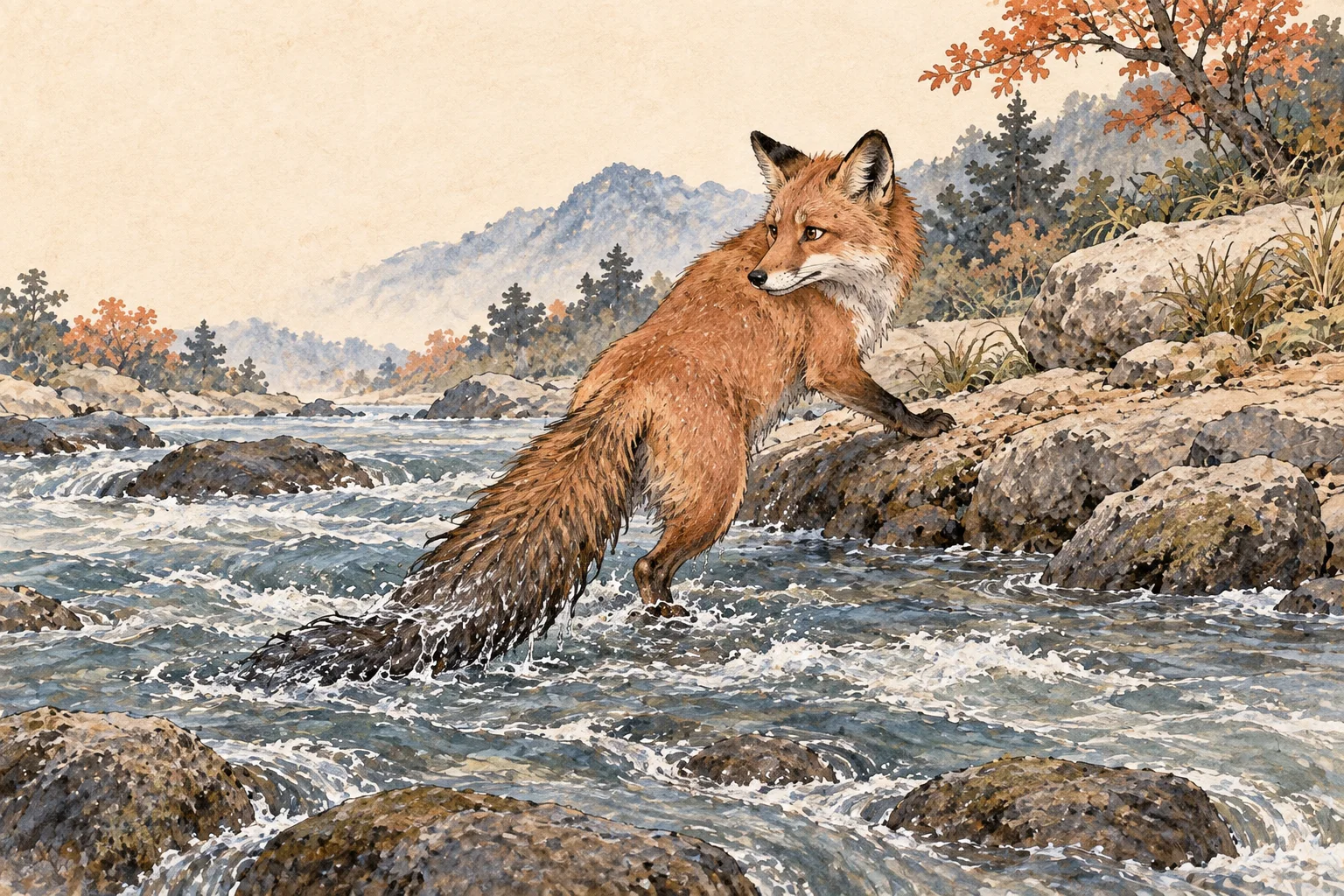
A fox almost reaches a rocky riverbank while its long tail remains soaked in the current.
初六 · Line 1 · 濡其尾

濡其尾,吝。

Its tail is wet: cause for regret.

小狐身已近岸,湿尾却还被水势牵住。初爻柔弱居险,不知水深与己力的边界,遂有「吝」而非不可挽回的大凶。此时最要紧的是停下估量,别把「差一点」误作「已经到了」。

The fox is close enough to see the bank, but the current still holds its tail. Regret comes from mistaking proximity for safety. Pause and measure the last part of the crossing.

Near is not across
Picture this in daily life生活中的这一爻

A teenage volunteer offers to carry the last small box across the slick footbridge alone. She is almost on the far bank, but the trailing strap of her bag dips into the creek and pulls her off balance. She stops, embarrassed but unhurt, realizing she treated almost across as already there.

一位少女志愿者自告奋勇,独自把最后一小箱工具搬过湿滑小桥。她几乎踏上对岸,背包拖带却垂进溪水,被水流一扯,差点滑倒。她停下来,有些懊恼却没有受伤,意识到自己把“几乎到了”误当成“已经到了”。

Ask yourself: What small warning tells you that 'almost there' is not yet safe?

想一想:什么小信号在提醒你,‘几乎到了’还不等于安全?

九二
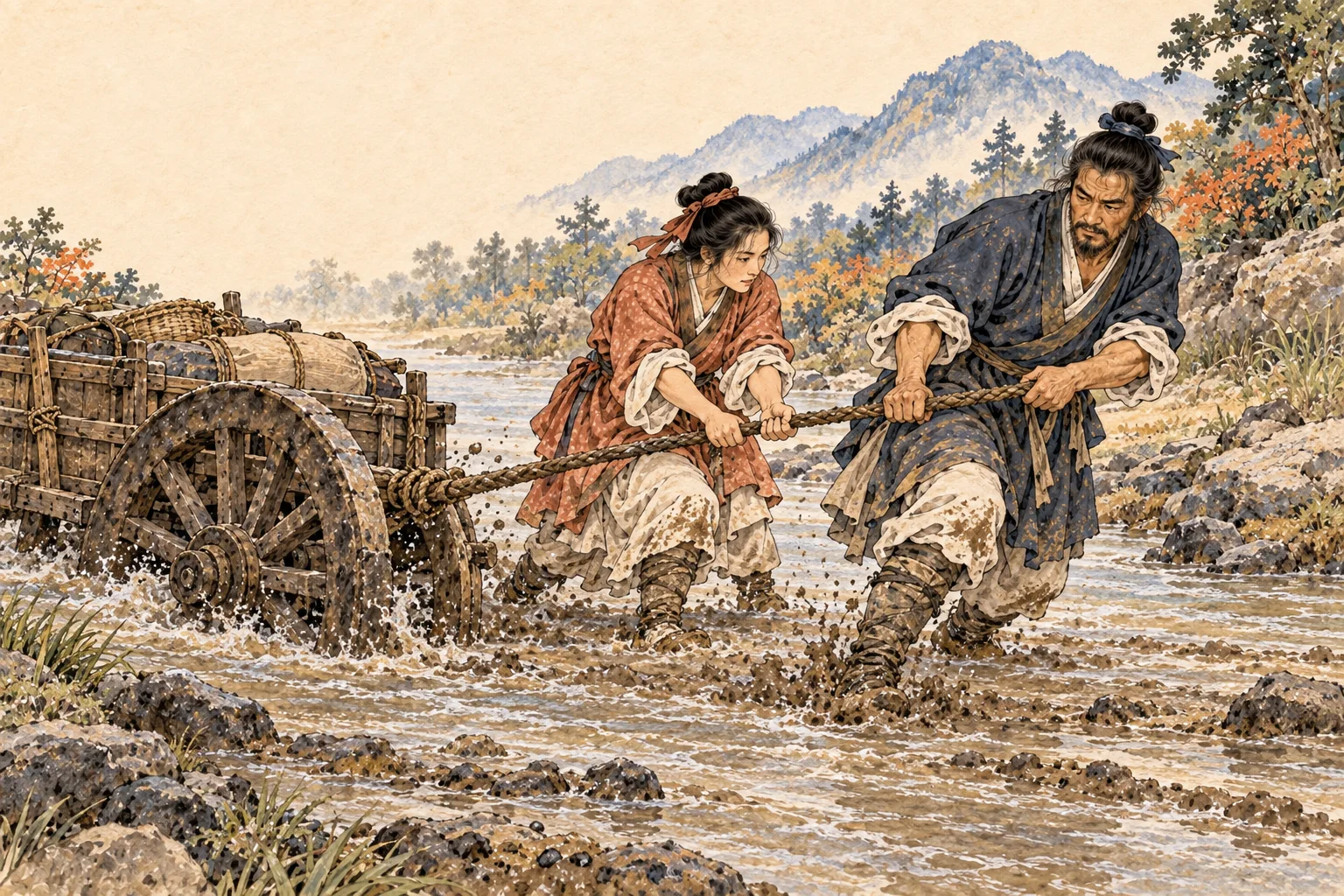
Two travelers strain to drag a heavy cart wheel through a muddy ford, keeping the work controlled.
九二 · Line 2 · 曳其輪

曳其輪,貞吉。

Drag the wheel; steadfastness brings good fortune.

九二刚而居中,有力却不抢快。「曳轮」是把重车缓缓拖过险处,需要持续劳作与自我节制。守正得吉,不是因为河已变浅,而是因为行动的速度与力量终于配得上现实。

A heavy wheel is moved by deliberate effort, not a reckless burst. The firm second line keeps to the center. Steadiness is favorable because the work is matched to the actual ford.

Move the weight with care
Picture this in daily life生活中的这一爻

Two neighbors take the heavy handcart. Instead of rushing the last stretch, they drag one wheel at a time through the muddy ford. It is slow and sweaty. By matching pace to the mud, they keep the load upright and earn a steady, unglamorous good result.

两位邻居接过沉重的手推车。他们不急着冲过最后一段,而是一边一边地把车轮拖过泥泞浅滩;又慢又累,却让速度与泥地相配,终于稳稳保住车上的工具。守正得吉,有时就是这种不好看却可靠的完成。

Ask yourself: Where would slower, steadier pulling finish better than a sudden rush?

想一想:哪里放慢、稳稳拖行,会比突然冲刺更可能完成?

六三
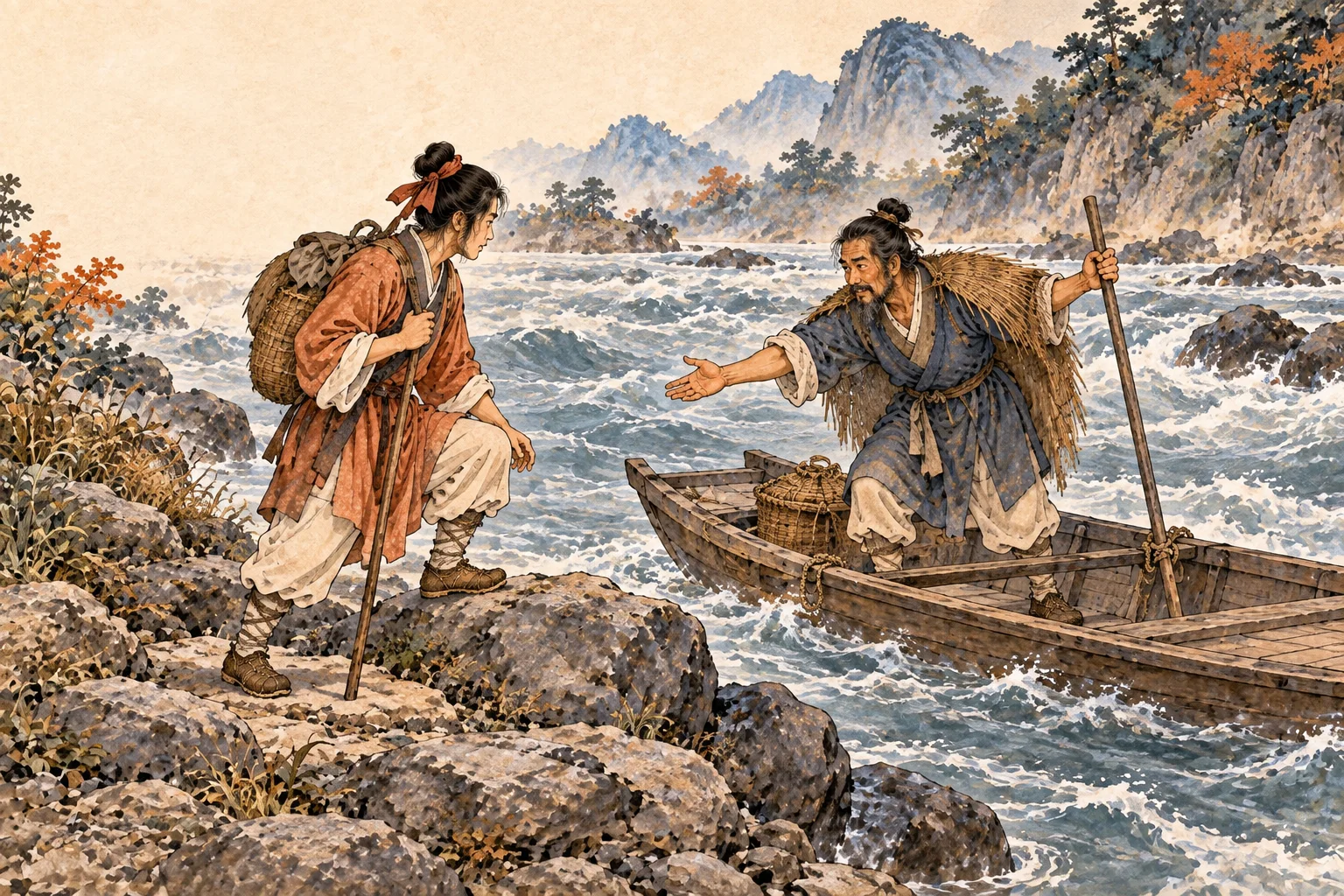
A traveler stops at a dangerous river and accepts the hand of an experienced ferryman waiting in a small boat.
六三 · Line 3 · 利涉大川

未濟,征凶,利涉大川。

Not yet across: pressing ahead is ominous; crossing the great river can be beneficial.

前半句禁止的是无备而独往,并非永不渡川。《正义》以六三阴柔失位,主张借九二之力来渡大川。画中旅人停在急流前,转向有经验的舟人;先承认不能独行,才有办法完成真正的渡越。

A lone advance into the current is dangerous; that does not forbid the crossing itself. Classical commentary points to capable help from the firm second line. The traveler turns toward a ferryman instead of entering the river unprepared.

Cross with capable help
Picture this in daily life生活中的这一爻

At the creek's widest point, a young volunteer wants to wade alone with a rope. The water is deeper than it looks. She stops, admits she cannot cross alone, and asks the neighbor who has kayaked there for years to ferry the box in his boat.

到了小溪最宽处,一个年轻志愿者想独自拉着绳子涉水过去。水比看上去深得多。她停下来,承认自己不能独渡,转去求助那位在此划艇多年的邻居,用小船把箱子运过河。这一转,把“征凶”变成“利涉大川”。

Ask yourself: What task would go better if you admitted you cannot do it alone?

想一想:哪件事,只要你承认无法独自完成,反而更可能做成?

九四
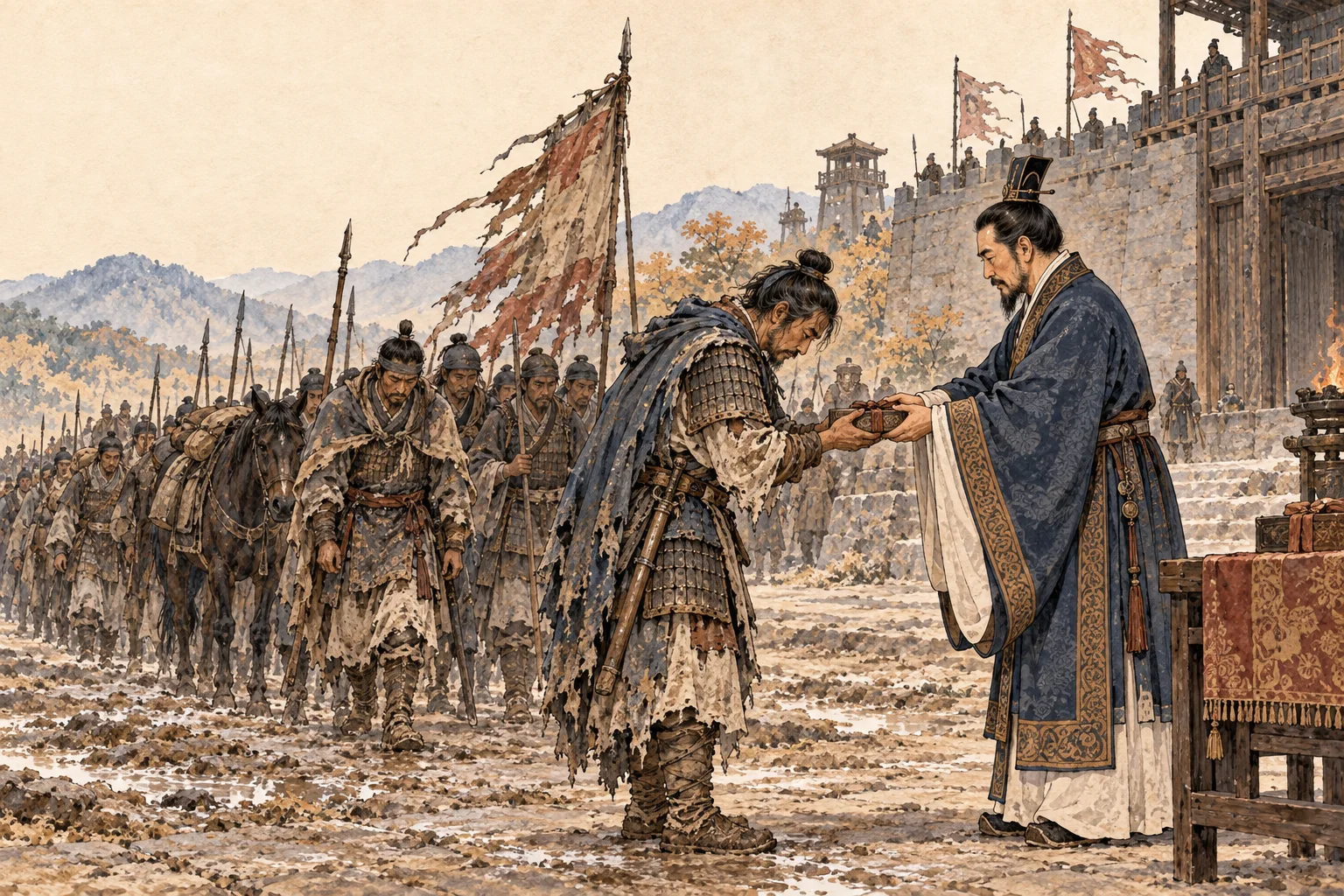
Worn soldiers return from a frontier campaign as a dignitary presents a modest award to their weary commander.
九四 · Line 4 · 三年有賞

貞吉,悔亡,震用伐鬼方,三年有賞于大國。

Steadfastness is auspicious and regret fades. With force, campaign against Gui Fang; after three years receive reward from a great state.

「鬼方」是古代族群称谓,不画鬼怪;「三年」突出历久与艰辛。《正义》重九四得应、有功受赏。图把受赏放在疲兵归来的一刻,提示功劳来自长久守正、组织与付出,不是瞬间的耀武扬威。

Gui Fang is a historical people, not ghosts. The three-year span makes the cost of the campaign central. The returning soldiers and restrained award show recognition after sustained, disciplined work rather than instant triumph.

Honor the long effort
Picture this in daily life生活中的这一爻

A public works crew is sent to a remote valley to repair a storm-damaged levee. The work stretches across three years of mud and cold. When the levee finally holds, the larger regional authority gives the crew a modest award; the honor rests on long, organized labor, not one dramatic gesture.

一支公共工程队被派到偏远山谷,修复被风暴冲坏的堤坝。泥泞和寒冷拖了三年。堤坝终于守住时,更大的地区机构给队伍一个简朴表彰;这份荣誉来自长期、有组织的劳作,而不是一次耀武扬威。

Ask yourself: What long effort in your life needs patient recognition rather than a quick reward?

想一想:你生活里哪件长期付出,需要耐心被看见,而不是急着要回报?

六五
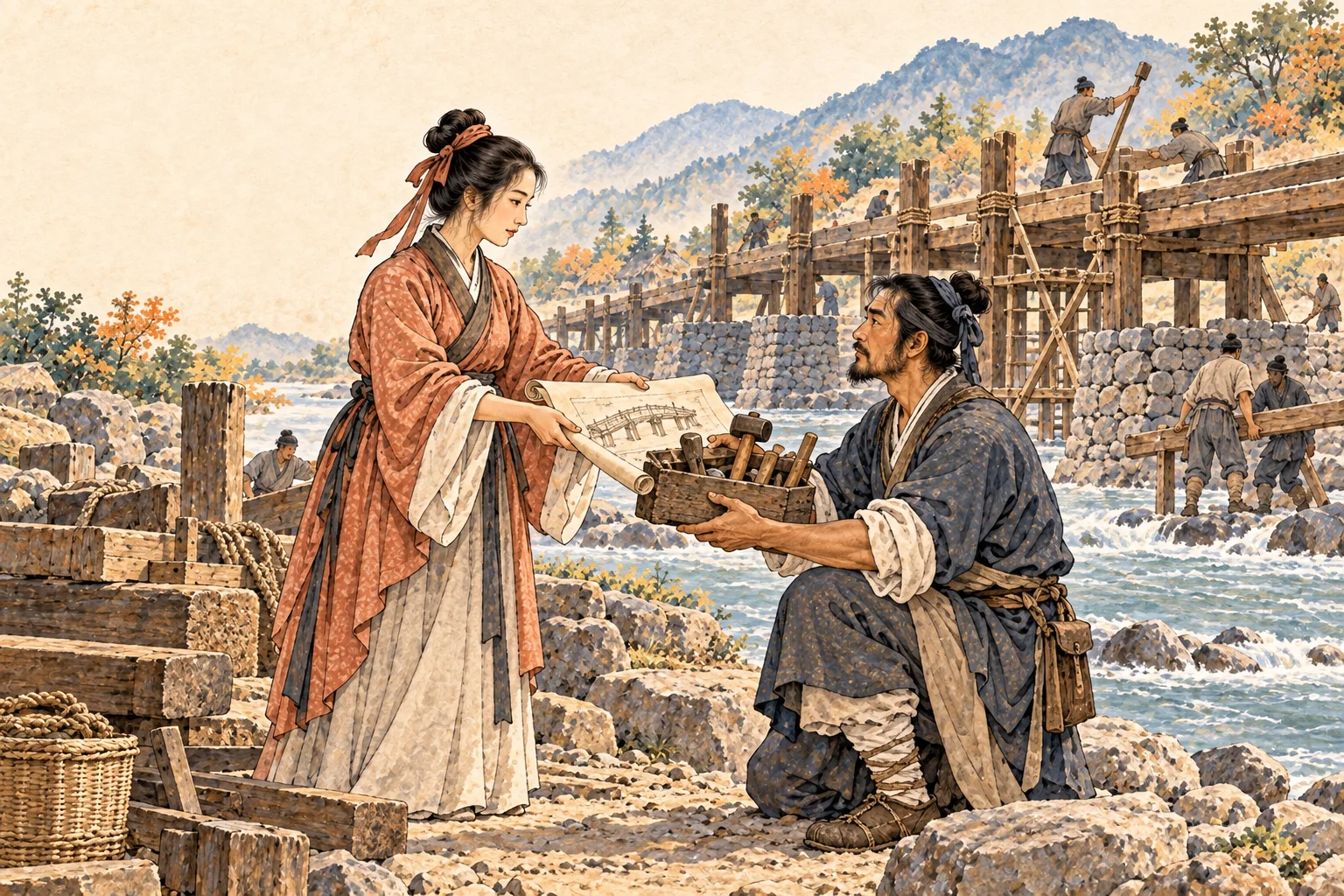
A leader entrusts a bridge plan and tools to a capable worker while a crossing is built behind them.
六五 · Line 5 · 君子之光

貞吉,无悔,君子之光,有孚,吉。

Steadfastness is auspicious; no regret. The cultivated person's light is trustworthy and auspicious.

六五柔中,能信任有力者并使其得用,故有君子之光。「光」不是神异光环,而是持正、信实与知人所产生的可见影响。图中主事者把图样与工具交给筑桥者,众人得以继续完成渡口。

The yielding fifth line leads from the center and trusts competent help. Its light is the visible effect of integrity and sound judgment, not magic. A bridge plan is entrusted to someone who can build it.

Let trust become action
Picture this in daily life生活中的这一爻

A project leader at the tool library does not build the final bridge ramp herself. She studies the plan, trusts a carpenter who has done it before, and hands him the tools. Neighbors see her fairness and follow. The ramp opens; her light is the trust she placed well.

工具图书馆的项目负责人没有亲自去搭最后一段桥坡。她研究好图样,信任一位做过类似工程的木匠,把工具交到他手里。邻居们看见她的公正,也愿意配合。桥坡开通,她的“光”正是这份放对了的信任。

Ask yourself: Who could shine through your trust if you handed over the tools?

想一想:如果你把工具交给合适的人,谁会因你的信任而发光?

上九
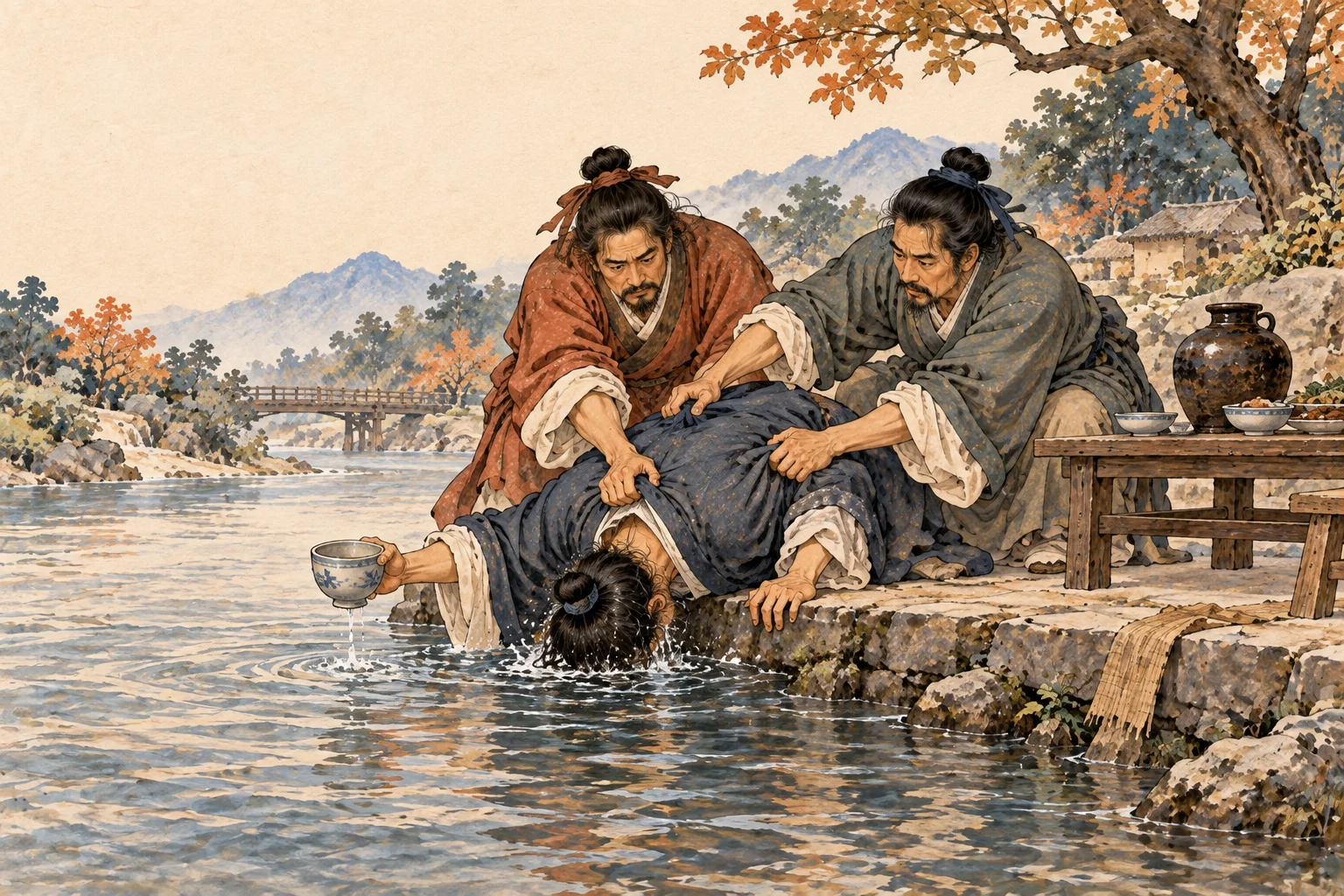
Still holding a wine cup, a reveler dips his head into the river while concerned companions pull him back.
上九 · Line 6 · 濡其首

有孚于飲酒,无咎,濡其首,有孚失是。

There is trust in drinking wine, with no blame; but when the head is wet, trust loses its right measure.

同人共饮、信而无咎,本来可以是艰难之后的安息;但过度饮酒而湿首,便失去了可信的分寸。《正义》把末句看作不知节制而失其是。画中酒杯仍在手里,头却已入水,同行者急忙拉住他:最后一关仍是自守。

A shared drink after hard work is not itself blameworthy. The danger comes when pleasure loses its measure: cup still in hand, the head now in the river, and companions reaching to pull the drinker back. Trust needs restraint to last.

Keep a limit after relief
Picture this in daily life生活中的这一爻

After the ramp opens, volunteers share cider by the creek. One drink and laughter are fine. But a young man keeps his cup while leaning too far over the rail to toast the water; his head plunges in. Friends grab his jacket. The trust of the group does not excuse losing measure.

桥坡开通后,志愿者们在溪边分享苹果酒。一杯酒、一阵笑,本来无咎。可一个年轻人举着杯子,探身越过栏杆向水敬酒,头一下扎进溪里。朋友们赶紧抓住他的外套。群体的信任,不能成为失去分寸的理由。

Ask yourself: After relief, where might you need a friend to pull you back?

想一想:紧张过后,哪里可能需要朋友把你拉回分寸?

Cultural Phrases

Classic Chinese Phrases可延展的中文经典短句

Chinese carries the cultural identity; English makes the meaning accessible. These phrases can later inform cards, objects, and décor.

中文保留文化识别,英文负责解释。这些短句可作为未来卡牌、装饰与文创的文字基础,具体载体仍需单独设计。

慎辨物居方

先辨性质与位置,再让事情相济。

Place things where they can work together.

君子之光

以诚信和知人点亮未竟之事。

Let integrity light the unfinished path.

Questions about this hexagram这一卦的常见问题

What does Hexagram 64, Before Completion, describe?第64卦描述什么处境?

Before Completion is a crossing still underway, not a sentence of failure. Fire sits above water without yet working with it; the lines nonetheless answer one another, leaving a path open. The little fox nearly reaches shore but wets its tail: effort must last through the final step. Six lines move through misjudged limits, disciplined work, accepted help, costly achievement, trusted leadership, and the danger of losing restraint after relief.

未济是尚未渡达,不等于注定失败。火在水上,彼此未能相济;但《彖传》说柔中而刚柔相应,仍有亨通之机。小狐几乎过河却湿了尾巴,提醒人越近终点越不能耗尽后力。六爻由初爻的失慎、九二的持重、六三求助渡险,走到九四历久得赏与六五信任生光;末爻则在酒与湿首之间,再次把自守交给人。全书止于未济,留下继续调整、继续渡河的空间。

How should I read its six lines?应该怎样阅读这六爻?

Read from the bottom line upward. Each position describes a different stage or condition. The highlighted line-position diagrams on this study page locate the line being explained; they are not a personal cast or a prediction.

从下往上读,结合不同位置与处境理解。这里的高亮卦画只说明正在讲哪一爻,不是个人起卦或预测结果。