1. Almost there is not there yet · 象曰:火在水上,未濟;君子以慎辨物居方。
Before Completion is a crossing still underway, not a sentence of failure. Fire sits above water without yet working with it; the lines nonetheless answer one another, leaving a path open.
未济是尚未渡达,不等于注定失败。火在水上,彼此未能相济;但《彖传》说柔中而刚柔相应,仍有亨通之机。
A fire separated above the water cannot yet heat it. The response is to discern what each thing is and arrange it in a workable place.
水在下、火在上,眼前还不能成炊。《象传》给出的不是盲目加火,而是先辨事物的性质、位置和配合方式,再安置得宜。
Your group has almost finished moving the neighborhood tool library across the creek before the rainy season. The last boxes still sit on the near bank; the footbridge is slick and the old handcart is heavy.
你们要把社区工具图书馆的最后一箱工具搬过小溪,赶在雨季前完成。小桥湿滑,旧手推车很重,大家已经看见对岸。
2. Near is not across · 濡其尾,吝。
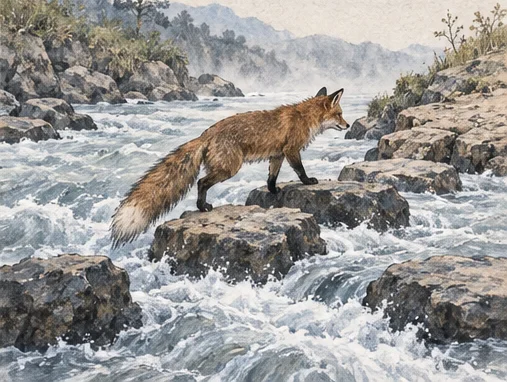
The fox is close enough to see the bank, but the current still holds its tail. Regret comes from mistaking proximity for safety.
小狐身已近岸,湿尾却还被水势牵住。初爻柔弱居险,不知水深与己力的边界,遂有「吝」而非不可挽回的大凶。
A teenage volunteer offers to carry the last small box across the slick footbridge alone.
一位少女志愿者自告奋勇,独自把最后一小箱工具搬过湿滑小桥。
She is almost on the far bank, but the trailing strap of her bag dips into the creek and pulls her off balance. She stops, embarrassed but unhurt, realizing she treated almost across as already there.
她几乎踏上对岸,背包拖带却垂进溪水,被水流一扯,差点滑倒。她停下来,有些懊恼却没有受伤,意识到自己把“几乎到了”误当成“已经到了”。
3. Move the weight with care · 曳其輪,貞吉。
A heavy wheel is moved by deliberate effort, not a reckless burst. The firm second line keeps to the center.
九二刚而居中,有力却不抢快。「曳轮」是把重车缓缓拖过险处,需要持续劳作与自我节制。
Two neighbors take the heavy handcart. Instead of rushing the last stretch, they drag one wheel at a time through the muddy ford.
两位邻居接过沉重的手推车。他们不急着冲过最后一段,而是一边一边地把车轮拖过泥泞浅滩。
It is slow and sweaty. By matching pace to the mud, they keep the load upright and earn a steady, unglamorous good result.
又慢又累,却让速度与泥地相配,终于稳稳保住车上的工具。守正得吉,有时就是这种不好看却可靠的完成。
4. Cross with capable help · 未濟,征凶,利涉大川。
A lone advance into the current is dangerous; that does not forbid the crossing itself. Classical commentary points to capable help from the firm second line.
前半句禁止的是无备而独往,并非永不渡川。《正义》以六三阴柔失位,主张借九二之力来渡大川。
At the creek's widest point, a young volunteer wants to wade alone with a rope. The water is deeper than it looks.
到了小溪最宽处,一个年轻志愿者想独自拉着绳子涉水过去。水比看上去深得多。
She stops, admits she cannot cross alone, and asks the neighbor who has kayaked there for years to ferry the box in his boat.
她停下来,承认自己不能独渡,转去求助那位在此划艇多年的邻居,用小船把箱子运过河。这一转,把“征凶”变成“利涉大川”。
5. Honor the long effort · 貞吉,悔亡,震用伐鬼方,三年有賞于大國。
Gui Fang is a historical people, not ghosts. The three-year span makes the cost of the campaign central.
「鬼方」是古代族群称谓,不画鬼怪;「三年」突出历久与艰辛。《正义》重九四得应、有功受赏。
A public works crew is sent to a remote valley to repair a storm-damaged levee. The work stretches across three years of mud and cold.
一支公共工程队被派到偏远山谷,修复被风暴冲坏的堤坝。泥泞和寒冷拖了三年。
When the levee finally holds, the larger regional authority gives the crew a modest award; the honor rests on long, organized labor, not one dramatic gesture.
堤坝终于守住时,更大的地区机构给队伍一个简朴表彰;这份荣誉来自长期、有组织的劳作,而不是一次耀武扬威。
6. Let trust become action · 貞吉,无悔,君子之光,有孚,吉。
The yielding fifth line leads from the center and trusts competent help. Its light is the visible effect of integrity and sound judgment, not magic.
六五柔中,能信任有力者并使其得用,故有君子之光。「光」不是神异光环,而是持正、信实与知人所产生的可见影响。
A project leader at the tool library does not build the final bridge ramp herself. She studies the plan, trusts a carpenter who has done it before, and hands him the tools.
工具图书馆的项目负责人没有亲自去搭最后一段桥坡。她研究好图样,信任一位做过类似工程的木匠,把工具交到他手里。
Neighbors see her fairness and follow. The ramp opens; her light is the trust she placed well.
邻居们看见她的公正,也愿意配合。桥坡开通,她的“光”正是这份放对了的信任。
7. Keep a limit after relief · 有孚于飲酒,无咎,濡其首,有孚失是。
A shared drink after hard work is not itself blameworthy. The danger comes when pleasure loses its measure: cup still in hand, the head now in the river, and companions reaching to pull the drinker back.
同人共饮、信而无咎,本来可以是艰难之后的安息;但过度饮酒而湿首,便失去了可信的分寸。《正义》把末句看作不知节制而失其是。
After the ramp opens, volunteers share cider by the creek. One drink and laughter are fine.
桥坡开通后,志愿者们在溪边分享苹果酒。一杯酒、一阵笑,本来无咎。
But a young man keeps his cup while leaning too far over the rail to toast the water; his head plunges in. Friends grab his jacket. The trust of the group does not excuse losing measure.
可一个年轻人举着杯子,探身越过栏杆向水敬酒,头一下扎进溪里。朋友们赶紧抓住他的外套。群体的信任,不能成为失去分寸的理由。
8. What must cross the final bank? · 未濟:亨。小狐汔濟,濡其尾,无攸利。
The fox is almost across, yet almost is not ashore. Its soaked tail shows what happens when the last stretch is attempted without enough strength.
「汔」是将近,重点在几成而未成。小狐不是永远不能过河,而是眼下后劲不足,尾巴被水拖住。
Six lines move through misjudged limits, disciplined work, accepted help, costly achievement, trusted leadership, and the danger of losing restraint after relief.
全书止于未济,留下继续调整、继续渡河的空间。
Where in your almost-finished task do you need to conserve strength or ask for help?
在你几乎完成的事情里,哪里需要保存力气或主动求助?