62 · Small Exceeding (XIǍO GUÒ)
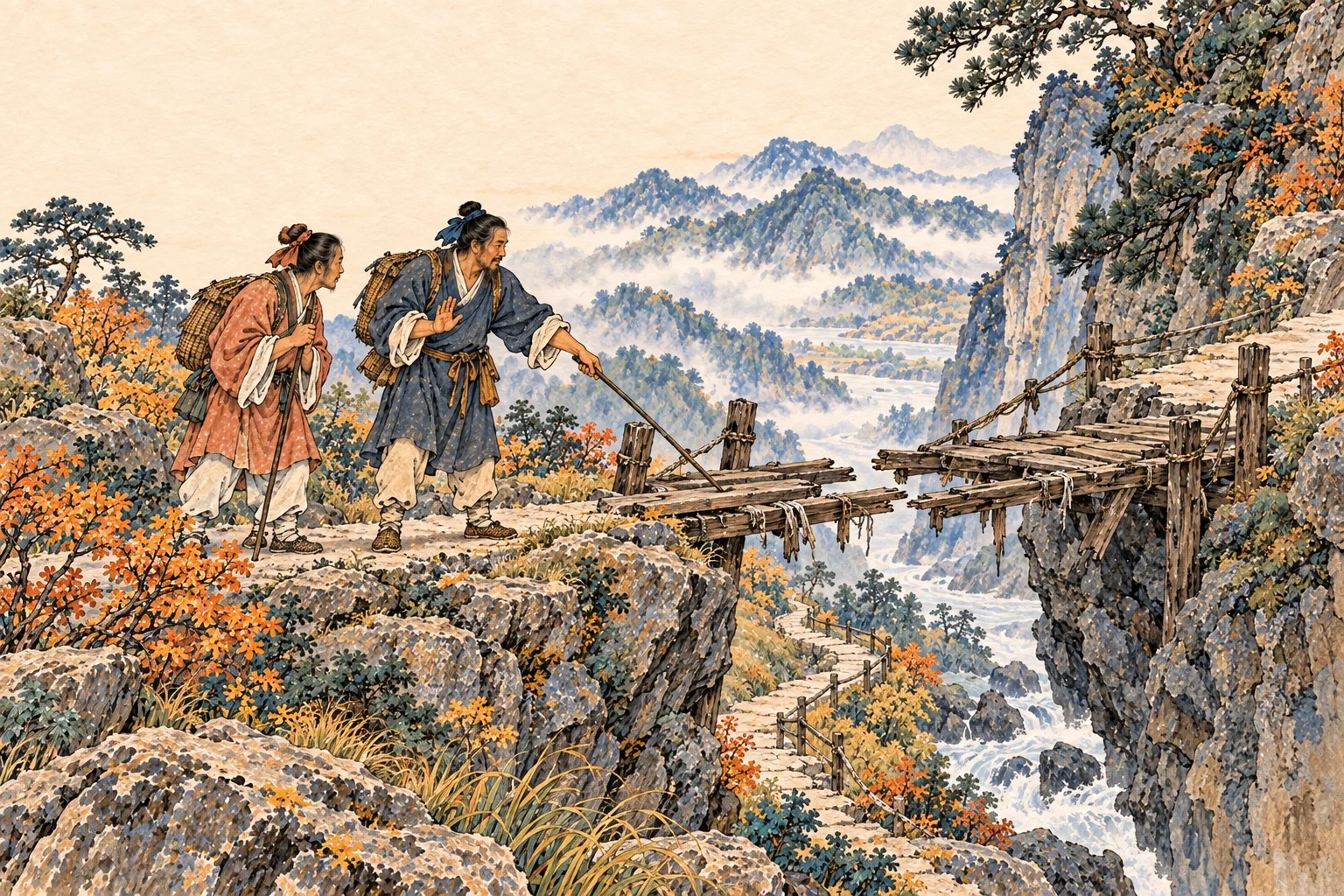
Small Exceeding is a time for modest, timely adjustments, not a license for grand action or simply a label for a small mistake. The flying bird is safer descending than climbing higher. The six lines move from unsafe ascent through fitting encounters and needed protection, then to temporary caution and a limited response that cannot bring rain. At the extreme, the bird that keeps rising meets a net.
The judgment
Small Exceeding: passage; steadfastness benefits. Small matters may be done, not great ones. A flying bird leaves its call: rising is unsuitable, descending is suitable, greatly auspicious.
Classical commentary reads the 'exceeding' as a small adjustment suited to its time. The permission is limited: minor matters can be handled, but a great undertaking would overreach. The distressed bird's call points down toward a place to settle.
Original Chinese text
小過:亨。利貞。可小事,不可大事。飛鳥遺之音,不宜上宜下,大吉。
The six lines
- 初六 · Line 1 — A flying bird brings misfortune.
Original Chinese
飛鳥以凶。
- 六二 · Line 2 — Pass the grandfather, meet the grandmother; do not reach the ruler, meet the minister: no blame.
Original Chinese
過其祖,遇其妣;不及其君,遇其臣;无咎。
- 九三 · Line 3 — Failing to add protection, following may bring injury: unfortunate.
Original Chinese
弗過防之,從或戕之,凶。
- 九四 · Line 4 — No blame; meet without exceeding. Going on is perilous, so be warned; do not make this a permanent rule.
Original Chinese
无咎,弗過遇之。往厲必戒,勿用永貞。
- 六五 · Line 5 — Dense clouds give no rain from our western outskirts; a lord shoots to take the one in a cave.
Original Chinese
密雲不雨,自我西郊,公弋取彼在穴。
- 上六 · Line 6 — Missing the meeting and passing beyond it, the flying bird meets a snare: unfortunate; this is calamity.
Original Chinese
弗遇過之,飛鳥離之,凶,是謂災眚。