60 · Limitation (JIÉ)
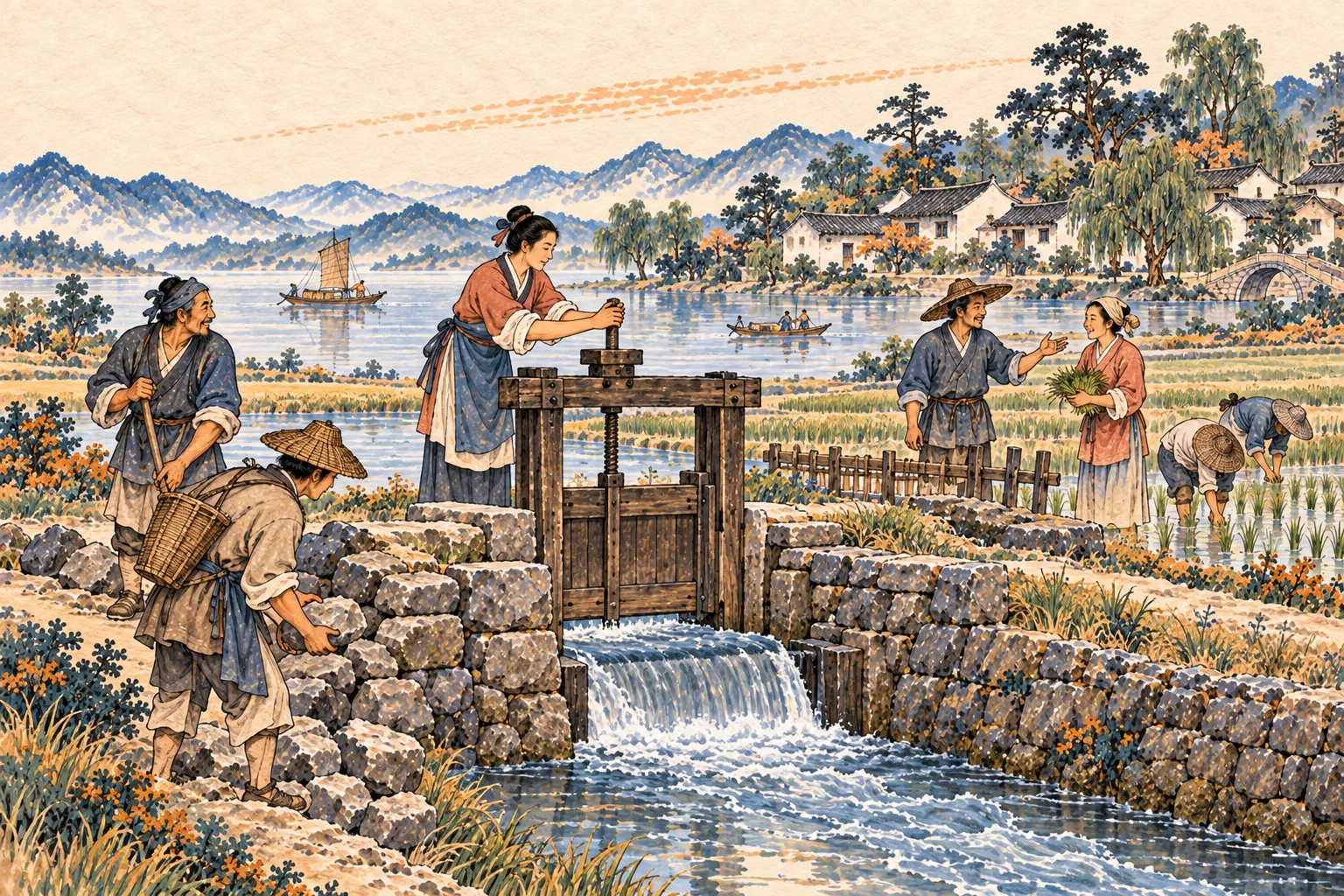
The lake contains water because it has a shore. Jie is a fitting measure: seasons follow their intervals, and human rules should conserve resources without injuring people. The six lines distinguish prudent waiting from a missed moment, regret after excess, workable habits, fair restraint, and finally limits so bitter they cannot last. The question is when a boundary serves life and when it closes it down.
The judgment
Limitation: passage. Bitter limitation cannot be held as a lasting rule.
A well-set boundary opens a path. Classical commentary insists on a middle measure: severe deprivation is too harsh to sustain. The judgment rejects making bitter austerity into a permanent rule, not the value of every limit.
Original Chinese text
節:亨。苦節不可貞。
The six lines
- 初九 · Line 1 — Do not leave the inner courtyard: no blame.
Original Chinese
不出戶庭,无咎。
- 九二 · Line 2 — Do not leave the outer gate courtyard: unfortunate.
Original Chinese
不出門庭,凶。
- 六三 · Line 3 — Without measure comes lament: no blame.
Original Chinese
不節若,則嗟若,无咎。
- 六四 · Line 4 — At ease with the measure: passage.
Original Chinese
安節,亨。
- 九五 · Line 5 — Sweet limitation: auspicious; going forward brings esteem.
Original Chinese
甘節,吉;往有尚。
- 上六 · Line 6 — Bitter limitation: holding to it brings misfortune; regret can vanish.
Original Chinese
苦節,貞凶,悔亡。