59 · Dispersion (HUÀN)
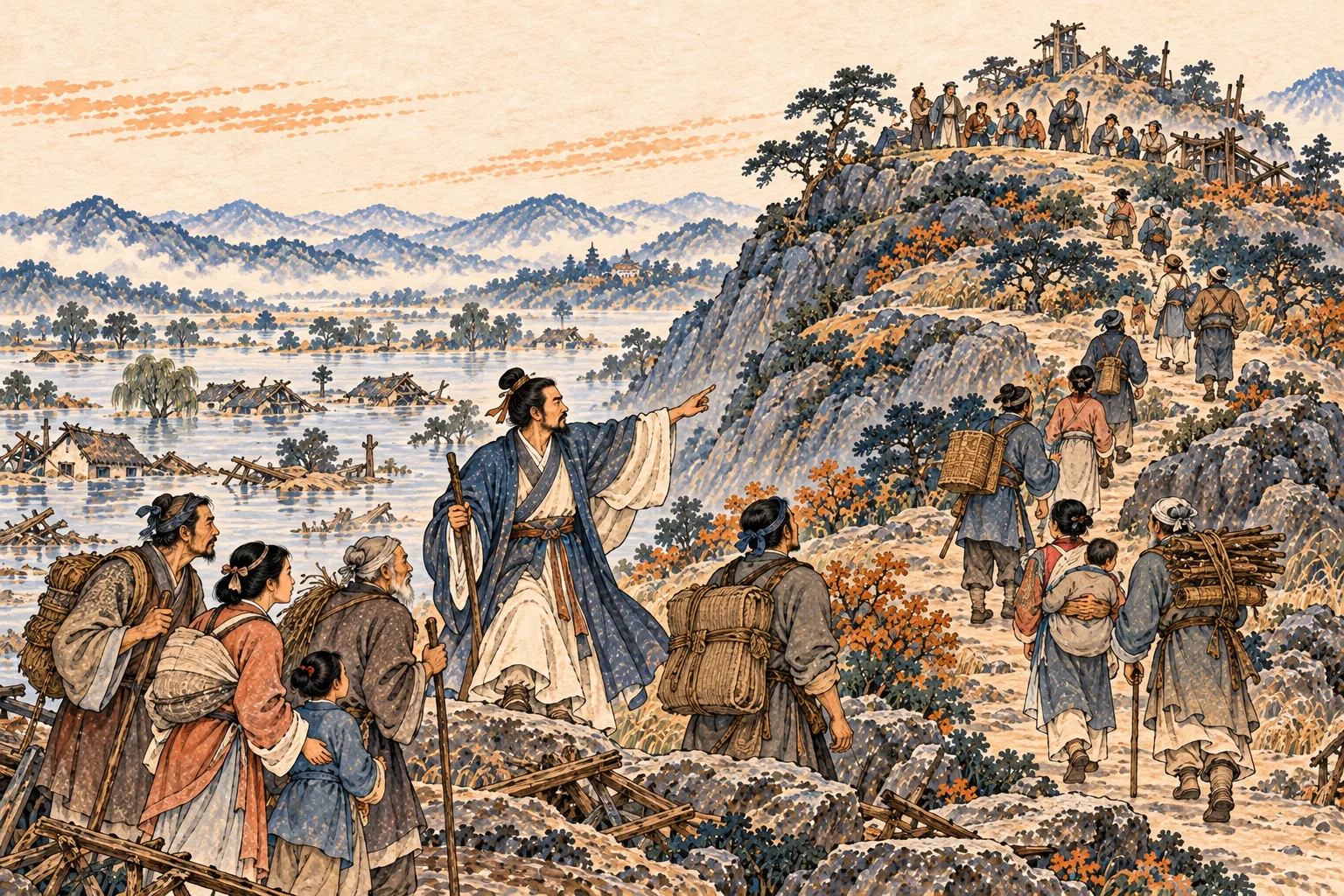
Wind scatters waves across water. Huan names both dispersion and the release of danger. The sequence moves from timely escape and dependable support to loosening self-interest, caring for a wider community, giving a clear public call, and moving far from harm. The aim is not separation for its own sake: once danger is dispersed, a trustworthy center must be rebuilt.
The judgment
Dispersion: passage. The king reaches the ancestral temple. It is beneficial to cross the great river and to remain steadfast.
The favorable opening comes from dissolving danger, not from letting everything drift apart. The temple marks a shared center; crossing the great river calls for deliberate action. Steadfastness matters especially when it is time to gather people again.
Original Chinese text
渙:亨。王假有廟,利涉大川,利貞。
The six lines
- 初六 · Line 1 — Use a strong horse for rescue: auspicious.
Original Chinese
用拯馬壯,吉。
- 九二 · Line 2 — In dispersion, run to the support; regret vanishes.
Original Chinese
渙奔其機,悔亡。
- 六三 · Line 3 — Disperse concern for one's own person: no regret.
Original Chinese
渙其躬,无悔。
- 六四 · Line 4 — Disperse the group's danger: great good. There remains a hill of concern, beyond ordinary thought.
Original Chinese
渙其群,元吉。渙有丘,匪夷所思。
- 九五 · Line 5 — Spread the great call like sweat; in dispersion, the king remains in his place: no blame.
Original Chinese
渙汗其大號,渙王居,无咎。
- 上九 · Line 6 — Disperse bloodshed; go out far away: no blame.
Original Chinese
渙其血,去逖出,无咎。