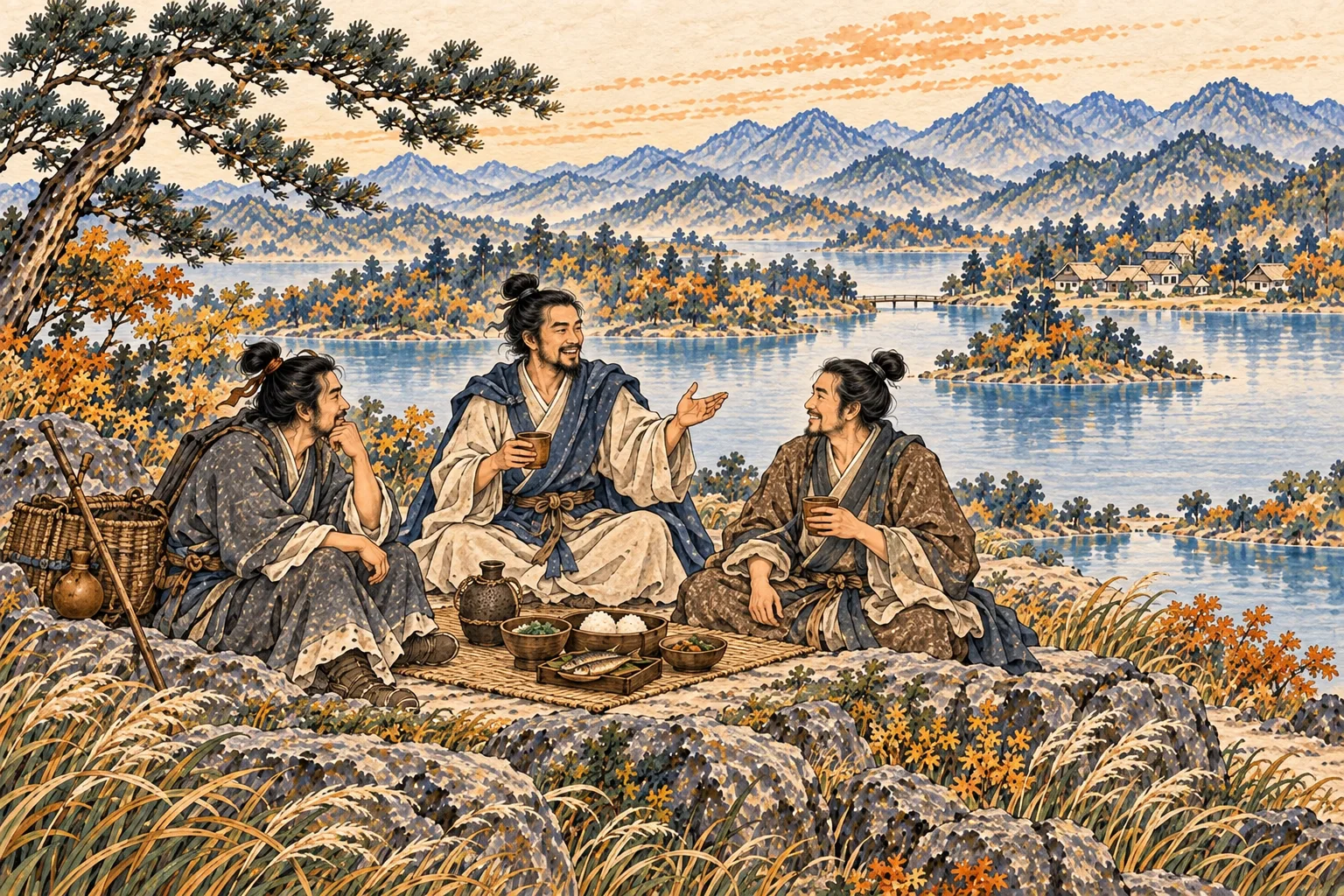
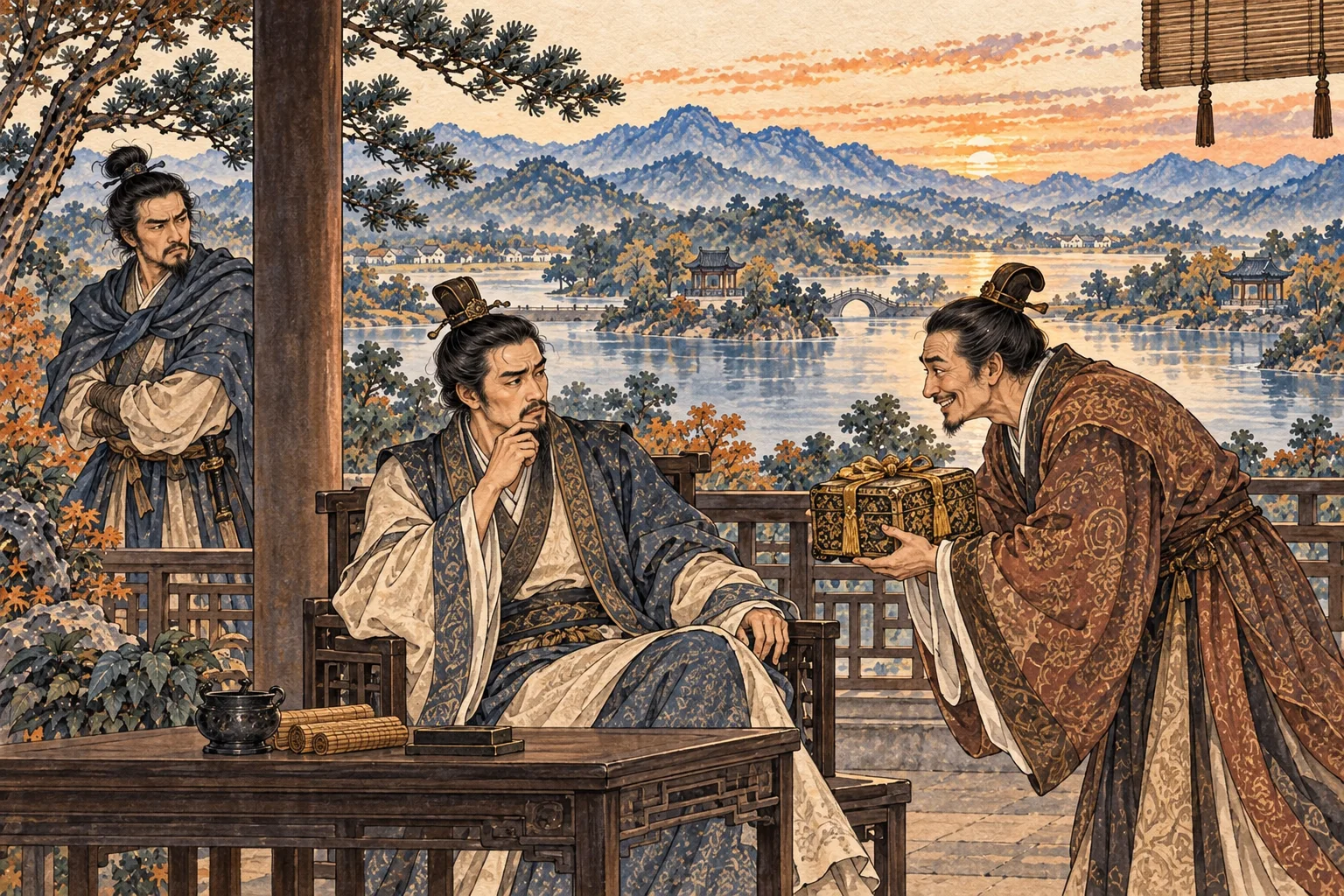
At a neighborhood lakeside repair circle, people bring broken lamps, stuck zippers, and questions. They fix, listen, and share skills. The joy is mutual: no one performs. But the circle also attracts a visitor who offers gifts to gain influence, and a coordinator nearly trusts a charming volunteer who quietly loosens the footbridge. The invitation to joy is real, but not guaranteed; it needs honesty and boundaries.
在社区湖边的修理圈里,人们带来坏台灯、卡住的拉链和问题,一边修一边听,一边分享手艺。喜悦是互相的:没人需要表演。但圈里也来了一位想用礼物换取影响力的访客,还有负责人差点信任一个悄悄松动木桥的讨喜志愿者。喜悦是邀请,不是保证;它需要真诚和界限。
ASK YOURSELF想一想
Where is your joy this week coming from real exchange, and where are you pleasing someone only to keep the mood easy?
这一周,你的喜悦哪里来自真实交流?又在哪里只为维持和气而讨好别人?



“说”通悦。刚中柔外说明内核正直而待人温和,才能以喜悦凝聚。传文使用古代君民关系说明悦的动员力,现代阅读则更要关注自愿、诚实与共同承担,不以快乐话术掩盖风险。
Shuo here means delight. Firmness within and softness outside let warmth coexist with principle. The ancient text praises joy's power to rally people; today that power calls for honest choice and shared responsibility, never a cheerful cover for hidden risk.
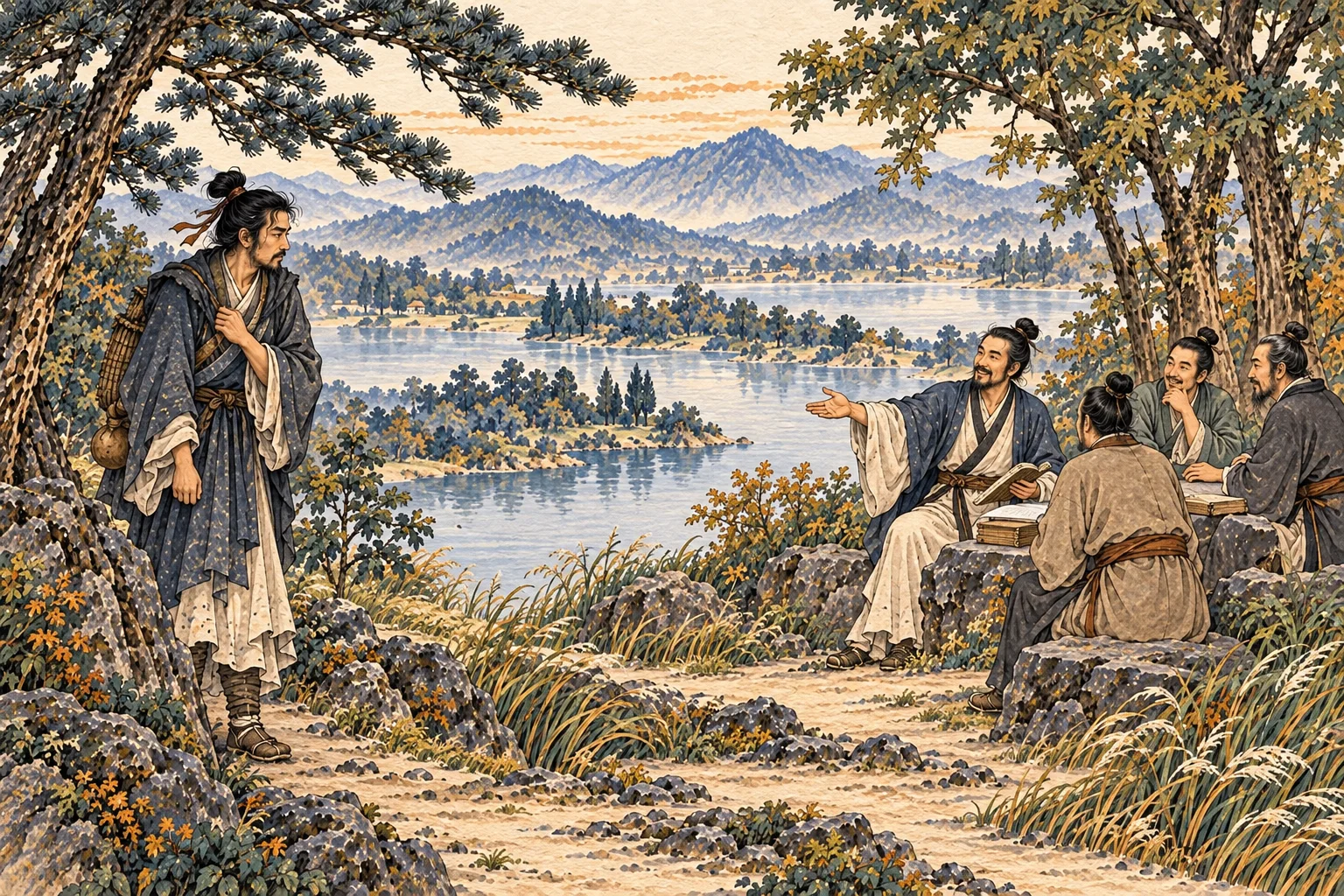
Lakes joined together: The Joyous. A cultivated person discusses and practices with friends.
两泽相依、彼此润泽。朋友讲习不是单向灌输,而是平等地把各自看见的东西说出来,能经讨论的喜悦才更持久。
Joined lakes nourish one another. Friends who discuss and practice together can test ideas while strengthening trust; shared learning gives joy a durable form.