 YiPhase
I CHING EXPLAINED · QIAN LINE FOUR
I Ching Qian Line 4 Explained: Should You Take the Leap?
Understand Qian line four, the dragon considering a leap, and a practical way to test a larger role before committing.
Watch with Jackie Yuen
English narration and subtitles. AI-generated presenter animation and synthetic voice, based on Jackie Yuen’s authorised photo.
Please retain the YiPhase credit and yiphase.com ending.
Download landscape MP4Download portrait MP4Qian’s fourth line and its commentary are the starting points. The workplace trial and three practical checks below are original modern applications. The highlighted line identifies its position; it is not a moving line from a user cast. “No blame” is not a promise that a leap will succeed.
Ready to leap? Test the next step.
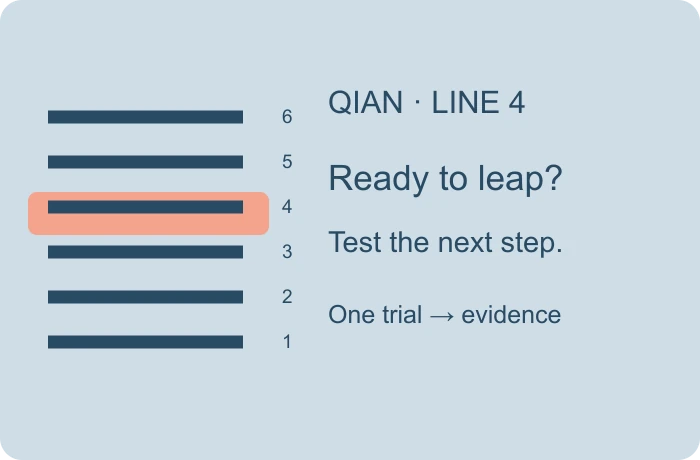
Should you take the next step, or test it first? In the I Ching, Qian line four describes a dragon considering a leap. It is a moment for judgement, not a command to rush.
中文解说
该迈出下一步,还是先试一步?《易经》乾卦九四描写龙跃的可能。这是需要判断的时刻,并不是催人仓促前进的命令。
A possible leap from the depths
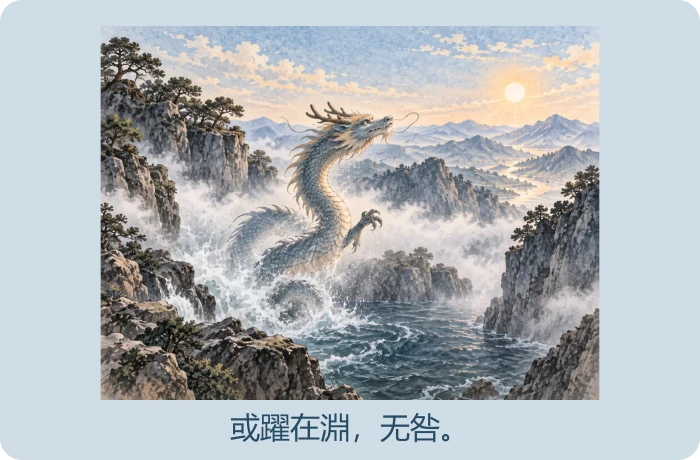
The line says: perhaps leaping in the depths; no blame. The commentary calls this testing oneself. Perhaps matters: the movement is not settled. No blame does not mean every leap will succeed.
中文解说
九四说“或跃在渊,无咎”。《文言》以“自试”解释这幅意象。“或”不能略过:进的动作尚未落定。“无咎”不等于每次跃起都一定成功。
Between preparation and a larger role
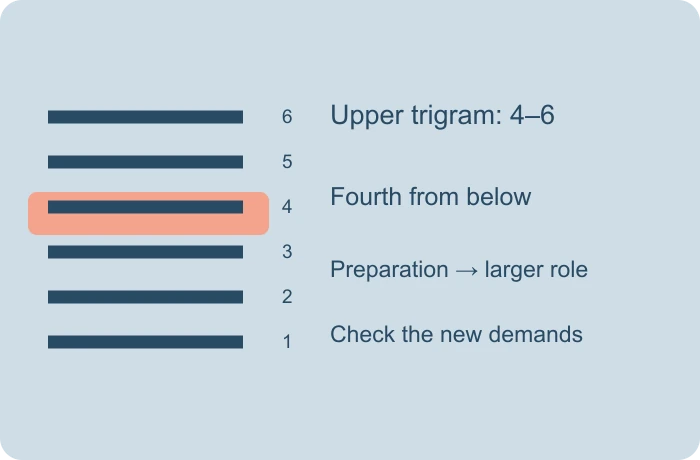
Count the six lines from the bottom. Four begins the upper trigram, following the vigilance of line three. In a modern situation, you may be approaching a larger role before knowing whether your preparation fits its demands.
中文解说
六爻从下往上数,第四爻进入上卦,承接九三的警省。现代处境中,你可能已接近更大的角色,却还需要确认准备是否足以应对新要求。
Try the responsibility before the title
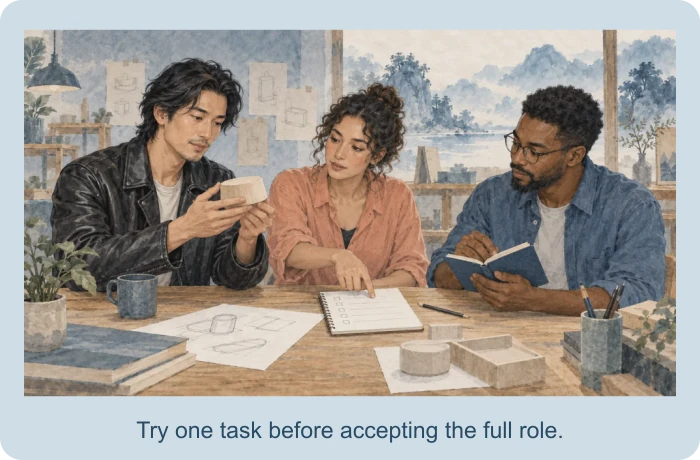
Suppose you are offered more responsibility at work. Rather than immediately saying yes or no, agree on a small trial assignment. Check the workload, available support, and results before committing to the full role.
中文解说
例如工作上有人提出更大的责任。与其立即全盘答应或拒绝,不如商定一项小型试行任务,先检查工作量、可获得的支持与实际结果,再决定是否完整承接。
What would make the step sensible?
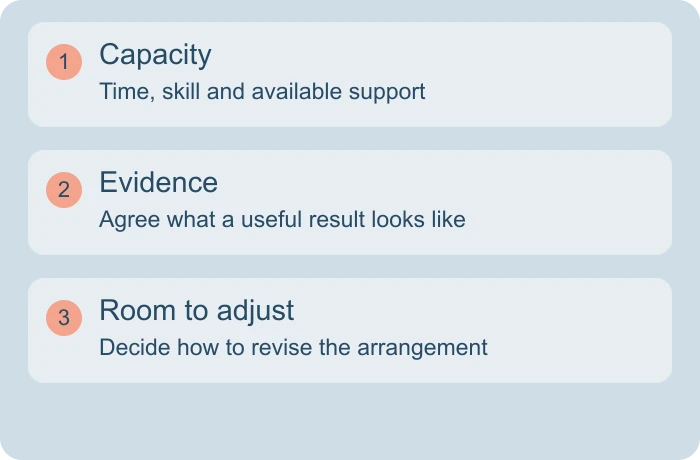
Ask three questions. Do I have the capacity? What evidence would show that the trial worked? Can we adjust the arrangement if it does not? A reversible test can reveal what enthusiasm alone cannot.
中文解说
问三个问题:我的容量够吗?什么证据能说明试行有效?若效果不合适,安排能否调整?可调整的小试验,能看见仅凭热情看不到的条件。
One trial. One review. Then decide.
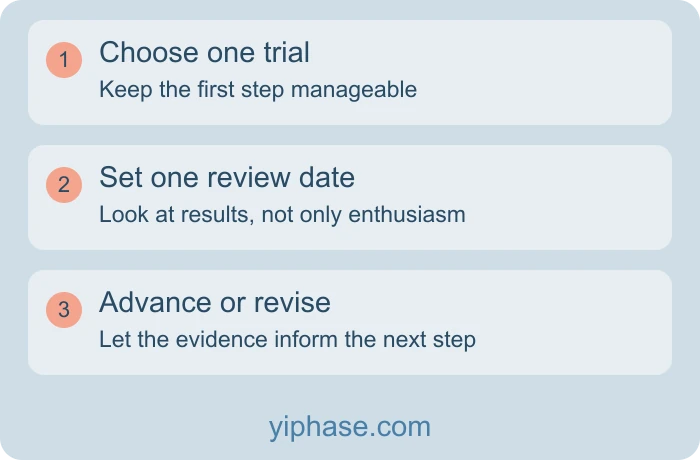
Choose one next step and a review date. Advance when the evidence supports it; revise when it does not. This is our practical application of testing oneself, not a prediction. Explore the full Qian lesson at yiphase dot com.
中文解说
选定一个下一步与复盘日期。证据支持时再推进,不支持时修订。这是我们对“自试”的现代应用,不是预言。在 YiPhase 继续学习完整乾卦。
Read the classical basis
Qian line four reads 九四:或躍在淵,无咎. The Image comments 或躍在淵,進无咎也; the Wenyan explains 或躍在淵,自試也. The word 或 leaves the movement open. We use this image to discuss testing oneself at a transition, not to prescribe a guaranteed outcome or a fixed deadline.
Zhouyi · Qian, line four, Image and Wenyan
Qian’s full six-stage illustrated lesson → · Qian’s original text and line illustrations →
← All learning paths