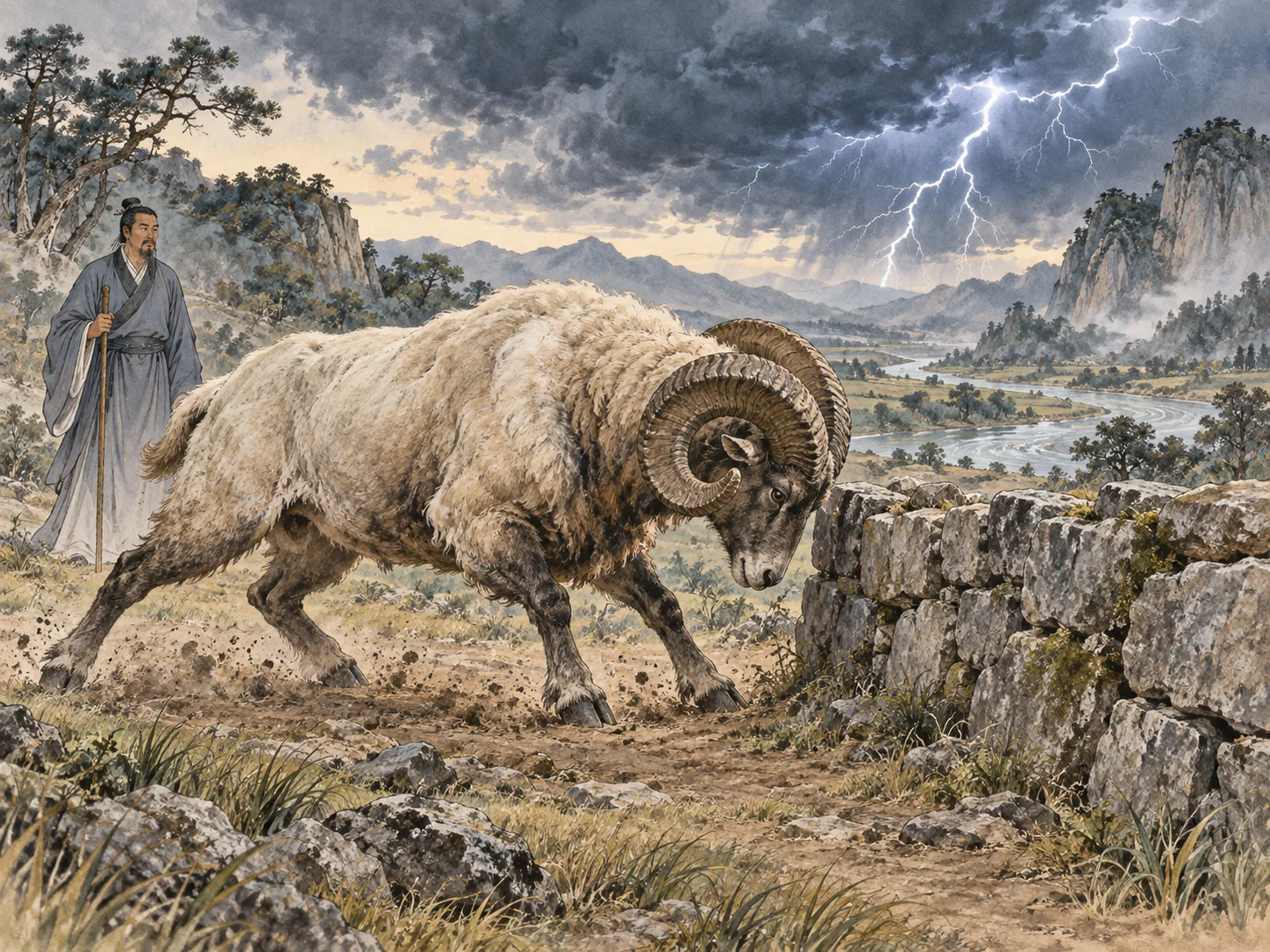
1. Power needs a right course · 象曰:雷在天上,大壯;君子以非禮弗履。
At a community farm, a volunteer has new strength and an eager plan: move a stubborn ram and load a cart before the weekend market. The strength is obvious, but the judgment is not about more force.
在社区农场,一位志愿者有了新的力气,也急着在周末集市前把倔强的公羊赶好、把货车装完。
It asks whether this power is held to a right course. A rushed first move can break trust; a measured one can clear the path.
力气很明显,但大壮的关键不是再加力,而是先问这股力量是否用在正道上。贸然的第一步可能失去信任,稳当的一步才可能让路打开。
Thunder is force made audible. The Image asks the strong to respect the boundary before taking the next step.
雷声越响,越应知道脚下的边界。“非礼弗履”是有力量也不逾矩。
2. Check the first step · 壯于趾,征凶,有孚。
A foot lunges toward a broken bridge before anyone checks the crossing.
脚先向断桥冲去,过河的条件还没查明。
Before sunrise, the volunteer steps toward the ram with all their weight on their toes, ready to pull it through the gate. They have not checked the latch or the muddy path beyond. The ram plants its feet. A senior worker raises a warning hand. The first step is too fast to be trustworthy.
天还没亮,志愿者就把全部力气压到脚尖,急着把公羊拉过门口。他没检查门闩,也没看门外泥路。公羊站住不动。老工人抬手示警:起步太急,反而先失信任。
What needs checking before you take a forceful first step?
第一步发力之前,你需要先检查什么?
3. Hold power at the center · 貞吉。
A strong horse pulls a loaded cart at a measured pace.
强马拉着重车,却按稳妥的速度前进。
By midmorning, the volunteer waits for the ram to settle. With a calm rope and steady pace, they walk it beside a loaded timber cart on the clear lane. No one yanks or hurries. The strength is real, but the horse and cart move because the driver stays centered.
上午过半,志愿者先等公羊安静下来。他用平稳的绳子和步子,把公羊引到清朗小路上,旁边是一辆装好木料的货车。没人猛拉猛赶。力气是真的,但车马能走,是因为赶车人守在中正的位置。
Where does calm, centered handling make your strength fruitful?
在哪些事上,稳住中心比逞强更让力气有用?
4. Force can become a trap · 小人用壯,君子用罔,貞厲。羝羊觸藩,羸其角。
The ram pushes so hard that its horn catches in the fence.
公羊使劲顶撞,角反而卡在篱笆里。
At the narrow wicker gate, the volunteer tries to push the ram straight through. A horn catches between the woven branches. The more they pull, the tighter it knots. An elder says to stop. The reckless use of strength has made a simple passage into a trap.
到了窄柳条门,志愿者硬把公羊往前推。一只角卡进枝条之间。越拉越紧。老农让他停手。莽撞地用强,把本来能过的门变成了困局。
When did pushing harder only make a knot tighter?
哪一次你越用力,反而把结打得更紧?
5. Open the way well · 貞吉悔亡,藩決不羸,壯于大輿之輹。
The fence opens and a sound axle carries the weight through.
篱笆打开了,坚实的车轴把重担稳稳送过。
This time the volunteer opens the wicker panel instead of forcing the ram through. They check the cart axle and load it evenly. The ram passes without its horns caught, and the cart carries the timber down the lane. Strength works when the opening and support are both prepared.
这一次,志愿者不再硬赶,而是把柳条门板打开。他检查车轴,把木料均匀装好。公羊顺利通过,没有缠住角,货车也能稳稳走下小路。力气有用,是因为通路和承重都先准备好了。
What preparation helps your strength carry a real load?
怎样的准备,能让你的力气真正承担重量?
6. Let it go · 喪羊于易,无悔。
A shepherd opens the hand and lets the sheep walk away.
牧人松开绳索,让羊自行离去。
On the open flat field, a sheep slips its rope and wanders away. The volunteer starts to chase, then stops. The field is easy, the sheep is safe, and no one is harmed. Letting a small loss stay small is wiser than turning it into a contest of will.
在平坦开阔的草地上,一只羊脱了绳,慢慢走开。志愿者本想追,又停下来。地势平易,羊没有危险,也没有人受伤。让小损失停在损失,比把它变成一场争强斗胜更明智。
Where could letting go be wiser than winning a struggle?
在哪里,放下比争赢更明智?
7. Work patiently through the bind · 羝羊觸藩,不能退,不能遂,无攸利,艱則吉。
The ram cannot advance or retreat; patience loosens the wicker around its horns.
羊角卡住,进退不得;耐心拆开篱笆才能脱困。
In light rain, the ram pushes into the fence and cannot go forward or back. Its horns are caught again. The volunteer stops pulling. For a long while, they work branch by branch to loosen the wicker, accepting that the only way out is slow, difficult, and careful.
细雨里,公羊又撞进篱笆,进不得也退不得,角卡住了。志愿者不再拉,而是花很长时间,一枝一枝地松开柳条。他承认:唯一的出路是艰难、缓慢、细心的解开。
What difficult, patient untangling is better than another surge of force?
什么艰难的慢解,比再一次用蛮力更好?
8. Where does your strength need a right course before it needs more force? · 大壯:利貞。
The lines begin with a foot that surges too soon, then find a steady center. A ram caught in a fence warns against brute force; an opened fence and strong cart show disciplined progress. Letting a sheep go and carefully freeing a trapped ram complete the lesson in restraint.
六爻由脚趾冲动前行的险,转到居中守正的吉;公羊两次触篱,分别显出蛮冲被困与困后艰难求解。中间的篱开、车轴坚固与失羊无悔,讲的是力量要知进,也要知舍。
The judgment is brief because the condition is decisive: power becomes beneficial only when held to a right course.
卦辞只有“利贞”两字,却是大壮的关键:力量越强,越需要先问这股力量用得正不正。
Where does your strength need a right course before it needs more force?
你的力气在哪里需要先校准方向,而不是继续加大?