1. Repair what has been neglected · 象曰:山下有風,蠱;君子以振民育德。
Repairing Decay faces problems compounded over time.
蛊面对的是积久成弊的事。
An extended family returns to a weathered courtyard house and the village well beside it. Decades of small neglect show in the roof, storehouse, gate, and records.
一个大家庭回到多年失修的老院子和村中水井旁。 屋顶、仓房、木门和旧账册都留下日积月累的疏忽。
The Image gives us a clue: Wind below Mountain: Repairing Decay. The noble one stirs the people and nourishes virtue. We will read the six lines from the ground upward.
象曰:山下有風,蠱;君子以振民育德。 我们从下往上读六爻,看看处境怎样一步步变化。
2. Repair inheritance · 干父之蠱,有子,考無咎,厲,終吉。
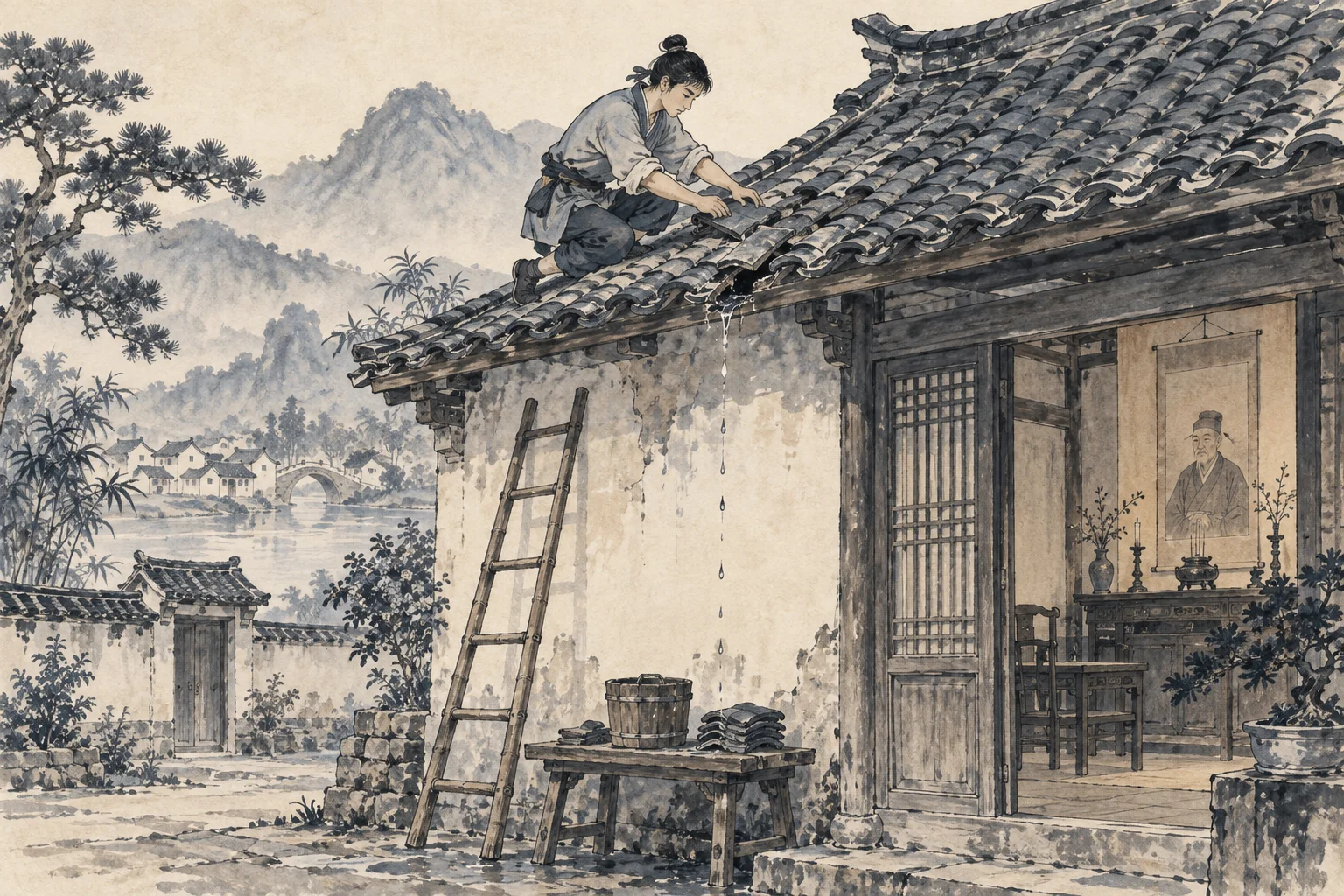
The young adult repairs a roof inherited with its leaks. Correcting an older generation's mistake is difficult but necessary.
年轻人修补祖辈留下的漏屋;处理旧过虽难,却能止住后来的损害。
A daughter climbs onto the family roof and replaces cracked tiles her father ignored for years. The work is tiring and the height feels risky, yet she keeps going. Her father watches from below, uneasy but relieved. By evening the leak is stopped, and the old house will not worsen through the coming rains.
女儿爬上家中屋顶,换掉父亲多年没修的裂瓦。活很累,高处也危险,但她继续做。父亲在下面看着,不安又宽慰。傍晚漏水止住,老屋不会在接下来的雨季继续坏下去。
A successor who repairs old mistakes faces danger and effort, yet ultimately prevents further harm. What old problem can you begin repairing even if it feels risky?
有什么旧问题,即使有风险,你也可以开始修补?
3. Repair gently · 干母之蠱,不可貞。
A son helps his mother untangle the basket thread by thread. Careful repair in a close bond cannot be forced.
儿子陪母亲一线一线理清乱篓;亲密关系里的旧结,不能硬拉。
A son notices his mother’s sewing basket has become a knot of tangled threads and old receipts. He does not impose a new filing system. Instead he sits beside her, asks which spools matter, and untangles slowly. What she needs is balance and gentleness; forcing order would bruise the bond.
儿子发现母亲的针线篮缠满线头与旧收据。他没有强推新分类法,而是坐在旁边,问她哪些线轴重要,慢慢解开。她需要的是中道与柔和;硬求整齐会伤到亲情。
Disorder in a caring bond needs balance and gentleness, not rigidity. Where would gentleness repair more than rigid order?
在哪里,柔和比僵硬整顿更能修补关系?
4. Allow small mistakes · 干父之蠱,小有悔,無大咎。
While fixing the gate, the daughter makes a small imperfect cut and keeps working. Minor awkwardness is not failure.
女儿修门时有一处小误,仍继续把门修好;方向对,小失不等于大过。
A daughter is repairing the wooden gate her father badly patched years ago. She cuts one board too short and must redo it, feeling embarrassed. Her father sighs, but they measure again together. The mistake is small; the gate still closes true. No great fault, only a lesson in patience.
女儿在修父亲多年前草草补过的木门。她锯短了一块木板,只得重做,很尴尬。父亲叹气,但两人重新一起量尺寸。错不大,门仍能严丝合缝关上。没有大过,只多了一课耐心。
Repairing old damage may bring awkward small mistakes; with a sound direction, they are not great faults. What small error can you accept as part of a sound repair?
哪个小错,你可以把它当作正确修补的一部分?
5. Do not indulge decay · 裕父之蠱,往見吝。
The storehouse wall keeps sagging as its owner passes by. Calling neglect kindness only lets the damage spread.
库房墙已歪斜,主人却走过不修;纵容旧弊,后患只会加深。
An adult cousin walks past the sagging storehouse wall every day, promising to fix it later. Rain seeps into stored grain and tools. He tells himself it is not urgent, that his father also ignored it. Soon the wall leans farther, and the next season brings regret he cannot undo.
一位堂兄每天走过倾斜的仓房墙,总说以后再修。雨水渗进存粮和工具。他告诉自己不急,父亲当年也没管。很快墙更歪,下一季带来无法挽回的遗憾。
Indulging old damage without repair carries regret into what follows. What are you delaying until regret forces your hand?
你正把什么事拖到遗憾逼你动手?
6. Restore with virtue · 干父之蠱,用譽。
The community clears the old well without discarding its sound stones. Repair can preserve what deserves to last.
乡人清理旧井,也保留结实的井石;修旧不是全盘推倒。
A community gathers to restore the old well their grandparents used. A woman leads without scolding anyone. They clean the water, reset the stones, and keep the worn rim that tells the village’s story. Repair done through care becomes praise, not erasure; the well serves again and neighbors remember why it mattered.
社区聚在一起修复祖辈用过的那口老井。一位女性带领大家,不责备任何人。他们清淤、重砌石块,保留磨损的井沿,因为它讲着村子的故事。以德承担的修复成了赞誉,不是抹去;井重新可用,邻居也记得它为何重要。
Repair undertaken through virtue turns an old problem into a renewal worthy of praise. How can a repair honor what is old while making it useful again?
怎样的修补既能尊重旧物,又能让它重新有用?
7. Choose higher work · 不事王侯,高尚其事。
The scholar turns from the official carriage toward a mountain path. Some work is better done beyond the struggle for office.
学者离开官车,走向山路;有些修复与成就,适合在权位之外完成。
A scholar is offered a prestigious office in the city, with a carriage waiting. He declines. Instead he stays on the mountain path, teaching village children and repairing the old schoolhouse roof by hand. His work is small and independent, but high-minded; he does not need the center of power to restore what decayed.
一位学者获邀去城里任显赫官职,马车已在等。他婉拒了。他留在山路上,教村童读书,亲手修补旧校舍屋顶。他的工作小而独立,却高尚;修复衰败,不必站在权力中心。
Sometimes the best repair is not at the center of power, but in independent and elevated work. Where might independent, unhurried work repair more than a prestigious position?
在哪里,独立而不急躁的工作,可能比显赫职位更能修复?
8. What must be mended before moving on? · 蠱,元亨,利涉大川。先甲三日,后甲三日。
Repairing entrenched damage needs decisive work and time before and after it for observation, preparation, and review.
处理积弊需要大行动,也需要在行动前后留出观察、准备与复盘的时间。
It does not evade old damage; it finds the root, prepares before and after, and repairs patiently.
它不回避旧问题,而是先看清根源、准备前后节奏,再以耐心修复。
Ask yourself: Where has small neglect quietly compounded in your life, and what is the first honest repair?
不妨问自己:你生活里哪一处小疏忽已悄悄积累,第一步诚实的修补是什么?