1. When exchange begins to flow · 象曰:天地交,泰;后以財成天地之道,輔相天地之宜,以左右民。
Peace is a phase when Heaven and Earth communicate and people share a direction: small obstructions recede and larger possibility arrives.
泰是天地交感、上下同心的通泰阶段:小的阻滞退去,大的机会到来;但通达也需要以节制和照应来维持。
A quiet neighborhood turns a weedy lot into a shared garden. People start by clearing roots together, then face storms, cliques, and a wall collapse.
一个安静的社区把杂草丛生的空地改成共享花园。 大家先一起拔除纠结的草根,随后经历暴雨、小圈子和围墙倒塌。
The Image gives us a clue: Heaven and Earth interact: Peace. The ruler completes the course of Heaven and Earth, supports what is fitting, and thereby assists the people. We will read the six lines from the ground upward.
象曰:天地交,泰;后以財成天地之道,輔相天地之宜,以左右民。 我们从下往上读六爻,看看处境怎样一步步变化。
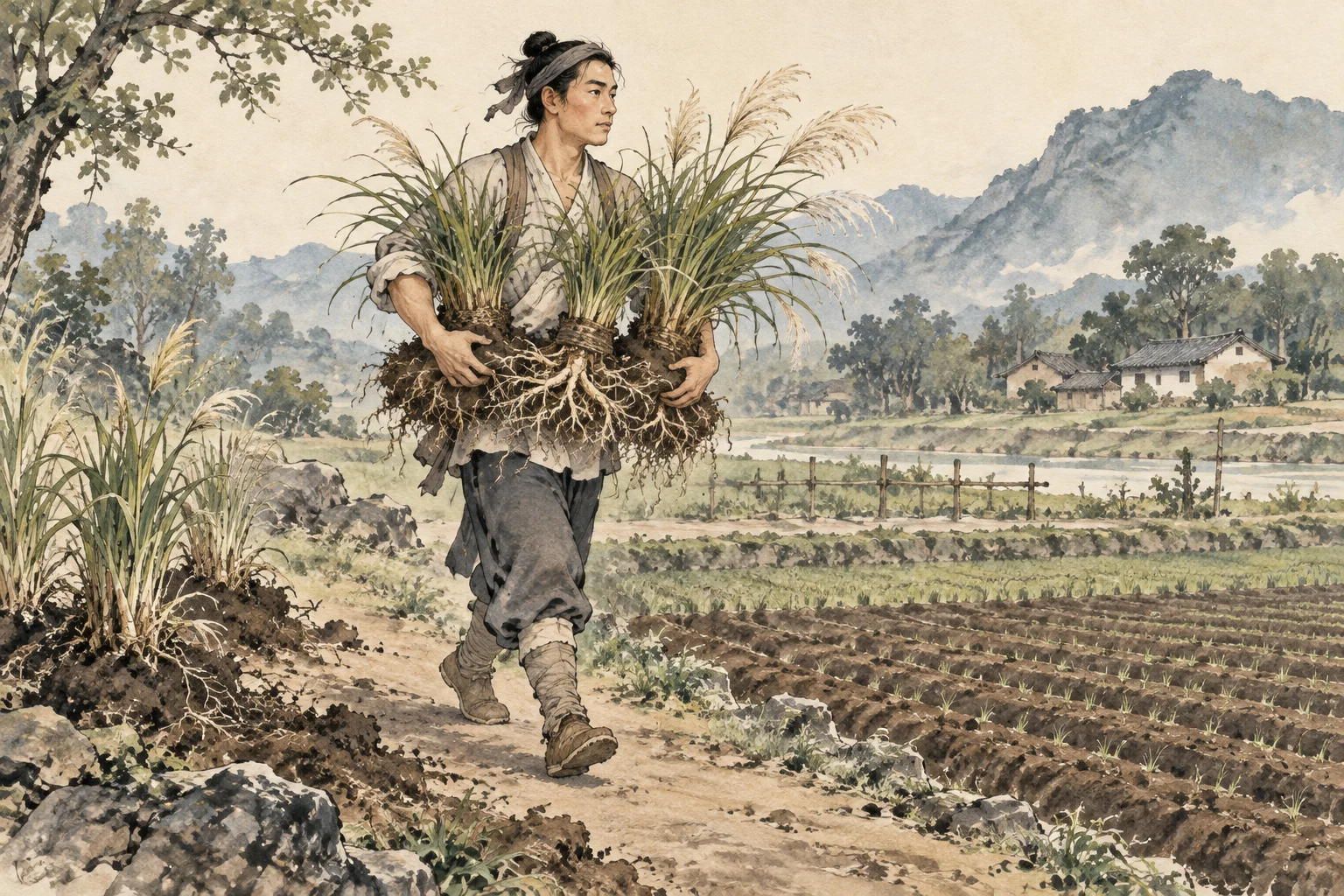
2. Advance together · 拔茅茹,以其彙,征吉。
When one root is pulled, the grasses beside it rise too. A sound opening lets companions advance together.
拔起一根草,连着的草也一起动;方向正时,伙伴可以同进。
In spring, a few neighbors tug at a stubborn patch of couch grass. The roots are tangled, so one pull brings up many. They decide to work side by side, not alone; the shared effort clears the bed faster. This is a good time to begin together.
春天,几位邻居一起拔一片顽固的茅草。草根互相缠连,一拔就带起许多。他们决定并肩动手,而不是各干各的;共同出力让苗床更快清出来。这是结伴起步的好时机。
Those joined at the roots move each other. Who might move with you if you start together?
如果结伴开始,谁会和你一起行动?
3. Include the rough · 包荒,用馮河,不遐遺,朋亡,得尚于中行。
A leader crosses the broad stream with rough and distant companions included. Peace must make room beyond the inner circle.
带着性情不同、路途遥远的人一起渡河;通泰不能只容得下自己人。
The group adopts the muddy, overgrown back strip that everyone avoided. After a storm floods the low path, one member wades in with a rope and guides others across. They invite a household from the far end of the street and agree not to favor any clique. Keeping the middle way holds the group together.
小组接手了大家都不想要的泥泞荒地。暴雨后低处小路被淹,一位成员带着绳子蹚水,引导其他人过去。他们还邀请街尾的一户人家加入,并约定不偏袒任何小圈子。守住中道,大家才抱得紧。
A capable person includes what is rough and crosses difficulty, leaving no one far behind. Who is being left out, and what rough part can you include?
谁被遗漏了?哪块粗粝的部分可以包容进来?
4. Change returns · 無平不陂,無往不復,艱貞無咎。勿恤其孚,于食有福。
The path levels, then slopes again. Remembering this rhythm keeps calm from turning into complacency.
平地之后又有坡,离去之后也会归来;懂得循环,安稳时就不会松懈。
After easy weeks, a slope in the garden erodes and the path turns muddy. Volunteers drift away; one season's harvest looks uncertain. The remaining members keep showing up, repair the drainage, and trust slowly returns. They share a simple meal, remembering that level ground and slopes alternate.
平顺几周后,花园的一处斜坡被雨水冲坏,小路泥泞。一些志愿者陆续离开,当季收成也显得不确定。留下的人照常出现,修好排水,信任慢慢恢复。他们一起简单吃饭,明白平地与斜坡本会轮转。
Level ground and slopes alternate; every departure has a return. When the path slopes, what steady habit keeps you going?
顺境中预备,逆境中守正,就不必因短期波动失去信心。 当道路变陡,哪个稳定的习惯能让你继续?
5. Trust without command · 翩翩不富,以其鄰,不戒以孚。
A neighbor comes without a display of riches. Honest confidence draws cooperation more surely than rank does.
邻人不凭财富排场而来;真诚互信比身份更能让人并肩。
Neighbors drift in like a small flock, carrying spare hoes, seed packets, and jars of soup. No one is rich, yet they leave things on the communal bench without being asked. Trust, not payment, moves between them, and the shed fills with what each can spare.
邻居们像一小群鸟轻轻聚来,带着多余的锄头、种子和几罐汤。没有人富裕,却主动把东西放在公共长凳上,不必谁提醒。往来靠的是信任,不是付款,工具棚渐渐装满大家能匀出的物件。
Trust need not depend on wealth. What can you share without needing to be asked?
有什么是你不用别人提醒就愿意分享的?
6. Union with blessing · 帝乙歸妹,以祉元吉。
Two households meet through a fitting marriage. Their respect, not ceremony alone, makes the alliance auspicious.
两家因婚姻相合;使这段结合有福的,是尊重而不只是仪式。
At dusk, the garden group and the nearby senior center hold a modest pairing ceremony by the footbridge. They exchange seed packets and a shared key to the tool shed. There is no lavish display, only respect and a blessing. Two groups become one working system.
黄昏时,花园小组和附近的养老中心在人行桥边举行简单的结对仪式。他们交换种子包,共用工具棚钥匙。没有铺张的排场,只有尊重和祝福。两个群体从此合成一套运作方式。
A fitting union is not display; respect and blessing make two households genuinely connected. Where could respect turn a connection into a blessing?
在哪里,尊重能让一段连接变成祝福?
7. Repair from within · 城復于隍,勿用師。自邑告命,貞吝。
The city wall gives way and earth returns to the moat. At peace's limit, repair inward before marching outward.
城墙崩回壕沟;泰到尽处,应先修内部秩序,别急着向外用兵。
After heavy rain, the garden's old earthen wall collapses into the drainage ditch. Some members want to force an expansion and argue with the landlord. Instead, the group posts a notice at the gate, calls a repair day, and rebuilds the wall from inside. Pushing outward now would only bring regret.
大雨过后,花园的旧土墙塌进排水沟。有人想强行扩建,还和地主办交涉。小组没有那样做,而是在门口贴出通知,召集修补日,从里面重新垒墙。此时向外硬推,只会带来懊悔。
When Peace reaches its limit, old structures loosen. When structures loosen, what needs repair at home before you push outward?
此时不宜以强力扩张,而应回到内部修复秩序。 当结构松动,向外推进之前,内部有什么需要先修复?
8. How will you protect a good season? · 泰,小往大來,吉亨。
When obstruction recedes and constructive forces increase, it is time to connect people, resources, and plans in earnest.
当阻碍减少、正向力量增加,适合把关系、资源和计划真正打通。
Its openness still requires proportion and care to endure.
通泰不是放任流动,而是顺应自然的同时把资源和秩序安排得合宜。
Ask yourself: Where in your own life are small obstacles clearing, and what would help that opening last?
不妨问自己:在你自己的生活里,哪些小阻碍正在消退?怎样做才能让这份通达持续?