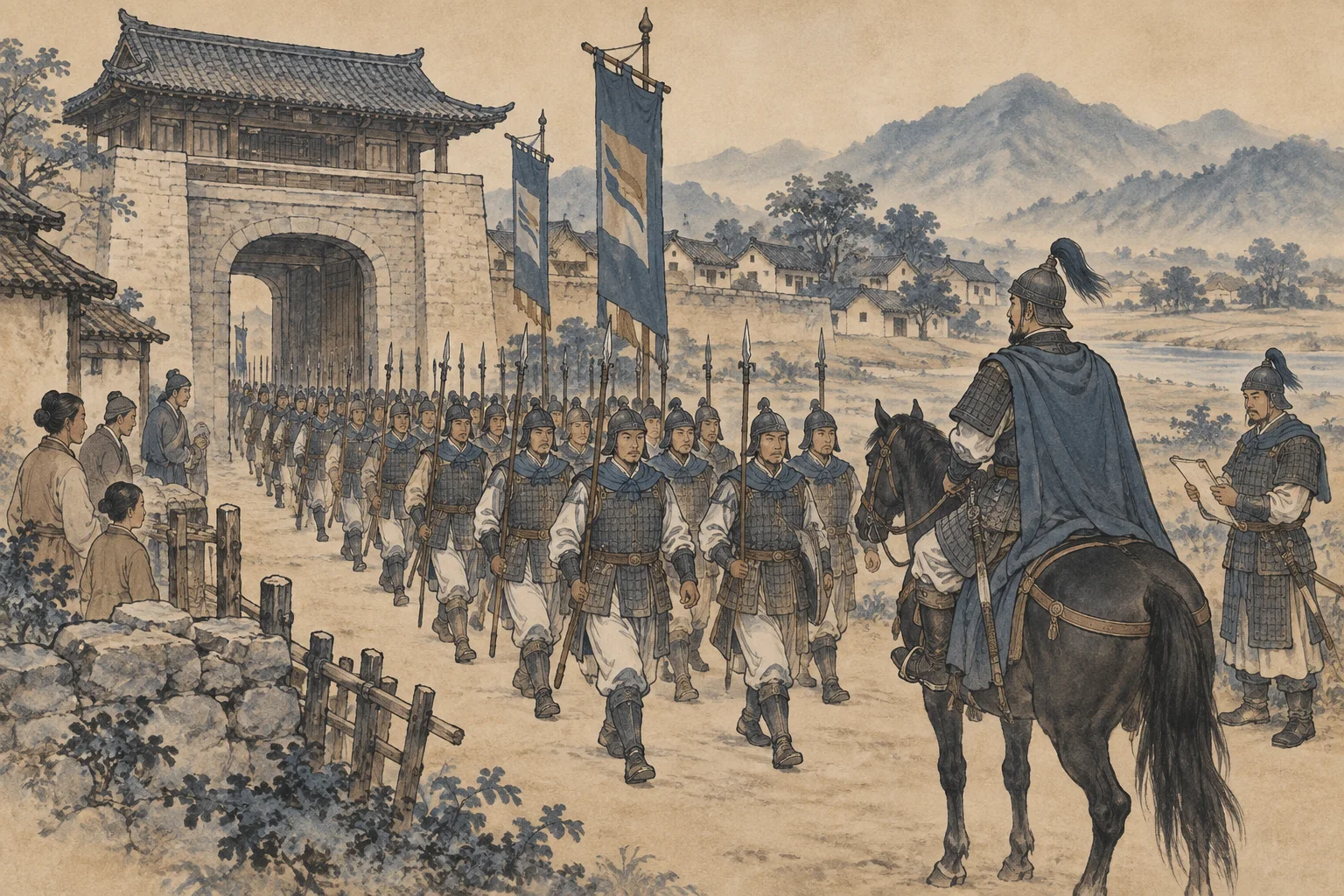
1. Discipline before force · 象曰:地中有水,師;君子以容民畜眾。
The Army concerns organization and responsibility when many people act together.
师是众人聚集后的组织与责任。
A group of friends plans a mountain hike. They must organize themselves, choose a leader, follow safety rules, and respond to unexpected challenges.
一群朋友计划去登山。 他们必须组织起来,选择领队,遵守安全规则,应对意外挑战。
The Image gives us a clue: Water within Earth: The Army. The noble person receives the people and gathers the multitude. We will read the six lines from the ground upward.
象曰:地中有水,師;君子以容民畜眾。 我们从下往上读六爻,看看处境怎样一步步变化。
2. Set the rule · 師出以律,否臧凶。
Before the force moves, its members agree on clear rules. Without them, a shared purpose quickly scatters.
队伍出发前先定纪律;没有规则,再共同的目标也会散乱。
The hiking group sets off. They agree on clear rules: stay together, keep a steady pace, and take breaks. But one person ignores the rules and races ahead, causing confusion. Without discipline from the start, even a good hike can turn chaotic.
徒步小组出发。他们定下明确的规则:一起走,保持匀速,定时休息。但有人无视规则,冲在前面,造成混乱。如果一开始没有纪律,即使是一次愉快的徒步也会变得一团糟。
Begin with discipline or even a good aim loses order. How do you establish clear rules when starting a group activity?
开始集体活动时,你如何建立明确的规则?
3. Trusted command · 在師中,吉,無咎,王三錫命。
A trusted commander stands among the troops, receiving authority again and again because everyone depends on steady judgment.
主帅立于军中,反复受命;众人的安危系于他是否能稳健判断。
The group chooses an experienced hiker as leader. They trust her judgment. She checks in with the park ranger, who gives her the trail map, weather warnings, and emergency contacts—three clear commands. She now bears responsibility for everyone's safety.
小组选了一位有经验的徒步者当领队。大家信任她的判断。她向公园管理员报到,拿到了路线图、天气预警和紧急联系方式——三条明确的指令。现在她肩负着所有人的安全。
A centered commander receives trust and bears the people’s safety. What does it mean to be entrusted with a group's safety or success?
被托付一个集体的安全或成功,意味着什么?
4. Face the cost · 師或輿尸,凶。
A cart returns carrying covered fallen comrades. The lowered banner asks what poor command cost, not who looked brave.
覆尸之车归来,旗帜低垂;该追问的是误指挥的代价,而非谁显得勇敢。
One hiker slips on a wet rock and breaks an ankle. The leader had ignored a warning about that section. The group must carry the injured person back down the trail. The mood is somber, and the leader feels the heavy cost of poor judgment.
一名徒步者在湿滑的岩石上滑倒,脚踝骨折。领队之前忽略了关于那段路的警告。小组不得不把伤者抬下山。气氛沉重,领队深感判断失误带来的沉重代价。
The cart carries the dead back from a failed campaign. When have you seen a small oversight lead to a serious setback?
此爻以「凶」警示指挥失当,不能只看出发时的声势;图中低垂的旗和覆尸之车把损失具体化。 你何时见过一个小疏忽导致严重挫折?
5. Withdraw in order · 師左次,無咎。
The troops make camp off the path and withdraw in order. Preserving people now is wiser than forcing a bad position.
军队有序退驻;此时保存人力,比硬守不利位置更明智。
The weather turns bad, and the summit is still far. The leader decides to turn back. Some are disappointed, but she explains that a safe retreat preserves the group. They walk down in an orderly way, keeping spirits up. It is a wise, not a shameful, choice.
天气转坏,离山顶还很远。领队决定原路返回。有人失望,但她解释说安全撤退能保全大家。他们井然有序地下山,保持士气。这是明智的选择,而非耻辱。
Orderly withdrawal in an unfavorable situation preserves capacity. How do you decide when to step back from a goal?
你如何决定何时从目标中退一步?
6. Choose the capable · 田有禽,利執言,無咎。長子帥師,弟子輿尸,貞凶。
Boars threaten the field, and an elder commander directs a measured response; beside him, an unready leader faces the loss his command caused.
野兽侵田,成熟主帅组织应对;一旁年轻将领面对误任造成的伤亡。
At a community repair day, a damaged power cable threatens the workshop. An experienced electrician asks everyone to cut the supply first. A new volunteer is put in charge instead and sends someone to move the cable; that person is injured and carried to safety. The urgent lesson is whom to entrust with real risk.
社区维修日发现电缆破损。经验丰富的电工要求先断电,负责人却让新手指挥,结果有人贸然碰线受伤,被扶离现场。真正的风险面前,任命谁来负责至关重要。
When a task is genuinely dangerous, who is qualified to lead it, and what would an unready appointment cost?
事情真的有风险时,谁有资格带队?把责任交给未准备好的人,会让谁付出代价?
7. Entrust wisely · 大君有命,開國承家,小人勿用。
After the campaign, the ruler assigns lasting duties. The moment of reward also decides who must never be given power.
事成之后,君主分派长久责任;论功之时,也要辨明谁不能掌权。
Back home, the group debriefs and plans the next hike. The leader suggests that the hiker who panicked should take a safety course before leading. She assigns roles based on reliability, not just enthusiasm. The group agrees to entrust responsibility only to those who are ready.
安全回家后,小组复盘并计划下次徒步。领队建议那个惊慌的徒步者先参加安全课程再带队。她根据可靠程度分配角色,而不只是热情。大家同意只把责任交给准备好的人。
After success, entrust responsibility to reliable people, not opportunists. How do you decide who to trust with responsibility after a group effort?
在集体努力之后,你如何决定把责任托付给谁?
8. Who should carry responsibility? · 師:貞,丈人吉,無咎。
Collective power needs sound principle and mature leadership, or it becomes destructive.
众人行动必须有正当原则和成熟领导,才不会把集体力量变成伤害。
Water held within Earth must be contained and directed. It does not glorify force; it insists on discipline, mature leadership, timely withdrawal, and proper appointments after success.
地中有水,力量必须被容纳、约束和正确使用;本卦不赞美武力,而强调纪律、成熟领导、及时撤退和功成后的正确任用。
Ask yourself: When have you seen a group effort succeed because of discipline and mature leadership, or fail without them?
不妨问自己:你何时见过一个集体因纪律和成熟领导而成功,或因缺乏它们而失败?