Skip to content
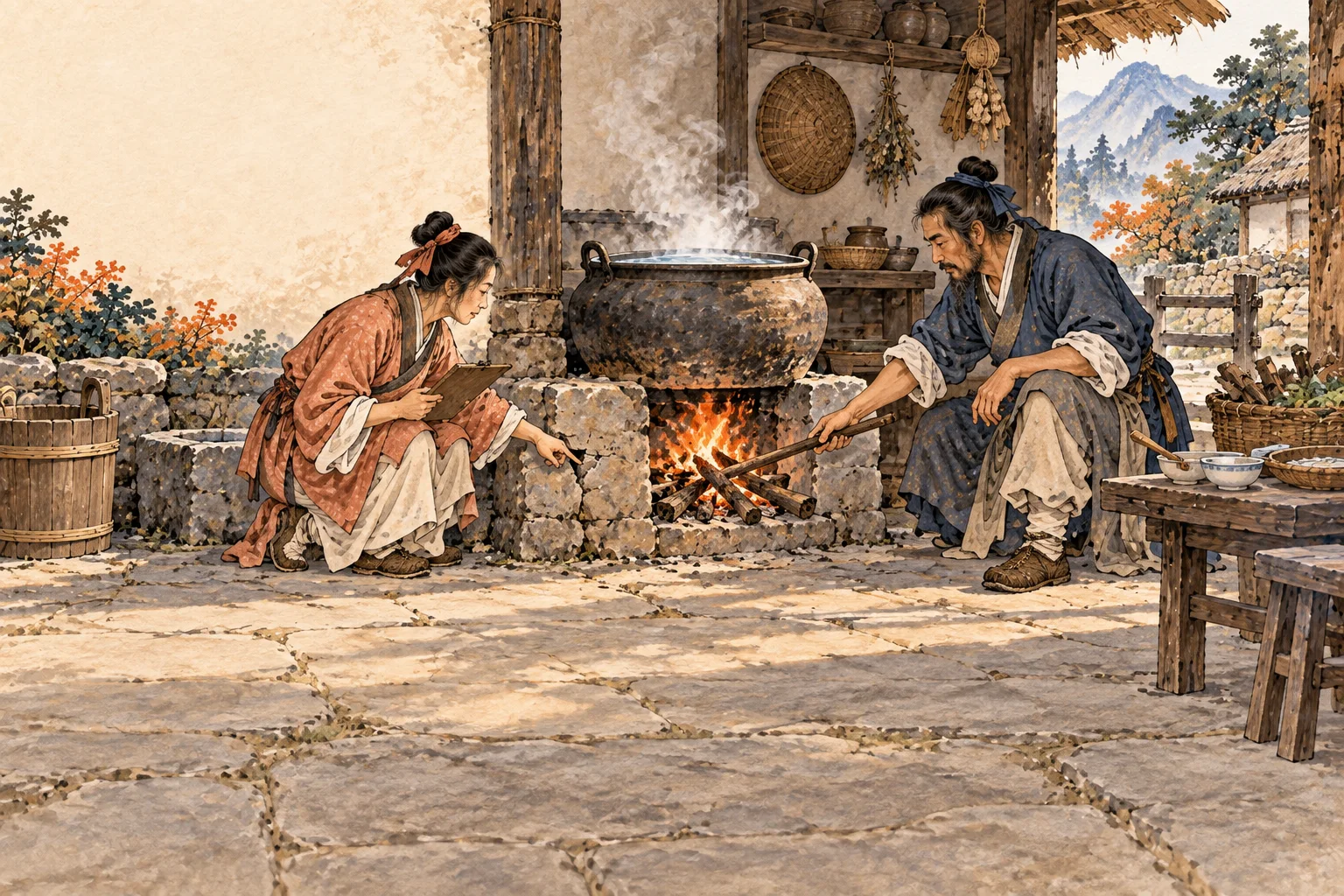
A vessel of water rests above a cooking fire as two people continue to tend it after the meal is ready.
Water above fire · Guard what is gainedScene imagery · YiPhase original learning visual
Hexagram 63 · 水火既濟
既濟JÌ JÌ

After Completion

坎 · Water · 離 · Fire

既济是已渡、已成,却不是从此无事。水在火上可成炊爨,《彖传》说小事亦通,刚柔各正其位;但“初吉终乱”警惕成果到手后停止修德与防患。六爻从控制涉水的速度、失物不妄逐,到三年艰难克事、舟漏终日戒,再以简祭胜盛祭辨真诚与形式,最后水淹至首显出过进之危。真正的完成,是把照料和警觉继续下去。

After Completion means the crossing has been made, not that care can end. Water over fire can bring a meal to readiness; even small matters find their place. Yet the Judgment warns of disorder at the end if achievement becomes complacency. Six lines move from a controlled ford and patient recovery through exhausting effort and a repaired leak, then distinguish sincere simplicity from display before the final danger of pushing into water too deep.

Original Chinese, independent English explanations and modern examples. Check the sources.保留经典原文,英文独立释读,生活例子单独说明。查看依据。

LESSON 63 · EVERYDAY I CHING

Stay attentive after success

第 63 课 · 生活里的卦意

A short bilingual narration with moving views of all six line images.

跟着双语讲解与逐爻画面,理解这一卦的生活处境。

▶ Play Lessons▶ 播放课程
YiPhase · Today

In everyday life这一卦在生活中

A modern scene to help you recognize the situation. This is YiPhase's own example, separate from the classical text below.

用当代处境帮助理解卦意。以下为 YiPhase 独立编写的例子,与后面的经典原文分开。

A situation you may recognize一个可能熟悉的处境

After a long home renovation, the family finally cooks in the new kitchen. Water boils over fire; the room works. Yet the joy of completion can slide into neglect. This hexagram asks what happens after the boxes are unpacked: keep tending, keep checking, and know when not to push.

一场漫长的家宅翻修结束,家人在新厨房里第一次做饭。水在火上,饭菜成了,房间也好用了。但完成之后,若把成果当作终点,照料就会松掉。这一卦问的是:箱子拆完之后,怎样继续看护、继续检查,以及何时不该再往前推。

ASK YOURSELF想一想

Where in your life has a finished task become an excuse to stop paying attention?

你生活里哪一件已经完成的事,反而让你不再留心?
The Judgment

The Judgment卦辞

The original Chinese remains visible as the cultural source. The English translation and reading explain it without replacing it.

先保留经典中文,再提供英文直译与现代中文解释。英文用于理解,不替代原文。

《周易》经文 · Original Chinese
既濟:亨小。利貞。初吉終亂。

After Completion: even small things pass through. Steadfastness benefits. At first auspicious; at the end disorder.

Beginner’s reading

Classical commentary reads the small as finding passage too: a completed settlement should leave no minor part neglected. The early good result is fragile. Disorder follows when people treat success as a reason to stop tending the work.

现代中文解说

《正义》把“亨小”读作小者也通:事情既成,细微处也应安顿。初吉不是永久保证,末后的乱来自以安为终、止步不修。利贞要求完成后仍保正、续行。

Classical Commentary

Tuan Commentary & The Image彖传与大象

These classical commentaries are shown separately from the Zhouyi core text, so their textual role stays clear.

以下属于解释《周易》的经典传文,页面与卦辞分层展示,方便初学者看清文本来源。

彖曰 · Tuan Commentary
彖曰:既濟,亨,小者亨也。利貞,剛柔正而位當也。初吉,柔得中也。終止則亂,其道窮也。

卦中阴阳六位各有其所,故能通;六二柔而得中,是“初吉”的条件。《彖传》尤其把“终乱”解释为“终止则乱”:不是一切完成必然毁坏,而是若把完成当终点、停下修持与治理,通道便穷。

The firm and yielding lines occupy fitting positions, and the yielding line at the center helps the beginning go well. The Tuan locates the later disorder in stopping. Completion itself does not doom the work; neglect after completion does.

象曰 · The Image
象曰:水在火上,既濟;君子以思患而豫防之。

Water above fire: After Completion. A cultivated person considers trouble and prepares against it.

水置火上,烹煮可成,次序看似恰好。古象却接着提出预防:已成之事最容易让人忘记下一次火候、水位或船漏。这里的警觉是照料成果,不是恐惧一切变化。

The vessel over the fire is in the right order for cooking. That very readiness calls for forethought. Keeping a good result alive means checking its heat, water, and weak places before they become trouble.

Six Changing Stages

Six Lines: Position and Change六爻:位置与变化

Slow down at the first crossing; do not chase every temporary loss. A hard victory can take years and the right people. Once across, patch the leak and keep watch. Modest sincerity may matter more than lavish display. The last warning is the cost of assuming the river has no more depth.

初九曳轮缓行、尾虽湿而无咎;六二失茀不逐、七日复得;九三久战而成,慎用人;六四以衣袽塞漏、终日警戒;九五薄祭得福胜于盛饰;上六湿首示完成后仍可能失守。

初九
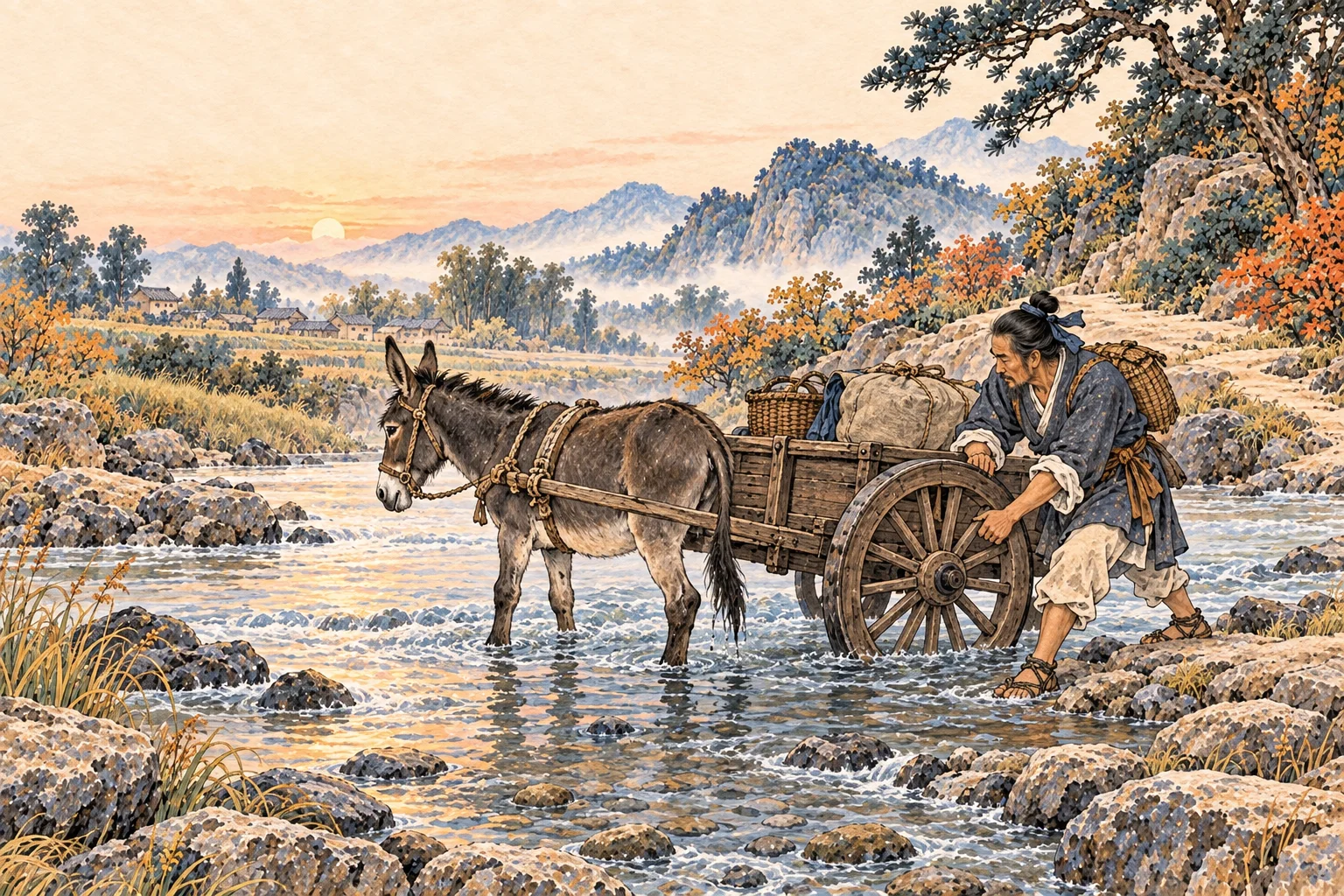
A traveler restrains a donkey cart wheel at a shallow ford while the donkey's tail drips with water.
初九 · Line 1 · 曳其輪

曳其輪,濡其尾,无咎。

Drag back the wheel; wet the tail: no blame.

轮被人拉住,驴尾只是轻湿,过河之初不抢快。图用有尾的驮车将两个具体物件同框:控制进度虽仍沾水,却不致咎。

The traveler holds the wheel back rather than rushing the cart; only the animal's tail is wet. A controlled beginning may be imperfect, yet it keeps the crossing safe enough.

Restrain the first rush
Picture this in daily life生活中的这一爻

In a mountain village, a librarian guides a donkey cart of book boxes down to a stream. She grips the wheel at the ford, slowing the cart; the donkey's tail gets wet, but not the boxes. Rushing would tip them. The small delay prevents a loss.

在山村,一位图书管理员赶着驴车,把书箱送到溪边渡口。她握住车轮,慢慢下水;驴尾湿了,书箱却没有。如果抢快,车会翻,书会散。开局有一点不完美,但控制速度让过河无咎。

Ask yourself: Where could slowing down protect what you are carrying?

想一想:在哪里,放慢一点反而能保住你带着的东西?

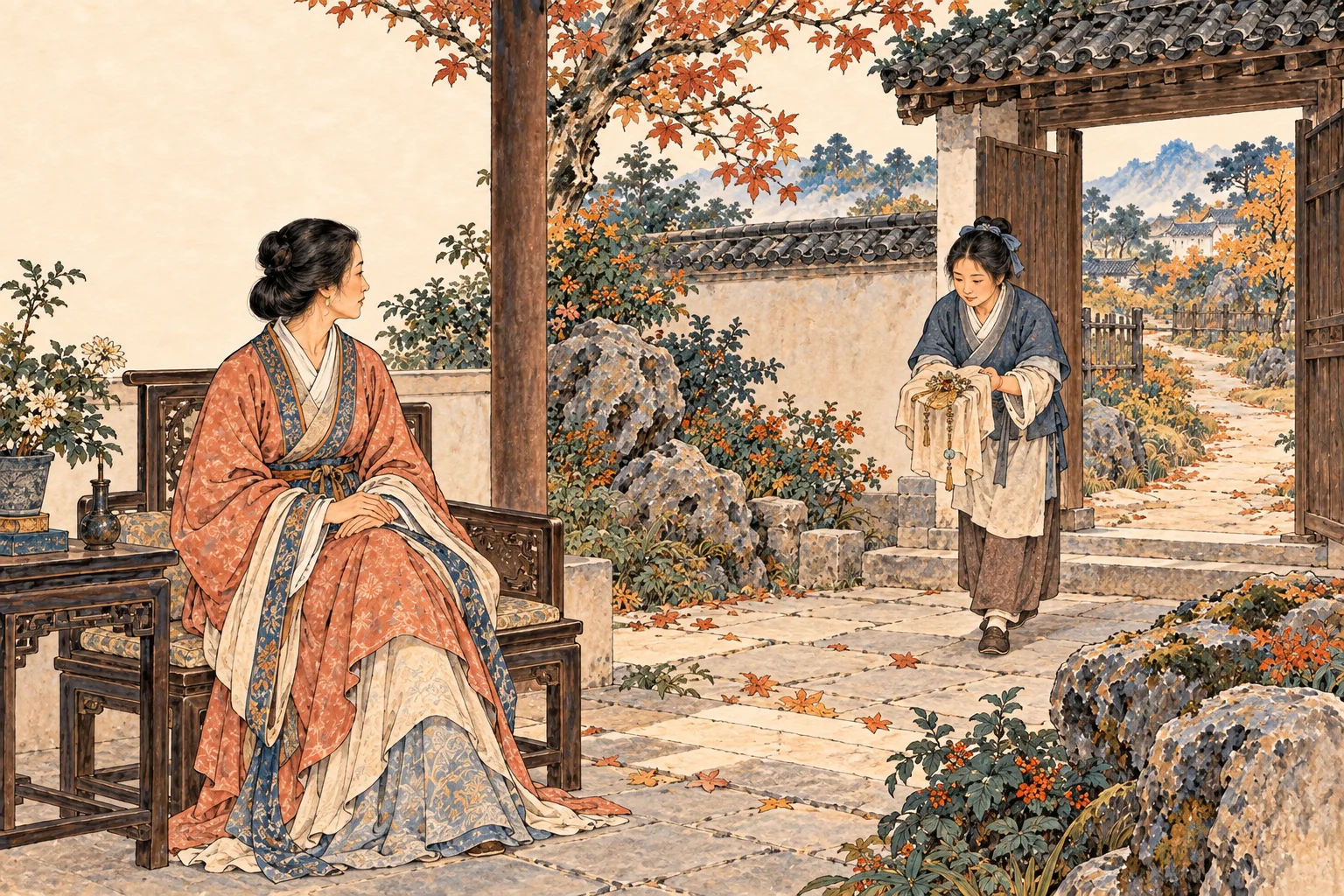
六二
A seated woman waits calmly as a servant returns her lost hair ornament or veil at the courtyard gate.
六二 · Line 2 · 勿逐

婦喪其茀,勿逐,七日得。

A woman loses her fu; do not pursue it. In seven days it is recovered.

《正义》把“茀”解为妇人的首饰,虽有遗失,不必慌忙追逐;守中道会得到帮助。画中女子未去追赶,旁人把饰物送回。“七日”是原文所定的回返期限,图不以假刻度硬画。

The lost fu is read by the cited commentary as a woman's head ornament. She does not chase it in panic; it is brought back. The seven days belong to the classical line, while the scene focuses on patient, steady conduct.

Do not chase in panic
Picture this in daily life生活中的这一爻

At a family reunion, Aunt Mei's jade hairpin slips from her bun. She chooses not to search people's bags or make a scene. A cousin finds it under a bench and returns it the following week. The classical line's 'seven days' marks a return; here, patience and dignity do the work.

家庭聚会上,梅姨的玉发簪从发髻滑落。她没有翻别人的包,也没有当众闹起来。一周后,表妹在长凳下找到发簪,送了回来。古爻说“七日得”,这里重要的是耐心与体面,而不是慌张追逐。

Ask yourself: When something is lost, what would patient conduct look like?

想一想:东西丢了,耐心的做法会是什么样?

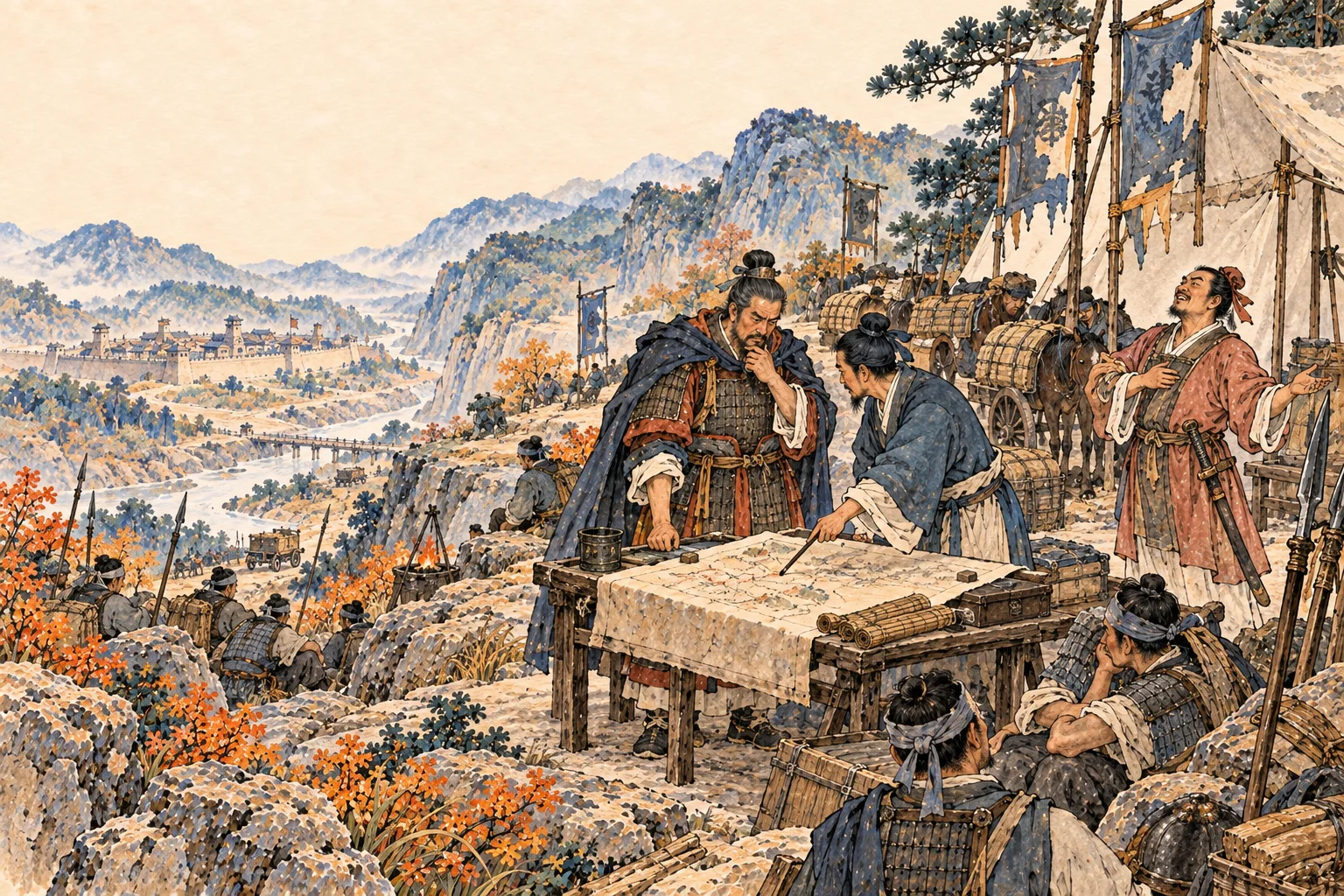
九三
A weary commander and trusted adviser study a campaign map among worn soldiers and supplies.
九三 · Line 3 · 三年克之

高宗伐鬼方,三年克之,小人勿用。

Gao Zong campaigns against Gui Fang; after three years he prevails. Do not employ the unfit.

高宗为商王武丁,“鬼方”是古代文献中的族群称谓,不是鬼怪。《正义》重在衰势下历三年方克,劳惫甚重,须用有德有能者。图里旧旗、疲兵与后勤安排压过凯旋姿态。

Gao Zong refers to the Shang ruler Wu Ding; Gui Fang is a historical designation, not a realm of ghosts. Classical commentary stresses the three years of strain and the need for capable, upright people. The worn camp matters more than a moment of victory.

Count the real cost of success
Picture this in daily life生活中的这一爻

A neighborhood group spends three years pressing the city to replace a washed-out footbridge. The chair rejects a contractor who offers quick, unsafe work and keeps trusted volunteers on the slow paperwork. Victory is a worn binder and tired feet, not a ribbon-cutting photo. Competence and integrity matter more than speed.

社区小组花了三年,推动市里更换被水冲坏的步行桥。负责人拒绝一个只图快、不安全的承包商,也让可靠的老志愿者继续整理繁琐文件。胜利不是剪彩照片,而是一本磨旧的资料夹和一双双走累的脚。用人要看德能,不图速成。

Ask yourself: Where does a long fix need trusted people, not shortcuts?

想一想:哪一件长期修复,需要可靠的人,而不是走捷径?

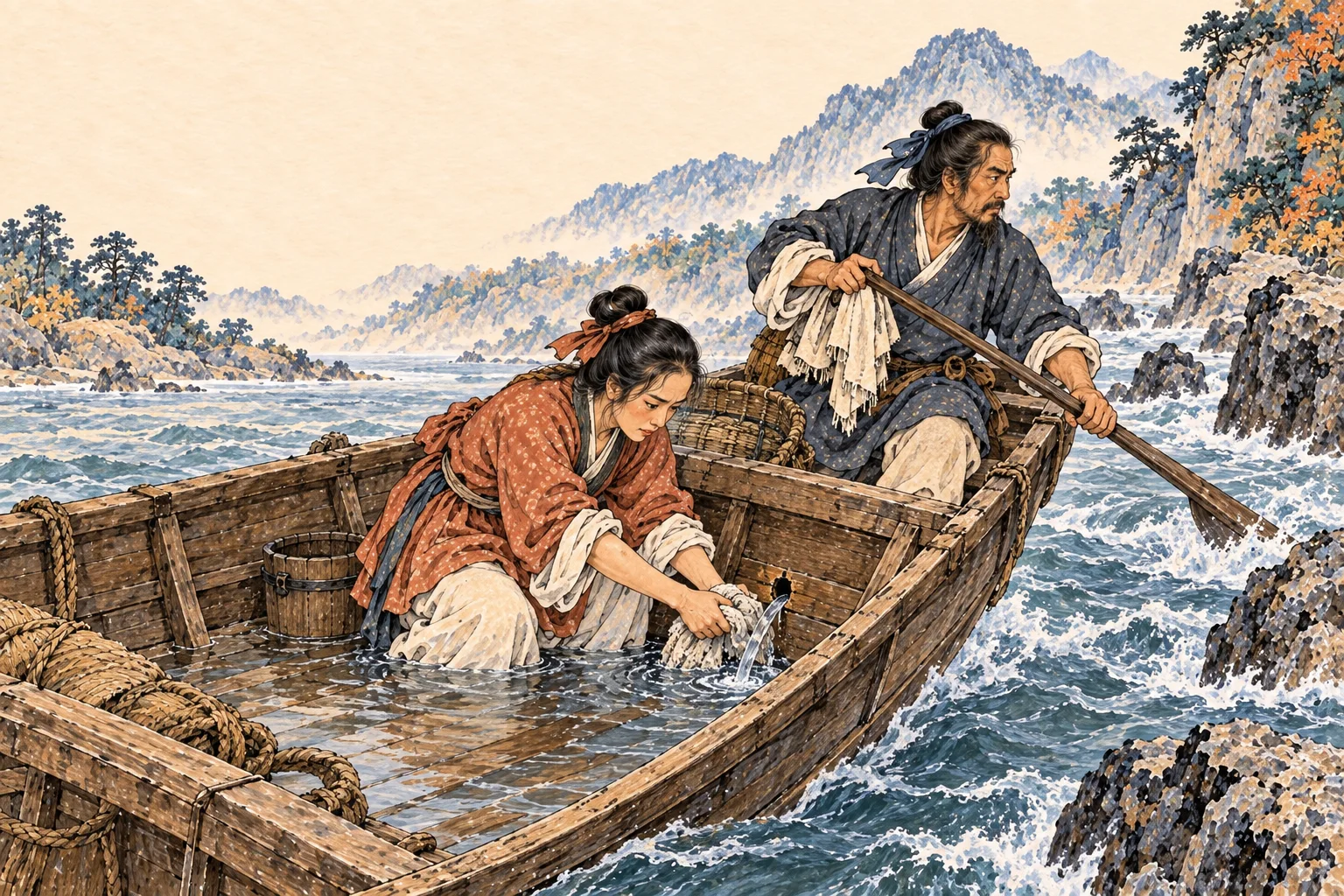
六四
Water enters a boat through a low hull leak as a woman presses cloth into it and a boatman steers vigilantly.
六四 · Line 4 · 終日戒

繻有衣袽,終日戒。

Have cloth rags ready against wetness; stay alert all day.

《正义》指出“繻”宜读作“濡”,衣袽是可塞舟漏的破布。画中水从低处漏进舟内,女子用布紧堵,同行者仍守望岩石:已渡有成,也不能放下全天警戒。

The commentary reads ru here as wetness and the cloth scraps as material to plug a boat's leak. Water is already entering; the woman presses a rag into the hole while her companion watches the rocks. Maintenance is part of completion.

Keep watch after success
Picture this in daily life生活中的这一爻

After a successful ferry crossing, water seeps through a seam in the old wooden boat. The boatwoman stuffs a cloth rag into the leak while her mate watches the rocks and current. They do not relax because the passengers already arrived safely. Completion still needs all-day attention.

一次渡河成功后,旧木船的板缝仍渗进水来。船娘用破布紧紧塞住漏洞,同伴盯着礁石和水流。乘客已经安全到达,他们却没有松劲。完成不等于收工;照料和警戒要持续一整天。

Ask yourself: What small leak in a finished task still needs daily watching?

想一想:已完成的事里,哪个小漏洞还需要每天留意?

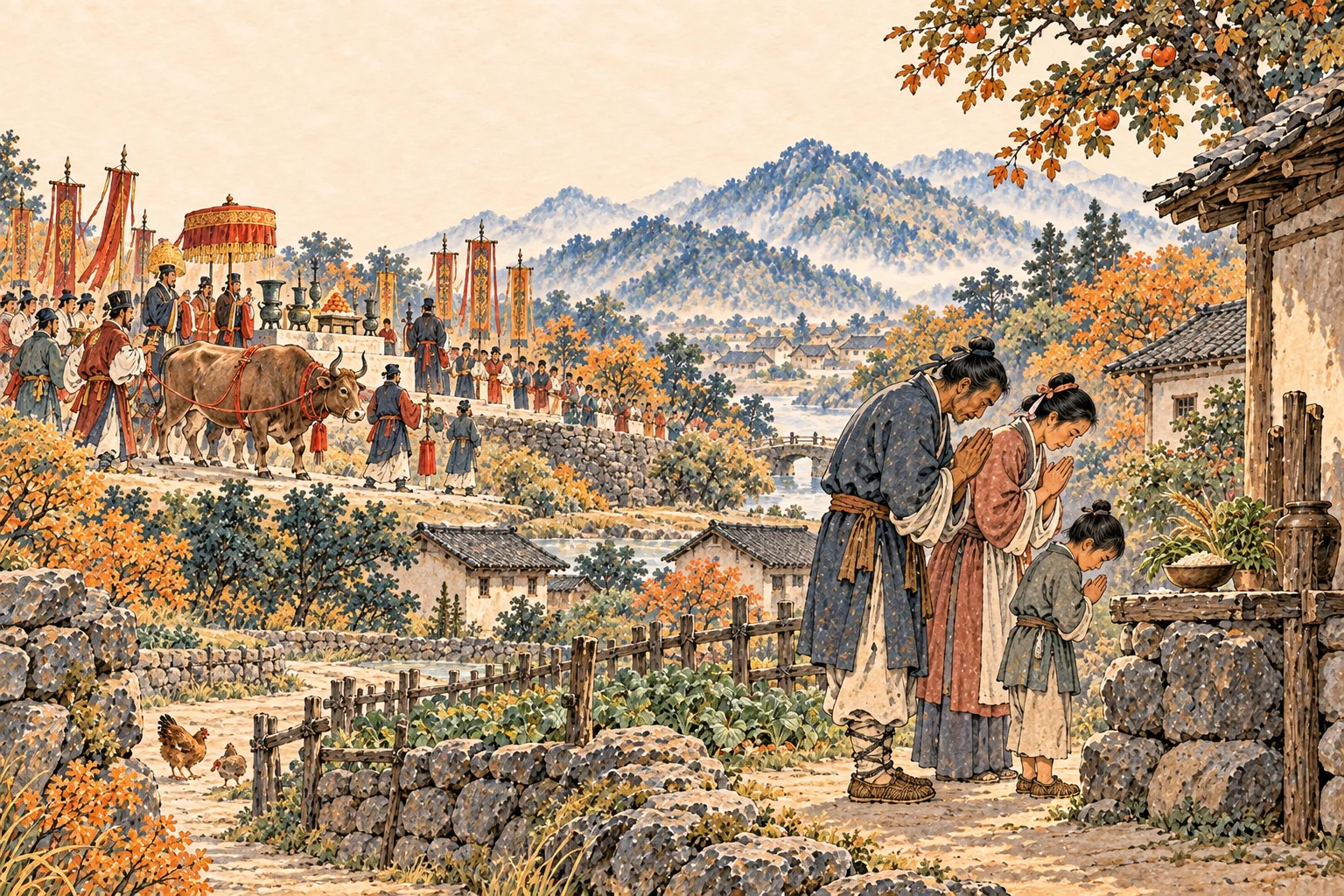
九五
An elaborate procession leads an ox at one altar while a neighboring family bows over a modest seasonal offering.
九五 · Line 5 · 實受其福

東鄰殺牛,不如西鄰之禴祭,實受其福。

The eastern neighbor sacrifices an ox, yet is not equal to the western neighbor's modest seasonal rite, which truly receives blessing.

东邻杀牛是盛祭,西邻禴祭是薄祭。《正义》认为福不系于耗费多寡,而系于修德、合时与诚敬。图把牛保留为活着的仪式对象,不以屠宰镜头夺走重点;朴素的一侧反而更有内在分量。

The ox marks an elaborate ancient sacrifice; the western rite is comparatively spare. Classical commentary judges by fitting time, cultivated conduct, and sincerity rather than expense. The image keeps the historical ritual visible without making slaughter the spectacle.

Let sincerity outweigh display
Picture this in daily life生活中的这一爻

Two neighbors mark a year of recovery. The east neighbor hires a caterer and roasts a whole ox for photos. The west neighbor sets bread and tea on a simple table and quietly thanks the helpers. The classical line does not measure blessing by cost. Sincere, timely, modest care can carry more weight than display.

两个邻居纪念灾后恢复一周年。东邻请来宴席团队,烤整头牛,为的是拍照好看;西邻只在简朴桌上摆面包和茶,安静感谢帮过忙的人。古爻不以花费多少衡量福分。真诚、合时、朴素的照料,可能比排场更有分量。

Ask yourself: Where might a simple, sincere gesture be enough?

想一想:在哪里,一个简单而真诚的举动已经足够?

上六
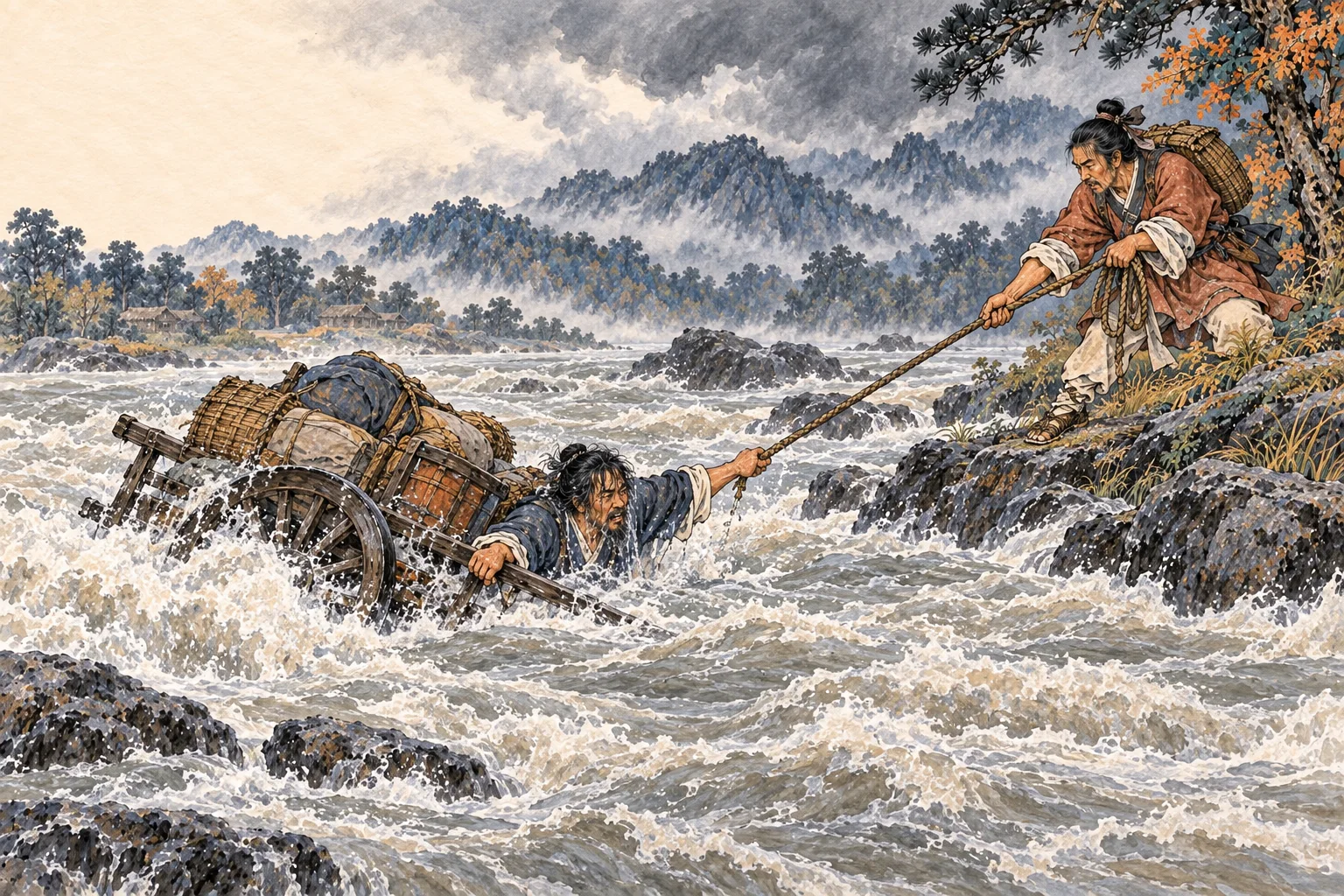
A traveler and cart nearly overturn in a swollen river; the traveler's head is soaked as a companion reaches with rope.
上六 · Line 6 · 濡其首

濡其首,厲。

The head is wet: danger.

初九只是尾湿,此处已湿到头。《正义》说既济走到极端,若仍不断前进,就重新落入未济之险。图中车翻、水急、岸上同伴援手;危险来自把既有胜利误当水浅无尽。

At the beginning only the tail was wet; now the head is soaked and the cart tilts in strong water. Pushing beyond an achieved crossing can undo it. The line's danger is immediate, not merely symbolic.

Do not outrun the safe crossing
Picture this in daily life生活中的这一爻

A cyclist has already crossed a flooded path once and reached dry ground. Wanting one more shortcut, he rides into deeper water. The current knocks him over; his head goes under until a companion throws a rope. The danger comes from treating a completed crossing as permission to push farther.

一名骑车人已经穿过一次积水路段,到了干地。为了再省一段路,他又骑进更深的水里。水流把他冲倒,头也没入水中,直到同伴抛出绳子。危险来自把已经完成的渡越,当成继续冒进的许可。

Ask yourself: Where is a past success tempting you to go too far?

想一想:过去的哪次成功,正诱你走得太远?

Cultural Phrases

Classic Chinese Phrases可延展的中文经典短句

Chinese carries the cultural identity; English makes the meaning accessible. These phrases can later inform cards, objects, and décor.

中文保留文化识别,英文负责解释。这些短句可作为未来卡牌、装饰与文创的文字基础,具体载体仍需单独设计。

思患豫防

事成之时,仍为后患预作照料。

Prepare while the work still holds.

終日戒

成后有守,警而不惧。

Keep watch without fear.

Questions about this hexagram这一卦的常见问题

What does Hexagram 63, After Completion, describe?第63卦描述什么处境?

After Completion means the crossing has been made, not that care can end. Water over fire can bring a meal to readiness; even small matters find their place. Yet the Judgment warns of disorder at the end if achievement becomes complacency. Six lines move from a controlled ford and patient recovery through exhausting effort and a repaired leak, then distinguish sincere simplicity from display before the final danger of pushing into water too deep.

既济是已渡、已成,却不是从此无事。水在火上可成炊爨,《彖传》说小事亦通,刚柔各正其位;但“初吉终乱”警惕成果到手后停止修德与防患。六爻从控制涉水的速度、失物不妄逐,到三年艰难克事、舟漏终日戒,再以简祭胜盛祭辨真诚与形式,最后水淹至首显出过进之危。真正的完成,是把照料和警觉继续下去。

How should I read its six lines?应该怎样阅读这六爻?

Read from the bottom line upward. Each position describes a different stage or condition. The highlighted line-position diagrams on this study page locate the line being explained; they are not a personal cast or a prediction.

从下往上读,结合不同位置与处境理解。这里的高亮卦画只说明正在讲哪一爻,不是个人起卦或预测结果。