54 · The Marrying Maiden (GUĪ MÈI)
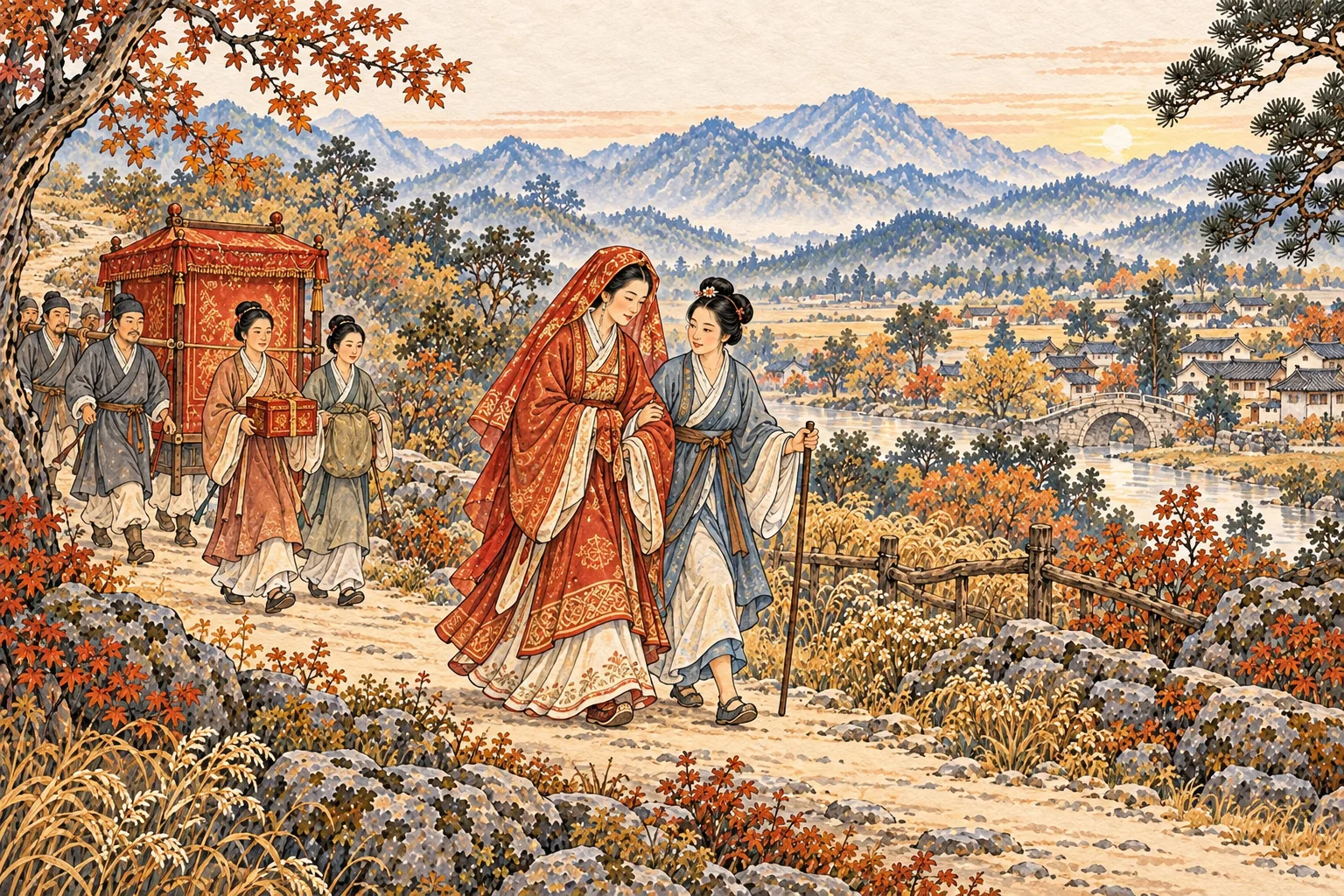
The Marrying Maiden speaks through an ancient marriage hierarchy. Its warning about setting out concerns a poor fit between role, timing, and action, not a verdict on a woman or on marriage itself. The six lines move through limited but useful participation, quiet steadiness, waiting, modest dignity, and finally a ritual with no substance. The enduring question is whether a commitment can survive beyond its ceremony.
The judgment
The Marrying Maiden: setting out brings misfortune; nothing is beneficial to pursue.
The warning addresses forward action within an ill-fitting arrangement. The Tuan links the risk to improper position. It is not a claim that marriage is bad or that a woman's worth depends on rank. Check the terms of a commitment before pressing ahead.
Original Chinese text
歸妹:征凶,无攸利。
The six lines
- 初九 · Line 1 — A younger sister goes as attendant in marriage; one who limps can still walk. Going forward is auspicious.
Original Chinese
歸妹以娣,跛能履,征吉。
- 九二 · Line 2 — One with impaired sight can still see; steadfastness of a secluded person is beneficial.
Original Chinese
眇能視,利幽人之貞。
- 六三 · Line 3 — The marrying maiden waits; she returns and goes as a younger attendant.
Original Chinese
歸妹以須,反歸以娣。
- 九四 · Line 4 — The marrying maiden misses the appointed date; a later marriage has its time.
Original Chinese
歸妹愆期,遲歸有時。
- 六五 · Line 5 — Di Yi marries off his younger sister. The noble bride's sleeves are less fine than her attendant's; the moon is almost full. Auspicious.
Original Chinese
帝乙歸妹,其君之袂,不如其娣之袂良,月幾望,吉。
- 上六 · Line 6 — A woman offers a basket with nothing in it; a man cuts a sheep yet draws no blood. Nothing is beneficial.
Original Chinese
女承筐无實,士刲羊无血,无攸利。