50 · The Cauldron (DǏNG)
After Revolution comes the Cauldron: change needs a vessel that can hold and distribute what is new. The six lines first empty what has spoiled, then fill the pot, confront blocked handles and a catastrophic broken leg, and finally lift a balanced vessel with sound supports. Leadership is tested by whether the structure actually nourishes people.
The judgment
The Cauldron: great good fortune, then passage.
The old order may be changed, but a new one has to work. The cauldron promises passage when a sound structure can prepare and share nourishment.
Original Chinese text
鼎:元吉,亨。
The six lines
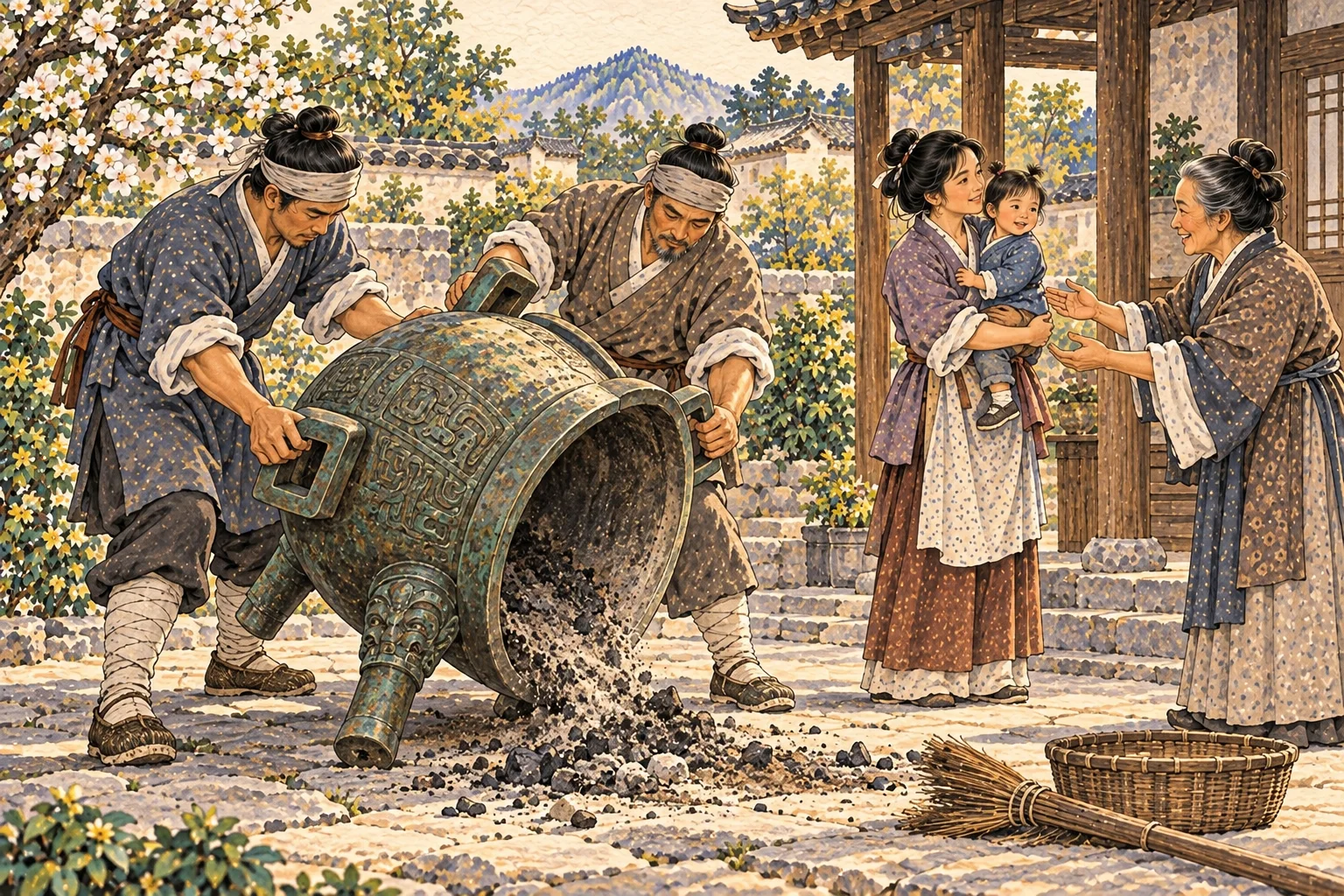
- 初六 · Line 1 — The cauldron is turned on its legs, useful for emptying the bad. A concubine gains standing through her child; no blame.
Original Chinese
鼎顛趾,利出否,得妾以其子,无咎。
- 九二 · Line 2 — The cauldron is full. My counterpart is ill and cannot come near me: auspicious.
Original Chinese
鼎有實,我仇有疾,不我能即,吉。
- 九三 · Line 3 — The cauldron's ears are altered and its movement blocked; pheasant delicacy goes uneaten. As rain approaches, regret lessens; in the end, good fortune.
Original Chinese
鼎耳革,其行塞,雉膏不食,方雨虧悔,終吉。
- 九四 · Line 4 — A cauldron leg breaks; a lord's food spills. Its form is soaked and soiled: ill fortune.
Original Chinese
鼎折足,覆公餗,其形渥,凶。
- 六五 · Line 5 — The cauldron has yellow ears and a metal carrying bar. Steadfastness is beneficial.
Original Chinese
鼎黃耳金鉉,利貞。
- 上九 · Line 6 — The cauldron has a jade carrying bar: great good fortune, nothing unfavorable.
Original Chinese
鼎玉鉉,大吉,无不利。