47 · Oppression (KÙN)
Oppression names a period of depletion and obstruction, not a verdict on a person's worth. The lake has no water; words alone will not win trust. The six lines move through isolation, burdensome abundance, an impossible refuge, delayed help, harsh authority that must change, and a final chance to loosen what binds and move wisely.
The judgment
Oppression: passage. Steadfastness brings good fortune to a great person, without blame. Words are not believed.
When credibility is strained, more speech may help less than steady conduct. The promise of passage is conditional: integrity and sound judgment can survive a hard season.
Original Chinese text
困:亨,貞大人吉,无咎,有言不信。
The six lines
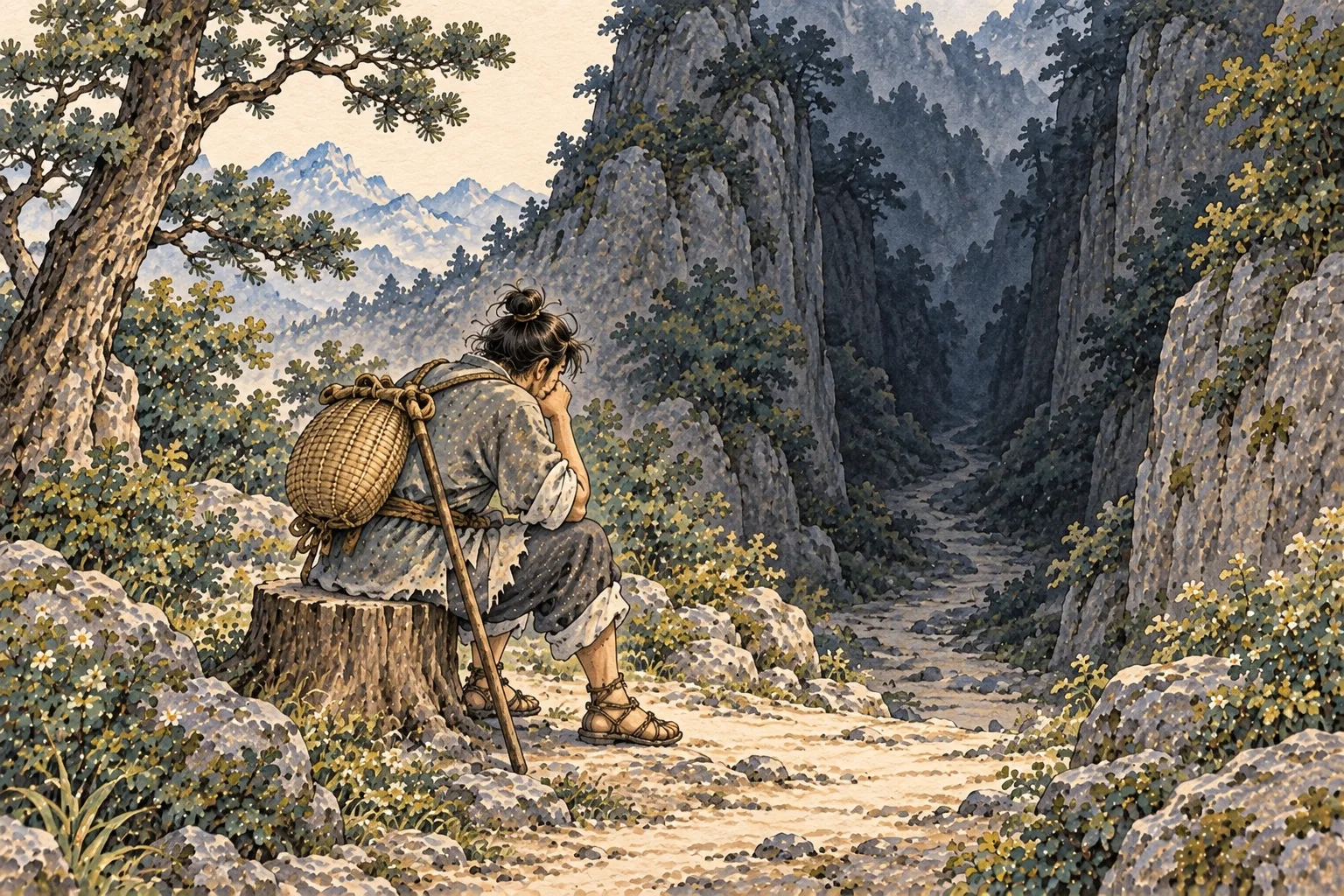
- 初六 · Line 1 — The buttocks are distressed on a tree stump; one enters a dark valley and is not seen for three years.
Original Chinese
臀困于株木,入于幽谷,三歲不覿。
- 九二 · Line 2 — Constrained by wine and food, a red ceremonial sash is coming. It is beneficial to make an offering. Going forth is ill-omened; no blame.
Original Chinese
困于酒食,朱紱方來,利用亨祀,征凶,无咎。
- 六三 · Line 3 — Blocked by stone, seated on thorns; entering one's home, one does not see one's wife. Ill fortune.
Original Chinese
困于石,據于蒺藜,入于其宮,不見其妻,凶。
- 九四 · Line 4 — Coming slowly, hindered by a metal carriage: embarrassment, yet there is an end.
Original Chinese
來徐徐,困于金車,吝,有終。
- 九五 · Line 5 — Nose-cutting and foot-cutting; constrained by red ceremonial sashes. Then there is gradual release; it is beneficial to perform an offering.
Original Chinese
劓刖,困于赤紱,乃徐有說,利用祭祀。
- 上六 · Line 6 — Bound by climbing vines and unstable footing; one says, moving brings regret. With regret acknowledged, going forth is auspicious.
Original Chinese
困于葛藟,于臲卼,曰動悔。有悔,征吉。