Skip to content
Two people who have each been alone meet and clasp hands on a bridge over difficult water.
Fire above Lake · Meet across the differenceScene imagery · YiPhase original learning visual
Hexagram 38 · 火澤睽
睽KUÍ

Opposition

離 · Fire · 兌 · Lake

睽卦是眼光与方向不一致:火上行、泽下润,彼此背离。卦辞说“小事吉”,提醒分歧时先处理可以独立完成或小范围协作的事,再慢慢寻找共同处;差异未必意味着永远无法相通。

Opposition begins with two movements pulling apart: fire rises and the lake settles below. Small tasks can still go well. The lines move through lost trust, blocked travel, lonely encounters and frightening misreadings toward a meeting made possible by rain.

Original Chinese, independent English explanations and modern examples. Check the sources.保留经典原文,英文独立释读,生活例子单独说明。查看依据。

LESSON 38 · EVERYDAY I CHING

Difference does not have to become war

第 38 课 · 生活里的卦意

A short bilingual narration with moving views of all six line images.

跟着双语讲解与逐爻画面,理解这一卦的生活处境。

▶ Play Lessons▶ 播放课程
YiPhase · Today

In everyday life这一卦在生活中

A modern scene to help you recognize the situation. This is YiPhase's own example, separate from the classical text below.

用当代处境帮助理解卦意。以下为 YiPhase 独立编写的例子,与后面的经典原文分开。

A situation you may recognize一个可能熟悉的处境

Opposition is not always a fight. In this hexagram, fire rises and a lake settles low, so two forces part ways. The judgment says small matters can go well. When plans, beliefs, or habits pull apart, begin with a modest task that one person or a small group can complete. A later meeting may become possible.

睽卦是方向彼此背离:火向上,泽向下。卦辞说“小事吉”。当计划、习惯或看法不一致时,先做一件一个人或小范围能完成的事,不必急着强求全体统一。差异不保证永远隔开,但和好需要从可做的小处开始。

ASK YOURSELF想一想

Where in your life is a difference pulling people apart, and what small step could you take without demanding agreement?

在你生活里,哪一处分歧正把人们拉开?你可以先做哪件小事,而不强求大家立刻一致?
The Judgment

The Judgment卦辞

The original Chinese remains visible as the cultural source. The English translation and reading explain it without replacing it.

先保留经典中文,再提供英文直译与现代中文解释。英文用于理解,不替代原文。

《周易》经文 · Original Chinese
睽:小事吉。

Opposition: in small matters, good fortune.

Beginner’s reading

When people pull in different directions, sweeping action is fragile. Begin with work that can be done clearly and modestly; a small success may create room for a later meeting.

现代中文解说

乖离之时,大规模统一行动难办,小事却仍可得吉。先把能做成的小事做好,不等于放弃远处可能的和解。

Classical Commentary

Tuan Commentary & The Image彖传与大象

These classical commentaries are shown separately from the Zhouyi core text, so their textual role stays clear.

以下属于解释《周易》的经典传文,页面与卦辞分层展示,方便初学者看清文本来源。

彖曰 · Tuan Commentary
彖曰:睽,火動而上,澤動而下;二女同居,其志不同行;說而麗乎明,柔進而上行,得中而應乎剛;是以小事吉。天地睽,而其事同也;男女睽,而其志通也;萬物睽,而其事類也;睽之時用大矣哉!

《彖传》先用火与泽的相背说明睽,再说天地、男女、万物虽异仍有共同作用。这里“二女”是古代卦象类比,不是评价女性;要点是不同位置仍可能互补。

The Tuan Commentary begins with fire and lake moving apart, then finds shared work among things that differ. Its image of two women belongs to the ancient trigram vocabulary; the broader insight is that distinct paths can still serve a common purpose.

象曰 · The Image
象曰:上火下澤,睽;君子以同而異。

Fire above, lake below: Opposition. A cultivated person holds a common ground while allowing difference.

同处一事,也不必抹平各自视角。“同而异”是保持共同原则,同时承认职责、看法与处境不同。

You need not erase difference to work together. Keep the shared principle in view while letting people approach it from distinct positions.

Six Changing Stages

Six Lines: Position and Change六爻:位置与变化

A lost horse returns without pursuit, and a lord is met in an alley. A dragged cart and resisting ox show how badly things can stall. Two lonely people then recognize one another; at the end, a feared cart proves to be a wedding party as rain dissolves suspicion.

失马不逐、巷中遇主,是分离时不必处处强求;车牛受阻、孤独遇友,说明相合需要条件。末爻从泥猪、鬼车、张弓的疑惧转为释弓、婚媾与遇雨,重心是看清对方再行动。

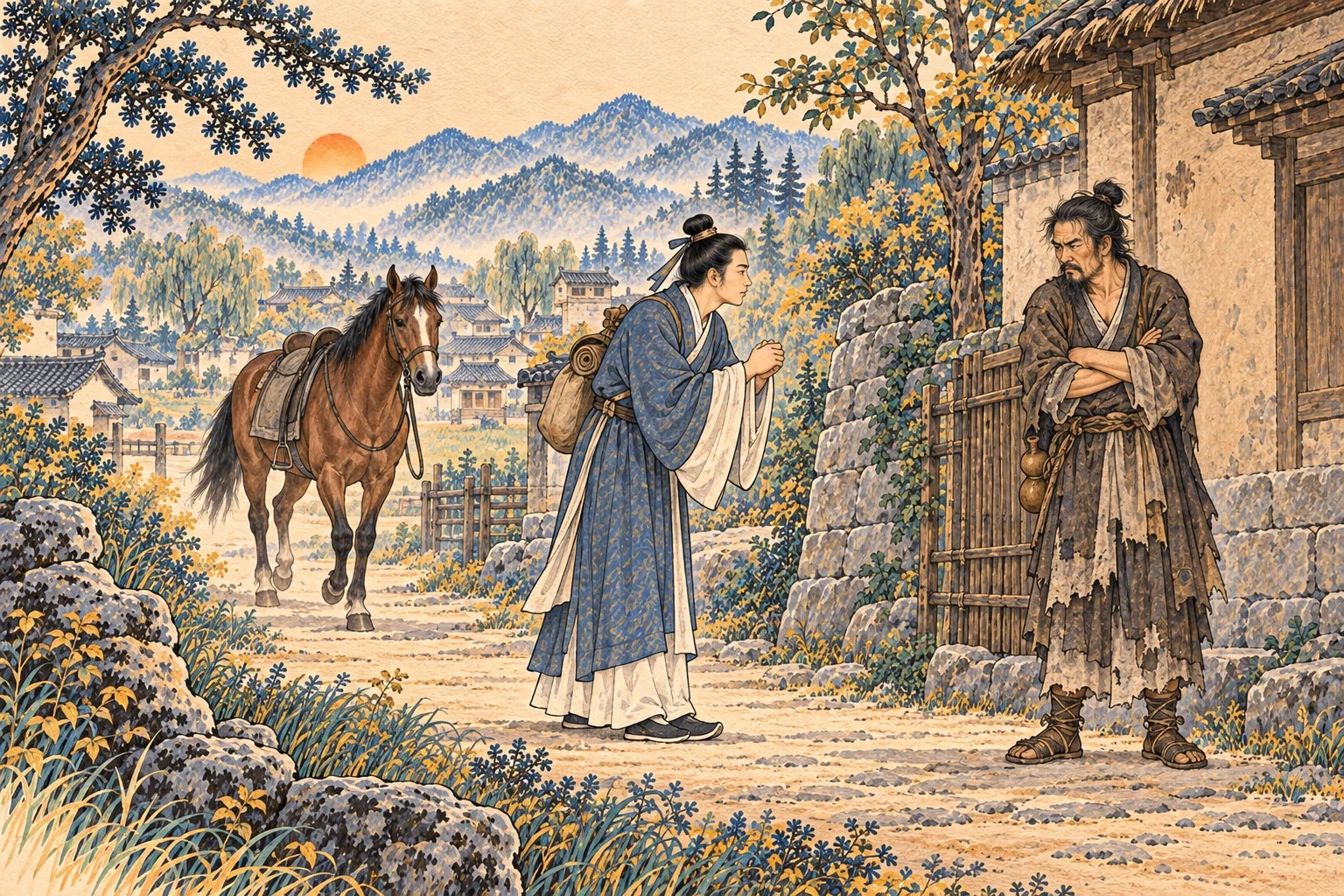
初九
A horse returns by itself behind a traveler who carefully greets a difficult stranger rather than chasing it.
初九 · Line 1 · 喪馬勿逐

悔亡,喪馬勿逐,自復;見惡人无咎。

Regret disappears. Lose a horse: do not chase; it returns itself. Meet an unpleasant person: no blame.

马走失,不必急追;在乖离初起时,有些联系自会回来。面对不好相处的人,保持审慎而有礼的接触,可以避开无谓冲突。

The horse finds its own way back. Not every separation needs pursuit. A restrained greeting to a difficult person can prevent fresh harm without pretending agreement.

Do not chase every loss
Picture this in daily life生活中的这一爻

On a family farm visit, a horse wanders past the fence. The guide says not to chase it; it returns to the water trough on its own. Later, the same family greets a grumpy stable hand politely instead of arguing. The day continues without a blow-up.

一家人在农场参观时,一匹马走出围栏。向导说别追,它自己会回到水槽边;果然如此。后来他们又遇到一位脾气差的马房管理员,只礼貌打招呼,不争辩。当天没有闹出冲突。

Ask yourself: What could settle if you stop chasing it?

想一想:有什么事情,如果你不追,反而会自己安定下来?

九二
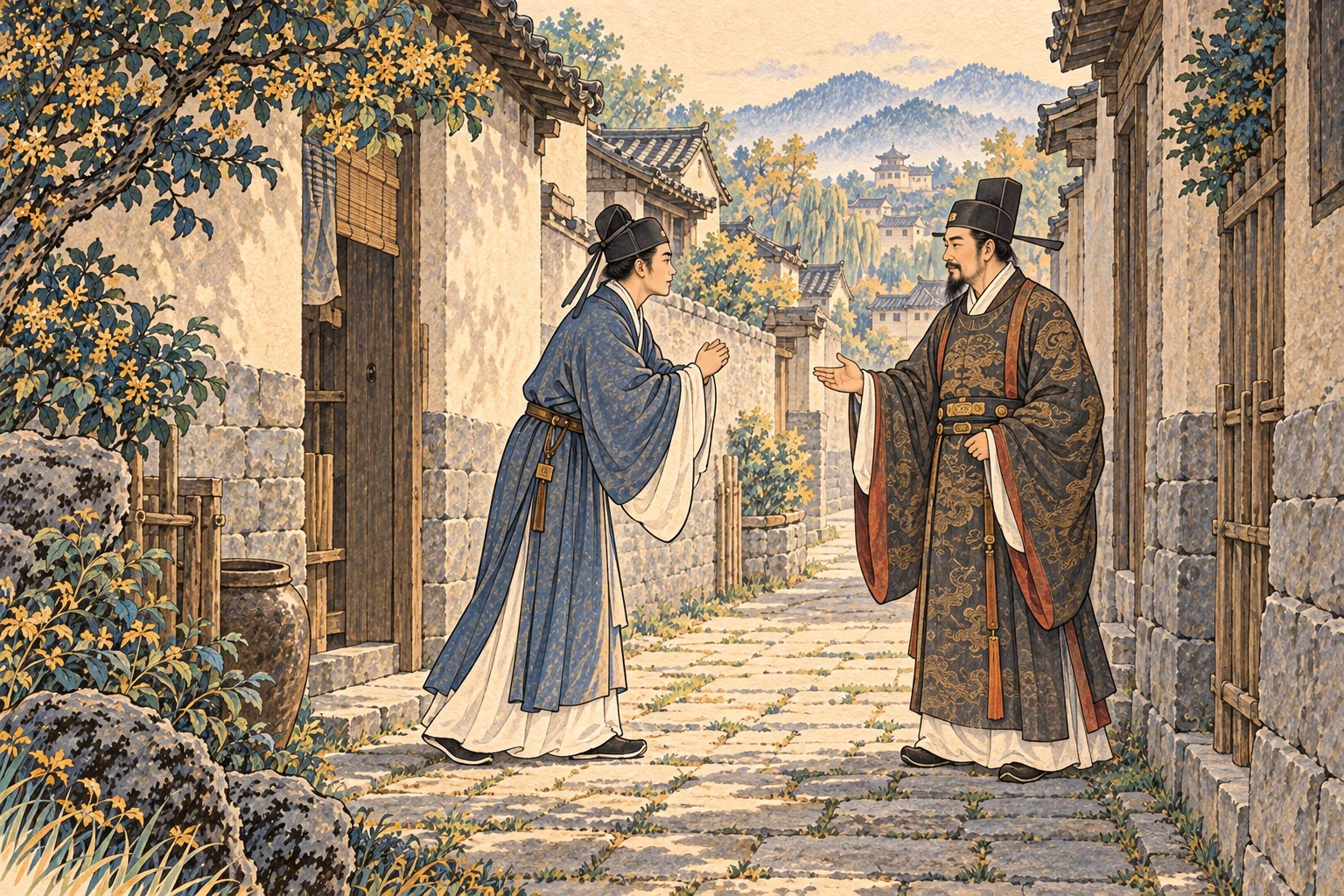
An official and his lord meet unexpectedly face to face in a narrow village alley.
九二 · Line 2 · 遇主于巷

遇主于巷,无咎。

Meet the lord in an alley; no blame.

不在堂皇正殿,而是在巷中相遇。关系一时不顺,仍可能从不经意的小路找到正确的接点。

The meeting happens in an alley, not at a formal audience. Even when the expected route is blocked, a real connection can occur nearby.

Find the side path
Picture this in daily life生活中的这一爻

A student needs a teacher's signature to join a weekend science fair, but the office line is closed. Between classes, they meet the teacher in a narrow hallway. The teacher hears the short request and signs the form. The expected route failed; a nearby encounter worked.

一个学生要报名周末科学展,需要老师签字,但办公室已关门。课间,他在狭窄走廊里偶遇老师,简短说明后老师签了表。正式途径没走通,旁边的一次碰面却解决了问题。

Ask yourself: Where has a side path opened when the main door was shut?

想一想:哪一扇正门关上时,旁边的小路曾为你打开?

六三
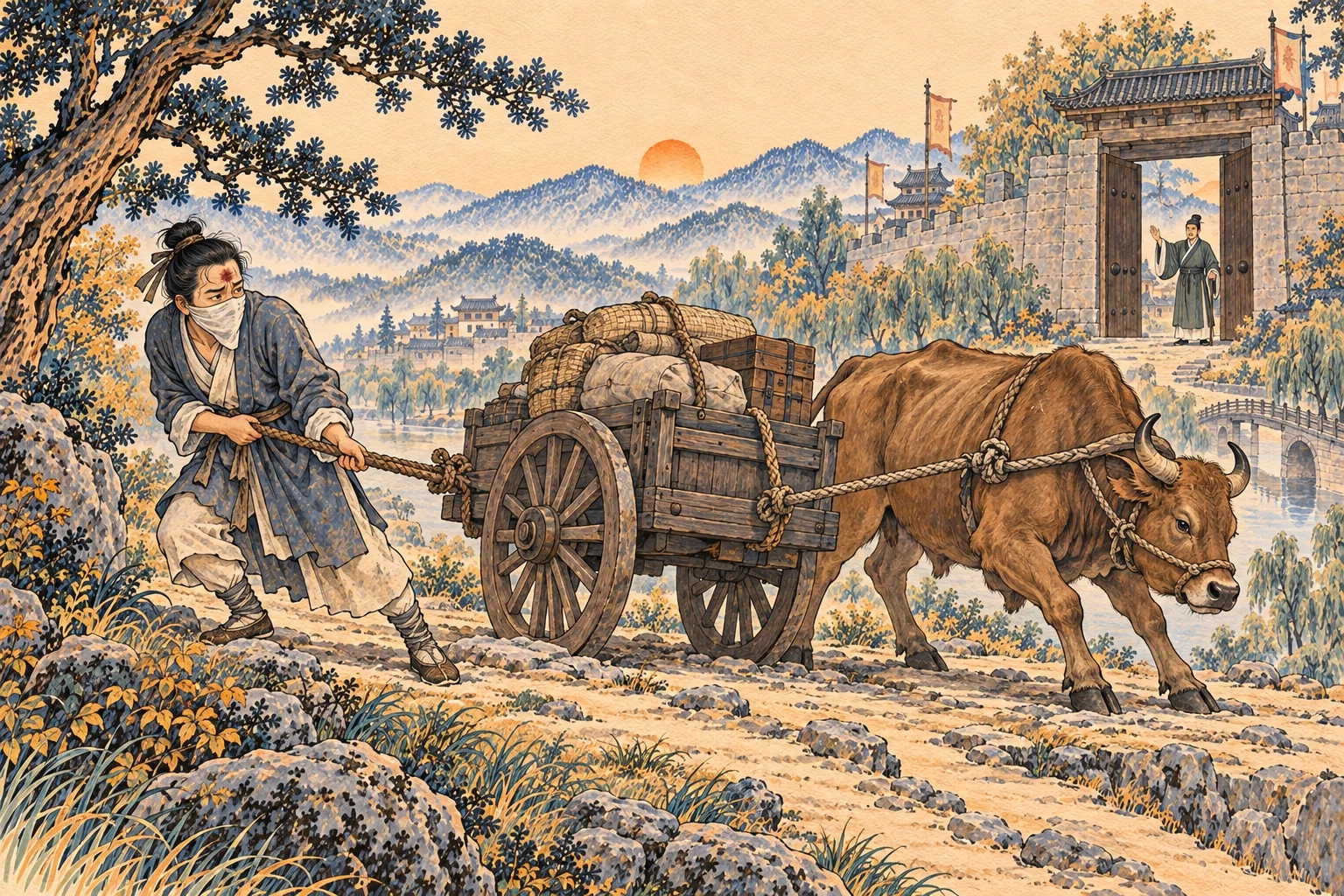
A cart is dragged backward while its ox strains forward; a traveler with a marked forehead and bandaged nose sees an ally at a far gate.
六三 · Line 3 · 无初有終

見輿曳,其牛掣,其人天且劓,无初有終。

See a cart dragged back and its ox held fast; the person is branded on the forehead and has the nose cut. No good beginning, but an end is reached.

车被拖、牛被牵,连人也受古代刑伤之辱,处境十分不利。图以额记与鼻部包扎避免血腥;经文仍照录。虽起初处处受阻,守住目标,终有相应者。

The cart, ox and injured traveler all show a severe obstruction; the original names ancient facial punishments. The image is non-graphic, but the difficulty remains real. A bad beginning need not rule out a later ally.

A hard start can change
Picture this in daily life生活中的这一爻

At a craft fair, a volunteer's pottery cart rolls backward while the ox refuses to pull. A potter with a painted forehead and bandaged nose from a skit keeps guiding anyway. The morning fails repeatedly, but near closing a neighboring booth lends a proper harness and the cart reaches its stall.

手作市集上,志愿者的陶器车向后滑,拉车的牛又停住不肯走;一位额头画着记号、鼻子贴着纱布的陶工仍坚持指挥。上午屡屡受阻,临近收摊时邻摊借来合适的挽具,车终于到了位。

Ask yourself: What difficult start might turn if you stay with it?

想一想:哪件开头不顺的事,再坚持一段就可能出现转机?

九四
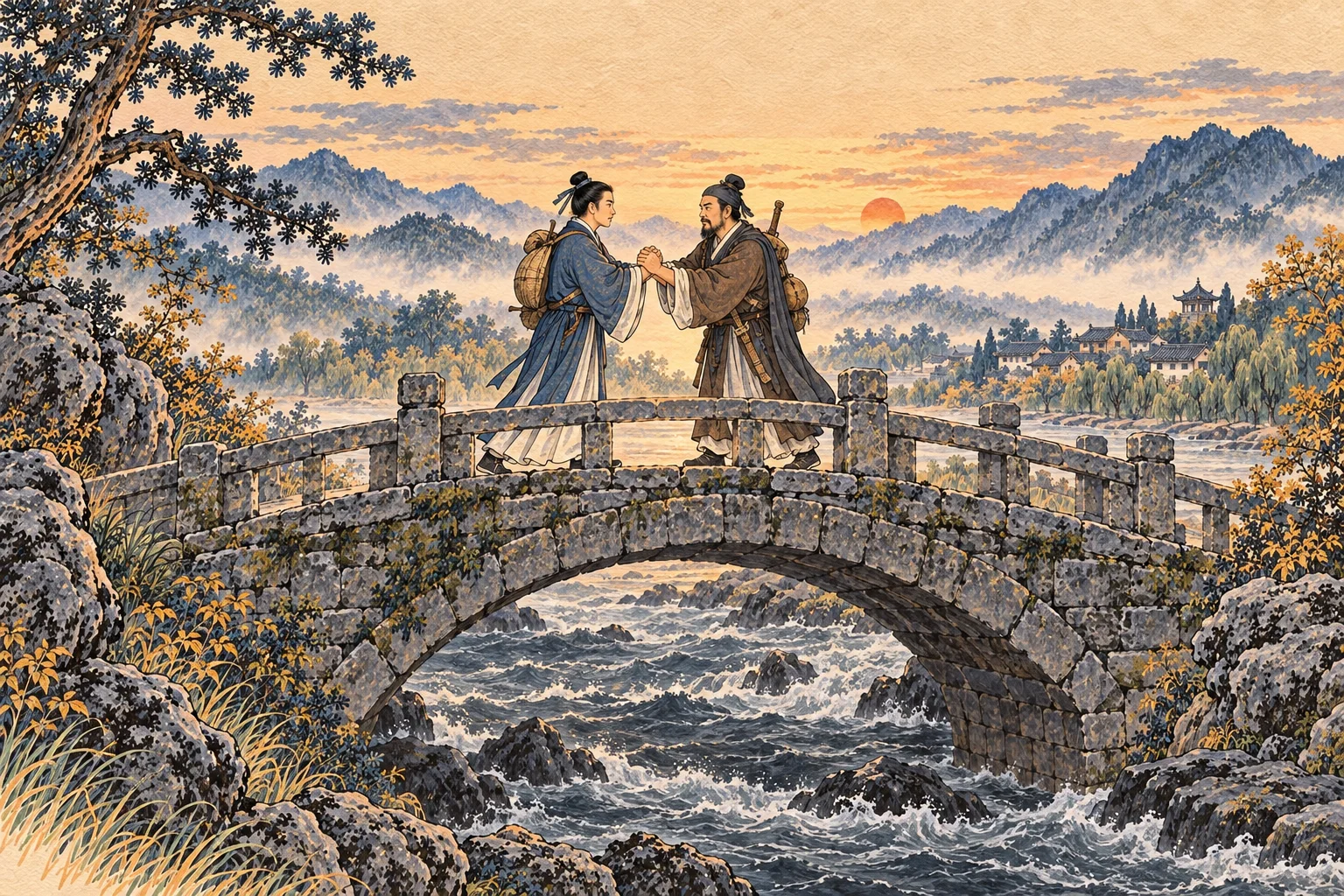
Two isolated travelers clasp forearms in cautious trust on a bridge above difficult water.
九四 · Line 4 · 交孚

睽孤,遇元夫,交孚,厲无咎。

Alone in opposition, meet a worthy man; exchange trust. Despite danger, no blame.

两边都曾孤立,遇到志向相通的人,能以诚意相交,即使局势仍险,也有路可走。“元夫”在古注中不是婚配之夫。

Two isolated people recognize a trustworthy counterpart. Their shared confidence does not remove danger below the bridge, but it lets them move through it without blame.

Trust across distance
Picture this in daily life生活中的这一爻

Two hikers lose their groups in a canyon and meet alone on a narrow footbridge above rushing water. Each has been blamed by their own team. They compare maps, decide to trust each other, and cross slowly. The risk below is real, but neither regrets the cautious partnership.

两名徒步者在大峡谷里和队伍走散,独自在一座窄桥相遇,桥下水流湍急。他们都曾被各自队伍责怪。两人互对地图,决定相信对方,慢慢过桥。危险仍在,但这段谨慎的同行没有错。

Ask yourself: Who might become a trustworthy ally when you feel isolated?

想一想:当你感到孤立时,谁可能成为可信的同行者?

六五
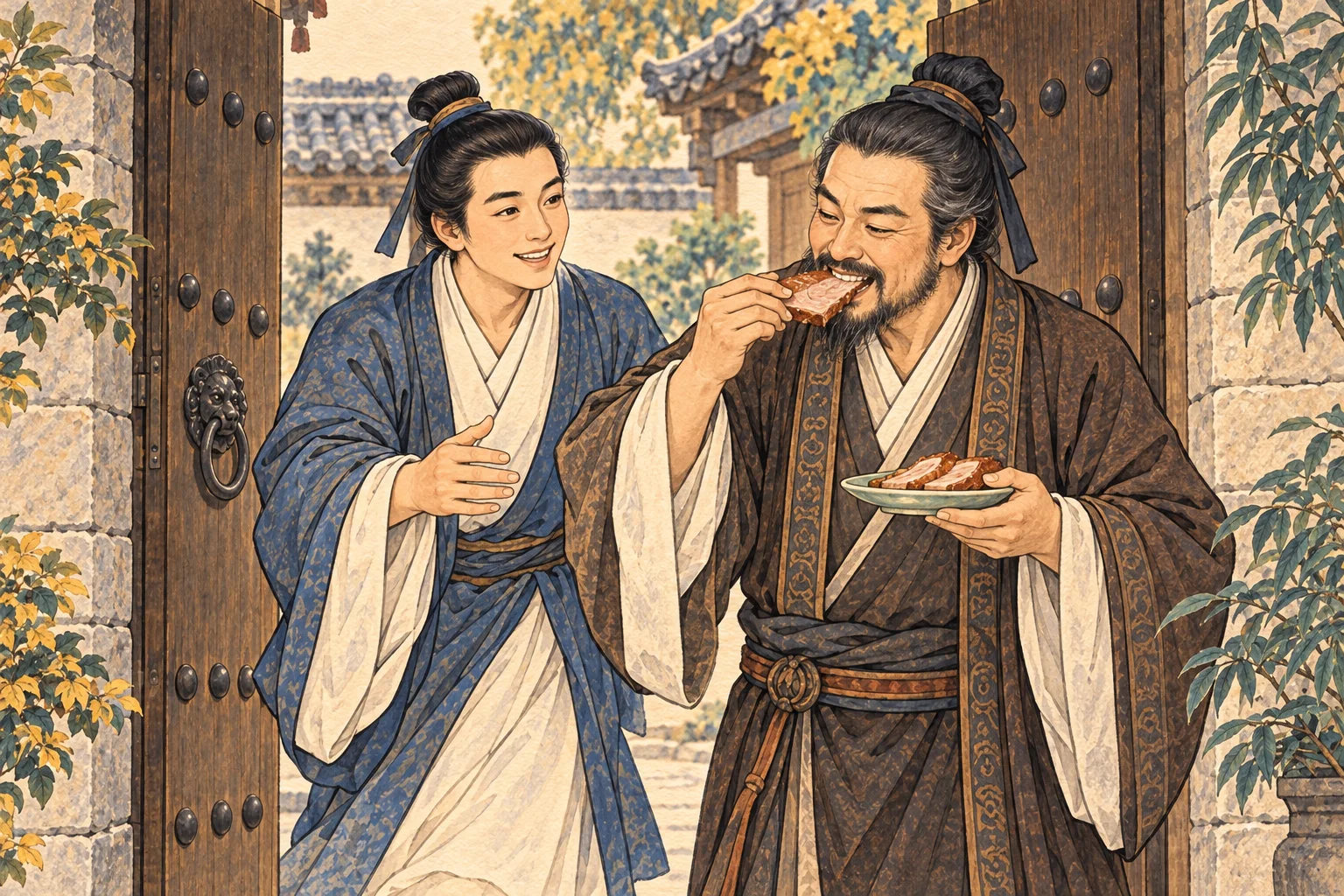
At an open gate an elder kinsman clearly bites a slice of cooked meat as a younger relative approaches with relief.
六五 · Line 5 · 往何咎

悔亡,厥宗噬膚,往何咎。

Regret disappears. One's kin bites through the flesh; what blame is there in going forward?

“厥宗”指有亲近关联者,“噬肤”在传注中喻阻隔不难突破,不是食人。图用亲人咬断一片熟肉作可见取象;关键是可信的关联已能通路,此时前往无咎。

The bite through soft flesh is a classical image of an obstacle yielding, not violence against a person. A trusted relation can clear the way; moving toward the open gate need not be feared.

Go when the way opens
Picture this in daily life生活中的这一爻

A young cook wants to reopen the family food stall, but the permit file is a tangle. At Sunday lunch, an older cousin bites a slice of soft cooked meat and says the barrier is not hard. She introduces the cook to the neighborhood council chair. The application moves forward.

一位年轻厨师想重开家里的熟食摊,许可证文件却乱成一团。周日午饭时,年长的表亲咬下一片炖软的肉,说这层阻碍并不硬。她带年轻人去见社区理事会主席,申请终于向前推进。

Ask yourself: Which trusted relative or neighbor could soften a blocked path?

想一想:哪位可信的亲友或邻居,能帮你化开一条受阻的路?

上九
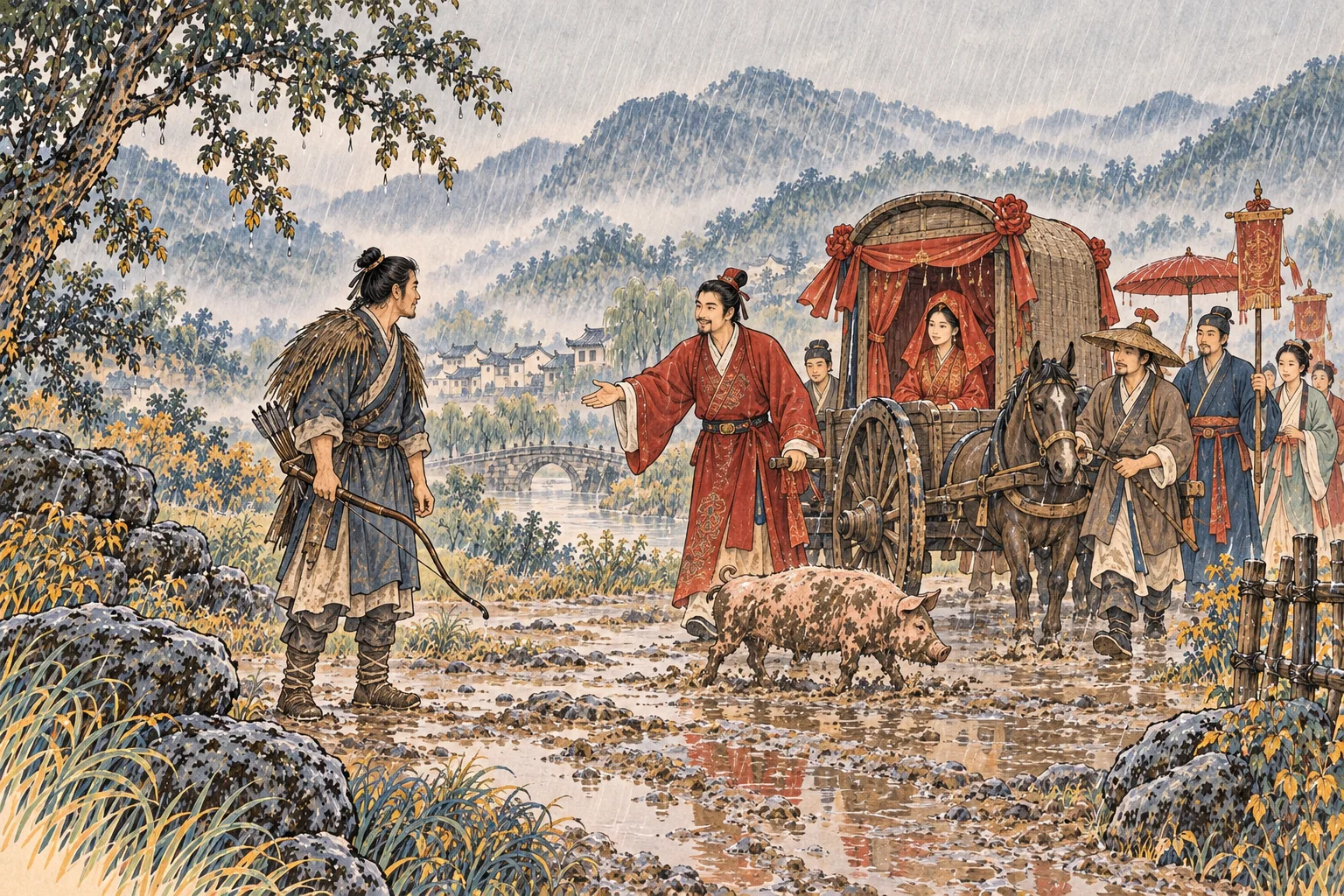
In rain an archer lowers his bow before a wedding cart and mud-coated pig, recognizing kin where he had feared raiders.
上九 · Line 6 · 後說之弧

睽孤,見豕負塗,載鬼一車,先張之弧,後說之弧,匪寇婚媾,往遇雨則吉。

Alone in opposition: see a pig coated with mud and a cart full of ghosts. First draw the bow, then release it. They are not raiders but a wedding party. Going and meeting rain is auspicious.

分歧到极处,泥猪、鬼车都被看成危险,先张弓戒备;看清后来者并非寇而是婚媾,便可松弓。遇雨象征疑虑消解、两边相合。图把“鬼车”处理成雨雾中的误认,不当作真实鬼怪。

Fear makes the muddy pig and covered cart seem monstrous. The archer lowers his bow when the visitors prove to be a wedding party. Rain marks suspicion washing away: look again before you act on a threat you only imagined.

Lower the bow when you see
Picture this in daily life生活中的这一爻

In heavy rain, a tenant sees a van with a muddy pig figure and covered boxes outside her building. She raises her umbrella like a shield, fearing a raid. Then wedding ribbons appear; neighbors are carrying chairs for a wedding. She lowers the umbrella and helps unload. The rain washes the mistake away.

大雨中,一位住户看见楼外停着一辆货车,车上有泥猪玩偶和盖住的箱子。她举伞当盾,以为有人来捣乱。随后看见婚礼彩带,邻居们正搬椅子办喜事。她放下伞去帮忙卸货,雨水把误会冲掉了。

Ask yourself: What perceived threat might change if you look again before acting?

想一想:哪一个你以为的威胁,再看一眼就可能改变?

Cultural Phrases

Classic Chinese Phrases可延展的中文经典短句

Chinese carries the cultural identity; English makes the meaning accessible. These phrases can later inform cards, objects, and décor.

中文保留文化识别,英文负责解释。这些短句可作为未来卡牌、装饰与文创的文字基础,具体载体仍需单独设计。

同而異

同守一事,也容得不同。

Share the ground without erasing difference.

往遇雨則吉

误会消散,重逢有望。

The meeting changes when suspicion clears.

Questions about this hexagram这一卦的常见问题

What does Hexagram 38, Opposition, describe?第38卦描述什么处境?

Opposition begins with two movements pulling apart: fire rises and the lake settles below. Small tasks can still go well. The lines move through lost trust, blocked travel, lonely encounters and frightening misreadings toward a meeting made possible by rain.

睽卦是眼光与方向不一致:火上行、泽下润,彼此背离。卦辞说“小事吉”,提醒分歧时先处理可以独立完成或小范围协作的事,再慢慢寻找共同处;差异未必意味着永远无法相通。

How should I read its six lines?应该怎样阅读这六爻?

Read from the bottom line upward. Each position describes a different stage or condition. The highlighted line-position diagrams on this study page locate the line being explained; they are not a personal cast or a prediction.

从下往上读,结合不同位置与处境理解。这里的高亮卦画只说明正在讲哪一爻,不是个人起卦或预测结果。