10 · Treading (LǙ)
Treading asks how to move among power, order, and risk: with courtesy and proportion, one may pass near danger without being harmed.
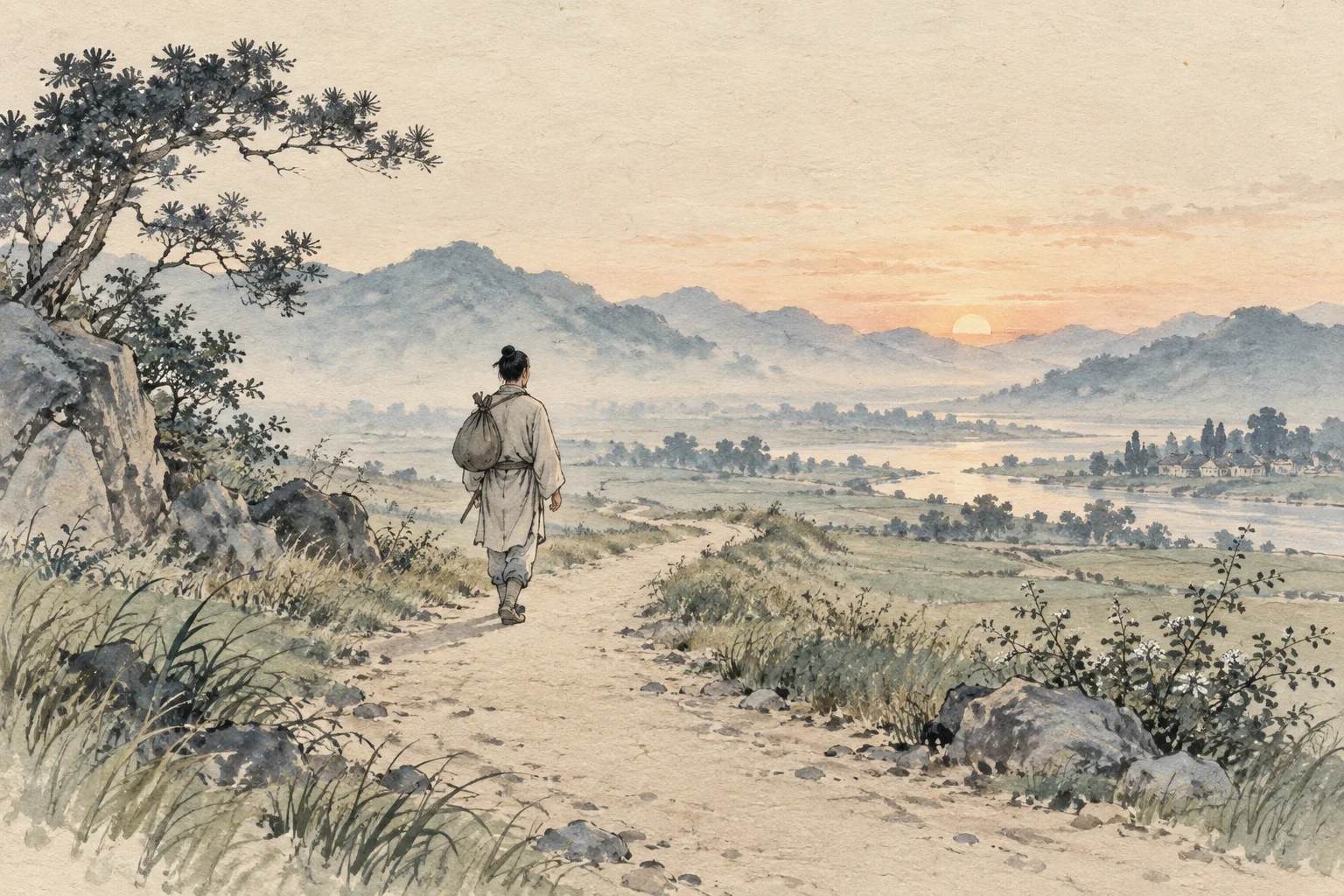
The judgment
Treading: tread on the tiger's tail; it does not bite the person. Success.
When facing powerful or sensitive conditions, success does not mean avoiding every risk; it means knowing boundaries and acting with respect.
Original Chinese text
履,履虎尾,不咥人,亨。
The six lines
- 初九 · Line 1 — Walk in simple treading. No blame.
Original Chinese
素履往,無咎。
- 九二 · Line 2 — The treading path is level. For the secluded person, steadfastness brings good fortune.
Original Chinese
履道坦坦,幽人貞吉。
- 六三 · Line 3 — The one-eyed thinks he can see; the lame think he can tread. He treads the tiger's tail and is bitten: ominous. A warrior acts as if he were a great ruler.
Original Chinese
眇能視,跛能履,履虎尾,咥人,凶。武人為于大君。
- 九四 · Line 4 — Tread on the tiger's tail. Anxious and alert; in the end, good fortune.
Original Chinese
履虎尾,愬愬,終吉。
- 九五 · Line 5 — Resolute treading. Steadfastness brings danger.
Original Chinese
夬履,貞厲。
- 上九 · Line 6 — Look at one's treading and examine the signs. Turning back brings great good fortune.
Original Chinese
視履考祥,其旋元吉。