1. Beauty needs substance · 象曰:山下有火,賁;君子以明庶政,無敢折獄。
Grace is the ability to give things fitting form and beauty, but it may only support substance, never replace it.
贲是让事物显得合宜、有文采的能力,但它只能辅助本质,不应替代本质。
You are helping a small hill town prepare its spring lantern festival. The budget is thin, but a sponsor urges expensive banners, sequins, and a grand carriage entrance.
你正在帮一座山间小镇筹办春季灯会。 预算很少,却有赞助人主张挂昂贵横幅、缀满亮片,并安排华丽的马车入场。
The Image gives us a clue: Fire beneath Mountain: Grace. The noble one clarifies many affairs but does not dare to decide punishments rashly. We will read the six lines from the ground upward.
象曰:山下有火,賁;君子以明庶政,無敢折獄。 我们从下往上读六爻,看看处境怎样一步步变化。
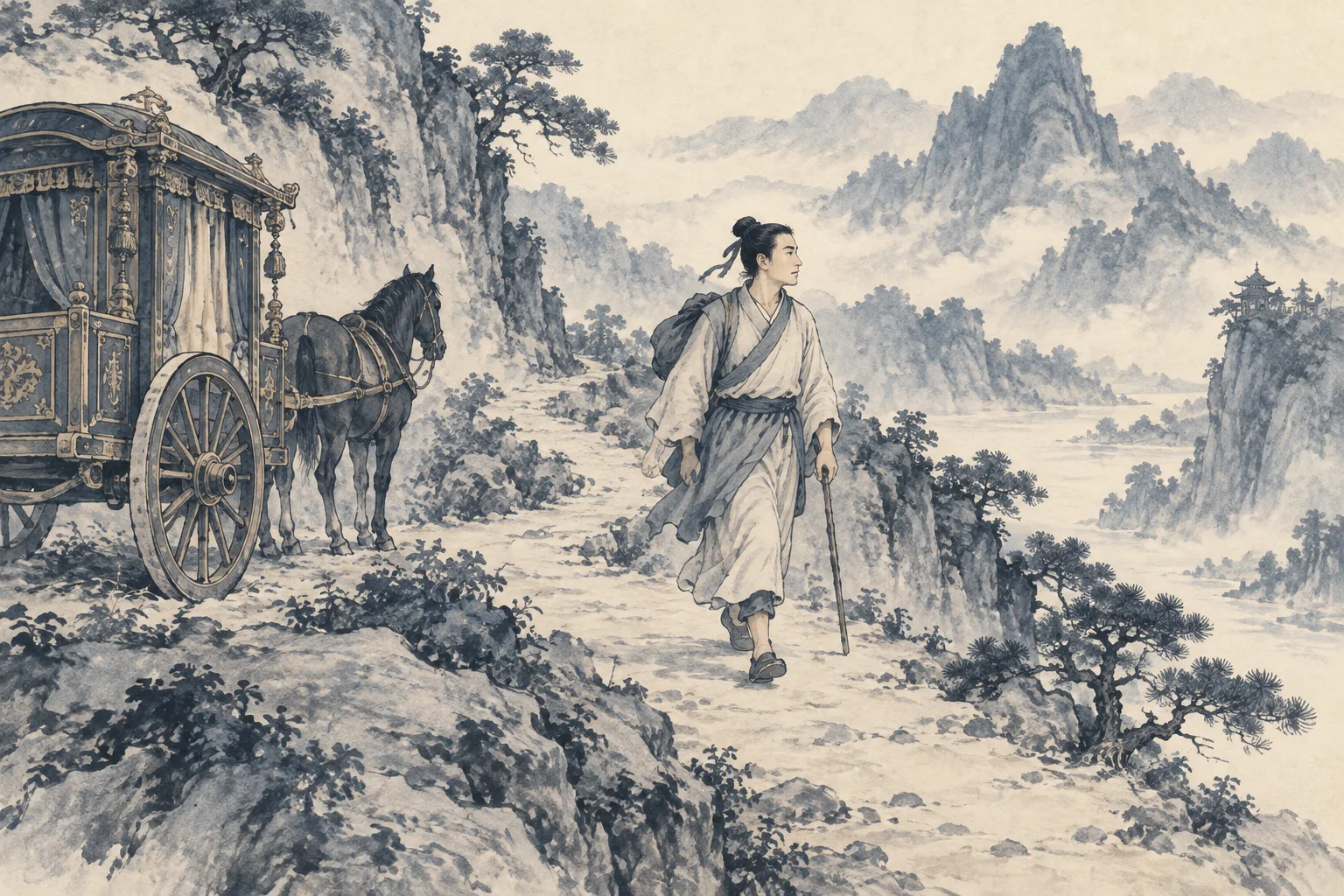
2. Walk, do not display · 賁其趾,舍車而徒。
The traveler steps away from the ornate carriage and walks on their own feet. Right conduct comes before elegant display.
旅人舍华车而徒步;先把路走正,比装饰门面更要紧。
On festival morning, the visiting lantern maker is offered a ride in the mayor's polished carriage, which would make a grand entrance. He chooses instead to walk the last mile, carrying bamboo strips on his own feet. He arrives dusty, but the plain choice sets the day's tone.
灯会清晨,来访的扎灯人被邀请乘坐镇长那辆锃亮马车,好风光入场。他却选择走完最后一里路,亲手抱着竹篾,双脚沾尘赶到。朴实的选择定下了这一天的基调。
Walking rightly under one's own feet matters more than riding in display. Where might walking on your own feet matter more than a polished entrance?
哪里值得你舍车步行,而不靠华丽入场?
3. Let form follow substance · 賁其須。
A beard is trimmed to suit the face beneath it. Grace works when it serves the person, not when it takes over.
胡须依着面貌修整;外在文饰应衬托主体,而不能喧宾夺主。
In the craft tent, an elder paper-cutter trims a red paper horse's mane with tiny snips, as a barber tends a beard. A young volunteer wants to glue on sequins and tassels everywhere. The elder lets the horse's own shape lead; only the mane gets a neat edge.
在工艺棚里,一位年长剪纸人用细剪修红纸马的鬃毛,像理发师修须。年轻志愿者想把亮片和流苏贴满各处。老人让马本身的形状作主,只给鬃毛修出清爽边线。
Fitting adornment follows the subject, as a beard follows the face; it should not take over. What decoration follows the thing it serves rather than taking over?
哪种修饰是在跟随主体,而不是喧宾夺主?
4. Keep inner integrity · 賁如濡如,永貞吉。
Rain darkens the traveler's clothes, but they hold their bearing. A wet appearance need not weaken inner integrity.
雨湿了衣服,行者仍守住仪态;外貌狼狈,内心的正可以不失。
Afternoon rain soaks the parade costumes and banners; colors run together. The lead dancer's borrowed silk is dark with water. Instead of rushing off, she keeps the steps steady and helps the children finish the route. The outer show is spoiled, but the inner promise holds.
午后的雨打湿游行服装和横幅,颜色淌成一片。领舞者借来的丝绸被雨水浸得发暗。她没有匆匆离场,仍稳稳走步,还帮孩子们走完全程。外在的体面坏了,内在的承诺还在。
Outer form may be soaked by rain; inner correctness can still endure. When the surface is spoiled, what steady commitment remains?
当外表被雨打湿,你仍要守住什么?
5. Discern union from threat · 賁如皤如,白馬翰如,匪寇婚媾。
A white horse approaches the gate, where a wedding ribbon changes the meaning of the encounter. Do not judge a visitor by first fear.
白马来到山门,婚礼丝带点明来意;初见似疑,未必就是敌人。
At the hill gate, a white horse gallops up, and organizer Mei fears a raid. The rider wears a red wedding ribbon and has come not to fight but to join two villages through a planned marriage. She studies the ribbon, then lifts the bar.
在山门前,一匹白马疾驰而来,筹办人梅担心是来捣乱。骑手系着红色婚带,不是来争斗,而是要通过一桩亲事联结两个村子。她看清婚带,才抬起路障。
A stranger who seems threatening may bring union rather than harm. Where might a frightening arrival actually be an invitation to union?
哪次来势汹汹的相遇,可能其实是联结的邀请?
6. Small gift, true heart · 賁于丘園,束帛戔戔,吝,終吉。
The visitor offers only a modest bundle of silk in the hill garden. The gift's sincerity matters more than its size.
访客在山园送上薄薄一束帛;礼物虽少,真心可以更重。
In the hill garden, the bride's family offers only a small tied bundle of silk—no gold, no feast. Beside the town's expectations it feels embarrassing. The groom's grandmother receives it with both hands and sets it by the tea, saying the thread is enough. Good will begins.
在山间园子里,新娘家只送上一小束捆好的丝帛,没有黄金,也没有盛宴。比起镇上的排场,这显得局促。新郎的祖母双手接过,把它放在茶炉旁,说这些丝线已经够了。善意就此开始。
The gift is slight but sincere. When your gift feels small, what makes it sincere?
当你的礼物显得微薄,什么让它有诚意?
7. Return to simplicity · 白賁,無咎。
At the end of adornment, a person stands in plain white against the mountains. Less display leaves the substance clear.
文饰走到尽头,只余一身素白立于山间;少一点装点,反能看清本质。
At dusk, workers strip the colored paper from the gate. The lantern maker stands in simple white linen among bare branches, holding one unpainted lantern. The festival's best moment, people say, was plain noodles shared after the rain. No ornament remains, and no blame.
暮色里,工人把彩纸从门楼上揭下。扎灯人穿着素白麻衣,站在光秃的枝桠间,手里提着一盏未上色的灯。人们说,灯会最好的时刻是雨后共吃的一碗素面。装饰褪尽,也没有过错。
At its end, adornment returns to plain white. What remains true when all decoration is removed?
当一切装饰褪尽,什么仍然真实?
8. What remains when decoration falls away? · 賁,亨。小利有攸往。
Adornment can help small matters proceed, but the larger direction depends on real substance and right action.
修饰可使小事通达,但大方向仍要靠真实内容与正确行动。
Fire lights the mountain's base and clarifies affairs, but a clear appearance cannot replace caution in complex judgment.
火照山下,能使事务清楚;但漂亮、清楚的外表不能代替对复杂案件的审慎。
Ask yourself: How do I decide where graceful display helps the festival and where it starts to replace its real substance?
不妨问自己:我该如何判断,哪些文饰能助益灯会,哪些开始取代它真正的本实?