1. See before deciding · 象曰:風行地上,觀;先王以省方,觀民設教。
Contemplation is seeing reality and people with quiet sincerity.
观是安静、诚敬地看清现实与人心。
Imagine your apartment block is deciding how to remake a shared courtyard. You hear bits of talk at the gate, see only part of the plans, and feel pulled to speak.
想象你所在的小区要改造共用庭院。 你在门口只听到零碎议论,只看到部分方案,却已被卷进争论。
The Image gives us a clue: Wind moves across Earth: Contemplation. Former kings inspected the regions, observed the people, and established teaching. We will read the six lines from the ground upward.
象曰:風行地上,觀;先王以省方,觀民設教。 我们从下往上读六爻,看看处境怎样一步步变化。
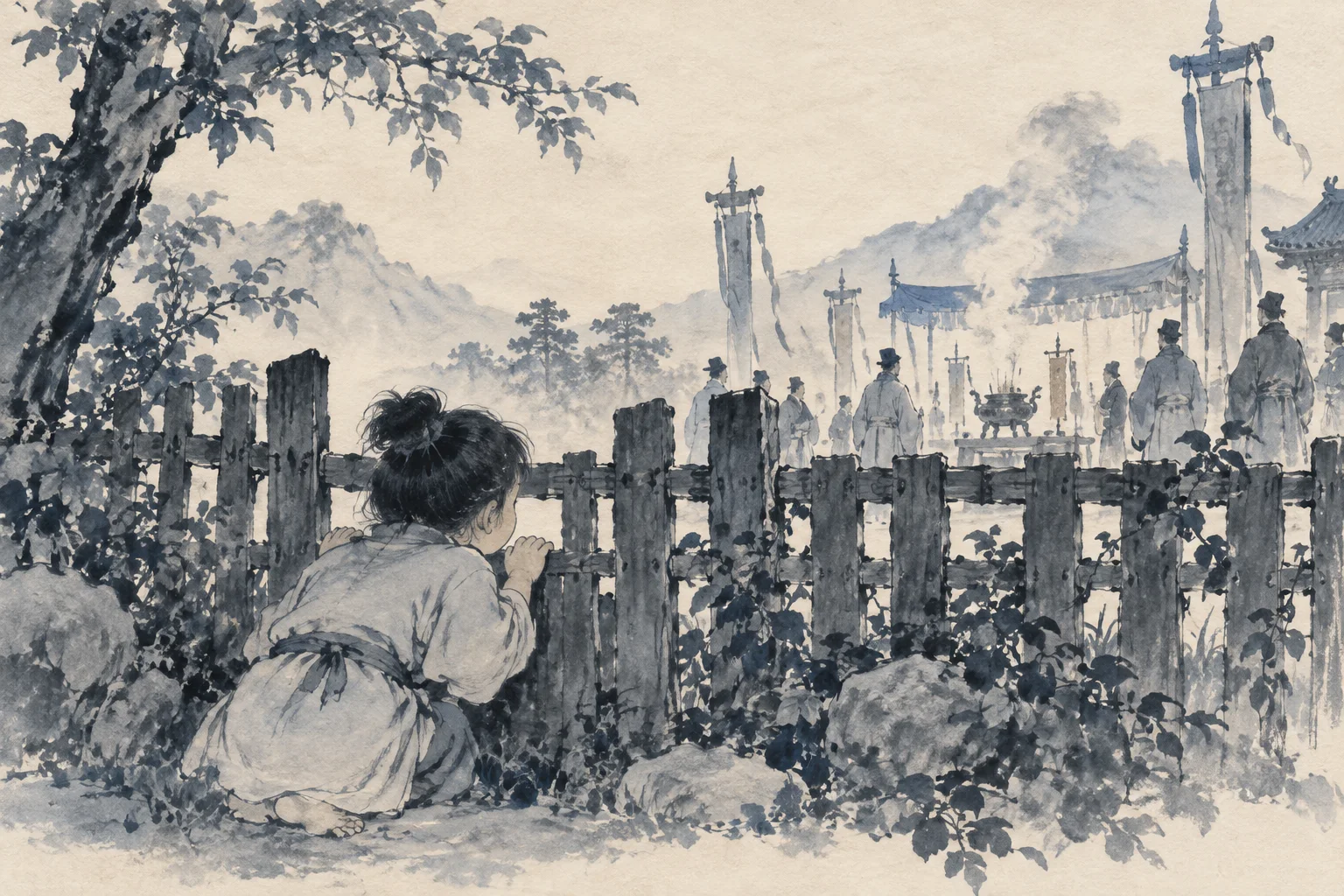
2. Grow beyond fragments · 童觀,小人無咎,君子吝。
A child peeks through a fence and sees only pieces of the scene. That is a beginning, not enough for a leader's decision.
孩子从矮篱间只看到局部;初学如此无妨,负责的人却不能止步于此。
At the first courtyard meeting, a child peeks through the low fence and sees only colored drawings of benches and flowers. For a child, that partial view is no fault. But if you carry a vote or sign the contract, deciding from that single bright fragment will leave you regretful. Step around the fence.
第一次庭院会议上,一个孩子从低矮栅栏外偷看,只看见彩色的长椅和花坛图。对孩子来说,这种局部观察无妨;但若你手握投票权或要签合同,只凭这一角明亮画面就决定,最后会遗憾。请绕到栅栏里面看看。
A partial view is natural for beginners, but insufficient for those carrying responsibility. Where are you seeing only the bright fragment?
你目前只看到哪一块明亮的碎片?
3. Know the limits of view · 窺觀,利女貞。
Through the lattice, the observer can see only a narrow slice. Naming that limit is better than mistaking it for the whole.
透过窗格只见狭窄一角;先承认视野有限,才不会误把局部当全貌。
A tenant recovering from surgery watches the shared courtyard through a narrow lattice window. She cannot attend meetings, yet her steady notes—who uses the shade, when children return—make her a valuable observer. Limited position, faithful attention.
一位术后休养的住户透过窄窗观察共用庭院。她不能到会,却稳定记录谁在树荫下停留、孩子何时回家,这些笔记让讨论少走弯路。位置受限时,守正而细致的观察仍有价值。
A narrow view is limited, yet there is value in steadfast observation from a constrained place. What can you observe faithfully from your limited position?
在你受限的位置上,能忠实观察到什么?
4. Review before moving · 觀我生,進退。
The traveler compares the map with their own reflection before choosing a road. Advance and retreat begin with self-review.
旅人一面看地图,一面照见自己;进还是退,要先审视自身处境。
Before volunteering to coordinate the courtyard build, you lay out your calendar, budget, diary, and a mirror. You study your own patterns: Do you listen when tired? Can you keep promises? Seeing this, you choose a smaller role or step forward. Advance or retreat now follows self-knowledge, not pride.
在报名协调庭院改造前,你把日历、预算、日记和一面镜子摊在桌上,先看自己的行为与处境:累时还愿意听人说话吗?答应的事能守住吗?看清这些,再决定做小帮手还是站出来。进退便不失道。
Study your own conduct and situation before choosing advance or retreat; then the way is not lost. What in your own life tells you whether to advance or step back?
你自己生活中的哪些迹象,能告诉你该进还是该退?
5. See public light · 觀國之光,利用賓于王。
A visitor watches the order of the capital and then enters as a guest. Seeing a community clearly can invite participation.
访客看清城中秩序,才以宾客身份进入;观其光,也要知自己如何参与。
You visit another neighborhood's well-run courtyard as a guest. Near its gate, you watch how residents share tools, repair benches, and settle small disputes in the open. You do not seize control or copy everything; you ask respectful questions and carry useful light home. Taking part as a guest fits this bright order.
你以客人身份参观另一个运转良好的小区庭院。在门边,你观察居民如何共用工具、修理长椅、公开化解小纠纷。你不夺主、不全盘照搬,只礼貌提问,把有用的光带回家。以宾客之礼参与,正合这明亮秩序。
Seeing a community's bright order makes it fitting to take part as a respected guest. What bright order can you learn from as a respectful guest?
你能以客人之礼,从哪一处明亮秩序中学习?
6. Review through people · 觀我生,君子無咎。
The leader walks through the market and measures policy against people's days. To review one's life is to see its effects.
主事者走进市集,看看决策怎样影响百姓;观己,不能只看自己。
Now you coordinate the courtyard. For a week you arrive at different hours, sit in the tool shed, and listen at the Saturday market stalls. You watch whether your new rules make daily life easier or merely look tidy on paper. Letting residents' routines test your conduct keeps a leader without blame.
现在你负责协调庭院。你连续一周在不同时段到场,坐在共用工具棚里,也在周六市集摊边安静听。你观察新规则是让日常生活更便利,还是只在纸面上好看。让居民的生活检验自己的治理,领导者便少过错。
In leadership, observing one's own life includes testing one's conduct through the lives of the people. How do others' daily routines reveal your own conduct?
他人的日常作息,怎样映照出你的作为?
7. Observe others with care · 觀其生,君子無咎。
From the hill, an elder studies homes and fields below. The final view asks for care toward other lives, not detached judgment.
长者从山坡望向民居田地;观人到深处,是关切他们的生活,不是高处评断。
After stepping down, you walk the hillside path above the courtyard and look at lit windows, small gardens, and empty chairs. You notice who has not come out lately. You ask about neighbors' work and worries with care, not judgment. Watching others' lives this way keeps goodwill without blame.
卸下协调工作后,你走到庭院上方的小山坡,望着亮灯的窗户、小菜园和空椅子,留意谁最近没有出门。你带着关切去问邻里的工作和烦恼,而不是评判他们的选择。这样观看他人的生活,君子无咎。
Turn attention to others' livelihoods and conditions, looking with care rather than judgment. Whose life can you observe today with care instead of judgment?
今天你能用关切而非评判,去观看谁的生活?
8. What lies beyond your first view? · 觀,盥而不荐,有孚顒若。
The essential moment is not presenting an object, but the cleansed and upright intention that naturally inspires solemn attention.
仪式最重要的片刻不在呈上物品,而在净手后心意已端正、让人自然肃然的状态。
Different scope produces different understanding: it moves from partial peeking toward self-review and broad observation.
视野不同,所得不同;从局部偷看走向自省和广阔观察。
Ask yourself: What might you notice if you paused before speaking in this courtyard decision?
不妨问自己:在这个庭院改造的决定前,若先暂停表态,你可能会看见什么?