 YiPhase
THE PATTERN, THEN THE PRACTICE · BEGINNER GUIDE
What do Ti and Yong mean in Mei Hua Yi Shu?
Understand body and use: the subject, the situation, and how their Five Phase relationship helps you examine support, effort and pressure.
▶ Watch the 83-second lesson
English narration and captions. Optional Chinese subtitles are available in the player.
Start with a relationship, not a label
Mei Hua Yi Shu, or Plum Blossom numerology, reads change through trigram imagery and relationships. Ti (体, body) is the subject or standpoint of the inquiry. Yong (用, use) is the matter, influence or condition with which it interacts.
“Body” does not mean an anatomical body, and “use” does not mean an object is useful. Think of a person starting a project and the conditions around that project. The interpretation should identify those roles from the actual question and known facts, not pretend to know what another person secretly thinks.
How are they assigned in YiPhase?
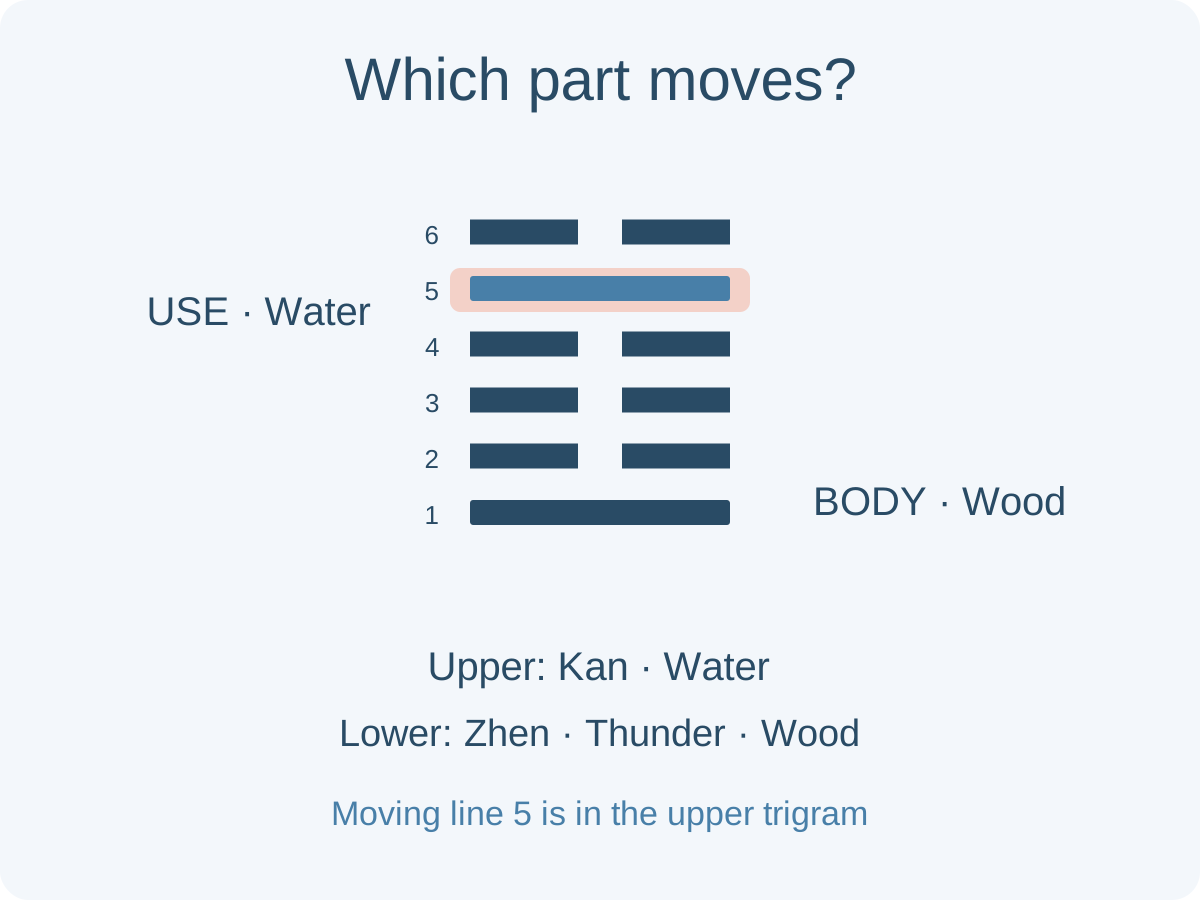
YiPhase’s moment-based method uses the local Chinese calendar date and two-hour time period to form two trigrams and one moving line. The trigram containing that line is the use. The other trigram, which stays unchanged, is the body.
Each trigram has three lines. A moving line in positions 1–3 makes the lower trigram the use; positions 4–6 make the upper trigram the use. So “upper means outside, lower means me” is not a fixed body–use rule. Check the moving line first.
Give the trigrams their Five Phases
The traditional mapping is: Qian / Heaven and Dui / Lake belong to Metal; Zhen / Thunder and Xun / Wind to Wood; Kan / Water to Water; Li / Fire to Fire; Gen / Mountain and Kun / Earth to Earth. These are symbolic classifications within the method, not material measurements.
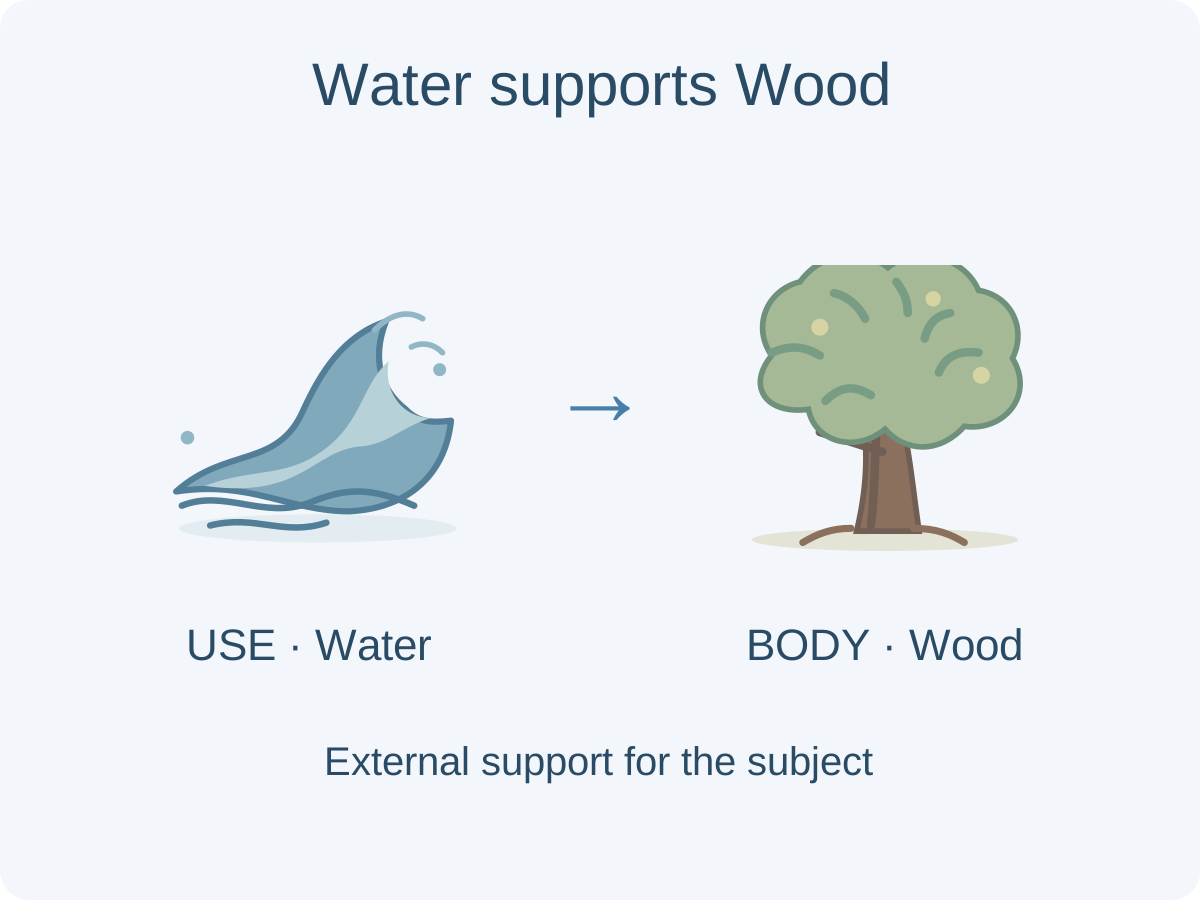
The generating cycle is Wood → Fire → Earth → Metal → Water → Wood. The controlling cycle is Wood → Earth → Water → Fire → Metal → Wood. “Controlling” means checking or restraining a force; a limit can be protective as well as difficult.
| Relationship | Traditional emphasis | Practical question |
|---|---|---|
| Use generates body | Support coming toward the subject | Which help can I actually use? |
| Body and use share a phase | Alignment or cooperation | Do we also agree on responsibilities? |
| Body restrains use | Progress through active effort | What must I organise or negotiate? |
| Body generates use | The subject gives energy outward | Is the cost sustainable? |
| Use restrains body | Pressure or obstacles affecting the subject | What limit should I respect or change? |
An example: “Should I expand this small project?”
In our example, lower Zhen / Wood is the body and upper Kan / Water is the use. Water generates Wood. Symbolically, this points toward support from the situation. In a project, that could invite questions about customer demand, useful advice or available resources. It does not establish that any of those are present; you need to tell us what support you actually have.
Now change line 5. Upper Kan becomes Kun / Earth; lower Zhen stays Wood. The changed pattern is Fu, hexagram 24. Wood restrains Earth: the body now has work to do in relation to the changed use.
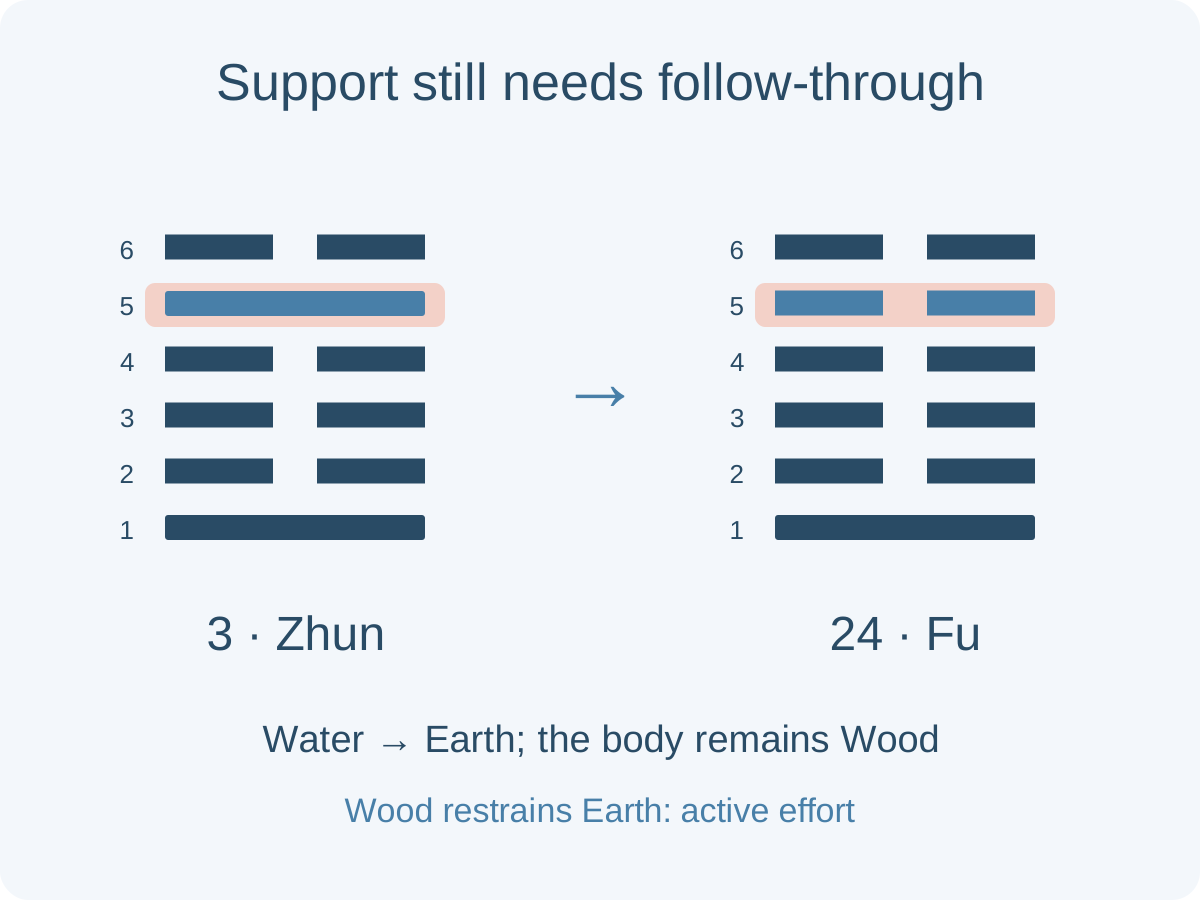
A grounded interpretation might say: support is helpful, but expansion still needs structure. Before taking on more work, define a small offer, set a spending limit, and make responsibilities explicit. If you mistake encouragement for proven demand, you may overcommit. If you test a manageable next step and review the evidence, you can adjust before the cost grows.
That conclusion comes from the relationship, then the circumstances. It is not “Wood is good, Earth is bad,” and it is not a measured probability of commercial success.
What else belongs in the interpretation?
The primary, nuclear and changed patterns provide distinct symbolic views. Classical imagery and seasonal considerations may add nuance. None removes the need to understand the real situation. In YiPhase, the arithmetic forms the cast; AI explains those supplied structures in relation to the context you voluntarily share.
Keep the two casting methods distinct. A coin cast may have several moving lines in both trigrams, so do not automatically impose this one-moving-line body–use assignment on every coin result. Compare the methods →
Leave with a clearer view
- Subject: what part of this question does body represent?
- Conditions: what real matter or influence does use represent?
- Relationship: does the reading emphasise support, alignment, effort, expenditure or pressure?
- Change: what shifts when the actual moving line changes?
- Action: what can you check or do, and what would tell you to reconsider?
See the illustrated generating and controlling cycles →
Foundation: Mei Hua Yi Shu · Volume 1 (trigram numbers and Five Phases) and Volume 2 (body–use and context). Examples and English explanations are original YiPhase teaching material. Symbolic readings are not guaranteed forecasts or evidence of a hidden fact.
中文解说 · Read in Chinese
梅花体用:把主体与处境分开看
体代表问事的主体或立场,用代表所问之事、与主体互动的外在条件。“体”不是人体器官,“用”也不是日用品。先明确用户到底问什么,再把角色对应到已知事实,不能靠卦猜出别人的秘密。
YiPhase 的起念时间法按当地农历日期和时辰取卦,并取一个动爻。动爻所在的三爻经卦为用,另一个不动的经卦为体。初至三爻动,下卦为用;四至上爻动,上卦为用。不能一概说上卦永远是外界、下卦永远是自己。
乾兑属金,震巽属木,坎属水,离属火,艮坤属土。相生为木火土金水木;相克为木土水火金木。用生体可看外力扶助,体用比和看协同,体克用看主动争取,体生用看精力输出,用克体看压力和阻碍。仍要结合实际:支持是否存在、付出能否持续、边界是否必要,不能机械判定。
图例为水雷屯、五爻动:下震木为体,上坎水为用,水生木,可观察外在支持。五爻一变,上坎变为坤土,成为地雷复;木体克土用,转向需要主动整理和推进。问“小项目是否扩张”时,可据此提醒:支持不等于已经验证需求,先做好小规模方案、成本上限与分工,再按证据调整。忽略边界可能过度承诺;及时验证则留有转圜空间。图例是教学用,不是假装记录了你的真实起卦时间,更不是成功概率。
本卦、互卦、变卦是不同的辅助视角。AI 按程序核算好的结构和用户自愿补充的事实解说。铜钱法可能两经卦同时有动爻,不能随便硬套单动爻体用规则。最后应清楚列出主体、外部条件、相互关系、变化节点,以及能做的行动。