Qian 乾
HeavenInitiative and steady strength
 YiPhase
CULTURE & ORIGINS · 文化与起源
The Fuxi tradition explains the eight trigrams through a powerful idea: observe the world carefully, recognise its patterns, and respond to change.
The Xici describes Fuxi looking upward at the sky and downward at the earth, observing patterns in birds and animals, and drawing examples from the human body and the wider world. The account connects the eight trigrams with recognising the character of different things.
仰则观象于天,俯则观法于地……近取诸身,远取诸物。From Xici, Part II, chapter 2. The English explanation here is YiPhase’s own paraphrase.
For a beginner, this offers a useful starting point: the symbols are a way of noticing relationships and change. They do not replace observation with a mysterious answer.
《系辞下》把八卦的创制归于包牺氏,也就是传统所说的伏羲。文中记载他仰观天象、俯察地理,观察鸟兽纹理与大地环境,并且“近取诸身,远取诸物”。这是一段文化起源叙事,不宜写成有确切年代和步骤的历史实验记录。
它给初学者的启发是:先观察天地、身体和身边事物,再认识其中的变化与关联。原文并没有细述伏羲当时的困惑,也没有列出一套现代科学分类表。我们可以借这个故事说明观察的重要性,但要分清经典记载与今天的教学解释。
Guà names a symbolic figure used in divination. In the I Ching, a three-line figure is a trigram; a six-line figure is a hexagram. The written character 卦 is different from the line diagram it names.
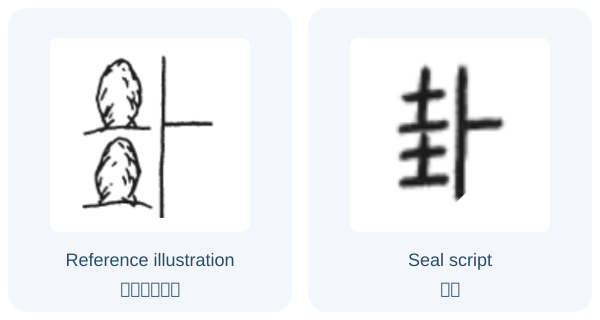
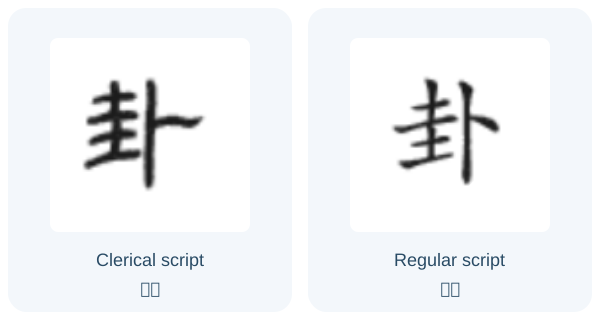
Divination. Its form is traditionally associated with cracks read in heated shells or bones.
The phonetic component in the explanation recorded by the Shuowen Jiezi.
The reference calls 卦 a phonosemantic character: one part points to meaning, the other to pronunciation. Its central explanation agrees with the Shuowen: “筮也。从卜,圭声。” In plain English: a divinatory figure, formed with 卜 and the sound component 圭.
The reference also associates 圭 with an instrument for measuring a shadow. That is a separate explanatory association; “measurement plus divination” is not the character derivation given by the Shuowen. Nor does the written character alone tell us how the trigram system was invented.
“卦”是占筮所用的符号。在《易经》语境中,三个爻组成经卦,两个经卦叠成六爻的重卦。“卦”这个汉字,与它所指的卦画,不是同一种图形。
截图中的核心说明是:“形声字,卜表意,圭表声。”《说文解字》记载“筮也。从卜,圭声”。卜与占卜有关,圭在这个字中担当声符。参考图把圭联系到测量日影的器具,可以作为联想补充,但不能因此把“圭表示测量,卜表示占卜”当作已确定的造字本义。
图中保留了你提供的早期示意字形,以及篆、隶、楷三种后续书体。由于截图没有注明第一幅字形的出土来源与年代,这里标为“参考示意字形”,不冒认成已经核实的甲骨文实物。
A solid line represents yang; a broken line represents yin. These are related qualities, such as activity and receptivity, understood in context. Neither is inherently good or bad, and neither assigns a fixed role to a person’s gender.
The Xici presents a sequence from the two primary forms to four images and then eight trigrams. A simple way to see the combinations is this: each of three positions has two possibilities, giving 2 × 2 × 2 = 8.
Initiative and steady strength
Receptivity and support
Movement and awakening
Gentle entry and influence
Depth and difficulty
Light and attachment
Stillness and stopping
Joy and exchange
Read each trigram from the bottom upward. These eight patterns show the combinations; they are not a compass arrangement. The short themes are beginner paraphrases inspired by the Shuogua.
Put one trigram below another and you have six lines. Eight choices below and eight above give 8 × 8 = 64 hexagrams.
阳爻是一条连续的实线,阴爻是一条中间断开的线。阴阳可以帮助我们认识主动与承接等相互关联的状态;它们不等于好坏,也不规定男人或女人应该怎样生活。
《系辞上》说“易有太极,是生两仪,两仪生四象,四象生八卦”。今天用组合图帮助理解:三个爻位,每个位置都有阴、阳两种选择,合起来就是八种组合。卦画从下往上读。两组三爻再叠加,便有八乘八、六十四种六爻卦。
这里按名称展示八种组合,不是先天或后天的方位图;旁边的短语是依据《说卦》象义作的入门解释,不是对某个人的吉凶判断。
The Shuogua describes three realms: Heaven, Earth and the human way. A common teaching lens places them in the three positions of a trigram:
The wider conditions and patterns around us.
Our choices, relationships and responsibilities.
The ground, resources and practical limits we work with.
This diagram is a teaching interpretation. It is not a historical record of Fuxi assigning these labels as he drew the first trigrams. The classical discussion also connects the three realms with the six lines of a hexagram.
《说卦》论述天、地、人三才,并说“兼三才而两之,故易六画而成卦”。用上爻对应天、中爻对应人、下爻对应地,是一种常用教学视角,不宜直接写成伏羲造卦的历史步骤。
为方便今天的读者理解,这里把天解释为整体条件,把人解释为选择与责任,把地解释为资源与现实限制。这些是现代生活中的类比,而不是说一看到某个爻位,就已经知道用户具体处境。
“一画开天地” — loosely, one stroke opens a world — is a later poetic celebration of Fuxi’s achievement. It expresses the significance of making complexity visible through simple symbols; it is not a quotation from the passages above.
The trigrams became an enduring vocabulary within Chinese thought. Natural images, human conduct and changing situations could be considered together. To “follow nature” in this learning context means attending to real conditions and timing while taking responsibility for what you can change.
“一画开天地”是后世赞颂伏羲创制八卦的形象说法,不是上面所引《易传》章节的原句。它让人感受到:简单的线条,也能够开启观察与思考天地万物的一种方式。
今天学习这些知识,不必把“遵天而行”理解成被动认命。可以理解为尊重条件、观察时机,同时为自己的行动负责。例如准备做一个小项目,先看需求,再看资源与边界,最后决定自己能做什么。先小范围尝试,根据实际反馈调整,就是一种贴近日常的学习应用,不是保证项目成功的断语。
Glyph illustrations preserve the user-supplied reference image. Its original publisher and early glyph provenance were not supplied; no archaeological date is asserted. English explanations and the everyday example are written by YiPhase. 中文引文为经典原文;英文及生活案例为本站重新撰写。